Bamboo woven fruit baskets
CN → US| HS Code | Tariff Rate | Origin | Destination | Doc |
|---|---|---|---|---|
| 4602110700 | 35.0% | CN | US | Official Doc |
| 4602110900 | 45.0% | CN | US | Official Doc |
| 3923109000 | 38.0% | CN | US | Official Doc |
| 3923900080 | 38.0% | CN | US | Official Doc |
| 7323999030 | 88.4% | CN | US | Official Doc |
Product Images
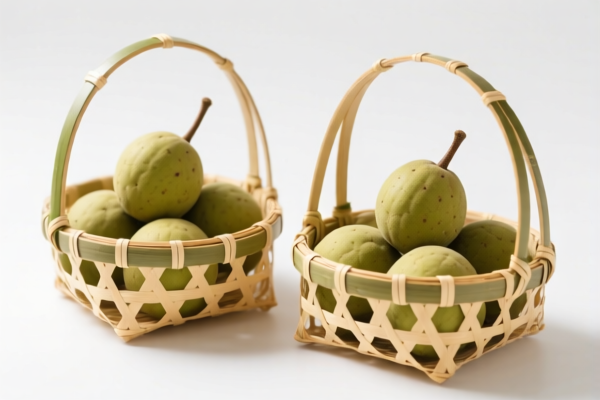
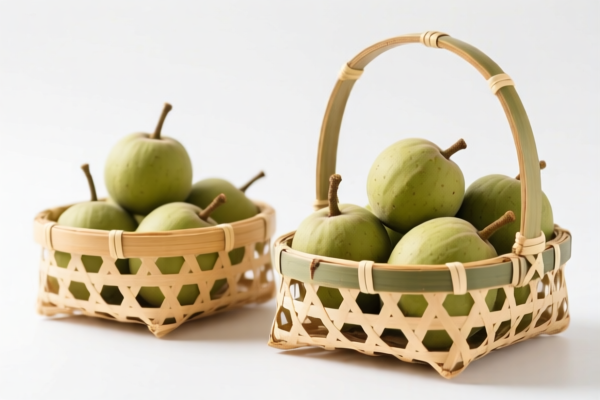
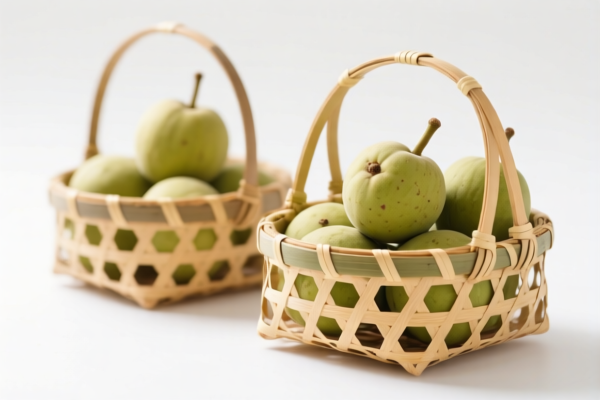

AI Analysis
🍎 Bamboo Woven Fruit Baskets (Plant Fiber Containers)
🌐 HS Code Reference & Customs Clearance Guide | 2026 Latest Tariff Analysis | Professional Clearance Strategy
📌 Part 1: Product Definition & Classification: Are You Sure You Understand "Bamboo Baskets"?
Bamboo woven fruit baskets are traditional storage and display containers used in kitchens, dining rooms, and retail settings. In international trade, their classification depends heavily on the material composition and specific form. Since the user input specifies "Bamboo," the primary logical inference points to Chapter 46 (Products of mosses, lichen, basket-weaving materials or of plaiting materials), but potential misclassifications into Chapter 39 (Plastics) or Chapter 73 (Iron/Steel) are common risks due to generic naming or mixed materials.
Key Classification Distinction: - True Plant Fiber (Bamboo/Wicker/Rattan): Must fall under Heading 4602 (Woven materials and articles thereof). This is the most accurate classification for pure bamboo baskets. - Plastic Resembling Bamboo: If the material is plastic molded to look like bamboo, it falls under Chapter 39 (Plastics). - Metal Base with Bamboo Weave: If it has a metal frame/structure, it might incorrectly be pushed to Chapter 73 (Iron/Steel), leading to massive tax penalties.
⚠️ Critical Warning:
- Misclassifying a bamboo basket as "Plastic" (Ch 39) or "Metal" (Ch 73) can result in massive duty underpayments followed by seizures, or overpayments if the wrong high-rate code is selected.
- The presence of "122 Section Tariffs" (Section 301/IEEPA add-ons) significantly impacts the final landed cost for US imports from China.
📦 Part 2: HS Code Classification Details (2026 Latest Tariff Authority Comparison)
Based on the provided data, here are the potential HS Codes, their logical justifications, and tax implications.
| HS Code | Product Description | Justification from Data | Tax Impact Risk |
|---|---|---|---|
4602.11.07.00 |
Bamboo/Woven Vegetable Fibres Baskets | Matches form (basket/bag) & use (fruit). Material inferred as bamboo/willow/plant fiber. No conflict. | Moderate (35% Total) |
4602.11.09.00 |
Other Baskets/Plaited Articles | Matches form & use. "Other" basket category. Material inferred as plant fiber due to lack of conflict. | High (45% Total) |
3923.10.90.00 |
Plastic Boxes/Boxes-like Articles | Inferred material as Plastic. Form matches "boxes/baskets". | Moderate (38% Total) |
3923.90.00.80 |
Other Plastic Packing Articles | Inferred material as Plastic. Used for packing/holding fruit. "Other" fallback category. | Moderate (38% Total) |
7323.99.90.30 |
Iron/Steel Household Articles | Inferred material as Iron/Steel (incorrect for pure bamboo). Form matches kitchen/dining use. | Extreme (88.4% Total) |
🔍 Key Insight:
-4602.11.07.00is the most precise and likely correct code for true bamboo baskets, offering the lowest total tax among the valid plant-fiber options.
-7323.99.90.30is a dangerous misclassification if the product is not metal. It triggers a 50% additional tariff on steel/aluminum, totaling 88.4%.
- Plastic codes (3923.xx) are only valid if the basket is actually made of plastic (e.g., PVC or PP woven look-alike).
💰 Part 3: 2026 Latest Tariff Rate Breakdown (Including Surtaxes & Policy Add-ons)
✅ Applicable Market: United States (US)
✅ Origin: China (CN)
✅ Effective Time: Post-November 2025 (Current Trade Environment)
🎯 1. 4602.11.07.00 — Bamboo/Plant Fiber Baskets (Optimal Classification)
| Item | Details |
|---|---|
| Base Duty | 0.0% (Preferential/Free entry for many plant-fiber articles) |
| Section 301 Surtax | +25.0% (USITC Footnote 9903.88.01) |
| IEEPA Add-on | +10.0% (针对中国/香港产品,Section 122 equivalent) |
| Total Tax Rate | 35.0% |
| Calculation | CIF Value × 35% |
| De Minimis Eligibility | ❌ No (Denied for Section 301 goods) |
| Legal Basis | USITC:4602.11.07.00 → FOOTNOTE:9903.88.01 → IEEPA:9903.01.24 |
📌 Explanation:
- This is the most cost-effective option for genuine bamboo baskets.
- The 0% base duty makes it attractive, but the 35% total burden is significant.
- Must provide Proof of Material: Bamboo/Plant fiber certification to avoid reclassification to "Other" (4602.11.09.00).
🎯 2. 4602.11.09.00 — Other Woven Baskets (Fallback Classification)
| Item | Details |
|---|---|
| Base Duty | 10.0% |
| Section 301 Surtax | +25.0% |
| IEEPA Add-on | +10.0% |
| Total Tax Rate | 45.0% |
| Calculation | CIF Value × 45% |
| De Minimis Eligibility | ❌ No |
| Legal Basis | USITC:4602.11.09.00 → FOOTNOTE:9903.88.01 → IEEPA:9903.01.24 |
📌 Warning:
- If customs determines the material is not clearly "bamboo" or falls outside the specific "bamboo" subheading, it defaults to this "Other" category.
- 10% higher than the optimal code. Avoid this by specifying "Bamboo" in the commercial invoice.
🎯 3. 3923.10.90.00 / 3923.90.00.80 — Plastic Baskets (If Misidentified as Plastic)
| Item | Details |
|---|---|
| Base Duty | 3.0% |
| Section 301 Surtax | +25.0% |
| IEEPA Add-on | +10.0% |
| Total Tax Rate | 38.0% |
| Calculation | CIF Value × 38% |
| De Minimis Eligibility | ❌ No |
| Legal Basis | USITC:3923.10.90.00 / 3923.90.00.80 → FOOTNOTE:9903.88.01 → IEEPA:9903.01.24 |
📌 Note:
- Only applicable if the basket is 100% plastic.
- If customs inspects and finds natural bamboo fibers, they will penalize for misclassification (reclassify to Ch 46 or Ch 73).
🎯 4. 7323.99.90.30 — Iron/Steel Household Articles (High-Risk Misclassification)
| Item | Details |
|---|---|
| Base Duty | 3.4% |
| Section 301 Surtax | +25.0% |
| IEEPA Add-on | +10.0% |
| Steel/Aluminum Surtax | +50.0% (Specific to 7323 category) |
| Total Tax Rate | 88.4% |
| Calculation | CIF Value × 88.4% |
| De Minimis Eligibility | ❌ No |
| Legal Basis | USITC:7323.99.90.30 → FOOTNOTE:9903.88.01 → IEEPA:9903.01.24 → Steel Surtax Rule |
🚨 CRITICAL WARNING:
- DO NOT USE this code unless the basket is made of iron or steel.
- This code carries an additional 50% tariff specifically for steel/aluminum products.
- Total tax of 88.4% can destroy profit margins. This is the most expensive option in the dataset.
🛠️ Part 4: Customs Clearance Practical Advice (Avoid Pitfalls)
✅ 1. Required Documentation Checklist
| Document | Required? | Purpose |
|---|---|---|
| ✅ Product Specification | ✔️ | Must explicitly state "100% Bamboo" or "Plant Fiber". Avoid vague terms like "Woven Material." |
| ✅ Material Test Report | ✔️ | Lab test confirming natural fiber content (not plastic or metal). |
| ✅ Product Photos | ✔️ | Clear images showing weave texture, natural color, and lack of plastic/metal sheen. |
| ✅ Commercial Invoice | ✔️ | Describe as "Bamboo Woven Fruit Basket", NOT "Plastic Basket" or "Metal Organizer." |
| ✅ Packing List | ✔️ | Net weight/Gross weight to verify volume/density consistency with bamboo (lighter than plastic/metal). |
✅ 2. Declaration Strategy (Golden Rules)
🔥 "Material First, Form Second, Name Precise!"
| Scenario | Correct Declaration | Incorrect Declaration | Consequence |
|---|---|---|---|
| Pure Bamboo Basket | 4602.11.07.00 |
3923.10.90.00 (Plastic) |
Reinspection, potential fine, duty difference |
| Pure Bamboo Basket | 4602.11.07.00 |
7323.99.90.30 (Metal) |
88.4% Tax + Penalty |
| Plastic-looking Bamboo | 3923.10.90.00 |
4602.11.07.00 |
Duty overpayment (38% vs 35%) |
| Mixed Material (Bamboo Handle + Metal Base) | 7323.99.90.30 (if metal essential) |
4602.11.07.00 |
Misclassification risk |
✅ 3. Special Handling Tips
- Prove the "Bamboo": If customs suspects the basket is plastic (common in cheap imports), provide a material composition declaration signed by the manufacturer.
- Avoid "Generic" Terms: Never use "Woven Basket" without specifying "Bamboo" or "Plant Fiber." Ambiguity leads to the "Other" (4602.11.09.00) category, adding 10% base duty.
- Watch for "Section 301" Updates: Tariff rates for Chinese goods are volatile. Confirm if any new exclusions apply to woven basket materials in 2026.
🌍 Part 5: Global Market Comparison (2026 Snapshot)
| Country/Region | Recommended HS Code | Approx. Total Duty | Notes |
|---|---|---|---|
| 🇺🇸 USA | 4602.11.07.00 |
35.0% | Heavy surtaxes (301 + IEEPA). |
| 🇨🇳 China | 4602.11.07.00 |
~9% | Import duty for finished goods. |
| 🇪🇺 EU | 4602.11.00 |
~6.5% | Standard MFN rate for woven baskets. |
| 🇬🇧 UK | 4602.11.00 |
~6.5% | Post-Brexit standard duty. |
| 🇯🇵 Japan | 4602.11.00 |
~5.0% | Favorable for natural fiber goods. |
📌 Conclusion:
- USA is the most expensive market due to layered surtaxes.
- Precision in material declaration is the #1 way to save costs.
- Avoid metal/plastic codes unless accurate, as misclassification risks are high.
📌 Part 6: Common Mistakes & Blood-Tears Lessons
❌ Mistake 1: Declaring "Bamboo Basket" as "Plastic Basket" (3923.10.90.00)
👉 Result: If found to be natural bamboo, underpayment of 3% + penalties. If found to be metal, massive underpayment.
❌ Mistake 2: Using the Metal Code (7323.99.90.30) for a Bamboo Basket
👉 Result: 88.4% Tax Rate! A 53.4% unnecessary increase. Profit destroyed.
❌ Mistake 3: Vague Description "Woven Container"
👉 Result: Customs assigns 4602.11.09.00 ("Other"), adding 10% base duty unnecessarily.
✅ Best Practice:
Use this exact description:
"Natural Bamboo Woven Fruit Basket, 100% Plant Fiber, No Plastic/Metal Components, Model XYZ"
🎯 Part 7: Conclusion: Precision Saves Money!
🎯 Remember the Golden Rule:
🔹 "Bamboo is 4602, Plastic is 3923, Metal is 7323 (Expensive!)"
🔹 "Specify Material, Avoid 'Other', Prevent 88% Tax Disaster!"
📌 Pro Tip:
If you are importing large volumes, consider applying for a Binding Tariff Information (BTI) or Advance Ruling from US Customs (CBP) to lock in the 4602.11.07.00 classification and avoid disputes.
📣 Immediate Action:
📞 Contact your customs broker with photos and material specs.
🚀 Declare "100% Bamboo" to secure the 35% rate, not the 88% rate!
💼 Your profit margin depends on this 53.4% difference!
✨ Professional Clearance Starts with Accurate Classification!
💼 Every percentage point saved is pure profit!
Customer Reviews
About HS Code Classification
The Harmonized System (HS) is an internationally standardized nomenclature developed by the World Customs Organization (WCO) to classify traded products. Over 200 countries use the HS system as the basis for customs tariffs, trade statistics, and import/export regulations.
Each HS code follows a hierarchical structure:
- Chapter (2 digits) — Broad category of goods (e.g., Chapter 84: Machinery and Mechanical Appliances)
- Heading (4 digits) — More specific grouping within the chapter
- Subheading (6 digits) — Internationally standardized breakdown, used by all WCO member countries
- National subdivisions (8-10 digits) — Country-specific extensions for further classification, such as US HTSUS 10-digit codes
Correct HS code classification is essential for smooth customs clearance, accurate duty payment, and compliance with trade regulations. Misclassification can lead to customs delays, overpayment of duties, or penalties.
When importing from CN to US, the applicable tariff rates may include:
- Most-Favored-Nation (MFN) rate — The standard duty rate applied to WTO members
- General rate — Applied to countries without trade agreements
- Trade remedy duties — Additional tariffs such as Section 301 (anti-dumping), Section 232 (national security), or countervailing duties
The information provided on this page is for reference purposes only. For official classification, please consult with your local customs authority or a licensed customs broker.