Bamboo woven storage bags
CN → US| HS Code | Tariff Rate | Origin | Destination | Doc |
|---|---|---|---|---|
| 4602110700 | 35.0% | CN | US | Official Doc |
| 4421999880 | 38.3% | CN | US | Official Doc |
| 4421919880 | 38.3% | CN | US | Official Doc |
| 9403820015 | 35.0% | CN | US | Official Doc |
| 9403820030 | 35.0% | CN | US | Official Doc |
Product Images
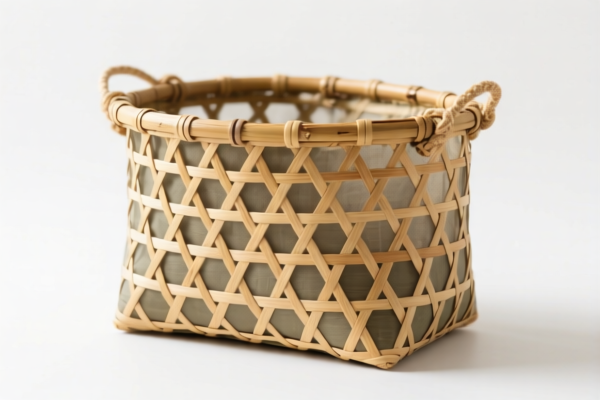
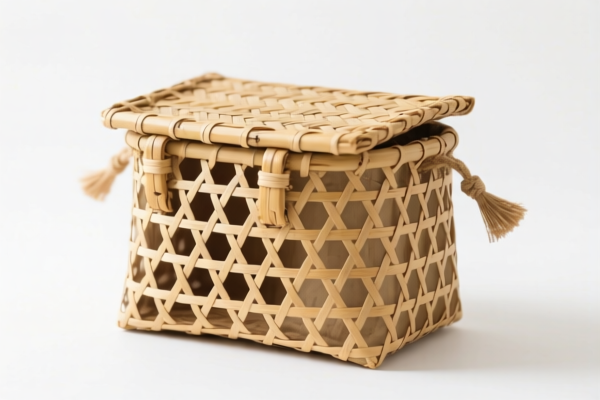
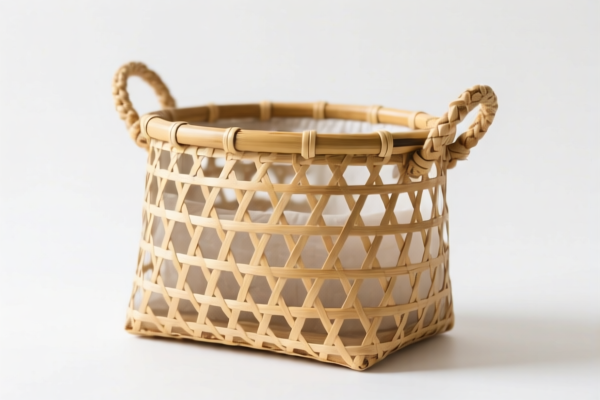
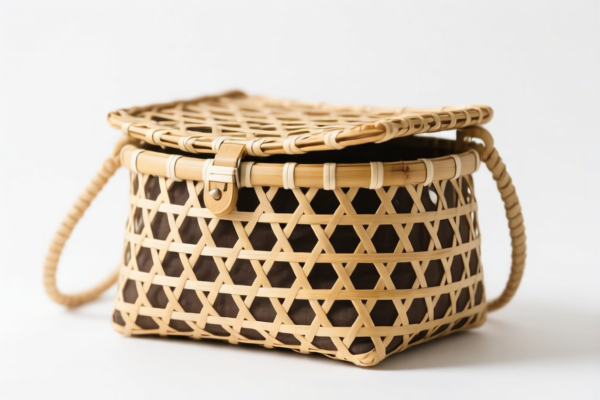
AI Analysis
🎋 Bamboo Woven Storage Bags (Bamboo Woven Baskets & Bags)
🌐 HS Code Reference & Clearance Guide | 2026 Latest Tariff Analysis | Professional Strategy for US Imports
📌 I. Product Definition & Classification: What Exactly Are "Bamboo Woven Storage Bags"?
In international trade, "Bamboo Woven Storage Bags" are versatile goods made from processed bamboo strips, fibers, or reeds, woven into mesh or solid structures for storage purposes. They are distinct from finished furniture or general wooden articles due to their specific manufacturing method (weaving) and intended use (storage/handling).
The classification depends heavily on the structure and finished form: 1. Woven Baskets/Bags: Items specifically woven into shapes like baskets, sacks, or bags for holding goods. 2. Other Bamboo Articles: Items that may use bamboo but are not strictly "woven" in the traditional sense, or are composite items classified under broader categories.
⚠️ Key Distinction Point:
- If the item is primarily woven (interlaced strips) and fits the definition of a "basket, bag, or container" →归入 4602.11.07.00.
- If the item is a solid bamboo structure (e.g., a slatted box, not woven) or a composite furniture piece →归入 4421 or 9403 series.
📦 II. HS Code Classification Details (2026 Latest Tariff Authority)
Based on the provided dataset, here are the exact HS Codes and tax breakdowns. Note that while "Bamboo Woven Storage Bags" most directly aligns with HS 4602, the dataset includes related bamboo products with different tax implications.
| HS Code | Product Description | Key Characteristics | Tax Rate |
|---|---|---|---|
4602.11.07.00 |
Woven baskets and other articles of vegetable plaiting materials, of bamboo | ✅ Primary Match for "Bamboo Woven Storage Bags". Includes woven baskets, sacks, and bags. | 35.0% |
4421.91.98.80 |
Other articles of bamboo | ⚠️ Non-woven bamboo articles (e.g., solid bamboo trays, simple boxes not classified as baskets). | 38.3% |
4421.99.98.80 |
Other articles of wood | ⚠️ Used if the item contains significant non-bamboo wood components or is classified as a generic wood product. | 38.3% |
9403.82.00.15 |
Other household furniture of bamboo | ❌ Only if the "bag" is actually a rigid storage cabinet or piece of furniture. | 35.0% |
9403.82.00.30 |
Other furniture of bamboo | ❌ General bamboo furniture. Not applicable to flexible or semi-rigid woven bags. | 35.0% |
🔍 Critical Analysis for "Bamboo Woven Storage Bags":
- The most accurate code for woven bags/baskets is4602.11.07.00.
- Why not 4421? HS 44 covers "Charcoal, Wood... and Articles of Wood." Bamboo is often treated as wood in general chapters, but Chapter 46 is specifically for "Vegetable Plaiting Materials; Basketwork, Wickerwork and Other Articles." If the item is woven, Chapter 46 prevails.
- Risk: If the "bag" has a rigid wooden frame or is purely a solid bamboo box, customs may reclassify it to 4421.91.98.80 (38.3%), which is higher than the 35% rate for woven items.
💰 III. 2026 Latest Tariff Rate Breakdown (Including Surcharge & Policy Add-ons)
✅ Applicable Country: United States (US)
✅ Country of Origin: China (CN)
✅ Effective Date: 2025/2026 (Current Trade Environment)
🎯 1. 4602.11.07.00 —— Woven Bamboo Baskets & Bags (Best Match)
| Item | Detail |
|---|---|
| Base Tariff | 0.0% (General Ad Valorem) |
| Section 301 Surcharge | +25.0% |
| Section 122 Tariff | +10.0% |
| Total Tax Rate | 35.0% |
| Tax Calculation | CIF Value × 35% |
| De Minimis Exemption | ❌ Not Eligible (Subject to 301/122 tariffs regardless of value) |
| Legal Basis Path | USITC:4602.11.07.00 → Section 301: 25% → Section 122: 10% |
📌 Explanation:
- Base 0%: Bamboo woven goods often have low base duties due to trade agreements or commodity status.
- +25% (Section 301): The primary trade war tariff on Chinese goods.
- +10% (Section 122): Additional tariffs under specific national security or trade balance provisions (as per provided data).
- Total 35%: This is a high-cost import. Profit margins must account for this significant duty burden.
⚠️ 2. 4421.91.98.80 & 4421.99.98.80 —— Other Bamboo/Wood Articles (Alternative/Risk)
| Item | Detail |
|---|---|
| Base Tariff | 3.3% |
| Section 301 Surcharge | +25.0% |
| Section 122 Tariff | +10.0% |
| Total Tax Rate | 38.3% |
| Difference | +3.3% higher than woven bags (4602) |
| Legal Basis Path | USITC:4421.x1.98.80 → Section 301 → Section 122 |
📌 Warning:
- If customs determines your "woven bag" is actually a "wooden box" or "bamboo article" not meeting Chapter 46 weaving standards, you will pay 38.3%.
- Savings Opportunity: Ensure your product description explicitly states "Woven" and "Vegetable Plaiting" to justify 4602.11.07.00.
🛠️ IV. Clearance Practical Advice (Battle-Tested Pitfall Guide)
✅ 1. Required Documentation Checklist (Non-Negotiable)
| Document | Must Provide? | Purpose |
|---|---|---|
| ✅ Product Specifications | ✔️ | Detail material: "100% Natural Bamboo Strips", weaving technique. |
| ✅ Product Photos | ✔️ | Clear shots showing the weave pattern. Essential to distinguish from solid wood/bamboo. |
| ✅ Commercial Invoice | ✔️ | Description must match HS Code: "Bamboo Woven Storage Basket/Bag". Avoid generic "Home Decor". |
| ✅ Packing List | ✔️ | Weight and dimensions for customs valuation. |
| ✅ Origin Certificate | ✔️ | Proof of Chinese origin (triggers tariffs). |
| ✅ Fiber Content Statement | ✔️ | Confirm no synthetic plastics dominate (which could shift HS to Chapter 39 or 63). |
✅ 2. Declaration Tips (Key Mantras)
🔥 “Woven is Key, Chapter 46 Prevails, Don’t Call It Wood!”
| Scenario | Correct Declaration | Incorrect Declaration |
|---|---|---|
| Woven Bag/Basket | 4602.11.07.00 |
"Bamboo Container" (Vague) |
| Solid Bamboo Box | 4421.91.98.80 |
"Woven Basket" (Fraud/Misclassification) |
| Bamboo Furniture | 9403.82.00.15 |
"Storage Bag" (Wrong Category) |
| Mixed Material | Depends on Main Material | "Home Accessories" (Too Broad) |
📌 Crucial Note:
- If the bag has metal handles or plastic linings, declare as "Bamboo woven with accessories." The main material (bamboo) still drives the Chapter 46 classification if it gives the item its essential character.
✅ 3. Special Handling for "Storage Bags"
| Situation | Advice |
|---|---|
| Collapsible/Flat-Packed | Still classified as 4602 if the finished form is a basket/bag. Declare as "Collapsible Bamboo Storage Basket." |
| Lined with Fabric | If the fabric is decorative, still 4602. If the fabric makes it a "textile bag," it could move to Chapter 63 (different tax rate). Ensure bamboo is the primary material. |
| Customized/Branded | Provide logo placement details. Branding doesn’t change HS Code, but helps in valuation if the price is unusual. |
🌍 V. Global Market Comparison (2026 Context)
| Country/Region | Recommended HS Code | Tariff (CN Origin) | Notes |
|---|---|---|---|
| 🇺🇸 USA | 4602.11.07.00 |
35.0% | High tariffs due to Section 301 & 122. |
| 🇨🇳 China | 4602.11.07.00 |
Low/0% | Domestic trade has no tariffs. |
| 🇪🇺 EU | 4602.11.00 |
Varies | Usually lower than US; check specific EU NCTS codes. |
| 🇬🇧 UK | 4602.11.00 |
Varies | Post-Brexit rules apply; generally favorable for natural materials. |
| 🇨🇦 Canada | 4602.11.00 |
Low | CUSMA agreement may offer benefits. |
📌 Conclusion:
- The USA is the most challenging market due to the 35-38.3% tariff block.
- Strategy: Consider price absorption, supplier negotiation, or sourcing from non-China origins if possible to mitigate duty costs.
📌 VI. Common Errors & Pitfall Guide (Lessons Learned)
❌ Error 1: Classifying Woven Bamboo Bags as "Plastic Baskets" (HS 3923)
👉 Consequence: Wrong HS Code, potential fraud flags, fines, and detention.
✅ Fix: Clearly state "Natural Bamboo" in the description.
❌ Error 2: Calling Woven Items "Wood Articles" (HS 4421)
👉 Consequence: Paying 38.3% instead of 35.0%. No real savings, just unnecessary complexity.
✅ Fix: Use Chapter 46 for woven vegetable plaiting materials.
❌ Error 3: Ignoring Section 122 Tariffs
👉 Consequence: Underestimating landed cost by 10%.
✅ Fix: Always include the +10% in your cost model.
❌ Error 4: Vague Description "Home Decor"
👉 Consequence: Customs scrutiny, delays, and potential reclassification to a higher duty item.
✅ Fix: Use precise language: "Hand-woven Bamboo Storage Basket for Kitchen Use."
🎯 VII. Conclusion: Professional Declaration, Cost Control!
🎯 Remember the Mantras:
🔹 "Woven = Chapter 46 = 35% Total."
🔹 "Solid = Chapter 44 = 38.3% Total."
🔹 "Don't Let Customs Reclassify You!"
📌 Pro Tip:
- If you are importing large volumes, consider applying for an HTS Code Exclusion (if applicable) or negotiating DDP (Delivered Duty Paid) pricing with suppliers who specialize in duty mitigation.
- Always request a Pre-Ruling from US Customs if the product is ambiguous (e.g., bamboo + plastic mix).
📣 Action Item:
📞 Contact your broker with:
1. Clear photos of the weave.
2. Material composition (100% Bamboo?).
3. Intended use (Storage).
🚀 Secure the 35% rate, not 38.3%, and clear your goods faster!
✨ Precision in Classification = Savings in Cost!
💼 Every percentage point counts in cross-border trade.
Customer Reviews
About HS Code Classification
The Harmonized System (HS) is an internationally standardized nomenclature developed by the World Customs Organization (WCO) to classify traded products. Over 200 countries use the HS system as the basis for customs tariffs, trade statistics, and import/export regulations.
Each HS code follows a hierarchical structure:
- Chapter (2 digits) — Broad category of goods (e.g., Chapter 84: Machinery and Mechanical Appliances)
- Heading (4 digits) — More specific grouping within the chapter
- Subheading (6 digits) — Internationally standardized breakdown, used by all WCO member countries
- National subdivisions (8-10 digits) — Country-specific extensions for further classification, such as US HTSUS 10-digit codes
Correct HS code classification is essential for smooth customs clearance, accurate duty payment, and compliance with trade regulations. Misclassification can lead to customs delays, overpayment of duties, or penalties.
When importing from CN to US, the applicable tariff rates may include:
- Most-Favored-Nation (MFN) rate — The standard duty rate applied to WTO members
- General rate — Applied to countries without trade agreements
- Trade remedy duties — Additional tariffs such as Section 301 (anti-dumping), Section 232 (national security), or countervailing duties
The information provided on this page is for reference purposes only. For official classification, please consult with your local customs authority or a licensed customs broker.