Bamboo woven trays
CN → US| HS Code | Tariff Rate | Origin | Destination | Doc |
|---|---|---|---|---|
| 4419110000 | 13.2% | CN | US | Official Doc |
| 4419199000 | 13.2% | CN | US | Official Doc |
| 9403820030 | 35.0% | CN | US | Official Doc |
| 9403820015 | 35.0% | CN | US | Official Doc |
Product Images
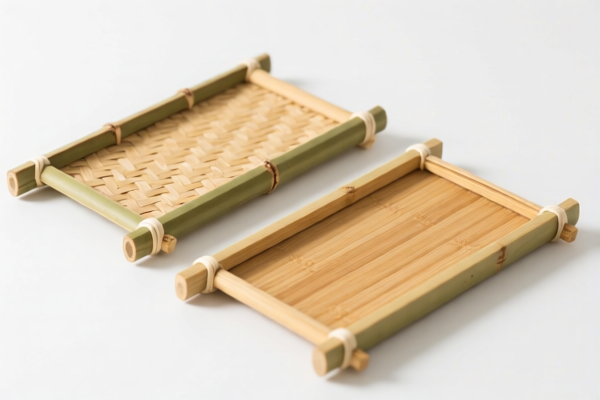
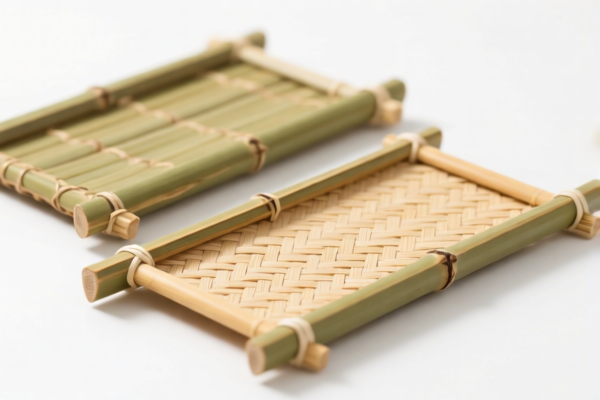
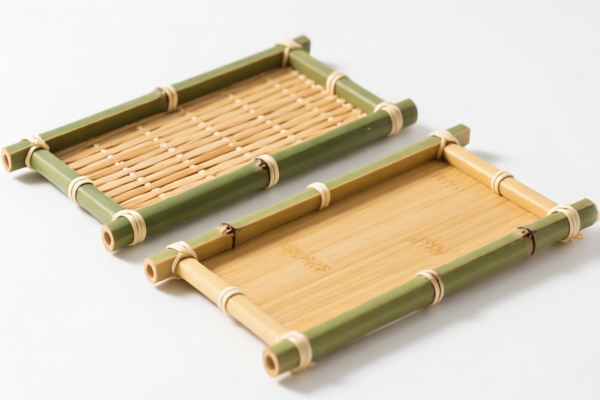
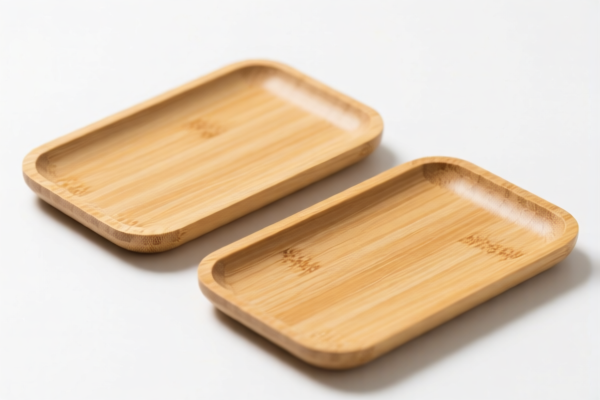
AI Analysis
🎋 Bamboo Woven Trays: HS Code Classification & 2026 US Customs Clearance Guide
🌐 HS Code Reference & Customs Strategy | 2026 Tariff Breakdown | Professional Compliance Guide
📌 I. Product Definition & Classification: What Exactly is a "Bamboo Woven Tray"?
Bamboo woven trays are versatile household items used for serving food, holding accessories, or as decorative organizers. In international trade, their classification depends heavily on their primary function and design context:
Kitchen/Dining Use: If designed specifically for food handling, serving, or kitchen tasks (e.g., cheese boards, sushi mats, serving platters), they fall under Chapter 44 (Articles of Wood/Bamboo).
Household Furniture/Storage: If designed as part of home furniture (e.g., side table trays, drawer organizers) or general household storage not primarily for food service, they may fall under Chapter 94 (Furniture).
⚠️ Key Distinction:
- If the tray is explicitly for food service/kitchen use → HS Code 4419
- If the tray is general household/furniture component → HS Code 9403
📦 II. HS Code Classification Details (2026 Latest Tariff Authority)
| HS Code | Product Description | Application Scenario | Primary Function |
|---|---|---|---|
4419.11.00.00 |
Tableware & kitchenware of bamboo, including serving trays | Food service, dining, kitchen use | ✅ Kitchen/Tableware |
4419.19.90.00 |
Other tableware & kitchenware of bamboo | General bamboo kitchen accessories, non-specific trays | ✅ Kitchen/Tableware |
9403.82.00.30 |
Other furniture of bamboo; trays as other components | Furniture accessories, home decor storage | ❌ Furniture/Storage |
9403.82.00.15 |
Household furniture & vessels of bamboo; trays as household items | Home organization, non-food decorative trays | ❌ Furniture/Storage |
🔍 Critical Reminder:
- Food-related bamboo trays MUST be classified under 4419 to avoid misdeclaration;
- Non-food, decorative/storage trays used with furniture should be classified under 9403;
- Misclassification leads to significant tariff differences and potential customs delays.
💰 III. 2026 US Tariff Rate Breakdown (Including Additional Duties & Policy Surcharges)
✅ Applicable Country: United States (US)
✅ Country of Origin: China (CN)
✅ Effective Date: 2025–2026 (including subsequent imports)
🎯 1. 4419.11.00.00 — Bamboo Tableware & Kitchenware (Serving Trays)
| Item | Content |
|---|---|
| Base Tariff | 3.2% |
| Additional Duty (Section 301) | 0.0% |
| Section 122 Duty | +10% |
| Total Tariff Rate | 13.2% |
| Calculation Basis | CIF Value × 13.2% |
| De Minimis Exemption | ❌ Not Eligible (due to Section 122) |
| Legal Reference Path | HTSUS:4419.11.00 → USITC:Footnote 122 |
📌 Explanation:
- Section 122 Duty (10%) applies specifically to bamboo products classified under 4419 when imported from China;
- Base Tariff (3.2%) is the standard Most Favored Nation (MFN) rate;
- Total 13.2% is relatively moderate compared to other bamboo/furniture categories.
🎯 2. 4419.19.90.00 — Other Bamboo Tableware & Kitchenware
| Item | Content |
|---|---|
| Base Tariff | 3.2% |
| Additional Duty (Section 301) | 0.0% |
| Section 122 Duty | +10% |
| Total Tariff Rate | 13.2% |
| Calculation Basis | CIF Value × 13.2% |
| De Minimis Exemption | ❌ Not Eligible |
| Legal Reference Path | HTSUS:4419.19.90 → USITC:Footnote 122 |
📌 Note:
- Same tariff structure as4419.11.00.00;
- Applies to bamboo kitchen items not specifically classified as "tableware" but still for kitchen/food use.
🎯 3. 9403.82.00.30 — Other Bamboo Furniture (Trays as Components)
| Item | Content |
|---|---|
| Base Tariff | 0.0% |
| Additional Duty (Section 301) | +25.0% |
| Section 122 Duty | +10% |
| Total Tariff Rate | 35.0% |
| Calculation Basis | CIF Value × 35.0% |
| De Minimis Exemption | ❌ Not Eligible |
| Legal Reference Path | HTSUS:9403.82.00 → USITC:Footnote 301 & Footnote 122 |
📌 Explanation:
- Section 301 Duty (25%) applies to all Chinese-origin furniture under 9403;
- Section 122 Duty (10%) also applies to bamboo furniture items;
- Total 35% is significantly higher than kitchenware classifications.
🎯 4. 9403.82.00.15 — Household Bamboo Furniture & Vessels
| Item | Content |
|---|---|
| Base Tariff | 0.0% |
| Additional Duty (Section 301) | +25.0% |
| Section 122 Duty | +10% |
| Total Tariff Rate | 35.0% |
| Calculation Basis | CIF Value × 35.0% |
| De Minimis Exemption | ❌ Not Eligible |
| Legal Reference Path | HTSUS:9403.82.00 → USITC:Footnote 301 & Footnote 122 |
📌 Note:
- Same 35% total tariff as9403.82.00.30;
- Applies to household bamboo items, including decorative trays not intended for food service.
🛠️ IV. Customs Clearance Practical Advice (Avoiding Pitfalls)
✅ 1. Required Documentation Checklist
| Document | Mandatory | Notes |
|---|---|---|
| ✅ Product Specifications | ✔️ | Include dimensions, weave pattern, intended use (food vs. non-food) |
| ✅ Product Photos | ✔️ | Clear images showing use case (e.g., on dining table vs. shelf) |
| ✅ Commercial Invoice | ✔️ | Specify "Bamboo Serving Tray" or "Bamboo Storage Tray" accurately |
| ✅ Packing List | ✔️ | Detail quantity, weight, and packaging |
| ✅ Country of Origin Certificate | ✔️ | Confirm Chinese origin for tariff application |
| ✅ Usage Declaration | ✔️ | Explicitly state if for food service or household storage |
✅ 2. Declaration Tips (Critical Strategy)
🔥 "Food Service = 4419, Non-Food = 9403, Get It Right or Pay Extra!"
| Scenario | Correct HS Code | Incorrect Declaration | Risk |
|---|---|---|---|
| Serving cheese/wine | 4419.11.00.00 (13.2%) |
9403.82.00.30 (35%) |
Overpay 21.8% |
| Desk organizer tray | 9403.82.00.15 (35%) |
4419.11.00.00 (13.2%) |
Underdeclare → Penalty & Back Duties |
| Mixed shipment | Separate declarations | Combined declaration | Customs rejection & delay |
✅ 3. Special Cases Handling
| Scenario | Handling Advice |
|---|---|
| Dual-purpose tray (can be used for food OR decor) | Declare based on primary intended use as per marketing/sales materials |
| Set with other items (e.g., tray + chopsticks) | Declare separately to optimize tariff; chopsticks may have different classification |
| OEM/Custom designs | Provide customer approval documents to prove intended use |
| Small sample shipments | Still subject to 13.2% or 35% depending on classification; de minimis does NOT apply |
🌍 V. Global Market Comparison (2026 Latest)
| Country/Region | Recommended HS Code | Tariff | Certification | Notes |
|---|---|---|---|---|
| 🇺🇸 USA | 4419.11.00.00 or 9403.82.00.30 |
13.2% or 35% | No specific | Section 122 applies to bamboo |
| 🇨🇳 China | 4419.11.00.00 or 9403.82.00.30 |
5–10% | FSC (optional) | No additional duties |
| 🇪🇺 EU | 4419.11.00.00 or 9403.82.00.30 |
0–4.5% | FSC/PEFC | No Section 122 equivalent |
| 🇬🇧 UK | 4419.11.00.00 or 9403.82.00.30 |
0–5% | FSC | Post-Brexit rules apply |
| 🇦🇺 Australia | 4419.11.00.00 or 9403.82.00.30 |
5% | No special | No additional duties |
📌 Conclusion:
- USA imposes the highest effective tariffs due to Section 122 and Section 301;
- China and EU have lower barriers, but quality/forestry certifications may apply;
- Strategic classification can save 21.8% in US duties.
📌 VI. Common Mistakes & Pitfalls (Lessons Learned)
❌ Mistake 1: Declaring food-serving trays as "furniture" to avoid Section 122
👉 Result: Customs audit → Back taxes + penalties + shipment hold
❌ Mistake 2: Combining kitchen and household trays in one HS code
👉 Result: Misclassification → 13.2% vs. 35% discrepancy → Financial loss
❌ Mistake 3: Ignoring Section 122 for bamboo products
👉 Result: Underpayment of 10% → Interest charges + enforcement actions
❌ Mistake 4: Using vague descriptions like "Bamboo Item"
👉 Result: Customs ambiguity → Delays, examinations, potential rejection
✅ Correct Practice:
"Bamboo Woven Serving Tray, 12x8 inch, for Food Service, Model BT-01, FSC Certified"
OR
"Bamboo Woven Storage Tray, Household Use, Model ST-02, Non-Food Application"
🎯 VII. Conclusion: Accurate Classification Saves Money!
🎯 Key Takeaways:
🔹 "Food Use = 13.2%, Home Use = 35%, Choose Wisely!"
🔹 "Section 122 Applies to All Bamboo, Don’t Ignore It!"
🔹 "Clear Documentation Prevents Delays & Penalties!"
📌 Pro Tip:
If your bamboo trays are originally from Vietnam, Indonesia, or Malaysia, they may avoid Section 122 and Section 301, resulting in lower or zero tariffs.
Consider supply chain diversification or substantial transformation strategies to optimize costs.
📣 Immediate Action Steps:
📞 Consult a licensed customs broker + Provide product images + Request HS Code Advance Ruling
🚀 Ensure compliant declaration, avoid penalties, and maximize profit margins!
✨ Professional Customs Clearance Starts with Accurate Classification!
💼 Every Percent Matters in Global Trade!
Customer Reviews
About HS Code Classification
The Harmonized System (HS) is an internationally standardized nomenclature developed by the World Customs Organization (WCO) to classify traded products. Over 200 countries use the HS system as the basis for customs tariffs, trade statistics, and import/export regulations.
Each HS code follows a hierarchical structure:
- Chapter (2 digits) — Broad category of goods (e.g., Chapter 84: Machinery and Mechanical Appliances)
- Heading (4 digits) — More specific grouping within the chapter
- Subheading (6 digits) — Internationally standardized breakdown, used by all WCO member countries
- National subdivisions (8-10 digits) — Country-specific extensions for further classification, such as US HTSUS 10-digit codes
Correct HS code classification is essential for smooth customs clearance, accurate duty payment, and compliance with trade regulations. Misclassification can lead to customs delays, overpayment of duties, or penalties.
When importing from CN to US, the applicable tariff rates may include:
- Most-Favored-Nation (MFN) rate — The standard duty rate applied to WTO members
- General rate — Applied to countries without trade agreements
- Trade remedy duties — Additional tariffs such as Section 301 (anti-dumping), Section 232 (national security), or countervailing duties
The information provided on this page is for reference purposes only. For official classification, please consult with your local customs authority or a licensed customs broker.