Bank Card Holder
CN → US| HS Code | Tariff Rate | Origin | Destination | Doc |
|---|---|---|---|---|
| 3926909989 | 22.8% | CN | US | Official Doc |
| 4202399000 | 55.0% | CN | US | Official Doc |
| 4823908680 | 35.0% | CN | US | Official Doc |
| 3926908700 | 40.3% | CN | US | Official Doc |
| 4820300040 | 35.0% | CN | US | Official Doc |
| 3926904800 | 13.4% | CN | US | Official Doc |
Product Images


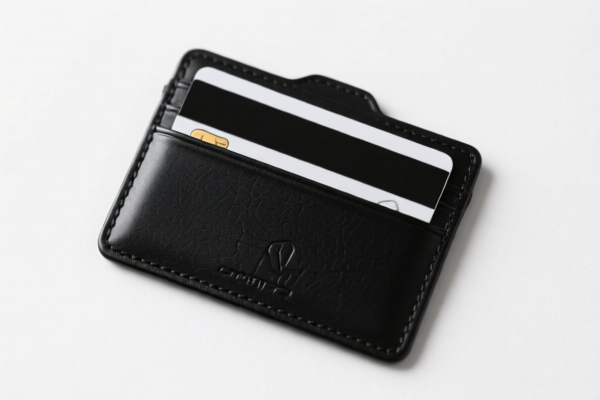
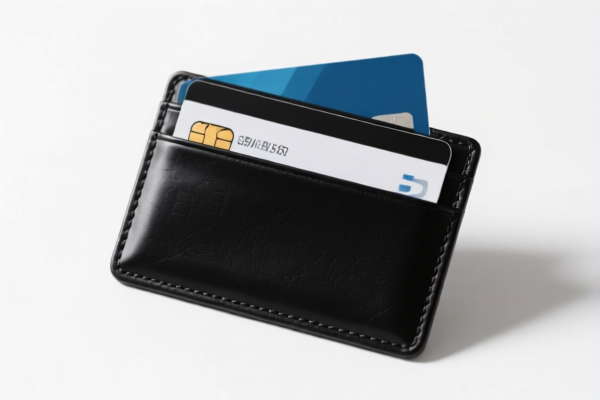
AI Analysis
💳 Bank Card Holder: HS Code Classification & US Customs Clearance Guide (2026 Edition)
🌐 HS Code Reference & Customs Strategy | 2026 Latest Tariff Analysis | Professional Compliance Guide
📌 I. Product Definition & Classification: What Exactly Is a "Bank Card Holder"?
A Bank Card Holder (commonly referred to as a Card Wallet, Card Case, or ID Holder) is a small accessory designed to hold credit cards, debit cards, ID cards, and business cards. In international trade, classification depends heavily on material composition and functional design.
There are two primary categories: 1. Artificial Plastic/Material Holders: Made primarily of plastic, PVC, silicone, or synthetic leather. These fall under Chapter 39 (Plastics) or Chapter 42 (Leather/Articles). 2. Paper/Cardboard Holders: Simple sleeves or holders made of paperboard. These fall under Chapter 48 (Paper/Paperboard).
⚠️ Critical Distinction:
- If the item is a rigid or semi-rigid container made of plastic intended for general storage of documents/cards → Likely 3926 or 4202.
- If the item is specifically a small wallet designed to carry money/cards (even if mostly cards) → Likely 4202.
- If it is a simple paper sleeve → 4823.
- If it is a simple plastic sleeve for receipts/bills (not a structured wallet) → 3926 (specific subheading).
📦 II. HS Code Classification Details (2026 Latest Tariff Authority)
| HS Code | Product Description | Material | Function/Scenario | Estimated Total Tax (US Import from CN) |
|---|---|---|---|---|
| 3926.90.99.89 | Card Holder, Plastic/Synthetic | Plastic or other synthetic materials | General-purpose plastic card case | 22.8% |
| 4202.39.90.00 | Card Holder, "Carrying Case" | Plastic, Leather, or Textile | Considered a "small container of plastics or textiles" or leather good | 55.0% |
| 3926.90.87.00 | Card Holder, Plastic (Document Storage) | Plastic | Classified as plastic articles for binding/storing documents | 40.3% |
| 4823.90.86.80 | Card Holder, Paper/Cardboard | Paper or Cardboard | Other paper articles | 35.0% |
| 3926.90.48.00 | Receipt/Bill Holder (Plastic) | Plastic or related materials | 收纳类办公/文具制品 (Office/Stationery storage) | 13.4% |
🔍 Key Insight:
- The highest tax burden (55.0%) applies if the item is classified as a carrying case under Chapter 42 (often interpreted broadly as "wallets").
- The lowest tax burden (13.4%) applies if classified as a simple office stationery item (receipt holder) under 3926.90.48.00.
- 3926.90.99.89 is a common "general" plastic category but carries a moderate 22.8% tax.
💰 III. 2026 Tariff Rate Breakdown (Detailed & Authoritative)
✅ Applicable Country: United States (US)
✅ Origin: China (CN)
✅ Effective Date: Current Section 301 & IEEPA tariffs apply.
🎯 1. 3926.90.99.89 — Plastic Card Holder (General)
| Item | Details |
|---|---|
| Base Duty | 5.3% (General Rate) |
| Section 301 Duty | 7.5% (Additional tariff on Chapter 39 goods) |
| IEEPA 122 Clause | 10% (Additional tariff on specific Chinese goods) |
| Total Effective Tax | 22.8% |
| De Minimis Exemption | ❌ Not Eligible (Section 301 goods usually excluded from $800 de minimis if high risk, but specifically, Section 301 tariffs often apply even to small parcels if not exempted; however, note that some small plastic items may face scrutiny). |
| Legal Basis | USITC:3926.90.99.89 → FOOTNOTE:9903.88.01 |
📌 Explanation:
- This code is used for plastic articles not elsewhere specified.
- The 7.5% Section 301 tariff is significant.
- The 10% IEEPA adds further cost.
- Total: 22.8% is moderate compared to other codes.
🎯 2. 4202.39.90.00 — Card Holder (Carrying Case/Wallet)
| Item | Details |
|---|---|
| Base Duty | 20.0% (General Rate for Chapter 42) |
| Section 301 Duty | 25.0% (High additional tariff on Chapter 42) |
| IEEPA 122 Clause | 10% |
| Total Effective Tax | 55.0% |
| De Minimis Exemption | ❌ Not Eligible (Chapter 42 goods are high-risk for Section 301). |
| Legal Basis | USITC:4202.39.90.00 → FOOTNOTE:9903.88.01 |
📌 Warning:
- This is the highest tax bracket in the dataset.
- U.S. Customs may classify any "wallet-like" card holder as a 4202 product, leading to a 55% duty.
- Avoid this code if possible unless the product is clearly a luxury leather item or structured wallet.
🎯 3. 3926.90.87.00 — Plastic Document Storage
| Item | Details |
|---|---|
| Base Duty | 5.3% |
| Section 301 Duty | 25.0% |
| IEEPA 122 Clause | 10% |
| Total Effective Tax | 40.3% |
| De Minimis Exemption | ❌ Not Eligible |
| Legal Basis | USITC:3926.90.87.00 |
📌 Explanation:
- This code is for plastics used for binding or storing documents.
- The 25% Section 301 rate is very high.
- Use only if the item is clearly a document storage device, not a personal accessory.
🎯 4. 4823.90.86.80 — Paper Card Holder
| Item | Details |
|---|---|
| Base Duty | 0.0% |
| Section 301 Duty | 25.0% |
| IEEPA 122 Clause | 10% |
| Total Effective Tax | 35.0% |
| De Minimis Exemption | ❌ Not Eligible |
| Legal Basis | USITC:4823.90.86.80 |
📌 Note:
- Even though base duty is 0%, the 25% Section 301 makes it expensive.
- Suitable for simple paper/cardboard card sleeves.
🎯 5. 3926.90.48.00 — Receipt/Bill Holder (Office/Stationery)
| Item | Details |
|---|---|
| Base Duty | 3.4% |
| Section 301 Duty | 0.0% |
| IEEPA 122 Clause | 10% |
| Total Effective Tax | 13.4% |
| De Minimis Exemption | ❌ Not Eligible (but lowest tax rate) |
| Legal Basis | USITC:3926.90.48.00 |
📌 Strategy:
- This is the most tax-efficient code in the dataset (13.4%).
- It applies to plastic office/stationery items like receipt holders or simple bill organizers.
- Key: Market the product as an "Office Supply" or "Receipt Holder" rather than a "Wallet" to potentially argue for this classification.
🛠️ IV. Customs Clearance Practical Advice (Avoiding Pitfalls)
✅ 1. Documentation Checklist (Essential)
| Document | Required? | Purpose |
|---|---|---|
| ✅ Commercial Invoice | ✔️ | Must clearly state material (e.g., "PVC Card Holder") and use. |
| ✅ Product Photos | ✔️ | Show structure: Is it a rigid case? A sleeve? A wallet? |
| ✅ Material Declaration | ✔️ | Specify % of plastic, leather, paper. Critical for Chapter 39 vs. 42. |
| ✅ Function Description | ✔️ | Use terms like "Office Supply," "Document Storage," "Receipt Organizer" to avoid "Wallet" classification. |
| ✅ HS Code Justification | ✔️ | Provide reasoning for chosen HS code (e.g., "Plastic stationery item, not a wallet"). |
✅ 2. Declaration Strategy (Key Tips)
🔥 Golden Rule: "Describe Function, Not Just Form. Avoid 'Wallet'."
| Scenario | Recommended Declaration | Risk |
|---|---|---|
| Plastic Card Sleeve | "Plastic Receipt Holder, Office Supply" | Low risk. Aim for 3926.90.48.00 (13.4%). |
| Structured Card Case | "Plastic Document Storage Case" | Medium risk. Might be pushed to 3926.90.99.89 (22.8%). |
| Leather/Synthetic Leather Case | "Synthetic Leather Card Holder" | High risk. Likely 4202.39.90.00 (55.0%). |
| Paper Card Sleeve | "Paperboard Card Sleeve" | Medium risk. 4823.90.86.80 (35.0%). |
✅ 3. Special Circumstances
| Situation | Handling Advice |
|---|---|
| OEM Custom Product | Provide design specs showing it is not a "wallet" (no coin pouch, no foldable bill compartment). |
| Mixed Material | If >50% plastic, argue for Chapter 39. If >50% leather/textile, argue for Chapter 42 (but beware 55% tax). |
| Gift Set | If sold with a pen or notebook, ensure the card holder is not the primary value item. |
| E-commerce (De Minimis) | Note: Section 301 tariffs often apply to de minimis shipments from China. Do not assume $800 exemption eliminates duties for these items. |
🌍 V. Global Market Comparison (2026)
| Market | Recommended HS Code | Estimated Total Tax | Key Certification |
|---|---|---|---|
| 🇺🇸 USA | 3926.90.48.00 |
13.4% (Lowest) | None specific for plastic stationery |
| 🇺🇸 USA | 4202.39.90.00 |
55.0% (Highest) | None |
| 🇪🇺 EU | 4202.32.90 |
~5-10% (Varies) | CE (if electronic components) |
| 🇨🇳 China | 3926.90.90 |
5-10% | N/A |
| 🇬🇧 UK | 3926.90.90 |
~0-5% (Post-Brexit) | UKCA |
📌 Conclusion:
- The USA has the most complex tariff structure for card holders due to Section 301.
- Minimizing tax requires accurate classification as office stationery (3926.90.48.00) rather than a wallet (4202).
📌 VI. Common Errors & Pitfalls (Lessons Learned)
❌ Error 1: Calling it a "Wallet" in the invoice.
👉 Consequence: Customs may reclassify as 4202.39.90.00 → 55% Tax.
❌ Error 2: Ignoring Section 301 for plastic items.
👉 Consequence: Unexpected 7.5% to 25% additional duty.
❌ Error 3: Using vague descriptions like "Accessory."
👉 Consequence: Delays, inspections, and potential reclassification to the highest duty code.
❌ Error 4: Assuming De Minimis ($800) exemption applies.
👉 Consequence: Section 301 tariffs often do not apply to de minimis, but IEEPA 10% might still apply depending on current enforcement. Check latest CBP memos.
✅ Correct Approach:
"Plastic Office Supply: Receipt and Card Holder, Model ABC, PVC Material, 100% New."
🎯 VII. Conclusion: Smart Classification Saves Money!
🎯 Remember the Strategy:
🔹 "Not a Wallet, But an Office Supply!"
🔹 Aim for3926.90.48.00(13.4%) by emphasizing "Receipt/Bill Holder" function.
🔹 Avoid4202(55%) by ensuring the product is not described as a "Wallet" or "Purse."
🔹 Tax Difference: 41.6% savings by choosing the right HS Code!
📌 Pro Tip:
If you are importing small quantities, consider the cost of reclassification. A pre-clearance ruling or consulting a customs broker can save thousands on large shipments.
📣 Immediate Action:
📞 Review your product photos and descriptions.
🚀 Adjust your invoices to reflect "Office Stationery" rather than "Fashion Accessory."
💼 Let precision drive your profit!
✨ Professional Customs Compliance Starts with the Right HS Code!
💼 Every percentage point saved is pure profit!
Customer Reviews
About HS Code Classification
The Harmonized System (HS) is an internationally standardized nomenclature developed by the World Customs Organization (WCO) to classify traded products. Over 200 countries use the HS system as the basis for customs tariffs, trade statistics, and import/export regulations.
Each HS code follows a hierarchical structure:
- Chapter (2 digits) — Broad category of goods (e.g., Chapter 84: Machinery and Mechanical Appliances)
- Heading (4 digits) — More specific grouping within the chapter
- Subheading (6 digits) — Internationally standardized breakdown, used by all WCO member countries
- National subdivisions (8-10 digits) — Country-specific extensions for further classification, such as US HTSUS 10-digit codes
Correct HS code classification is essential for smooth customs clearance, accurate duty payment, and compliance with trade regulations. Misclassification can lead to customs delays, overpayment of duties, or penalties.
When importing from CN to US, the applicable tariff rates may include:
- Most-Favored-Nation (MFN) rate — The standard duty rate applied to WTO members
- General rate — Applied to countries without trade agreements
- Trade remedy duties — Additional tariffs such as Section 301 (anti-dumping), Section 232 (national security), or countervailing duties
The information provided on this page is for reference purposes only. For official classification, please consult with your local customs authority or a licensed customs broker.