Barbecue Tool
CN → US| HS Code | Tariff Rate | Origin | Destination | Doc |
|---|---|---|---|---|
| 8215992400 | 0.0% | CN | US | Official Doc |
| 8205517500 | 38.7% | CN | US | Official Doc |
| 7323930045 | 62.0% | CN | US | Official Doc |
| 8205513030 | 38.7% | CN | US | Official Doc |
| 8215992600 | 0.0% | CN | US | Official Doc |
Product Images
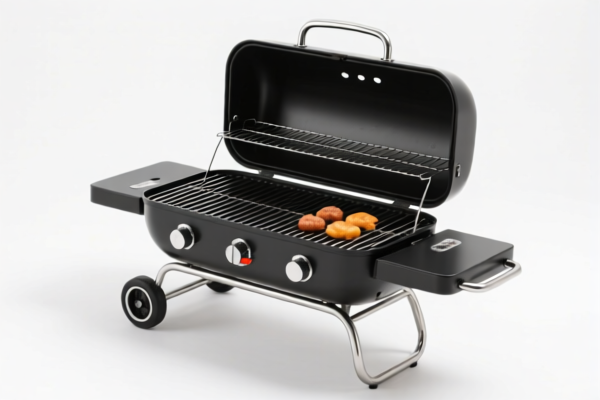
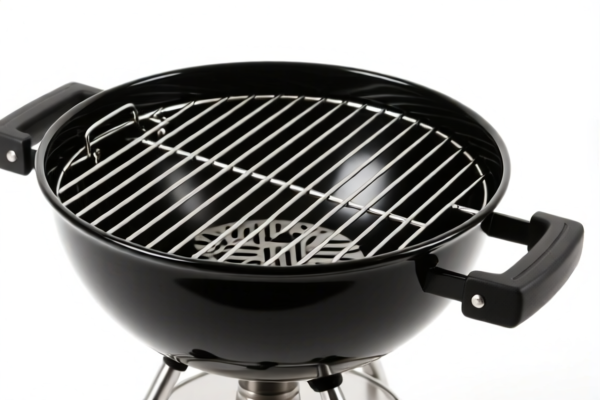
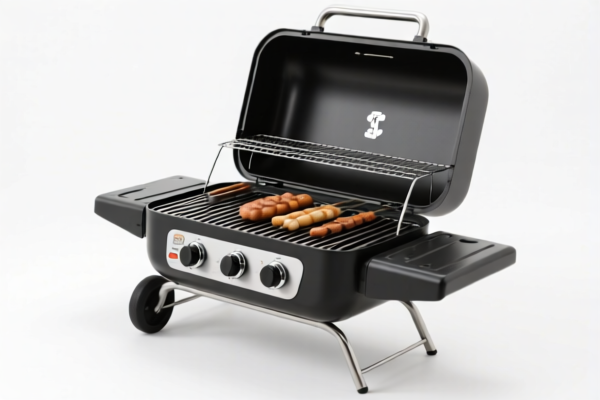
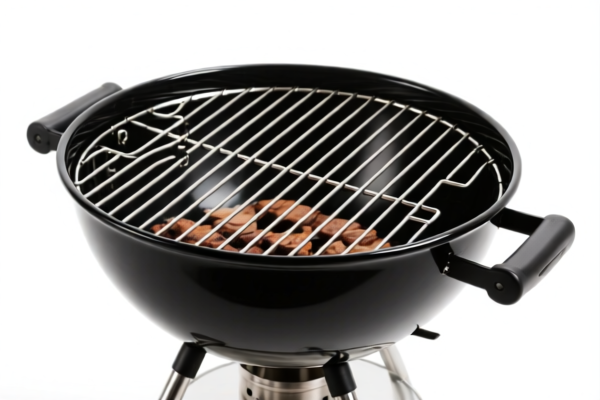
AI Analysis
🍖 Barbecue Tools (Stainless Steel Cooking & Tableware)
🌐 HS Code Reference & Customs Clearance Guide | 2026 Latest Tariff Analysis | Professional Strategy for US Imports
📌 Part 1: Product Definition & Classification: What Exactly Are "Barbecue Tools"?
Barbecue tools refer to handheld utensils made primarily of stainless steel, used for grilling, turning, serving, or handling food on a barbecue grill or at the dining table. In international trade, these items are often classified into three distinct categories based on their primary function, structure, and material usage:
1. Specific Barbecue Utensils (Grill Spatulas, Forks, Tongs):
Items specifically designed for flipping, piercing, or holding meat over an open flame. These often fall under specific tariff headings for "Cutlery" or "Household Tools."
2. General Household Hand Tools:
Broader category including kitchen tongs, salad servers, or general-purpose stainless steel tools not exclusively for grilling.
3. Cooking Vessels & Accessories:
Sometimes, items like grill grates or specific pans are grouped here if they are considered "pots/pans" rather than "handheld tools."
⚠️ Key Distinction Point:
- If the item is a fork/spatula/tongs for handling food → It is likely Hand Tool/Cutlery (HS 8215 or 8205).
- If the item is a cooking pot/pan or a rigid rack → It may fall under Cooking Utensils (HS 7323).
- Misclassification Risk: Declaring a grill spatula as "Cookware" (HS 7323) can lead to significantly different tax rates and potential customs penalties.
📦 Part 2: HS Code Classification Details (2026 Latest Tariff Reference)
Based on the provided data, here are the five specific HS Codes applicable to Barbecue Tools, with detailed breakdowns:
| HS Code | Product Description | Application Scenario | Tax Rate (Total) |
|---|---|---|---|
8215.99.24.00 |
Stainless Steel Barbecue Tools (Specifically classified as barbecue forks/tools) |
Barbecue forks, spatulas, tongs specifically for grilling | 0.3¢ each + 4.5% + 17.5% (Total Effective: ~17.5%+ per unit) |
8205.51.75.00 |
Stainless Steel Hand Tools (Other household tools category) |
General kitchen tongs, salad servers, non-specific grilling tools | 38.7% (Ad Valorem) |
7323.93.00.45 |
Stainless Steel Cooking Utensils (Residual/Fallback category) |
Grilling racks, heavy-duty griddles, or if deemed "pots/pans" | 62.0% (Ad Valorem) |
8205.51.30.30 |
Kitchen & Tableware, Iron/Steel (Hand tool form factor) |
Stainless steel cutlery sets, serving tools for table use | 38.7% (Ad Valorem) |
8215.99.26.00 |
Cutlery/Kitchen Tools (Other category, no material conflict) |
General kitchen tools, serving spoons, less specific grilling aids | 0.2¢ each + 3.1% + 17.5% (Total Effective: ~17.5%+ per unit) |
🔍 Key Insight:
- HS 8215 codes are often more favorable for specific barbecue tools due to lower ad valorem percentages (4.5% and 3.1%) despite the per-unit fee.
- HS 7323 carries the highest risk (62% total tax) because it includes a 50% additional tariff for steel/aluminum products, making it critical to avoid misclassifying simple tools as "cooking vessels."
- HS 8205 codes are a middle ground, often used for general kitchen hand tools, with a flat 38.7% rate.
💰 Part 3: 2026 Latest Tariff Rate Breakdown (Including Surtaxes)
✅ Applicable Country: United States (US)
✅ Origin: China (CN)
✅ Effective Date: Current tariffs include Section 301 and Section 232 measures.
🎯 1. 8215.99.24.00 — Stainless Steel Barbecue Tools (Specific)
| Item | Detail |
|---|---|
| Base Duty | 0.3¢ per unit + 4.5% |
| Section 301 Surtax | +7.5% |
| Section 232 (122 Clause) Surtax | +10% |
| Total Effective Rate | ~17.5% + 0.3¢/unit |
| Calculation | (CIF Value × (4.5% + 7.5% + 10%)) + (0.3¢ × Quantity) |
| Legal Basis | USITC Tariff Schedule + IEEPA Footnotes |
📌 Note: This is likely the most optimized code for dedicated BBQ forks/spatulas if they fit the specific subheading. The low ad valorem rate is significant.
🎯 2. 8205.51.75.00 & 8205.51.30.30 — Other Stainless Steel Hand Tools
| Item | Detail |
|---|---|
| Base Duty | 3.7% |
| Section 301 Surtax | +25.0% |
| Section 232 (122 Clause) Surtax | +10% |
| Total Effective Rate | 38.7% |
| Calculation | CIF Value × 38.7% |
| Legal Basis | USITC Tariff Schedule + IEEPA Footnotes |
📌 Note: These codes apply if the item is considered a general "hand tool" rather than specific cutlery or BBQ tools. The rate is flat and high.
🎯 3. 7323.93.00.45 — Stainless Steel Cooking Utensils (Fallback)
| Item | Detail |
|---|---|
| Base Duty | 2.0% |
| Section 301 Surtax | 0.0% |
| Section 232 (122 Clause) Surtax | +10% |
| Steel/Aluminum Additional Duty | +50% |
| Total Effective Rate | 62.0% |
| Calculation | CIF Value × 62.0% |
| Legal Basis | USITC Tariff Schedule + Section 232 |
⚠️ Critical Warning: This code includes a 50% additional tariff under Section 232 for steel products. This is extremely punitive. Only use this if the item is definitively a "cooking vessel" (like a grill pan or rack) and not a handheld tool. For most BBQ tools, this code should be avoided.
🎯 4. 8215.99.26.00 — Other Cutlery/Kitchen Tools
| Item | Detail |
|---|---|
| Base Duty | 0.2¢ per unit + 3.1% |
| Section 301 Surtax | +7.5% |
| Section 232 (122 Clause) Surtax | +10% |
| Total Effective Rate | ~17.5% + 0.2¢/unit |
| Calculation | (CIF Value × 20.6%) + (0.2¢ × Quantity) |
| Legal Basis | USITC Tariff Schedule + IEEPA Footnotes |
📌 Note: Similar to
8215.99.24.00, this code offers a low ad valorem rate, making it competitive for general kitchen tools that may not fit the specific "barbecue fork" description.
🛠️ Part 4: Customs Clearance Practical Advice (Avoid Pitfalls)
✅ 1. Essential Documentation Checklist
| Document | Required? | Notes |
|---|---|---|
| Product Specifications | ✅ Yes | Detail material (e.g., 304 Stainless Steel), dimensions, weight. |
| Function Description | ✅ Yes | Clearly state "Used for grilling meat," "Handheld utensil," not "Cooking appliance." |
| Photos | ✅ Yes | Show the tool in use, handle design, and any branding. |
| Commercial Invoice | ✅ Yes | Must match the HS Code description exactly. |
| Country of Origin | ✅ Yes | Critical for applying Section 301/232 surtaxes. |
| Bill of Lading | ✅ Yes | Standard shipping document. |
✅ 2. Classification Strategy & Tips
🔥 Golden Rule: "Specific Function Lowers Risk, General Function Increases Cost!"
| Scenario | Recommended HS Code | Why? |
|---|---|---|
| Dedicated BBQ Fork/Spatula | 8215.99.24.00 |
Specific classification often enjoys lower ad valorem rates (4.5% + 17.5% total). |
| General Kitchen Tongs | 8215.99.26.00 |
If not specifically for BBQ, this "other cutlery" code is still low-cost (3.1% + 17.5% total). |
| Mixed Kitchen/Grill Tools | 8205.51.x5.00 or 30.30 |
If the item is ambiguous, expect a flat 38.7% rate. |
| Grill Grates/Pans | 7323.93.00.45 |
Only if it is a rigid vessel/rack. Be aware of the 62% total tax. |
📌 Key Tip:
- Avoid describing items as "Cooking Tools" in a way that implies a vessel (pan/pot). Use "Handheld Utensil" or "Serving Tool."
- For8215codes, ensure the per-unit fee calculation is factored into your landed cost, especially for low-value items.
✅ 3. Special Circumstances
| Situation | Handling Advice |
|---|---|
| Sets of BBQ Tools | If sold as a set (e.g., spatula + fork + tongs in a case), declare as a set under the most specific HS Code (8215.99.24.00 if applicable). Do not split components unless they have distinct uses and values. |
| Wooden Handles | If the handle is wood, but the head is stainless steel, it still falls under HS 8215/8205 as the primary material/function is metal tool. Be prepared to show material composition. |
| Promotional Items | Low-value items may still face the per-unit fee (0.3¢). Calculate if the fee exceeds the percentage duty for very cheap items. |
| Section 232 Exemptions | Check if your steel product qualifies for any exemptions (e.g., specific countries not subject to 232). Most Chinese steel products do not qualify for the 50% reduction, so avoid 7323 if possible. |
🌍 Part 5: Global Market Comparison (2026)
| Country/Region | Recommended HS Code | Approx. Total Tax (CN Origin) | Key Certification |
|---|---|---|---|
| 🇺🇸 USA | 8215.99.24.00 |
~17.5% + 0.3¢/unit | FDA (if food contact), Prop 65 (if applicable) |
| 🇨🇳 China | 8215.99.24.00 |
5-10% | CCC (if applicable) |
| 🇪🇺 EU | 8215.99.24.00 |
0-4% | REACH, LFGB (Food Contact) |
| 🇬🇧 UK | 8215.99.24.00 |
4-6% | UKCA, Food Standards Agency |
📌 Conclusion:
- The US market is the most complex due to Section 301 and 232 tariffs.
- Correct classification is critical to avoid the 62% rate associated with7323.
- EU/UK have much lower tariffs but stricter food safety certifications (LFGB/REACH).
📌 Part 6: Common Mistakes & Pitfalls (Lessons Learned)
❌ Mistake 1: Classifying BBQ Spatulas as "Cookware" (7323)
👉 Consequence: Tax jumps from ~17.5% to 62%. Huge cost increase.
👉 Solution: Ensure description emphasizes "Handheld," "Utensil," "Serving."
❌ Mistake 2: Using a generic "Metal Tools" code (8205) for specific BBQ Forks
👉 Consequence: Tax jumps from ~17.5% to 38.7%.
👉 Solution: Use the specific 8215 codes if the item fits the description.
❌ Mistake 3: Ignoring the per-unit fee in 8215 codes
👉 Consequence: For very low-priced items (e.g., $0.50 BBQ fork), the 0.3¢ fee is negligible, but for bulk, it adds up. For expensive items, the percentage matters more.
👉 Solution: Calculate landed cost accurately for both scenarios.
❌ Mistake 4: Inconsistent Material Declaration
👉 Consequence: Customs may re-classify if "Stainless Steel" is not clearly stated, leading to delays.
👉 Solution: Always specify "304 Stainless Steel" or "18/8 Stainless Steel."
✅ Correct Approach:
"Stainless Steel BBQ Spatula, Heat Resistant Handle, for Grilling Meat, Model XYZ, Food Grade 304 Steel"
🎯 Part 7: Conclusion: Professional Classification, Cost Savings, Compliance!
🎯 Remember the Key Takeaway:
🔹 "BBQ Forks are Tools, Not Cookware!"
🔹 Aim for HS 8215.99.24.00 or 26.00 for the lowest rates (~17.5% + unit fee).
🔹 Avoid HS 7323 unless it is a grill rack or pan (62% tax!).
🔹 Be Specific in Description to prevent arbitrary reclassification.
📌 Pro Tip:
If you are importing large volumes, consider applying for an Advance Ruling (Binding Tariff Information) from US Customs and Border Protection (CBP) to lock in the correct HS Code and tax rate, avoiding future disputes.
📣 Take Action Now:
📞 Consult your customs broker with the specific product photos and description.
📝 Ensure your commercial invoice matches the HS Code description precisely.
🚀 Save on tariffs by choosing the correct classification from the start!
✨ Professional Clearance, Starting with Accurate Classification!
💼 Every cent saved in duty is pure profit!
Customer Reviews
About HS Code Classification
The Harmonized System (HS) is an internationally standardized nomenclature developed by the World Customs Organization (WCO) to classify traded products. Over 200 countries use the HS system as the basis for customs tariffs, trade statistics, and import/export regulations.
Each HS code follows a hierarchical structure:
- Chapter (2 digits) — Broad category of goods (e.g., Chapter 84: Machinery and Mechanical Appliances)
- Heading (4 digits) — More specific grouping within the chapter
- Subheading (6 digits) — Internationally standardized breakdown, used by all WCO member countries
- National subdivisions (8-10 digits) — Country-specific extensions for further classification, such as US HTSUS 10-digit codes
Correct HS code classification is essential for smooth customs clearance, accurate duty payment, and compliance with trade regulations. Misclassification can lead to customs delays, overpayment of duties, or penalties.
When importing from CN to US, the applicable tariff rates may include:
- Most-Favored-Nation (MFN) rate — The standard duty rate applied to WTO members
- General rate — Applied to countries without trade agreements
- Trade remedy duties — Additional tariffs such as Section 301 (anti-dumping), Section 232 (national security), or countervailing duties
The information provided on this page is for reference purposes only. For official classification, please consult with your local customs authority or a licensed customs broker.