Barber Chair Casters
CN → US| HS Code | Tariff Rate | Origin | Destination | Doc |
|---|---|---|---|---|
| 8716905048 | 38.1% | CN | US | Official Doc |
| 8302200000 | 90.7% | CN | US | Official Doc |
| 8302106090 | 88.5% | CN | US | Official Doc |
| 8716903000 | 40.7% | CN | US | Official Doc |
| 8716905048 | 38.1% | CN | US | Official Doc |
Product Images
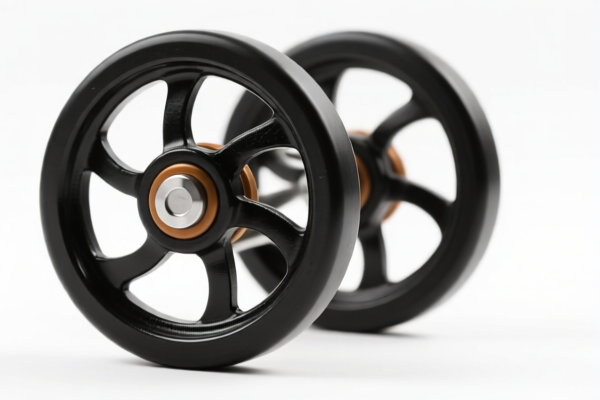
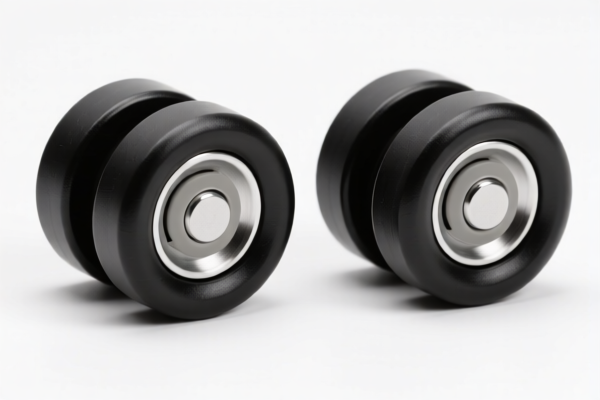
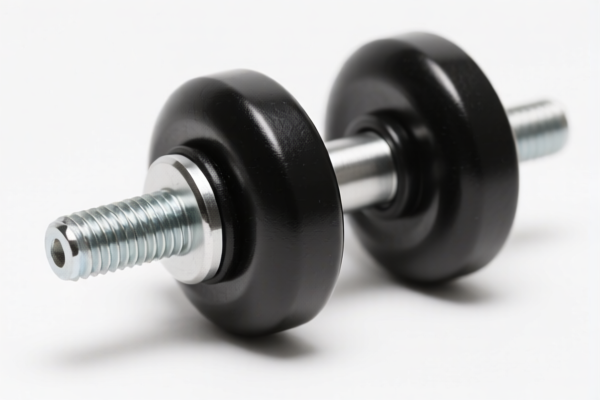
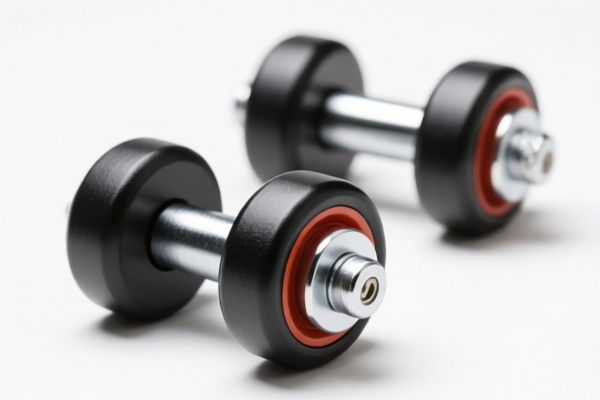
AI Analysis
🪑 Barber Chair Casters: The Heavy-Duty Mobility Solution
🌐 HS Code Reference & Customs Clearance Guide | 2026 Latest Tariff Analysis | Professional Entry Strategy
📌 I. Product Definition & Classification: What Exactly Are "Barber Chair Casters"?
Barber chair casters (often referred to as swivel casters or foot wheels) are specialized wheels designed for heavy-duty furniture, specifically barber chairs, salon stools, and medical recliners. In international trade, they are classified based on their function (rolling) and material composition (typically metal frames with rubber/plastic tires).
They fall into two main conceptual buckets in the Harmonized System (HS): 1. Part of a Vehicle (Footrest/Wheeled Support): Viewed as a part of a non-motorized vehicle (the chair). 2. General Hardware/Fittings: Viewed as a metallic fitting, roller, or wheel for machinery/furniture.
⚠️ Critical Distinction Point:
- If the caster is marketed specifically as a spare part for a barber chair and functions as a support wheel for a non-motorized vehicle, it leans towards Chapter 87.
- If it is sold as a general industrial roller or metal fitting without specific reference to the chair in the declaration, it may fall under Chapter 83 (Base metal articles).
- Material Matters: If the frame is steel, aluminum, or copper, additional "Section 122" tariffs often apply (see Tax Details below).
📦 II. HS Code Classification Matrix (2026 Latest Tariff Authority)
The following HS Codes are derived directly from the provided data for Barber Chair Casters. Note that the tax burden varies significantly based on the chosen classification.
| HS Code | Product Description / Logic | Classification Basis | Total Tax Rate |
|---|---|---|---|
8716.90.50.48 |
Casters / Wheels | Classified as a Wheel component. Follows the "Spare Parts / Other" fallback principle for vehicles. | 38.1% |
8716.90.30.00 |
Swivel Casters (Footwheels) | Classified as a Footwheel (Swivel Caster) for Non-motorized Vehicles. | 40.7% |
8302.20.00.00 |
Rollers / Rollers | Classified as a Roller under "Base Metal Fittings". Default classification for base metal hardware. | 90.7% |
8302.10.60.90 |
Hinges & Fittings Parts | Classified as a part of Base Metal Hinges/Fittings. Fits the category of base metal articles for furniture. | 88.5% |
🔍 Key Insight:
- Lowest Risk/Cost:8716.90.50.48(38.1%) and8716.90.30.00(40.7%) are significantly cheaper than the Chapter 83 options.
- Highest Risk/Cost:8302.20.00.00and8302.10.60.90carry massive tariffs (~88-90%) due to the base metal fittings classification.
- Avoid Misclassification: Do not simply declare as "Metal Wheels" or "Fittings" if they are functionally parts of a chair/vehicle, as this invites the 90%+ tariff.
💰 III. 2026 Detailed Tariff Breakdown (Including Surtaxes & Policy Add-ons)
✅ Applicable Country: United States (US)
✅ Origin: China (CN)
✅ Effective Date: Current 2026 Trade Regime (Includes Section 301 & Section 122 measures)
🎯 1. 8716.90.50.48 —— Casters Classified as Vehicle Wheels (Lowest Cost Option)
| Item | Detail |
|---|---|
| Base Tariff | 3.1% |
| Section 301 Surcharge | 25.0% |
| Section 122 Tariff | 10.0% |
| Base Metal Surcharge (Steel/Alu/Cu) | 0% (Not applied to this specific vehicle part code in this dataset) |
| Total Effective Rate | 38.1% |
| Calculation Basis | CIF Value × 38.1% |
| De Minimis Eligibility | ❌ No (De Minimis exemption does not apply to goods under Section 301/122 surcharges) |
| Legal Pathway | HS:8716.90.50.48 → Base:3.1% + Sec301:25% + Sec122:10% |
📌 Explanation:
- This code treats the caster as a wheel for a non-motorized vehicle.
- It avoids the harsh "Base Metal Fittings" surcharges that apply to Chapters 73-83.
- Recommendation: This is the most cost-effective classification if you can justify it as a "wheel" for a chair (non-motorized vehicle).
🎯 2. 8716.90.30.00 —— Swivel Casters for Non-Motorized Vehicles
| Item | Detail |
|---|---|
| Base Tariff | 5.7% |
| Section 301 Surcharge | 25.0% |
| Section 122 Tariff | 10.0% |
| Base Metal Surcharge | 0% |
| Total Effective Rate | 40.7% |
| Calculation Basis | CIF Value × 40.7% |
| De Minimis Eligibility | ❌ No |
| Legal Pathway | HS:8716.90.30.00 → Base:5.7% + Sec301:25% + Sec122:10% |
📌 Explanation:
- Specifically targets Swivel Casters (Footwheels).
- Slightly higher base tariff (5.7% vs 3.1%) than8716.90.50.48, but still significantly lower than Chapter 83.
- Use this if the product is explicitly marketed as a "Swivel Caster" or "Footwheel."
🎯 3. 8302.20.00.00 —— Base Metal Rollers (High Cost Risk)
| Item | Detail |
|---|---|
| Base Tariff | 5.7% |
| Section 301 Surcharge | 25.0% |
| Section 122 Tariff | 10.0% |
| Base Metal Surcharge (Steel/Alu/Cu) | 50.0% |
| Total Effective Rate | 90.7% |
| Calculation Basis | CIF Value × 90.7% |
| De Minimis Eligibility | ❌ No |
| Legal Pathway | HS:8302.20.00.00 → Base:5.7% + Sec301:25% + Sec122:10% + BaseMetal:50% |
📌 Warning:
- This code classifies the caster as a roller under base metal fittings.
- The 50% additional tariff for steel, aluminum, or copper products is devastating to margins.
- Avoid unless you have no other option and are not using base metals (e.g., plastic wheels with metal axles, but even then, risk is high).
🎯 4. 8302.10.60.90 —— Parts of Base Metal Hinges/Fittings (High Cost Risk)
| Item | Detail |
|---|---|
| Base Tariff | 3.5% |
| Section 301 Surcharge | 25.0% |
| Section 122 Tariff | 10.0% |
| Base Metal Surcharge (Steel/Alu/Cu) | 50.0% |
| Total Effective Rate | 88.5% |
| Calculation Basis | CIF Value × 88.5% |
| De Minimis Eligibility | ❌ No |
| Legal Pathway | HS:8302.10.60.90 → Base:3.5% + Sec301:25% + Sec122:10% + BaseMetal:50% |
📌 Warning:
- Classifies the caster as a part of hinges or similar fittings.
- Like the previous code, the 50% base metal surcharge applies.
- Do not use this classification for barber chair casters unless you are importing them as generic hinge parts (which they are not).
🛠️ IV. Customs Clearance Practical Advice (Battle-Tested Pitfall Guide)
✅ 1. Document Checklist (Non-Negotiable)
| Document | Required | Notes |
|---|---|---|
| ✅ Product Specification Sheet | ✔️ | Must clearly state "Caster for Barber Chair" or "Swivel Wheel for Non-Motorized Vehicle." |
| ✅ High-Res Photos | ✔️ | Show the swivel mechanism, brake (if any), and overall structure. |
| ✅ Commercial Invoice | ✔️ | Description must match the HS Code logic. Use "Barber Chair Caster" or "Swivel Wheel." |
| ✅ Material Declaration | ✔️ | Specify if frame is Steel, Aluminum, or Plastic. Critical for determining Section 122 vs. Base Metal Surcharges. |
| ✅ Packaging List | ✔️ | Ensure quantities match invoice. |
✅ 2. Declaration Strategy (Key Mantra)
🔥 "Vehicle Parts First, Base Metal Last; Specificity Saves Thousands!"
| Scenario | Recommended HS Code | Why? |
|---|---|---|
| Barber Chair Casters | 8716.90.50.48 or 8716.90.30.00 |
They are parts of a non-motorized vehicle. Avoids the 50% base metal surcharge. |
| Generic Industrial Wheels | 8483.90.00.00 (Not in data, but common) |
If not for a vehicle, check Chapter 84. |
| Plastic Wheels with Metal Axles | Still lean towards 8716 |
If the primary function is rolling for a chair, Chapter 87 is often preferred over Chapter 83. |
| Pure Metal Rollers (No Swivel) | 8302.20.00.00 |
Only if clearly not a caster/wheel for a vehicle. |
❌ ERROR 1: Declaring as "Metal Hardware" or "Fittings"
👉 Consequence: 88.5% - 90.7% Tax Rate. Loss of Profit.❌ ERROR 2: Not specifying "Barber Chair" or "Swivel Caster"
👉 Consequence: Customs may reclassify to the highest duty rate based on visual inspection.✅ CORRECT ACTION:
Declare as:
"Swivel Casters for Barber Chairs, Non-Motorized Vehicle Parts, Model BC-123, Steel Frame, Rubber Tire."
Use HS Code:8716.90.30.00(40.7%) or8716.90.50.48(38.1%).
🌍 V. Global Market Clearance Comparison (2026 Snapshot)
| Country/Region | Recommended HS Code | Est. Tariff (China Origin) | Key Requirement |
|---|---|---|---|
| 🇺🇸 USA | 8716.90.50.48 |
38.1% | Section 301 + 122 Surcharges Apply |
| 🇨🇳 China (Import) | 8716.90.50.48 |
Low (MFN Rate) | No Section 301/122 |
| 🇪🇺 EU | 8716.90 |
0-5% (Varies) | CE Marking if applicable |
| 🇬🇧 UK | 8716.90 |
Low | Post-Brexit Tariffs |
📌 Conclusion:
- The USA is the most challenging market due to Section 301 (25%) and Section 122 (10%) tariffs.
- Choosing the wrong HS Code (e.g.,8302) can double or triple your tax bill.
- Chapter 87 is your friend for Barber Chair Casters. Chapter 83 is your enemy here.
📌 VI. Common Mistakes & Pitfalls (Blood & Tears)
❌ Mistake 1: Using "Caster" as a generic term without specifying "Vehicle Part"
👉 Result: Customs may view it as general hardware → 8302 → 90% Tax.
✅ Fix: Explicitly state "Part for Non-Motorized Vehicle" or "For Barber Chair."
❌ Mistake 2: Assuming Plastic Casters Avoid Surcharges
👉 Result: Even if plastic, if the code is 8302, the 50% base metal surcharge might still trigger if there are metal components.
✅ Fix: Stick to 8716 codes for vehicle-related casters.
❌ Mistake 3: Ignoring Section 122 Tariffs
👉 Result: Forgetting the 10% Section 122 tariff leads to under-declaration and penalties.
✅ Fix: Always include Section 122 in your cost calculation for China-origin goods to the US.
🎯 VII. Conclusion: Professional Classification Saves Money!
🎯 Remember the Mantra:
🔹 "Barber Chair Casters = Vehicle Parts (Ch 87), Not General Fittings (Ch 83)."
🔹 "38% vs 90%: A 50% Difference Based on HS Code Choice."
🔹 "Declare Specifically: 'Swivel Caster for Non-Motorized Vehicle.'"
📌 Pro Tip:
If you are importing large volumes, consider applying for a Customs Ruling or Advance Ruling from US Customs and Border Protection (CBP) to lock in the 8716 classification. This provides legal certainty and prevents surprise audits.
📣 Immediate Action:
📞 Contact your Customs Broker: Provide photos and specs.
🚀 Use HS Code8716.90.50.48or8716.90.30.00.
💰 Save 50%+ in tariffs by getting the code right!
✨ Professional Customs Clearance Starts with Precise Classification!
💼 Your Margin Depends on It!
Customer Reviews
About HS Code Classification
The Harmonized System (HS) is an internationally standardized nomenclature developed by the World Customs Organization (WCO) to classify traded products. Over 200 countries use the HS system as the basis for customs tariffs, trade statistics, and import/export regulations.
Each HS code follows a hierarchical structure:
- Chapter (2 digits) — Broad category of goods (e.g., Chapter 84: Machinery and Mechanical Appliances)
- Heading (4 digits) — More specific grouping within the chapter
- Subheading (6 digits) — Internationally standardized breakdown, used by all WCO member countries
- National subdivisions (8-10 digits) — Country-specific extensions for further classification, such as US HTSUS 10-digit codes
Correct HS code classification is essential for smooth customs clearance, accurate duty payment, and compliance with trade regulations. Misclassification can lead to customs delays, overpayment of duties, or penalties.
When importing from CN to US, the applicable tariff rates may include:
- Most-Favored-Nation (MFN) rate — The standard duty rate applied to WTO members
- General rate — Applied to countries without trade agreements
- Trade remedy duties — Additional tariffs such as Section 301 (anti-dumping), Section 232 (national security), or countervailing duties
The information provided on this page is for reference purposes only. For official classification, please consult with your local customs authority or a licensed customs broker.