Barium Vanadate Catalyst
CN → US| HS Code | Tariff Rate | Origin | Destination | Doc |
|---|---|---|---|---|
| 2825300010 | 40.5% | CN | US | Official Doc |
| 2825300050 | 40.5% | CN | US | Official Doc |
| 2841905000 | 38.7% | CN | US | Official Doc |
| 3824993600 | 24.0% | CN | US | Official Doc |
| 2825300010 | 40.5% | CN | US | Official Doc |
Product Images
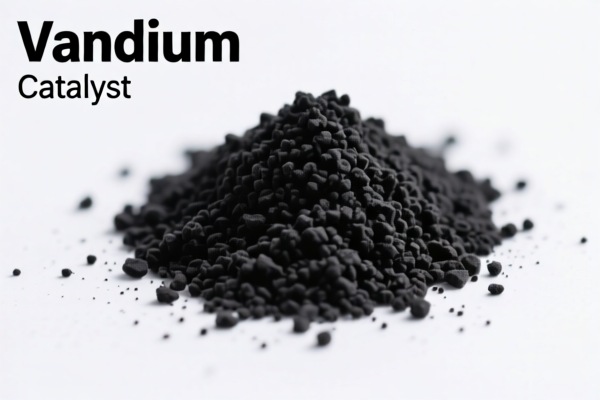

AI Analysis
🧪 Barium Vanadate Catalyst (Chemical Compound)
🌐 HS Code Reference & Customs Clearance Guide | 2026 Latest Tariff Analysis | Professional Clearance Strategy
📌 I. Product Definition & Classification: Do You Truly Understand "Barium Vanadate Catalyst"?
Barium Vanadate is an inorganic compound primarily used as a high-purity catalyst in industrial chemical processes. In international trade, its classification depends heavily on its specific chemical nature (salt vs. oxide vs. prepared preparation) and its intended use.
Chemical Nature Options: 1. Vanadium Salts: Classified under Chapter 28 (Inorganic Chemicals). This is the most common classification for pure Barium Vanadate used as a catalyst precursor. 2. Prepared Catalysts/Chemical Preparations: If mixed with other carriers or binders, it may fall under Chapter 38 (Miscellaneous Chemical Products).
⚠️ Key Distinction Point:
- If it is a pure chemical salt (Barium Vanadate) → Classify under Chapter 28 (Specifically 2825 or 2841).
- If it is a mixed formulation or a specifically prepared catalyst not meeting specific chemical definitions → Classify under Chapter 38 (3824).
📦 II. HS Code Classification Details (2026 Latest Tariff Authoritative Comparison)
Based on the provided data, here are the 4 primary HS Codes associated with this product, along with their tax implications.
| HS Code | Product Description Summary | Applicability Scenario | Total Tax Rate* |
|---|---|---|---|
2825.30.00.10 |
High-purity Barium Vanadate Catalyst, categorized as Vanadium Salts. Matches the category of vanadium oxides/hydroxides and inorganic salts. | Pure chemical form, primary salt classification. | 40.5% |
2825.30.00.50 |
High-purity Barium Vanadate Catalyst, categorized as Vanadium Salts (Catch-all category for other inorganic salts/bases). | Pure chemical form, if not fitting the specific sub-heading of 2825.30.00.10. | 40.5% |
2841.90.50.00 |
High-purity Barium Vanadate Catalyst, core material is Oxo-metal acid salts (or peroxometallic salts). Falls under the catch-all for these salts. | Classified based on the "Oxo-metal" chemical structure rather than just "Vanadium salt". | 38.7% |
3824.99.36.00 |
High-purity Barium Vanadate Catalyst, categorized as Chemical Preparations. Fits the usage description of chemical products/preparations. | Used as a formulated catalyst, mixture, or industrial preparation. | 24.0% |
📌 Key Reminder:
- The Tax Rate varies significantly based on whether you classify it as a raw chemical (28xx) or a prepared catalyst (38xx).
- Chapter 28 codes (2825,2841) generally attract higher tariffs due to the "122 Clause" and Section 301 tariffs.
- Chapter 38 code (3824) offers the lowest total tax rate in this dataset.
💰 III. 2026 Latest Tariff Rate Breakdown (Including Additional Taxes & Policy Surcharges)
✅ Applicable Country: United States (US)
✅ Origin: China (CN)
✅ Effective Date: 2025/2026 (Current Trade Regime)
🎯 1. 2825.30.00.10 & 2825.30.00.50 —— Vanadium Salts (Chapter 28)
| Item | Content |
|---|---|
| Base Duty Rate | 5.5% |
| Section 301 Additional Duty | +25.0% (Standard US-China Trade War Tariff) |
| 122 Clause Duty | +10.0% (Specific trade measure, likely related to strategic minerals or specific chemical controls) |
| Total Tax Rate | 40.5% |
| Tax Calculation | CIF Value × 40.5% |
| De Minimis Eligibility | ❌ No (High duty rates typically exclude small parcel exemptions or face strict scrutiny) |
| Legal Basis Path | HTSUS:2825.30 → USITC:8525/2825 Footnotes → IEEPA/301: Section 301 List 4 → 122 Clause: Specific Order |
📌 Explanation:
- These codes fall under "Other Salts of Vanadium."
- The 40.5% total rate is composed of the MFN base rate (5.5%) plus the heavy Section 301 surcharge (25%) and the 122 Clause surcharge (10%).
- This is a high-duty category for inorganic vanadium compounds.
🎯 2. 2841.90.50.00 —— Oxo-metal Salts (Chapter 28)
| Item | Content |
|---|---|
| Base Duty Rate | 3.7% |
| Section 301 Additional Duty | +25.0% |
| 122 Clause Duty | +10.0% |
| Total Tax Rate | 38.7% |
| Tax Calculation | CIF Value × 38.7% |
| De Minimis Eligibility | ❌ No |
| Legal Basis Path | HTSUS:2841.90 → USITC:2841 Footnotes → 301 List → 122 Clause |
📌 Explanation:
- Classifying Barium Vanadate as an "Oxo-metal salt" yields a slightly lower total rate (38.7%) due to a lower base duty (3.7% vs 5.5%).
- However, the additional surcharges remain the same.
🎯 3. 3824.99.36.00 —— Chemical Preparations (Chapter 38)
| Item | Content |
|---|---|
| Base Duty Rate | 6.5% |
| Section 301 Additional Duty | +7.5% (Note: Different surcharge rate than Chapter 28) |
| 122 Clause Duty | +10.0% |
| Total Tax Rate | 24.0% |
| Tax Calculation | CIF Value × 24.0% |
| De Minimis Eligibility | ❌ No (Check specific de minimis rules for chemical preparations, but generally high risk) |
| Legal Basis Path | HTSUS:3824.99 → USITC:3824 Footnotes → 301 List (Different Tier) → 122 Clause |
📌 Explanation:
- This is the most cost-effective classification at 24.0%.
- The Section 301 surcharge is lower (+7.5% vs +25%), likely because this subheading is on a different list or exempt from the highest tier of Section 301 measures.
- Crucial: You must justify why this is a "preparation" and not a pure "salt." This requires evidence of formulation, carrier integration, or specific industrial application beyond the basic chemical structure.
🛠️ IV. Customs Clearance Practical Advice (Real-World Pitfall Avoidance Guide)
✅ 1. Documentation Checklist (Non-negotiable)
| Document | Mandatory | Description |
|---|---|---|
| ✅ COA (Certificate of Analysis) | ✔️ | Must show purity >99% if claiming Chapter 28; or formulation details if claiming Chapter 38. |
| ✅ Technical Data Sheet (TDS) | ✔️ | Clearly state "Catalyst" and intended industrial use. |
| ✅ Formula/Composition Breakdown | ✔️ | If claiming 3824.99.36.00, you must prove it is a "preparation" (mixture, not pure salt). |
| ✅ Commercial Invoice | ✔️ | Description: "Barium Vanadate Catalyst, High Purity, for Chemical Synthesis." |
| ✅ Supply Chain Proof | ✔️ | Original purchase orders, supplier invoices. |
| ✅ FSC (Form B) | ✔️ | If applicable, for controlled chemical verification. |
✅ 2. Declaration Strategy (Key Mantras)
🔥 "Pure Salt = Chapter 28 (High Tax); Prepared Mix = Chapter 38 (Lower Tax)!"
| Situation | Correct Declaration | Wrong Action |
|---|---|---|
| Pure Barium Vanadate Powder | 2825.30.00.10 or 2825.30.00.50 |
Misdeclare as 3824 → Risk of penalty for misclassification. |
| Barium Vanadate mixed with Carrier/Support | 3824.99.36.00 |
Misdeclare as 2825 → Unnecessary high tax (40.5% vs 24.0%). |
| Unclear Composition | Request Advance Ruling | Guessing HS Code → Delays, audits, back taxes + interest. |
| "Catalyst" as Generic Term | Specify "Chemical Preparation" for Ch38 | Vague description → Customs may assign default (often higher) code. |
✅ 3. Special Handling Cases
| Case | Handling Advice |
|---|---|
| High Purity (>99%) | Likely Chapter 28. Justify why it's not a preparation. Cost: 40.5% or 38.7%. |
| Supported Catalyst (on Alumina/Silica) | Strong case for Chapter 38 (3824.99.36.00). Cost: 24.0%. Provide TDS showing support material. |
| Small Sample (De Minimis) | Even if under $800, chemical shipments are often scrutinized. Ensure CBP Form 7501 is correct. |
| Dual Use (Chemical + Industrial) | If used in specific military/aerosol applications, additional EAR/ITAR controls may apply. Check BIS regulations. |
🌍 V. Global Market Comparison (2026 Latest)
| Country/Region | Recommended HS Code | Tariff (China Origin) | Certification Requirements | Notes |
|---|---|---|---|---|
| 🇺🇸 USA | 3824.99.36.00 (Preferred) |
24.0% | None specific | If 2825, tax jumps to 40.5%. |
| 🇺🇸 USA | 2825.30.00.10 (Fallback) |
40.5% | None specific | High duty due to 301 + 122 Clause. |
| 🇨🇳 China | 2924.29.90.00 (Example) |
~5-7% | None | Different classification logic. |
| 🇪🇺 EU | 2835.90.00 (Example) |
0% (Most MFN) | REACH Registration | REACH is critical for chemicals in EU. |
| 🇯🇵 Japan | 2825.30.00 (Example) |
0-3% | None | Generally low duties for inorganic salts. |
📌 Conclusion:
- USA is the most challenging market due to Section 301 and 122 Clause tariffs.
- Strategic Opportunity: If your product is a supported catalyst or mixture, aggressively pursue HS Code3824.99.36.00to save 16.5% in duties compared to the salt classification.
- EU/China have lower base duties but stricter chemical registration (REACH in EU, MIIT registration in China).
📌 VI. Common Errors & Pitfalls (Blood-Teaching Lessons)
❌ Error 1: Declaring a supported catalyst as a pure salt (2825)
👉 Consequence: Pay 40.5% instead of 24.0%. Overpayment by ~70%!
❌ Error 2: Declaring a pure salt as a preparation (3824) without proof
👉 Consequence: Customs audit, back taxes + penalties + interest. Misdeclaration fines can be 3x the duty difference.
❌ Error 3: Ignoring the 122 Clause
👉 Consequence: Even with base duty at 5.5%, the 10% surcharge is non-negotiable for these HS codes. Plan cash flow accordingly.
❌ Error 4: Using "Catalyst" without chemical description
👉 Consequence: Customs may classify under "Other Chemicals" with highest duty tier. Always provide EC/Chemical Name.
✅ Correct Practice:
"Barium Vanadate Catalyst, Supported on Alumina, 2% Loading, for VOC Oxidation, HS 3824.99.36.00"
🎯 VII. Conclusion: Professional Classification Saves Money!
🎯 Remember the Mantra:
🔹 "Pure Salt = Ch28 (40%+ Tax); Prepared Mix = Ch38 (24% Tax)!"
🔹 "Check the Formula, Not Just the Name. 16% Savings is Worth the Paperwork!"
🔹 "122 Clause is Always On. Plan for 38-40% if you miss the Ch38 loophole."
📌 Pro Tip:
- If your Barium Vanadate is pure, accept the 40.5% or try to justify 38.7% (2841).
- If it is supported/formulated, provide TDS/COA to prove it's a preparation for 24.0%.
- Apply for an Advance Ruling from US CBP if the distinction is ambiguous. It provides legal protection against future audits.
📣 Immediate Action:
📞 Consult your customs broker with Technical Data Sheets.
📝 Do not self-classify if you are unsure between Ch28 and Ch38.
🚀 Optimize your HS Code to reduce landed cost by up to 16.5%.
✨ Professional Customs Clearance Starts with Precise Classification!
💼 Every Percent Saved is Pure Profit!
Customer Reviews
About HS Code Classification
The Harmonized System (HS) is an internationally standardized nomenclature developed by the World Customs Organization (WCO) to classify traded products. Over 200 countries use the HS system as the basis for customs tariffs, trade statistics, and import/export regulations.
Each HS code follows a hierarchical structure:
- Chapter (2 digits) — Broad category of goods (e.g., Chapter 84: Machinery and Mechanical Appliances)
- Heading (4 digits) — More specific grouping within the chapter
- Subheading (6 digits) — Internationally standardized breakdown, used by all WCO member countries
- National subdivisions (8-10 digits) — Country-specific extensions for further classification, such as US HTSUS 10-digit codes
Correct HS code classification is essential for smooth customs clearance, accurate duty payment, and compliance with trade regulations. Misclassification can lead to customs delays, overpayment of duties, or penalties.
When importing from CN to US, the applicable tariff rates may include:
- Most-Favored-Nation (MFN) rate — The standard duty rate applied to WTO members
- General rate — Applied to countries without trade agreements
- Trade remedy duties — Additional tariffs such as Section 301 (anti-dumping), Section 232 (national security), or countervailing duties
The information provided on this page is for reference purposes only. For official classification, please consult with your local customs authority or a licensed customs broker.