Barkless Coniferous Logs
CN → US| HS Code | Tariff Rate | Origin | Destination | Doc |
|---|---|---|---|---|
| 4403110020 | 35.0% | CN | US | Official Doc |
| 4403240104 | 35.0% | CN | US | Official Doc |
Product Images
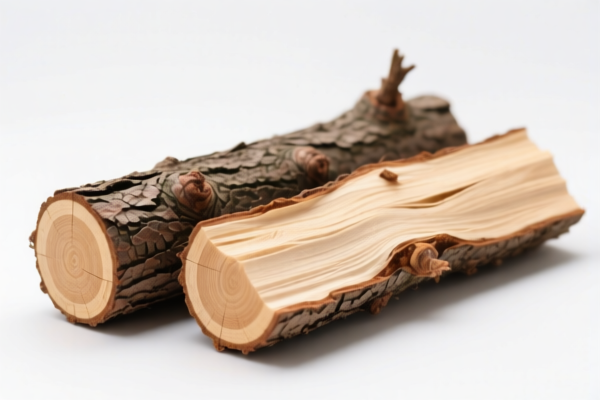
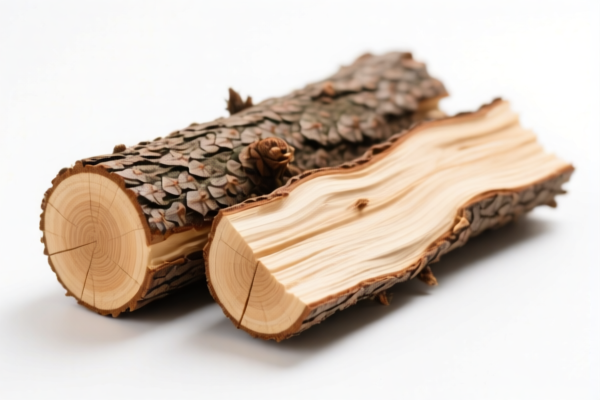
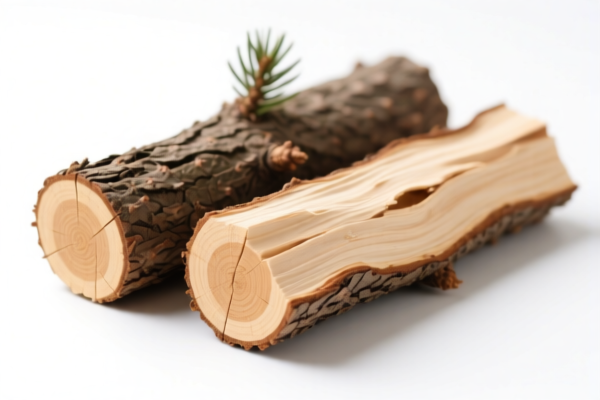
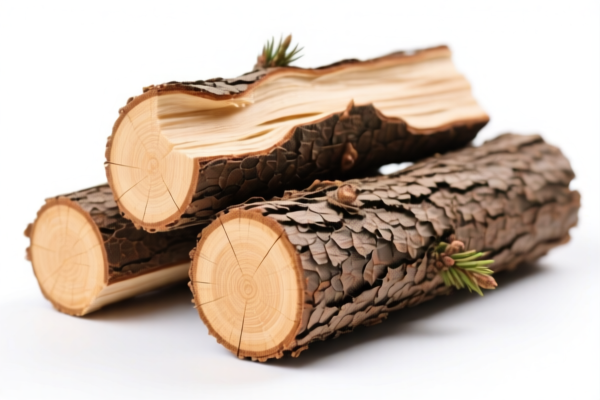
AI Analysis
🌲 Barkless Coniferous Logs (Wood in the Rough)
🌐 HS Code Reference & Customs Clearance Guide | 2026 Latest Tariff Analysis | Professional Clearance Strategy
📌 I. Product Definition & Classification: What Are "Barkless Coniferous Logs"?
Wood in the rough refers to timber that has undergone minimal processing—typically only delimbed (bark removed) and possibly debarked, but not sawn or planed. When specified as "Coniferous," it refers to softwood species such as pine, spruce, fir, cedar, etc.
In international trade, these logs are primarily classified under Chapter 44 of the HS Nomenclature. The key distinction lies in their intended use and processing level:
- Raw Pulpwood/Firewood Logs: Unprocessed softwood logs, stripped of bark, intended for paper pulp, chipboard, or fuel.
- Treated Poles/Piles/Posts: Coniferous logs specifically treated with preservatives (e.g., creosote, paint, stain) for use as utility poles, railway ties, or construction posts.
⚠️ Critical Distinction:
- If the logs are untreated and used for pulp/chips → Likely falls under 4403.24.
- If the logs are treated (e.g., with creosote/paint) and designated as poles/piles/posts → Falls under 4403.11.
- Bark removal alone does not change the classification from "wood in the rough," but treatment is a key differentiator for poles.
📦 II. HS Code Classification Details (2026 Latest Tariff Authority)
Based on the provided data, two primary HS Codes apply depending on the specific type and treatment of the coniferous logs.
| HS Code | Product Description | Application Scenario | Key Differentiator |
|---|---|---|---|
4403.11.00.20 |
Wood in the rough, coniferous, treated with paint, stain, creosote or other preservatives: Telephone, telegraph and electrical power poles | Utility poles, telegraph poles, electrical power transmission poles, railway sleepers (if treated as posts) | ✅ Treated with preservatives (e.g., creosote, paint). Must be in the form of poles/piles/posts. |
4403.24.01.04 |
Other, coniferous: Of fir (Abies spp.) and spruce (Picea spp.), other Pulpwood | Logs made of Spruce (Picea) or Fir (Abies) species, intended for pulping or general softwood use, not treated as poles | ✅ Untreated (or simply barkless). Specific species: Fir or Spruce. |
🔍 Key Reminder:
-4403.11.00.20is for treated coniferous logs used as poles/posts.
-4403.24.01.04is for untreated (or merely barkless) Fir/Spruce logs used as pulpwood or general softwood.
- "Barkless" applies to both, but the treatment and species/use determine the exact HS Code.
💰 III. 2026 Latest Tariff Rate Breakdown (Including Surcharges)
✅ Applicable Country: United States (US)
✅ Origin: China (CN)
✅ Effective Date: 2025年11月10日起 (From November 10, 2025)
🎯 1. 4403.11.00.20 —— Treated Coniferous Poles, Piles, and Posts
| Item | Details |
|---|---|
| Base Tariff Rate | 0.0% (ad valorem) |
| Surtax (Section 301) | +25.0% |
| Total Tax Rate | 25.0% |
| Tax Calculation | CIF Value × 25% |
| De Minimis Exemption | ❌ Not Eligible (Deny de minimis) |
| Legal Basis | HS Code 4403.11.00.20 → 25% Surtax under US Trade Policy |
📌 Explanation:
- Although the base tariff is 0%, the 25% Section 301 surtax applies due to the product’s origin (China).
- This classification applies to treated logs (e.g., creosote-treated utility poles).
- Total effective rate: 25%.
🎯 2. 4403.24.01.04 —— Untreated Fir/Spruce Pulpwood
| Item | Details |
|---|---|
| Base Tariff Rate | 0.0% (ad valorem) |
| Surtax (Section 301) | +25.0% |
| Total Tax Rate | 25.0% |
| Tax Calculation | CIF Value × 25% |
| De Minimis Exemption | ❌ Not Eligible (Deny de minimis) |
| Legal Basis | HS Code 4403.24.01.04 → 25% Surtax under US Trade Policy |
📌 Note:
- Same tariff structure as above: 0% base + 25% surtax = 25% total.
- Applies specifically to Fir (Abies) and Spruce (Picea) logs.
- If the logs are of other coniferous species (e.g., Pine, Cedar), they may fall under different subheadings (e.g.,4403.21or4403.29), but still likely subject to the same 25% surtax if from China.
🛠️ IV. Customs Clearance Practical Advice (Avoid Pitfalls)
✅ 1. Required Documentation Checklist
| Document | Required? | Notes |
|---|---|---|
| ✅ Commercial Invoice | ✔️ | Must clearly state: "Wood in the Rough," Species (e.g., Spruce), Treatment Status (e.g., Creosote-Treated), and HS Code. |
| ✅ Phytosanitary Certificate | ✔️ | Mandatory for all wood products. Must confirm pest-free status (ISPM 15 compliant). |
| ✅ Treatise Declaration | ✔️ | If claiming treated poles, provide certificate of treatment (e.g., creosote concentration). |
| ✅ Bill of Lading | ✔️ | Show gross weight, net weight, and container number. |
| ✅ Packing List | ✔️ | Detail number of logs, dimensions, and any packaging materials. |
| ✅ Species Identification | ✔️ | For 4403.24, provide scientific names (Abies spp., Picea spp.). |
✅ 2. Classification Tips (Critical for Compliance)
🔥 "Treated = Poles, Untreated = Pulpwood, Species Matters!"
| Scenario | Correct HS Code | Incorrect HS Code | Consequence |
|---|---|---|---|
| Creosote-treated utility poles | 4403.11.00.20 |
4403.24.01.04 |
Misclassification → 25% penalty + delay |
| Untreated Spruce logs for pulping | 4403.24.01.04 |
4403.11.00.20 |
No penalty, but possible delay for verification |
| Treated Pine posts | 4403.29.01.00 (or similar) |
4403.11.00.20 |
4403.11 is only for specifically listed poles/posts; other treated conifers may fall under other 4403 subheadings but still likely 25% surtax. |
📌 Key Point:
-4403.11is not a catch-all for all treated coniferous wood. It specifically lists "Telephone, telegraph and electrical power poles."
- If your treated wood is for fencing, decking, or general construction (not poles), it may fall under4403.29(Other, coniferous, treated), but still subject to 25% surtax.
- Always verify the end-use (poles vs. general timber) and treatment type.
✅ 3. Special Cases & Handling
| Scenario | Handling Advice |
|---|---|
| Mixed Species (Spruce + Pine) | If Pine is not Spruce/Fir, it may fall under 4403.21 (Pine) or 4403.29 (Other). Check specific species. |
| Partially Treated Logs | If only ends are treated, still considered "treated" if the treatment is for preservation. Provide treatment certificate. |
| Chipwood vs. Logs | If the wood is chipped, it falls under Chapter 47 (Wood Pulp). Ensure it is whole logs (< 1m length, < 15cm diameter). |
| ISPM 15 Marking | All wood packaging material must be heat-treated or fumigated and marked. Wood itself must have Phytosanitary Certificate. |
🌍 V. Global Market Comparison (2026 Latest)
| Country/Region | Recommended HS Code | Tariff (China Origin) | Certification | Notes |
|---|---|---|---|---|
| 🇺🇸 United States | 4403.11.00.20 / 4403.24.01.04 |
25% | Phytosanitary Certificate | Surtax applies. No de minimis. |
| 🇨🇳 China | 4403.11.00 / 4403.24.00 |
0%–5% | Phytosanitary Certificate | Low tariff for import into China. |
| 🇪🇺 European Union | 4403.11.00 / 4403.24.00 |
0%–6% | Phytosanitary + FSC/PEFC | Sustainable sourcing certificates may apply. |
| 🇯🇵 Japan | 4403.11.00 / 4403.24.00 |
0%–3.2% | Phytosanitary Certificate | Strict on pests. |
| 🇰🇷 South Korea | 4403.11.00 / 4403.24.00 |
0%–5% | Phytosanitary Certificate | Fumigation often required. |
📌 Conclusion:
- US market is the most costly due to the 25% surtax.
- Phytosanitary certification is universally required.
- Species declaration is critical for4403.24(Fir/Spruce).
📌 VI. Common Mistakes & Pitfalls (Lessons Learned)
❌ Mistake 1: Declaring treated poles as "untreated pulpwood" to avoid scrutiny
👉 Consequence: Customs inspection reveals treatment → Penalty + 25% surtax + potential seizure.
❌ Mistake 2: Not specifying the species for 4403.24.01.04
👉 Consequence: Customs may reclassify as "other coniferous" (4403.29) → Delay + additional verification.
❌ Mistake 3: Missing Phytosanitary Certificate
👉 Consequence: Shipment rejected or destroyed at border.
❌ Mistake 4: Assuming all treated wood falls under 4403.11.00.20
👉 Consequence: If not poles/piles/posts, it may fall under a different subheading → Misclassification risk.
✅ Correct Approach:
"Spruce Logs, Barkless, Untreated, for Pulpwood, Length: 2m, Diameter: 10cm, Origin: China, Phytosanitary Certificate Attached"
"Creosote-Treated Coniferous Poles, for Electrical Transmission, Origin: China, Treatment Certificate Attached"
🎯 VII. Conclusion: Precise Classification Saves Money!
🎯 Remember:
🔹 "Treated Poles = 4403.11, Untreated Spruce/Fir = 4403.24, Both 25% Surtax!"
🔹 "Phytosanitary Certificate is Non-Negotiable!"
🔹 "Species Matters for 4403.24!"
📌 Tips:
- For large shipments, consider applying for an Advance Ruling from US Customs (CBP) to confirm HS Code.
- If using wood packaging, ensure it is ISPM 15 compliant.
- For treated wood, keep treatment certificates readily available for inspection.
📣 Immediate Action:
📞 Consult with a licensed customs broker + Provide species details + Obtain Phytosanitary Certificate
🚀 Ensure smooth customs clearance, avoid penalties, and protect your supply chain!
✨ Professional Clearance Starts with Accurate Classification!
💼 Every percentage point matters in cross-border trade!
Customer Reviews
About HS Code Classification
The Harmonized System (HS) is an internationally standardized nomenclature developed by the World Customs Organization (WCO) to classify traded products. Over 200 countries use the HS system as the basis for customs tariffs, trade statistics, and import/export regulations.
Each HS code follows a hierarchical structure:
- Chapter (2 digits) — Broad category of goods (e.g., Chapter 84: Machinery and Mechanical Appliances)
- Heading (4 digits) — More specific grouping within the chapter
- Subheading (6 digits) — Internationally standardized breakdown, used by all WCO member countries
- National subdivisions (8-10 digits) — Country-specific extensions for further classification, such as US HTSUS 10-digit codes
Correct HS code classification is essential for smooth customs clearance, accurate duty payment, and compliance with trade regulations. Misclassification can lead to customs delays, overpayment of duties, or penalties.
When importing from CN to US, the applicable tariff rates may include:
- Most-Favored-Nation (MFN) rate — The standard duty rate applied to WTO members
- General rate — Applied to countries without trade agreements
- Trade remedy duties — Additional tariffs such as Section 301 (anti-dumping), Section 232 (national security), or countervailing duties
The information provided on this page is for reference purposes only. For official classification, please consult with your local customs authority or a licensed customs broker.