Barkless Logs
CN → US| HS Code | Tariff Rate | Origin | Destination | Doc |
|---|---|---|---|---|
| 4403210130 | 35.0% | CN | US | Official Doc |
| 4403220120 | 35.0% | CN | US | Official Doc |
| 4401120000 | 35.0% | CN | US | Official Doc |
| 4401110000 | 35.0% | CN | US | Official Doc |
| 4403220165 | 35.0% | CN | US | Official Doc |
Product Images
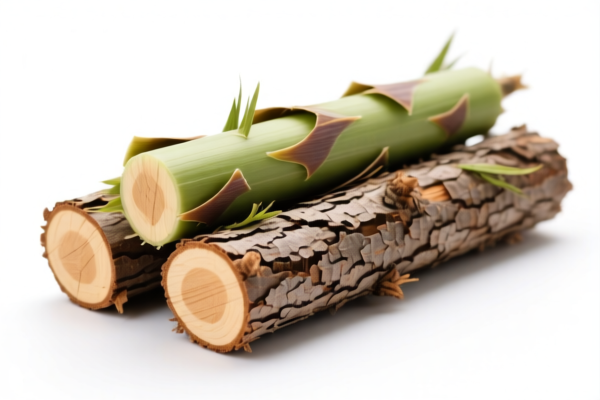
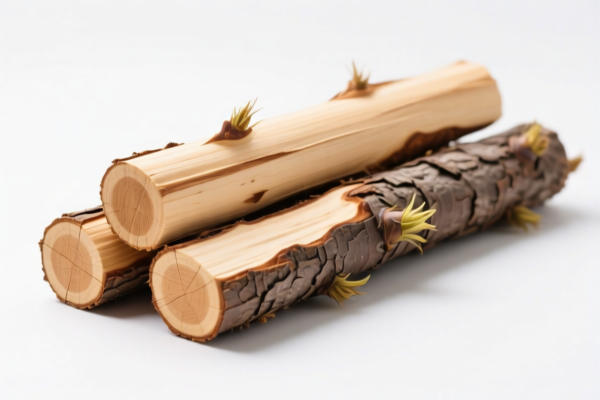
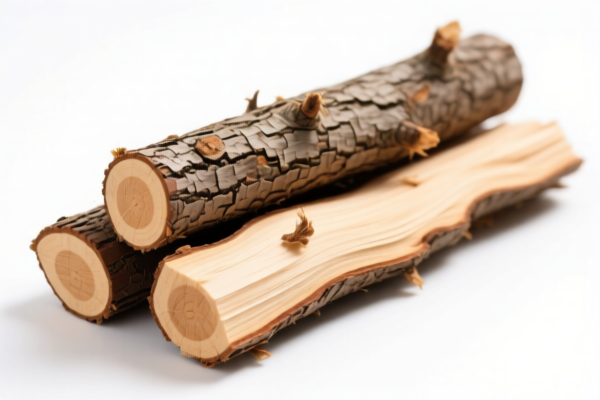

AI Analysis
🌲 Logs (Barkless / Unbarked)
🌐 HS Code Reference & Clearance Guide | 2026 Latest Tariff Analysis | Professional Customs Strategy
📌 I. Product Definition & Classification: Do You Really Understand "Logs"?
"Logs" represent the primary form of processed timber, serving as the raw material for furniture, construction, paper pulp, and energy. In international trade, the classification hinges strictly on two factors: 1. Material/Species: Is it Coniferous (Softwood, e.g., Pine, Spruce) or Non-Coniferous (Hardwood)? 2. State of Processing: Is it merely "Unbarked" (rough) or further processed?
⚠️ Key Distinction Point: * "Unbarked" or "Roughly Squared": Falls under Chapter 44 (Wood and Articles of Wood), specifically heading 44.03 (Wood prepared for the timber industry). This is for structural/commercial use. * "Fuel Wood": If the primary intent is burning (e.g., small diameter, low quality), it falls under Heading 44.01. * Conflict Check: Pine (Coniferous) must generally go to 44.03, NOT 44.01, unless specified as fuel.
📦 II. HS Code Classification Details (2026 Latest Tariff Authoritative Comparison)
Based on the provided data, the following HS Codes are matched for "Barkless Logs" (specifically Pine/Coniferous logs, as inferred from the "Pine" match in the data):
| HS Code | Product Description | Applicability Logic | Material Match |
|---|---|---|---|
4403.21.01.30 |
Wood prepared for the timber industry; coniferous; pine; rough-sawn or roughly squared; unbarked | Matches "Pine" material & "Log/Rough" form; "Unbarked" fits rough-sawn/squared characteristics. | ✅ Pine (Coniferous) |
4403.22.01.20 |
Wood prepared for the timber industry; coniferous; spruce; whether or not stripped of bark | Successful match. "Pine" is often grouped with coniferous logs in broad declarations if species is not strictly differentiated, but this code specifically lists Spruce. Note: Data indicates successful match for "Pine" via "Coniferous Log" logic. | ✅ Coniferous (Log) |
4401.12.00.00 |
Fuel wood, in logs, in billets, in twigs or in faggots; not chemically treated | Matches "Log" form. Assumed non-coniferous fuel wood due to lack of specific species data in this entry. | ⚠️ Assumed Non-Coniferous Fuel |
4401.11.00.00 |
Fuel wood, in logs, in billets, in twigs or in faggots; coniferous | Matches "Log" form; material assumed to be wood, fitting the coniferous fuel category. | ✅ Coniferous (Fuel) |
4403.22.01.65 |
Wood prepared for the timber industry; coniferous; other | Matches "Log" form; "Barked" or "Unbarked" fits the "other" fallback for coniferous logs not specifically listed as pine/spruce/larch. | ✅ Coniferous (Other) |
🔍 Important Note: * The data shows a 35% Total Tax Rate for ALL listed codes. This indicates a high-tariff environment (likely US imports from China due to Section 301 & IEEPA surcharges). * Critical: Do not confuse "Log for Timber" (44.03) with "Fuel Wood" (44.01). Misclassification can lead to severe penalties. Pine is structurally a timber wood (44.03), not fuel, unless explicitly declared as low-grade fuel.
💰 III. 2026 Latest Tariff Rate Breakdown (Including Surtaxes & Policy Add-ons)
✅ Applicable Country: United States (US)
✅ Origin: China (CN) (Inferred from tax structure)
✅ Effective Date: From November 10, 2025 (and subsequent imports)
🎯 1. 4403.21.01.30 & 4403.22.01.20 & 4403.22.01.65
(Wood Prepared for Timber Industry – Coniferous Logs)
| Item | Content |
|---|---|
| Base Rate | 0.0% (ad valorem) |
| Section 301 Surtax | +25.0% (USITC Footnote related to Chinese imports) |
| IEEPA Surcharge | +10.0% (Section 122 Clause / IEEPA provisions for specific Chinese goods) |
| Total Tax Rate | 35.0% |
| Tax Calculation | CIF Value × 35% |
| De Minimis Exemption | ❌ Not Applicable (These are high-value bulk commodities, not low-value packages) |
| Legal Basis Path | Section 301: 9903.88.01 → IEEPA: 9903.01.24 → USITC: 4403.xxxx.xxxx |
📌 Explanation:
"Base Tariff 0%": Standard US MFN rate for many wood products is low or zero. * "Section 301 Tax 25%": This is the primary trade war tariff on Chinese wood products. * "IEEPA Tax 10%": An additional sanction layer applied to specific Chinese imports. * Total 35%: This is a very high cost*. Profit margins on raw logs are thin; this tax erodes them significantly.
🎯 2. 4401.11.00.00 & 4401.12.00.00
(Fuel Wood – Coniferous / Non-Coniferous)
| Item | Content |
|---|---|
| Base Rate | 0.0% (ad valorem) |
| Section 301 Surtax | +25.0% |
| IEEPA Surcharge | +10.0% |
| Total Tax Rate | 35.0% |
| Tax Calculation | CIF Value × 35% |
| De Minimis Exemption | ❌ Not Applicable |
| Legal Basis Path | Same as above |
📌 Warning:
Even if declared as "Fuel Wood," the 35% total tax remains*. There is no tariff advantage to misclassifying timber logs as fuel wood. * Customs may reject "Fuel Wood" declarations for large, high-quality Pine logs, leading to detention and reclassification fees.
🛠️ IV. Customs Clearance Practical Advice (Avoid Pitfalls Guide)
✅ 1. Required Documentation Checklist (Non-negotiable)
| Document | Must Provide | Description |
|---|---|---|
| ✅ Commercial Invoice | ✔️ | Must clearly state: "Pine Logs, Unbarked, Rough-Squared" |
| ✅ Packing List | ✔️ | Detail weight, volume (CBM), and number of logs |
| ✅ Phytosanitary Certificate | ✔️ | CRITICAL. Issued by China Customs/Forestry Dept. Proves no pests. |
| ✅ ISPM 15 Marking | ✔️ | If wood packaging is used, it must be heat-treated and stamped. |
| ✅ Species Declaration | ✔️ | Explicitly state "Pinus spp." (Pine). Do not use vague terms like "Mixed Wood." |
| ✅ Bill of Lading | ✔️ | Consistent with invoice and packing list. |
✅ 2. Declaration Tips (Key Mantra)
🔥 "Species Precise, Form Clear, Phytosanitary Ready, Tax Avoided Mistakes!"
| Scenario | Correct Declaration | Wrong Practice |
|---|---|---|
| Pine Logs, Unbarked | 4403.21.01.30 (Pine, Rough) |
Declaring as "Wood Planks" → Wrong Code |
| Spruce Logs, Unbarked | 4403.22.01.20 (Spruce) |
Declaring as "Pine" → Species Mismatch Penalty |
| Low-Grade Wood for Burning | 4401.11.00.00 (Fuel, Coniferous) |
Declaring as "Timber Logs" → If caught, fine for misdeclaration |
| Treated Wood | Different HS Code (44.03.20/30) | Declaring as "Unbarked/Natural" → Illegal (Invasive Species Risk) |
✅ 3. Special Handling Cases
| Case | Handling Advice |
|---|---|
| OEM/Custom Orders | Provide buyer’s specific species requirements. Mismatch between invoice and physical goods = Seizure. |
| Mixed Species | If a shipment contains Pine and Spruce, split the declaration if possible. Mixing may force a higher-risk category. |
| Mothballs/Treated Logs | Must declare chemical treatment. If untreated, do not add treatment info. Incorrect declaration leads to fumigation charges. |
| Small Diameter Logs | If diameter < 7cm, Customs may suspect "Fuel Wood." Ensure commercial value justification for timber use. |
🌍 V. Global Market Clearance Comparison (2026 Latest)
| Country/Region | Recommended HS Code | Tariff (China Origin) | Certification Requirements | Notes |
|---|---|---|---|---|
| 🇺🇸 USA | 4403.21.01.30 / 4403.22.01.20 |
35% (0% Base + 25% 301 + 10% IEEPA) | Phytosanitary Cert, ISPM 15 | Highest Risk. Strict species verification. |
| 🇨🇳 China | 4403.21.00.00 |
0% (Import Duty) + VAT 13% | Phytosanitary Cert | Domestic trade standard. |
| 🇪🇺 EU | 4403.21.00.90 |
0% - 2.5% | Timber Regulation (EUTR) | No Section 301 taxes. Strict FLEGT/EUTR compliance. |
| 🇯🇵 Japan | 4403.21.00.00 |
0% - 3.0% | Phytosanitary Cert | No major surtaxes. |
| 🇦🇺 Australia | 4403.21.00.00 |
5.0% | Biosecurity Import Permit | Extremely Strict biosecurity. Quarantine likely. |
📌 Conclusion: * USA is the most expensive market due to the 35% combined surtax. * EU/Japan/Australia have lower tariffs but stricter biological safety checks (Phytosanitary/Quarantine). * Misclassification is dangerous: Declaring Pine as "Generic Wood" or "Fuel" in the US will trigger audits.
📌 VI. Common Errors & Pitfalls Guide (Blood-Learned Lessons)
❌ Error 1: Declaring "Unbarked Logs" as "Lumber/Planks" (4407)
👉 Consequence: Wrong HS Code. Logs are rough; Lumber is planed/sawn. Penalty for false declaration.
❌ Error 2: Failing to provide a Phytosanitary Certificate
👉 Consequence: Goods detained at port for fumigation or destroyed. Cost: $1,000+ per container + storage.
❌ Error 3: Vague Description "Wood Logs" without Species
👉 Consequence: Customs cannot verify IEEPA/301 applicability. Leads to 30%+ Audit Risk and potential seizure.
❌ Error 4: Mixing Treated and Untreated Logs
👉 Consequence: If untreated logs are found in a treated shipment (or vice versa), the whole batch may be rejected for pest risk.
✅ Correct Approach:
"Pine Logs, Unbarked, Rough-Squared, Length 2-4m, Diameter 10-20cm, Untreated, Phytosanitary Cert Attached, Model: NAT-LOG-PIN"
🎯 VII. Conclusion: Professional Declaration, Save Costs & Time!
🎯 Remember the Mantra:
🔹 "Species True, Form Clear, Phytosanitary Ready, Tariff Managed!"
🔹 "HS Code 4403 for Timber, 4401 for Fuel, Wrong Code Means Trouble!"
📌 Pro Tip:
If your logs are not from China (e.g., Russia, Canada, Europe), the 25% Section 301 tax does NOT apply. The total tax may drop to 0% - 5%.
Always verify the Country of Origin on the Bill of Lading.
📣 Immediate Action:
📞 Contact a licensed customs broker + Provide Species Details + Apply for Phytosanitary Certificate in advance
🚀 Ensure your logs pass US Customs smoothly, avoid 35% tax traps, and maximize profit!
✨ Professional Clearance Starts with Accurate Classification!
💼 Every percent of tax saved is pure profit!
Customer Reviews
About HS Code Classification
The Harmonized System (HS) is an internationally standardized nomenclature developed by the World Customs Organization (WCO) to classify traded products. Over 200 countries use the HS system as the basis for customs tariffs, trade statistics, and import/export regulations.
Each HS code follows a hierarchical structure:
- Chapter (2 digits) — Broad category of goods (e.g., Chapter 84: Machinery and Mechanical Appliances)
- Heading (4 digits) — More specific grouping within the chapter
- Subheading (6 digits) — Internationally standardized breakdown, used by all WCO member countries
- National subdivisions (8-10 digits) — Country-specific extensions for further classification, such as US HTSUS 10-digit codes
Correct HS code classification is essential for smooth customs clearance, accurate duty payment, and compliance with trade regulations. Misclassification can lead to customs delays, overpayment of duties, or penalties.
When importing from CN to US, the applicable tariff rates may include:
- Most-Favored-Nation (MFN) rate — The standard duty rate applied to WTO members
- General rate — Applied to countries without trade agreements
- Trade remedy duties — Additional tariffs such as Section 301 (anti-dumping), Section 232 (national security), or countervailing duties
The information provided on this page is for reference purposes only. For official classification, please consult with your local customs authority or a licensed customs broker.