Barkless Spruce Logs
CN → US| HS Code | Tariff Rate | Origin | Destination | Doc |
|---|---|---|---|---|
| 4403240135 | 35.0% | CN | US | Official Doc |
| 4403230135 | 35.0% | CN | US | Official Doc |
| 4401110000 | 35.0% | CN | US | Official Doc |
| 4407120019 | 35.0% | CN | US | Official Doc |
| 4407120017 | 35.0% | CN | US | Official Doc |
Product Images
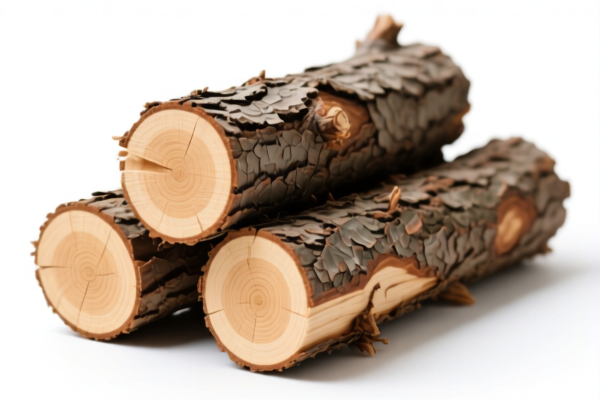
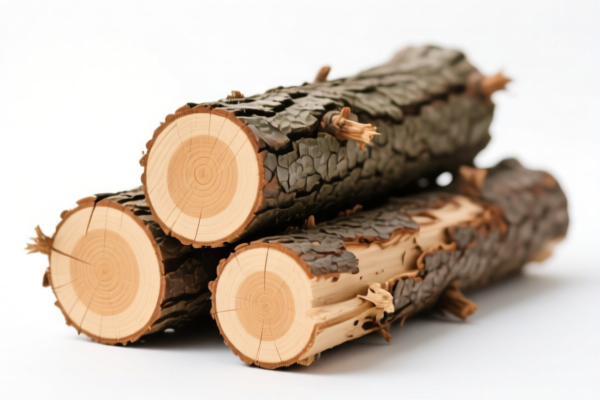
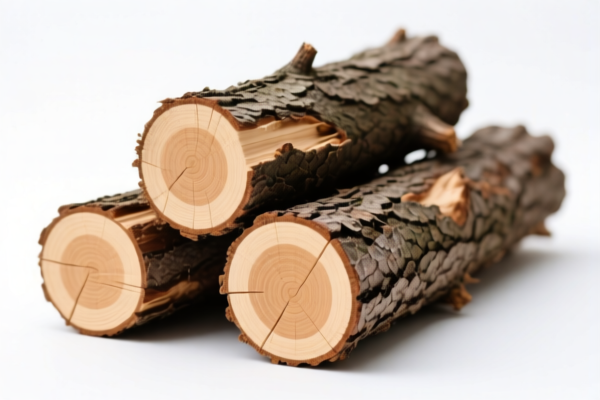
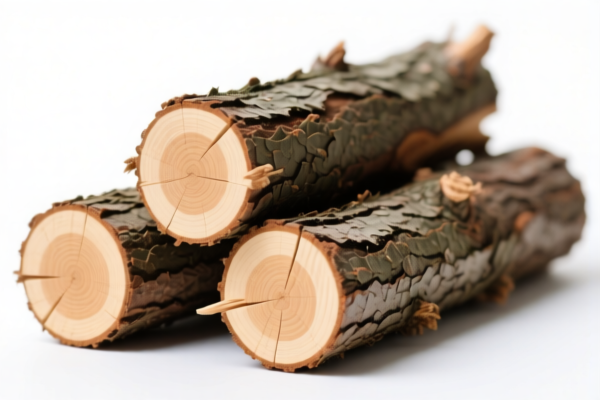
AI Analysis
🌲 Barkless Spruce Logs: HS Code Classification & Customs Clearance Guide (2026)
🌐 HS Code Reference & Customs Clearance Strategy | 2026 Tariff Analysis | Professional Entry Guide
📌 I. Product Definition & Classification: Do You Understand "Barkless Spruce Logs"?
Barkless Spruce Logs are raw, unprocessed timber derived from spruce trees (a coniferous species), where the bark has been removed. In international trade, these are classified based on their physical state (log vs. sawn) and processing level (raw wood vs. treated wood).
The key distinction lies in whether the wood is:
Raw Logs (4403/4401): Unprocessed or minimally processed (bark removed, cut to length).
Sawn Wood (4407): Processed further into planks, beams, or similar forms.
⚠️ Critical Classification Point:
- If the spruce wood is in its original log form (even if barkless and debarked), it falls under Chapter 4403 or 4401 (Fuel wood/logs).
- If the spruce wood is sawn or chipped into timber products, it falls under Chapter 4407.
- Note: The provided data suggests a mix of log and sawn classifications for "barkless spruce logs," likely due to specific national tariff line interpretations (e.g., US HTS). We will analyze the specific HS Codes provided in the data.
📦 II. HS Code Classification Matrix (Based on Provided Data)
| HS Code | Product Description | Key Characteristics | Processing Level |
|---|---|---|---|
4401.11.00.00 |
Barkless Spruce Logs | Coniferous, primary form, suitable for fuel or raw material | Raw Log (Debaarked) |
4407.12.00.19 |
Barkless Spruce Logs | Material: Spruce; Form: Log; Unprocessed primary wood | Primary Wood Product |
4407.12.00.17 |
Barkless Spruce Logs | Material: Spruce; Unprocessed log form; Coarse material feature | Primary Wood Product |
4403.24.01.35 |
Barkless Spruce Logs | Explicitly includes spruce material & log form; Fits classification criteria | Raw Log (Debaarked) |
4403.23.01.35 |
Barkless Spruce Logs | Material: Spruce; Debaarked log; Fits rough timber form | Raw Log (Debaarked) |
🔍 Key Insight:
- HS 4401 typically covers "Fuel wood in logs, in chips, or in pellets."
- HS 4403 covers "Wood in the rough, whether or not stripped of bark or sapwood."
- HS 4407 covers "Wood sawn or chipped lengthwise..." but some national lines (like the US 10-digit lines) may include specific debarked log forms under this chapter depending on historical tariff structures or specific trade agreements.
- All listed HS codes share the same tax structure: Total Tax 35% (0% Base + 25% Section 301 + 10% IEEPA).
💰 III. 2026 Tariff Rate Breakdown (Including Additional Duties & Policies)
✅ Applicable Country: United States (US)
✅ Country of Origin: China (CN)
✅ Effective Date: 2025-11-10 onwards (including subsequent imports)
🎯 Universal Tax Structure for All Listed HS Codes
| Item | Rate/Detail |
|---|---|
| Base Tariff | 0% (ad valorem) |
| Section 301 Tariff (USITC) | +25% |
| IEEPA Tariff (China-specific) | +10% |
| Total Effective Tariff | 35% |
| Calculation Basis | CIF Value (Cost, Insurance, Freight) × 35% |
| De Minimis Exemption | ❌ Not Applicable |
| Legal Reference Path | USITC: Section 301 Footnote → IEEPA: Section 9903 → HTSUS: 4401/4403/4407 |
📌 Explanation:
- 0% Base Tariff: Wood logs often have low or zero base MFN tariffs under US Harmonized Tariff Schedule.
- 25% Section 301: Added tariff on Chinese goods under Trade Act of 1974, Section 301.
- 10% IEEPA Tariff: Additional tariff under the International Emergency Economic Powers Act targeting specific Chinese imports.
- 35% Total: This is a high tariff rate, significantly impacting cost competitiveness.
🛠️ IV. Customs Clearance Practical Advice (Avoiding Pitfalls)
✅ 1. Required Documentation Checklist (Mandatory)
| Document | Required? | Notes |
|---|---|---|
| ✅ Commercial Invoice | ✔️ | Must specify "Barkless Spruce Logs," HS Code, Country of Origin. |
| ✅ Packing List | ✔️ | Detail weight, volume, and number of logs. |
| ✅ Certificate of Origin (CO) | ✔️ | Essential for origin verification. |
| ✅ Phytosanitary Certificate | ✔️ | Critical: Must confirm logs are free from pests/diseases (ISPM 15 standards). |
| ✅ Debaarking Statement | ✔️ | Clarify if bark is fully removed to avoid classification disputes. |
| ✅ Bill of Lading/Air Waybill | ✔️ | Standard shipping document. |
| ✅ Product Photos | ✔️ | Show log ends, debarked surface, and dimensions. |
✅ 2. Declaration Strategy (Key Tips)
🔥 “Be Precise: Specify ‘Spruce,’ ‘Barkless,’ and ‘Log Form’”
| Scenario | Correct Declaration | Common Error |
|---|---|---|
| Raw, debarked spruce logs | 4403.24.01.35 or 4401.11.00.00 |
Misclassifying as sawn timber (4407) if not sawn. |
| Sawn spruce timber | 4407.12.00.19 |
Declaring as "logs" to avoid higher scrutiny. |
| Treated/Pressure-preser ved wood | Different HS Code | Declaring as "raw" when treated. |
| Mixed hardwood/softwood | Split declaration | Bundling spruce with hardwood → Classification error. |
📌 Note:
- Ensure the phytosanitary certificate explicitly states "Spruce" and "Bark Removed" to match the HS Code description.
- If logs are chipped or shredded, they may fall under 4401.11.00.00 (Fuel wood in chips).
- If logs are sawn, they must be declared under 4407 lines.
✅ 3. Special Considerations
| Issue | Recommendation |
|---|---|
| Pest Control | Ensure logs meet ISPM 15 standards. Heat treatment or fumigation may be required. |
| Moisture Content | High moisture may attract customs scrutiny for biosecurity. |
| Value Declaration | Declaring low value to reduce duties can lead to audits and penalties. Use CIF value. |
| Pre-Ruling | Apply for a Customs Ruling if classification is uncertain (e.g., between 4403 and 4407). |
🌍 V. Global Customs Comparison (2026)
| Market | Recommended HS Code | Tariff (China Origin) | Key Requirements |
|---|---|---|---|
| 🇺🇸 USA | 4403.24.01.35 / 4407.12.00.19 |
35% (0% Base + 25% Sec 301 + 10% IEEPA) | Phytosanitary Certificate, ISPM 15 |
| 🇪🇺 EU | 4403.41.00 / 4407.10 |
0% - 5% | FLEGT License (if applicable), Phytosanitary Cert |
| 🇨🇳 China | 4403.24.00 / 4407.12.00 |
5% - 10% | Import License (if restricted) |
| 🇬🇧 UK | 4403.24.00 / 4407.10 |
0% - 5% | Phytosanitary Certificate |
📌 Conclusion:
- USA imposes the highest effective tariff (35%) due to Section 301 and IEEPA duties.
- EU and UK have lower base tariffs but strict phytosanitary requirements.
- Cost optimization: Consider sourcing from non-China origins (e.g., Russia, Canada) to avoid Section 301/IEEPA duties, if available.
📌 VI. Common Errors & Pitfalls (Lessons Learned)
❌ Error 1: Misclassifying sawn timber as logs (4407 vs 4403)
👉 Consequence: Customs may reclassify and apply higher tariffs or penalties.
❌ Error 2: Omitting "Barkless" in description
👉 Consequence: Customs may inspect for pests in bark, causing delays and destruction orders.
❌ Error 3: Failing to provide a Phytosanitary Certificate
👉 Consequence: Cargo held at port, demurrage fees, or rejection.
❌ Error 4: Under-declaring CIF Value
👉 Consequence: Audit, fines, and blacklisting.
✅ Correct Practice:
"Barkless Spruce Logs, Raw Wood, Debaarked, Heat-Treated per ISPM 15, Origin: China, CIF Value: $X, XXX"
🎯 VII. Conclusion: Professional Classification, Cost Efficiency, and Compliance
🎯 Key Takeaways:
🔹 "Barkless Spruce Logs" face a 35% total tariff in the US due to Section 301 and IEEPA.
🔹 Accurate HS Code selection (4403 vs 4407) is critical to avoid reclassification penalties.
🔹 Phytosanitary Compliance is non-negotiable.
📌 Pro Tip:
If your spruce logs are sourced from non-China countries (e.g., Canada, Russia, Scandinavia), you may avoid the 35% tariff, potentially reducing duties to 0-5%.
Recommendation: Apply for a Customs Ruling before shipment to confirm the correct HS Code.
📣 Action Items:
📞 Consult a licensed customs broker.
📄 Prepare Phytosanitary Certificate and ISPM 15 compliance documents.
🚀 Ensure accurate CIF declaration and HS Code matching.
✨ Professional Classification, Clear Compliance, Lower Costs!
💼 Your Supply Chain Success Starts with Accurate Tariff Engineering!
Customer Reviews
About HS Code Classification
The Harmonized System (HS) is an internationally standardized nomenclature developed by the World Customs Organization (WCO) to classify traded products. Over 200 countries use the HS system as the basis for customs tariffs, trade statistics, and import/export regulations.
Each HS code follows a hierarchical structure:
- Chapter (2 digits) — Broad category of goods (e.g., Chapter 84: Machinery and Mechanical Appliances)
- Heading (4 digits) — More specific grouping within the chapter
- Subheading (6 digits) — Internationally standardized breakdown, used by all WCO member countries
- National subdivisions (8-10 digits) — Country-specific extensions for further classification, such as US HTSUS 10-digit codes
Correct HS code classification is essential for smooth customs clearance, accurate duty payment, and compliance with trade regulations. Misclassification can lead to customs delays, overpayment of duties, or penalties.
When importing from CN to US, the applicable tariff rates may include:
- Most-Favored-Nation (MFN) rate — The standard duty rate applied to WTO members
- General rate — Applied to countries without trade agreements
- Trade remedy duties — Additional tariffs such as Section 301 (anti-dumping), Section 232 (national security), or countervailing duties
The information provided on this page is for reference purposes only. For official classification, please consult with your local customs authority or a licensed customs broker.