Barley straw bedding
CN → US| HS Code | Tariff Rate | Origin | Destination | Doc |
|---|---|---|---|---|
| 4602900000 | 38.5% | CN | US | Official Doc |
| 1404909090 | 35.0% | CN | US | Official Doc |
| 4602198000 | 37.3% | CN | US | Official Doc |
| 1404904000 | 37.3% | CN | US | Official Doc |
Product Images

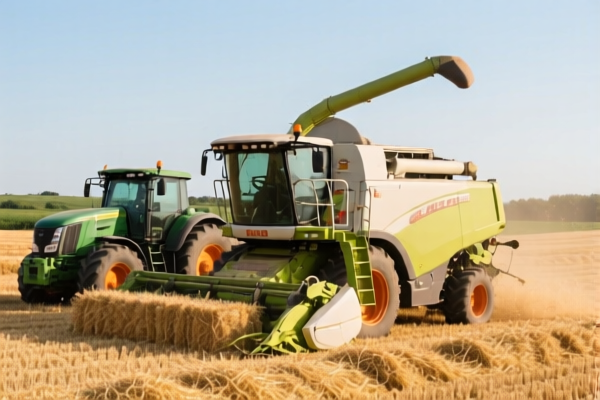
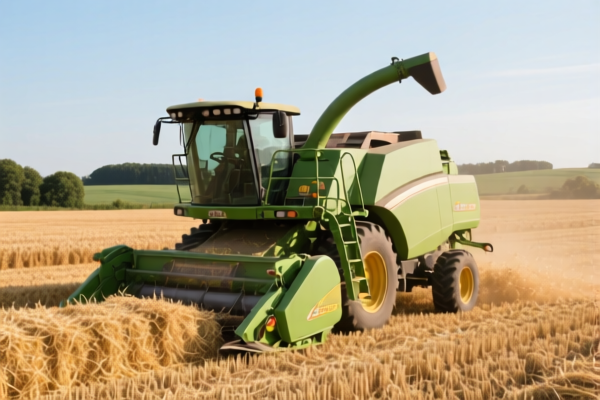

AI Analysis
🌾 Barley Straw Bedding: HS Code Classification & Customs Clearance Guide (2026 Edition)
🌐 HS Code Reference & Customs Strategy | Professional Classification Analysis
📌 One Product, Four Classifications: Why does the same "Barley Straw Bedding" have different tax rates?
Barley Straw Bedding is a natural agricultural product widely used in livestock farming. In international trade, its classification depends heavily on its physical state (raw vs. processed) and manufacturing method (woven vs. loose). The data below reveals four distinct HS Code possibilities for this product, each carrying different tax implications.
⚠️ Critical Distinction:
- Is it loose straw or a woven mat?
- Is it raw material or a finished article?
These two questions determine whether you pay 35.0% or 38.5% in duties!
📦 II. Detailed HS Code Classification Breakdown (Based on Provided Data)
| HS Code | Product Description (Summary) | Material Attribute | Category | Total Tax Rate |
|---|---|---|---|---|
| 4602.90.00.00 | Barley straw bedding, plant fiber material, woven/natural plant article. | Plant Fiber | Woven Article | 38.5% |
| 1404.90.90.90 | Barley straw bedding, plant product, fits "other plant products". | Plant Product | Loose/Other Plant | 35.0% |
| 4602.19.80.00 | Barley straw bedding, plant material, mat form, woven category. | Plant Material | Woven Mat | 37.3% |
| 1404.90.40.00 | Barley straw bedding, plant material, for bedding use, non-specific plant product. | Plant Material | Specific Use Plant | 37.3% |
🔍 Key Analysis:
- Woven vs. Non-Woven: Items under 4602 are considered "Woven or Plaited Articles" (e.g., straw mats, woven bedding layers).
- Raw/Processed Plant: Items under 1404 are considered "Vegetable Products" (e.g., loose straw, processed straw not woven into a specific article).
- Tax Variation: The total tax rate ranges from 35.0% to 38.5%. The 1404.90.90.90 code offers the lowest duty burden (0% base), while 4602.90.00.00 has the highest (3.5% base).
💰 III. 2026 Detailed Tariff Rate Breakdown (Including Additional Duties)
✅ Applicable Country: United States (US)
✅ Origin: China (CN)
✅ Structure: Base Duty + Section 301 (25%) + Section 122 (10%)
🎯 1. HS Code 1404.90.90.90 (Lowest Total Tax: 35.0%)
Best for loose straw or non-woven plant products.
| Item | Content |
|---|---|
| Base Duty | 0.0% (ad valorem) |
| Section 301 Duty | +25.0% (Additional Tariff) |
| Section 122 Duty | +10.0% (Additional Tariff) |
| Total Rate | 35.0% |
| Calculation | CIF Value × 35.0% |
| Legal Basis | Base: 1404.90.90.90 → Sec 301: +25% → Sec 122: +10% |
📌 Explanation:
- This is the most cost-effective classification if the product can be declared as a general "plant product" rather than a "woven article."
- Crucial: The product must not be woven, plaited, or assembled into a specific structured mat. If it is loose or loosely bound, this code applies.
🎯 2. HS Code 1404.90.40.00 (Total Tax: 37.3%)
Best for barley straw specifically used as bedding.
| Item | Content |
|---|---|
| Base Duty | 2.3% (ad valorem) |
| Section 301 Duty | +25.0% (Additional Tariff) |
| Section 122 Duty | +10.0% (Additional Tariff) |
| Total Rate | 37.3% |
| Calculation | CIF Value × 37.3% |
| Legal Basis | Base: 1404.90.40.00 → Sec 301: +25% → Sec 122: +10% |
📌 Explanation:
- This code is more specific to "bedding use" but still falls under the "Vegetable Products" chapter (14).
- It assumes the straw is prepared/processed but not woven into a structural article.
🎯 3. HS Code 4602.19.80.00 (Total Tax: 37.3%)
Best for woven straw mats or structured bedding layers.
| Item | Content |
|---|---|
| Base Duty | 2.3% (ad valorem) |
| Section 301 Duty | +25.0% (Additional Tariff) |
| Section 122 Duty | +10.0% (Additional Tariff) |
| Total Rate | 37.3% |
| Calculation | CIF Value × 37.3% |
| Legal Basis | Base: 4602.19.80.00 → Sec 301: +25% → Sec 122: +10% |
📌 Explanation:
- Chapter 46 covers "Woven or Plaited Articles."
- If the barley straw is woven into a mat, braid, or structured shape, it moves to this chapter.
- The base duty is slightly higher than loose plant products (2.3% vs 0.0% or 2.3%).
🎯 4. HS Code 4602.90.00.00 (Highest Total Tax: 38.5%)
Best for other woven plant fiber articles (not specifically mats).
| Item | Content |
|---|---|
| Base Duty | 3.5% (ad valorem) |
| Section 301 Duty | +25.0% (Additional Tariff) |
| Section 122 Duty | +10.0% (Additional Tariff) |
| Total Rate | 38.5% |
| Calculation | CIF Value × 38.5% |
| Legal Basis | Base: 4602.90.00.00 → Sec 301: +25% → Sec 122: +10% |
📌 Explanation:
- This is a "catch-all" for woven plant fiber articles not specified elsewhere in Chapter 46.
- It carries the highest base duty (3.5%), resulting in the highest total tariff.
- Avoid this code unless the product is clearly a woven article that doesn't fit the "mat" description.
🛠️ IV. Customs Clearance Practical Advice (Step-by-Step)
✅ 1. Prepare Essential Documentation
| Document | Required? | Notes |
|---|---|---|
| ✅ Product Specifications | ✔️ | Must clearly state: "Barley Straw," "Bedding," "Woven/Loose," "Dimensions." |
| ✅ Photos | ✔️ | Show the texture. Is it loose stalks or a tight weave? |
| ✅ Commercial Invoice | ✔️ | Use precise description matching the HS Code chosen. |
| ✅ Packing List | ✔️ | Weight and dimensions must be accurate. |
| ✅ Certificate of Origin | ✔️ | To prove origin for tariff calculations. |
✅ 2. Declaration Strategy (Key Tips)
| Scenario | Recommended HS Code | Reason |
|---|---|---|
| Loose Straw Bales | 1404.90.90.90 |
Lowest duty (0% base). Classified as plant product. |
| Pressed/Compressed Straw Blocks | 1404.90.40.00 |
Specific use (bedding), but not woven. |
| Woven Straw Mats | 4602.19.80.00 |
Woven structure triggers Chapter 46. |
| Generic Woven Plant Fiber | 4602.90.00.00 |
Last resort for woven items. Highest duty. |
🔥 Pro Tip:
"Loose is cheaper, woven is heavier!"
If the straw is not structurally woven, always argue for Chapter 14 (Plant Products) to save on the base duty.
✅ 3. Special Considerations
| Issue | Solution |
|---|---|
| Misclassification Risk | If you declare woven mats as "loose straw," customs may reclassify and impose higher duties + penalties. |
| Section 122 Duty | Applies to most agricultural imports from China. Ensure it’s included in cost calculations. |
| Phytosanitary Certificate | Barley straw may require plant health certificates to prevent pest introduction. Check with USDA APHIS. |
🌍 V. Global Market Comparison (2026)
| Market | Recommended HS Code | Est. Total Duty | Notes |
|---|---|---|---|
| 🇺🇸 USA | 1404.90.90.90 |
35.0% | Lowest rate available. |
| 🇨🇳 China | 1404.90.90.90 |
Varies | Check domestic VAT. |
| 🇪🇺 EU | 1404.90.90 |
~6-9% | No Section 301/122. Lower overall cost. |
| 🇦🇺 Australia | 1404.90.90 |
~5% | Strict biosecurity rules apply. |
📌 Conclusion:
- The US market is the most expensive due to additional tariffs (301 + 122).
- For US imports,1404.90.90.90is the optimal code if the product is not woven.
- If the product is woven,4602.19.80.00is better than4602.90.00.00.
📌 VI. Common Mistakes & Pitfalls (Learn from Others)
❌ Mistake 1: Declaring woven mats as "Loose Straw" to save taxes.
👉 Consequence: Customs inspection reveals weave structure → Reclassification to 4602 → Back taxes + fines.
❌ Mistake 2: Using 4602.90.00.00 for woven mats when 4602.19.80.00 is more specific.
👉 Consequence: Paying an extra 1.2% in base duty unnecessarily.
❌ Mistake 3: Ignoring Section 122 Duty.
👉 Consequence: Underquoting landed cost → Profit margin erosion.
✅ Correct Action:
"Define Texture, Define Use, Choose Chapter 14 or 46 Accurately."
🎯 VII. Conclusion: Optimize Your Clearance Strategy
🎯 Remember:
🔹 "Loose Straw = Chapter 14 (Cheaper)"
🔹 "Woven Mat = Chapter 46 (More Expensive)"
🔹 "Total Duty = Base + 25% (301) + 10% (122)"
📌 Tip:
If you have the option to sell loose or compressed straw instead of woven mats, choose 1404.90.90.90 to minimize duties. If woven is mandatory, use 4602.19.80.00.
📣 Immediate Action:
📞 Consult a customs broker to verify if your product is "woven" or "processed plant material."
🚀 Accurate classification saves up to 3.5% in base duties!
✨ Professional Clearance, Start with Precise Classification!
💼 Every cent of duty counts in international trade!
Customer Reviews
About HS Code Classification
The Harmonized System (HS) is an internationally standardized nomenclature developed by the World Customs Organization (WCO) to classify traded products. Over 200 countries use the HS system as the basis for customs tariffs, trade statistics, and import/export regulations.
Each HS code follows a hierarchical structure:
- Chapter (2 digits) — Broad category of goods (e.g., Chapter 84: Machinery and Mechanical Appliances)
- Heading (4 digits) — More specific grouping within the chapter
- Subheading (6 digits) — Internationally standardized breakdown, used by all WCO member countries
- National subdivisions (8-10 digits) — Country-specific extensions for further classification, such as US HTSUS 10-digit codes
Correct HS code classification is essential for smooth customs clearance, accurate duty payment, and compliance with trade regulations. Misclassification can lead to customs delays, overpayment of duties, or penalties.
When importing from CN to US, the applicable tariff rates may include:
- Most-Favored-Nation (MFN) rate — The standard duty rate applied to WTO members
- General rate — Applied to countries without trade agreements
- Trade remedy duties — Additional tariffs such as Section 301 (anti-dumping), Section 232 (national security), or countervailing duties
The information provided on this page is for reference purposes only. For official classification, please consult with your local customs authority or a licensed customs broker.