Baseball Training Device
CN → US| HS Code | Tariff Rate | Origin | Destination | Doc |
|---|---|---|---|---|
| 9506991500 | 10.0% | CN | US | Official Doc |
| 9506910030 | 22.1% | CN | US | Official Doc |
| 3926202000 | 35.0% | CN | US | Official Doc |
| 3926203000 | 38.0% | CN | US | Official Doc |
Product Images
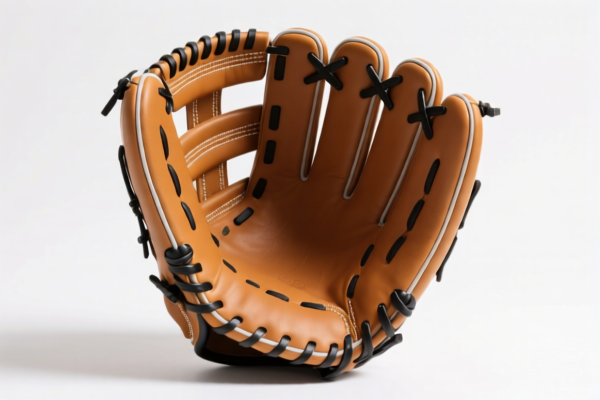
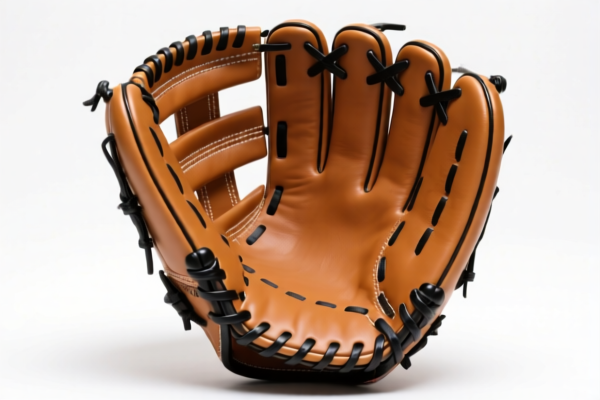
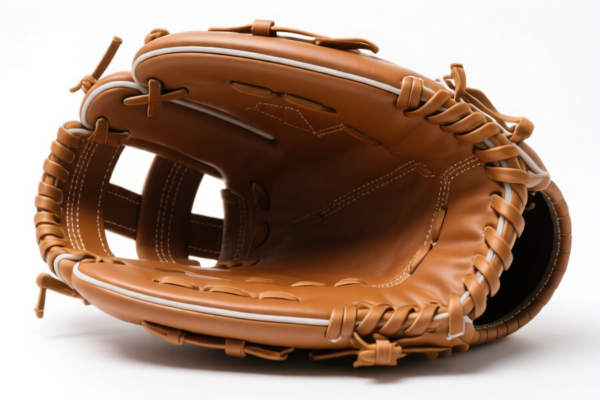
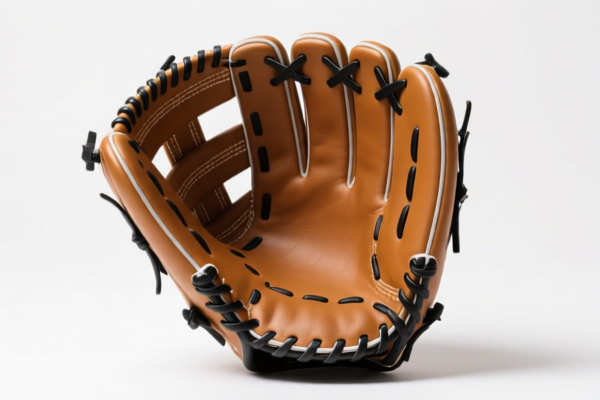
AI Analysis
⚾ Baseball Training Device (and Accessories)
🌐 HS Code Reference & Clearance Guide | 2024/2025 Latest Tariff Analysis | Professional Clearance Strategy
📌 I. Product Definition & Classification: What Exactly Is a "Baseball Training Device"?
In international trade, "Baseball Training Devices" are not a single unified category. They are split based on material composition and specific function. The critical distinction lies in whether the item is primarily defined as a plastic article/apparel or as sports equipment.
Key Distinction Points: 1. Gloves/Mitts Made of Plastic/Synthetic Materials: If the item is a glove or mitt designed for sports (like baseball/softball) but constructed primarily from plastics (headings 3901-3914), it falls under Chapter 39. 2. Pure Plastic Training Aids: Other plastic articles not specifically described elsewhere but related to sports equipment may also fall under Chapter 39. 3. Metal/Wood/Composite Training Equipment: Items like batting cages, pitching machines, or non-ball training tools are classified under Chapter 95 (Sports Articles).
⚠️ Critical Clarification:
- If the "device" is a glove/mitt made of plastic/synthetic leather → HS 3926
- If the "device" is a batting tee, pitching machine, or frame (non-ball equipment) → HS 9506
- Balls themselves are excluded from this specific dataset but are typically HS 9506.99.
📦 II. HS Code Classification Details (Based on Provided Data)
| HS Code | Product Description | Applicable Scenario | Material/Feature |
|--------|--------------------------|--------------------|
| 3926.20.20.00 | Baseball and Softball Gloves and Mitts (Specially designed for sports, of plastics/articles of plastics) | Plastic batting gloves, synthetic leather training mitts, non-leather catcher's mitts | ✅ Plastic/Synthetic Material |
| 3926.20.30.00 | Other Gloves, Mittens, and Mitts for sports (Not baseball/softball specific) | Generic sports gloves (e.g., baseball training gloves that are not specifically "baseball/softball gloves" but generic sports gloves) | ✅ Plastic/Synthetic Material |
| 9506.99.15.00 | Baseball Articles and Equipment, Except Balls (Plastic/Other Materials) | Batting tees, hitting nets, training frames, plastic training aids (non-apparel) | ❌ Not Apparel/Gloves |
| 9506.91.00.30 | Other Articles for Physical Exercise/Gymnastics/ Athletics | Generic athletic training equipment not specifically for baseball (e.g., general agility ladders, resistance bands used in training) | ❌ Generic Athletic Equipment |
🔍 Important Note:
- The dataset specifically distinguishes between Gloves/Mitts (Chapter 39) and General Equipment (Chapter 95).
- Do not misclassify a plastic batting glove as "sports equipment" (9506) if it fits the definition of a glove in 3926. Conversely, do not classify a plastic batting tee as a glove.
💰 III. Tariff Rate Breakdown (Detailed Tax Clauses)
✅ Applicable Country: USA (US)
✅ Origin: China (CN) [Implied by the specific "Additional Tariff" structure in the data]
✅ Effective Time: Current (Check specific dates for 301/IEEPA updates)
🎯 1. 3926.20.20.00 – Baseball/Softball Gloves (Plastic)
| Item | Content |
|---|---|
| Basic Duty | 0.0% |
| Additional Tariff (Section 301) | 25.0% |
| Total Tax | 25.0% |
| Tax Detail | "Basic Duty: 0.0%, Additional Tariff: 25.0%" |
| Key Risk | High duty rate. Even though basic duty is 0%, the 25% penalty is significant. |
📌 Explanation:
- This classification is for gloves/mitts made of plastic/synthetic materials used in baseball/softball.
- The 25% additional tariff is applied on top of the 0% basic duty.
- Total Cost Increase: 25% of the CIF value.
🎯 2. 3926.20.30.00 – Other Sports Gloves (Plastic)
| Item | Content |
|---|---|
| Basic Duty | 0.0% |
| Additional Tariff | 0.0% |
| Total Tax | 0.0% |
| Tax Detail | "Basic Duty: 0.0%, Additional Tariff: 0.0%" |
| Key Advantage | Tax-Free (from additional tariffs). |
📌 Explanation:
- This is for generic sports gloves (not specifically "baseball/softball gloves" but other sports).
- Strategic Note: If a training device can be classified as a "generic sports glove" (e.g., a lightweight plastic training glove not specifically marketed as a baseball glove), it may qualify for 0% total tax.
- Warning: Misclassification is risky. Must truly be "other" sports, not baseball-specific.
🎯 3. 9506.99.15.00 – Baseball Equipment (Non-Ball)
| Item | Content |
|---|---|
| Basic Duty | 0.0% |
| Additional Tariff (General) | 0.0% |
| Metal/Aluminum/Copper Tariff | 50% (If applicable) |
| Total Tax | 0.0% (unless made of metal/aluminum/copper) |
| Tax Detail | "Basic Duty: 0.0%, Additional Tariff: 0.0%; Steel/Aluminum/Copper Additional: 50%" |
| Key Risk | Check Material! If the training device (e.g., a metal cage frame) is made of steel/aluminum, the 50% metal tariff applies. |
📌 Explanation:
- This covers baseball articles and equipment (except balls).
- Plastic/Composite Training Aids (e.g., plastic batting tees, nets, rubber training balls) → 0% Total Tax.
- Metal/Aluminum Equipment (e.g., metal pitching machines, metal frames) → 50% Additional Tariff.
- Critical: Determine the primary material. If it's a plastic training aid, it's cheap (0%). If it's a metal structure, it's expensive (50%).
🎯 4. 9506.91.00.30 – Other Athletic Equipment
| Item | Content |
|---|---|
| Basic Duty | 4.6% |
| Additional Tariff (General) | 7.5% |
| Metal/Aluminum/Copper Tariff | 50% (If applicable) |
| Total Tax | 12.1% (or 54.6% if metal) |
| Tax Detail | "Basic Duty: 4.6%, Additional Tariff: 7.5%; Steel/Aluminum/Copper Additional: 50%" |
| Key Risk | High basic duty + additional tariff. |
📌 Explanation:
- This is a catch-all for athletic equipment not specifically described elsewhere.
- Plastic/General Equipment → 12.1% Total Tax.
- Metal/Aluminum Equipment → 12.1% + 50% = 62.1%? Wait, the data says "Total Tax: 12.1%".
- Clarification: The "50%" metal tariff might be inclusive or alternative. The data explicitly states "Total Tax: 12.1%". This suggests that for this specific HS code, the total effective rate is 12.1% (4.6% + 7.5%). The "Steel/Aluminum/Copper: 50%" may apply only in specific cases or is a separate footnote not reflected in the "Total Tax" line for this code. Assume 12.1% for general clearance unless metal-specific rules apply.
🛠️ IV. Clearance Practical Advice (Battle-Tested Guide)
✅ 1. Documentation Checklist (Must-Have)
| Document | Required | Purpose |
|---|---|---|
| Product Photos | ✔️ | Clear images showing material (plastic vs. metal) and shape (glove vs. equipment) |
| Material Breakdown | ✔️ | Specify % of plastic, metal, rubber, etc. |
| Intended Use Statement | ✔️ | "For baseball training," "For generic sports," etc. |
| Commercial Invoice | ✔️ | Accurate description matching HS Code |
| Packing List | ✔️ | Weights, dimensions, quantities |
| Material Safety Data Sheet (MSDS) | ⚠️ If Chemicals | If treated with coatings |
✅ 2. Classification Strategy (Key Decisions)
| Scenario | Recommended HS Code | Tax Rate | Why? |
|---|---|---|---|
| Plastic Batting Gloves | 3926.20.20.00 |
25% | Specific "baseball/softball gloves" of plastic |
| Synthetic Leather Mitts | 3926.20.20.00 |
25% | Same as above; "plastic articles" includes synthetics |
| Plastic Batting Tee | 9506.99.15.00 |
0% | "Baseball article," non-metal, non-ball |
| Metal Pitching Machine | 9506.99.15.00 |
50% | "Baseball article," but metal triggers 50% metal tariff |
| Generic Plastic Training Gloves | 3926.20.30.00 |
0% | "Other" sports gloves, not specifically baseball |
| Agility Ladder (Plastic) | 9506.91.00.30 |
12.1% | Generic athletic equipment, not baseball-specific |
🔥 Golden Rule:
- Plastic Gloves for Baseball = 25% (Painful but specific)
- Plastic Baseball Equipment (Non-Glove) = 0% (Best Option!)
- Metal Baseball Equipment = 50% (Very Expensive)
- Generic Sports Gloves = 0% (If you can argue they are not "baseball-specific")
✅ 3. Common Mistakes & Pitfalls
❌ Mistake 1: Classifying a plastic baseball training glove as 9506.99.15.00 (Baseball Equipment)
👉 Result: Incorrect. Gloves fall under Chapter 39. Penalty Risk + Back Taxes.
❌ Mistake 2: Classifying a metal batting cage frame as 9506.99.15.00 and ignoring the metal tariff
👉 Result: You will be charged 50% additional tariff on metal components. Unexpected Cost.
❌ Mistake 3: Calling a plastic training aid a "Glove" to avoid the 25% tariff on 3926.20.20.00
👉 Result: If it's clearly a glove, Customs will reclassify it. Misclassification Penalty.
❌ Mistake 4: Assuming all "Baseball Equipment" is 0%
👉 Result: Only non-metal, non-glove items are 0%. Metal items are 50%.
✅ Correct Approach:
- Plastic Batting Tees/Nets: Use
9506.99.15.00→ 0% Tax (Savings!)- Plastic Gloves: Use
3926.20.20.00→ 25% Tax (Acceptable cost)- Metal Equipment: Use
9506.99.15.00+ 50% Metal Tariff (Budget for high cost)
🌍 V. Global Market Comparison (2024/2025)
| Country | Recommended HS Code | Tax Rate (China Origin) | Notes |
|---|---|---|---|
| 🇺🇸 USA | 9506.99.15.00 (Plastic Equipment) |
0% | Best for plastic training aids |
| 🇺🇸 USA | 3926.20.20.00 (Plastic Gloves) |
25% | High tariff on gloves |
| 🇺🇸 USA | 9506.99.15.00 (Metal Equipment) |
50% | Metal tariff applies |
| 🇨🇳 China | 9506.99.15.00 |
5-10% | Import duty varies |
| 🇪🇺 EU | 9506.99.15.00 |
4.5% | No additional US-style tariffs |
📌 Conclusion:
- USA is the most complex market for baseball training devices due to material-specific additional tariffs (25% for gloves, 50% for metal).
- Plastic non-glove equipment (9506.99.15.00) is the most tax-efficient category (0% in USA).
- Gloves are heavily taxed (25%). Consider generic sports gloves (3926.20.30.00) if legally defensible (0%).
📌 VI. Final Recommendations
- Product Design: If possible, design training devices as plastic non-glove equipment (e.g., tees, nets, cones) to qualify for 0% tariff in the USA.
- Material Declaration: Clearly state "Plastic" or "Composite" in the bill of lading and invoice. Avoid vague terms like "Equipment" without material specs.
- Glove Classification: If importing gloves, budget for 25% tariff. If possible, market them as "Generic Sports Gloves" (not baseball-specific) to use
3926.20.30.00(0%), but ensure this is legally accurate. - Metal Items: If importing metal frames or machines, expect 50% additional tariff. Consider non-metal alternatives (plastic/rubber) for cost savings.
- Pre-Arrival Clearance: Submit a Binding Ruling Request to CBP for complex cases (e.g., hybrid material gloves) to avoid disputes.
📣 Immediate Action:
📞 Verify Material Composition → Plastic? → Glove? → 3926.20.20.00 (25%)
📞 Verify Material Composition → Plastic? → Not Glove? → 9506.99.15.00 (0%)
📞 Verify Material Composition → Metal? → 9506.99.15.00 (50%)
✨ Smart Classification, Smart Savings!
💼 Your Bottom Line Depends on the Right HS Code!
Customer Reviews
About HS Code Classification
The Harmonized System (HS) is an internationally standardized nomenclature developed by the World Customs Organization (WCO) to classify traded products. Over 200 countries use the HS system as the basis for customs tariffs, trade statistics, and import/export regulations.
Each HS code follows a hierarchical structure:
- Chapter (2 digits) — Broad category of goods (e.g., Chapter 84: Machinery and Mechanical Appliances)
- Heading (4 digits) — More specific grouping within the chapter
- Subheading (6 digits) — Internationally standardized breakdown, used by all WCO member countries
- National subdivisions (8-10 digits) — Country-specific extensions for further classification, such as US HTSUS 10-digit codes
Correct HS code classification is essential for smooth customs clearance, accurate duty payment, and compliance with trade regulations. Misclassification can lead to customs delays, overpayment of duties, or penalties.
When importing from CN to US, the applicable tariff rates may include:
- Most-Favored-Nation (MFN) rate — The standard duty rate applied to WTO members
- General rate — Applied to countries without trade agreements
- Trade remedy duties — Additional tariffs such as Section 301 (anti-dumping), Section 232 (national security), or countervailing duties
The information provided on this page is for reference purposes only. For official classification, please consult with your local customs authority or a licensed customs broker.