Basket, Wicker Products
CN → US| HS Code | Tariff Rate | Origin | Destination | Doc |
|---|---|---|---|---|
| 4601932000 | 41.6% | CN | US | Official Doc |
| 4602121600 | 40.0% | CN | US | Official Doc |
| 4602110700 | 35.0% | CN | US | Official Doc |
| 4601942000 | 41.6% | CN | US | Official Doc |
| 4602191700 | 35.0% | CN | US | Official Doc |
Product Images
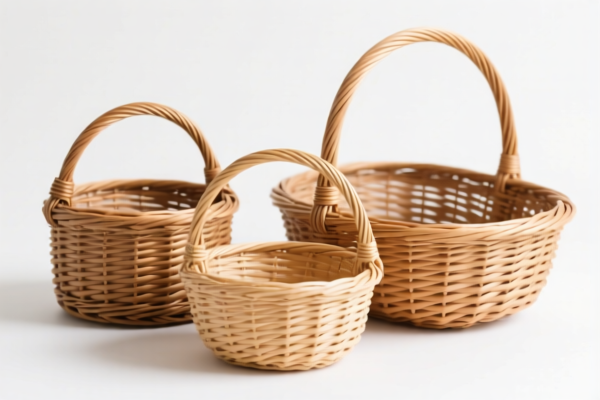
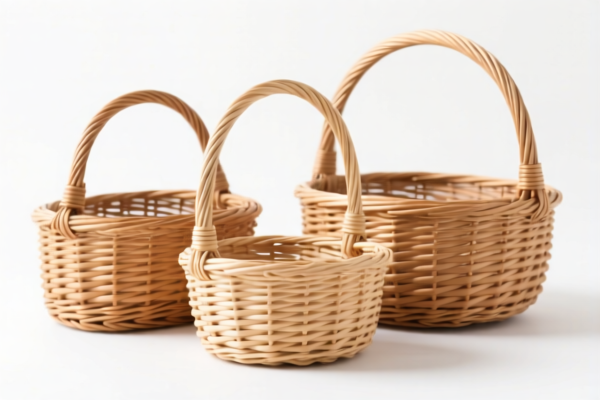
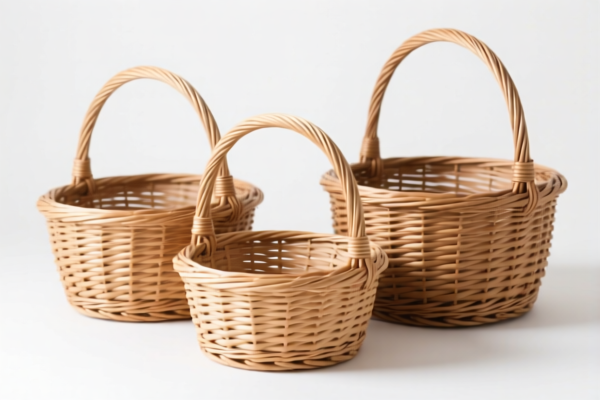
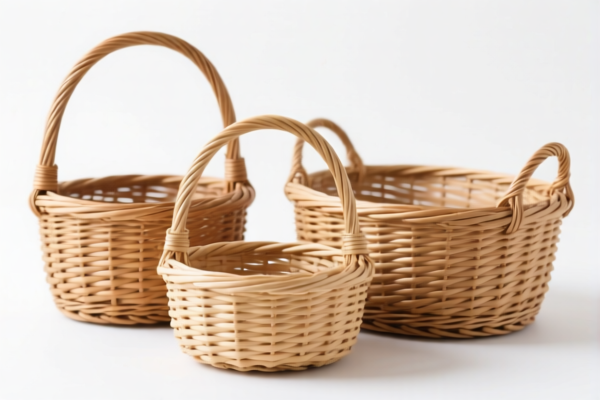
AI Analysis
🧺 Basket & Wicker Products (Woven Materials & Articles)
🌐 HS Code Reference & Customs Clearance Guide | 2026 Latest Tariff Analysis | Professional Strategy for US Imports
📌 I. Product Definition & Classification: Do You Really Know "Wicker"?
Basket and Wicker products are ubiquitous in home decor, storage, and agriculture. However, under international trade rules, they are not a single category. They are strictly divided based on manufacturing process (woven mats vs. shaped structures) and material composition.
Woven Products (Chapter 4601):
Flat woven mats, screens, or unfinished woven materials (e.g., reed mats, woven baskets not fully shaped).
Wickerware/Basketry (Chapter 4602):
Shaped articles made by weaving, plaiting, or braiding (e.g., finished baskets, trunks, hatboxes). This is the most common classification for consumer baskets.
⚠️ Key Distinction Point:
- If the item is a flat mat, screen, or unfinished woven sheet → Likely 4601.
- If the item is a finished basket, box, or shaped container → Likely 4602.
- Material Matters: "Willow" (柳) and "Rattan" (藤) are specific plant fibers. Misclassifying material can lead to errors in duty calculation if specific sub-rules apply.
📦 II. HS Code Classification Details (2026 Latest Tariff Authority对照)
Based on the provided data, here are the 6 specific HS Codes applicable to Wicker/Basket products, ranging from 35.0% to 41.6% total duty for imports from China to the US.
| HS Code | Product Description (Summary) | Material & Shape | Base Duty | Total Duty (China-US) |
|---|---|---|---|---|
4601.93.20.00 |
Wicker Basket; Material: Rattan/Willow woven; Shape: Basket | Rattan/Willow; Basket | 6.6% | 41.6% |
4602.12.16.00 |
Willow/Rattan Basket; Material: Willow/Rattan; Shape: Basket | Willow/Rattan; Basket | 5.0% | 40.0% |
4602.11.07.00 |
Willow Basket; Material: Willow Twig; Shape: Basket | Willow; Basket | 0.0% | 35.0% |
4601.94.20.00 |
Willow Basket; Material: Willow Twig; Shape: Basket | Willow; Basket | 6.6% | 41.6% |
4602.19.17.00 |
Willow Basket; Material: Woven Willow/Plant; Shape: Basket | Willow/Plant; Basket | 0.0% | 35.0% |
4601.94.05.00 |
Willow Basket; Material: Other Plant Material; Shape: Woven Article | Other Plant; Woven Item | 2.7% | 37.7% |
🔍 Key Insight:
- Lowest Duty:4602.11.07.00and4602.19.17.00(Base 0% → Total 35%). These typically apply to specific willow products classified under "Wickerware."
- Highest Duty:4601.93.20.00and4601.94.20.00(Base 6.6% → Total 41.6%). These fall under "Woven Products," which often carry higher base tariffs before附加税.
💰 III. 2026 Latest Tariff Rate Breakdown (Including Surcharge & Policy Add-ons)
✅ Applicable Country: United States (US)
✅ Country of Origin: China (CN)
✅ Effective Date: November 10, 2025 (and subsequent imports)
🎯 1. 4601.93.20.00 & 4601.94.20.00 —— Woven Baskets (Plant Material)
| Item | Content |
|---|---|
| Base Tariff | 6.6% (Ad Valorem) |
| Section 301 Surcharge | +25.0% (USITC Footnote) |
| Section 122 Clause | +10.0% (Specific China-related clause) |
| Total Tariff | 41.6% |
| Calculation Method | CIF Value × 41.6% |
| De Minimis Exemption | ❌ NOT Eligible (Denied for Chinese origin under Section 301/122) |
| Legal Basis Path | Section 301 → Section 122 → USITC:4601.93.20.00 |
📌 Explanation:
- These codes classify as "Woven Products" rather than finished wickerware.
- The 6.6% base rate is significant. Combined with the 25% Section 301 tariff and 10% Section 122 tariff, the total burden is high.
- Risk: High. Customs may scrutinize if the item is truly "woven mat-like" vs. "finished basket."
🎯 2. 4602.12.16.00 —— Willow/Rattan Basket
| Item | Content |
|---|---|
| Base Tariff | 5.0% |
| Section 301 Surcharge | +25.0% |
| Section 122 Clause | +10.0% |
| Total Tariff | 40.0% |
| Calculation Method | CIF Value × 40.0% |
| De Minimis Exemption | ❌ NOT Eligible |
| Legal Basis Path | Section 301 → Section 122 → USITC:4602.12.16.00 |
📌 Note:
- Slightly lower total duty than 4601 codes.
- Specifically identifies "Rattan/Willow" as material. Ensure materials match exactly; using mixed materials might trigger reclassification.
🎯 3. 4602.11.07.00 & 4602.19.17.00 —— Willow Basket (Best Rate Options)
| Item | Content |
|---|---|
| Base Tariff | 0.0% |
| Section 301 Surcharge | +25.0% |
| Section 122 Clause | +10.0% |
| Total Tariff | 35.0% |
| Calculation Method | CIF Value × 35.0% |
| De Minimis Exemption | ❌ NOT Eligible |
| Legal Basis Path | Section 301 → Section 122 → USITC:4602.11.07.00 / 4602.19.17.00 |
📌 Advantage:
- Lowest total duty (35%) among all listed codes.
- Applies to "Willow" specifically.
- Crucial: The item must be clearly identified as Willow (柳) and not generic "plant material" or "Rattan" if it doesn't fit the specific sub-heading.
🎯 4. 4601.94.05.00 —— Other Plant Material Basket
| Item | Content |
|---|---|
| Base Tariff | 2.7% |
| Section 301 Surcharge | +25.0% |
| Section 122 Clause | +10.0% |
| Total Tariff | 37.7% |
| Calculation Method | CIF Value × 37.7% |
| De Minimis Exemption | ❌ NOT Eligible |
| Legal Basis Path | Section 301 → Section 122 → USITC:4601.94.05.00 |
📌 Note:
- Used for "Other plant materials" not specifically willow/rattan.
- Mid-range duty cost. Useful if material is ambiguous (e.g., bamboo mixed with other fibers).
🛠️ IV. Customs Clearance Practical Advice (Real-World Pitfall Guide)
✅ 1. Preparation Checklist (Non-Negotiable)
| Document | Required | Explanation |
|---|---|---|
| ✅ Product Specifications | ✔️ | Must specify Material (e.g., "100% Willow," "Rattan," "Mixed Plant Fiber") and Process (Woven vs. Braided). |
| ✅ Product Photos | ✔️ | Clear images showing weaving pattern, shape (basket vs. mat), and labels. |
| ✅ Commercial Invoice | ✔️ | Must explicitly state: "Wicker Basket, Made in China, Material: Willow." |
| ✅ Packing List | ✔️ | Weight and dimensions must match. |
| ✅ Origin Certificate | ✔️ | Proves CN origin (subject to surcharges). |
✅ 2. Declaration Tips (Key Mnemonic)
🔥 "Willow is 35%, Rattan is 40%, Woven Mat is 41.6%! Check Material, Check Shape!"
| Scenario | Correct Declaration | Wrong Action | Consequence |
|---|---|---|---|
| Pure Willow Basket | 4602.11.07.00 or 4602.19.17.00 (35%) |
Declare as "Wicker Basket" generically | Risk of reclassification to higher rate (40%+). |
| Rattan Basket | 4602.12.16.00 (40%) |
Declare as "Willow Basket" | Customs Penalty for false declaration. |
| Woven Mat/Screen | 4601.94.20.00 (41.6%) |
Declare as "Basket" | Underpayment of Duty → Back taxes + fines. |
| Mixed Material Basket | 4601.94.05.00 (37.7%) |
Declare as "100% Willow" | Customs Audit → Delay + Re-determination. |
✅ 3. Special Cases
| Situation | Handling Advice |
|---|---|
| Bamboo Baskets | Often classified under 4601 (Woven) or 4602 (Wickerware). If woven flat, likely 4601. If shaped, likely 4602. Check specific sub-rules. |
| Plastic "Wicker" | NOT covered here. Plastic wicker falls under Chapter 39 (Plastics). Duty structure is completely different. Do not misdeclare! |
| Mixed Wood & Wicker | If wood frame is dominant, may fall under Chapter 44 (Wood). Consult customs broker. |
| Small Gifts < $800 | ❌ No De Minimis Exemption for Chinese origin under Section 301/122. Even small items pay 35-41.6%. |
🌍 V. Global Market Comparison (2026 Update)
| Country/Region | Recommended HS Code | Total Duty (China Origin) | Notes |
|---|---|---|---|
| 🇺🇸 USA | 4602.11.07.00 |
35.0% | Includes 25% Sec 301 + 10% Sec 122. High cost. |
| 🇨🇳 China | 4602.11.07.00 |
5-10% | No surcharges. Low cost. |
| 🇪🇺 EU | 4602.11.00 |
4-6% | No Section 301/122 equivalent. Lower risk. |
| 🇬🇧 UK | 4602.11.00 |
4-6% | Post-Brexit rules apply, but generally lower than US. |
📌 Conclusion:
- US Market is the most expensive for Chinese wicker products due to Section 301 (25%) and Section 122 (10%) tariffs.
- Duty Saving Strategy:
1. Ensure precise material declaration (Willow = 35% vs. Woven = 41.6%).
2. Consider supply chain diversification (e.g., sourcing from Vietnam, India, or Indonesia) to avoid China-specific surcharges.
3. Apply for HTS Code Exclusions if applicable (though rare for wicker).
📌 VI. Common Errors & Pitfalls (Lessons Learned)
❌ Error 1: Calling "Plastic Wicker" a "Wicker Basket"
👉 Consequence: Wrong HS Code (Chapter 39 vs. 46). Penalty + Re-classification Fee.
❌ Error 2: Ignoring "Section 122"
👉 Consequence: Forgetting the 10% additional tax leads to underpayment. Customs will demand back-taxes + interest.
❌ Error 3: Vague Material Description ("Plant Material")
👉 Consequence: Customs may assign the highest base rate (6.6%) if they cannot verify it's "Willow" (0% base). Cost Increase: 1.7-6.6%.
❌ Error 4: Assuming De Minimis ($800) Applies
👉 Consequence: False. Chinese origin wicker baskets are excluded from de minimis. You pay duty on every box.
✅ Correct Practice:
"Handmade Willow Basket, 12-inch, Round, Flat-Bottom, Made in China. Material: 100% Salix (Willow)."
🎯 VII. Conclusion: Precision Saves Money!
🎯 Remember the Mnemonic:
🔹 "Willow 35%, Rattan 40%, Woven 41.6%! No De Minimis for China!"
🔹 "Material is King: Specify Willow, Not Generic 'Plant'!"
🔹 "Plastic is NOT Wicker: Chapter 39 vs. 46!"
📌 Pro Tip:
- If your sales volume is high, calculate the $0.35-$0.42 duty per $1.00 of value. It significantly impacts margin.
- Consider pre-classification rulings from US Customs and Border Protection (CBP) if your product is unique (e.g., hybrid materials).
- Supply Chain Check: Can you source from non-China countries to bypass the 35-41.6% surcharge? (Duty may drop to 4-6%).
📣 Immediate Action:
📞 Verify Material: Is it 100% Willow? Or Mixed?
📞 Check Shape: Is it a Basket (4602) or Woven Mat (4601)?
🚀 Accurate Declaration: Use the correct HS Code to avoid seizure, delay, and massive penalties.
✨ Professional Customs Clearance Starts with Accurate Classification!
💼 Every 1% of duty saved is pure profit!
Customer Reviews
About HS Code Classification
The Harmonized System (HS) is an internationally standardized nomenclature developed by the World Customs Organization (WCO) to classify traded products. Over 200 countries use the HS system as the basis for customs tariffs, trade statistics, and import/export regulations.
Each HS code follows a hierarchical structure:
- Chapter (2 digits) — Broad category of goods (e.g., Chapter 84: Machinery and Mechanical Appliances)
- Heading (4 digits) — More specific grouping within the chapter
- Subheading (6 digits) — Internationally standardized breakdown, used by all WCO member countries
- National subdivisions (8-10 digits) — Country-specific extensions for further classification, such as US HTSUS 10-digit codes
Correct HS code classification is essential for smooth customs clearance, accurate duty payment, and compliance with trade regulations. Misclassification can lead to customs delays, overpayment of duties, or penalties.
When importing from CN to US, the applicable tariff rates may include:
- Most-Favored-Nation (MFN) rate — The standard duty rate applied to WTO members
- General rate — Applied to countries without trade agreements
- Trade remedy duties — Additional tariffs such as Section 301 (anti-dumping), Section 232 (national security), or countervailing duties
The information provided on this page is for reference purposes only. For official classification, please consult with your local customs authority or a licensed customs broker.