Basketry and Wickerwork Products
CN → US| HS Code | Tariff Rate | Origin | Destination | Doc |
|---|---|---|---|---|
| 4602110700 | 35.0% | CN | US | Official Doc |
| 4602121600 | 40.0% | CN | US | Official Doc |
Product Images
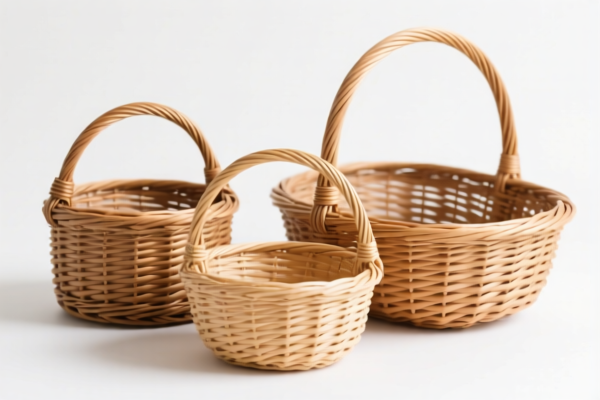
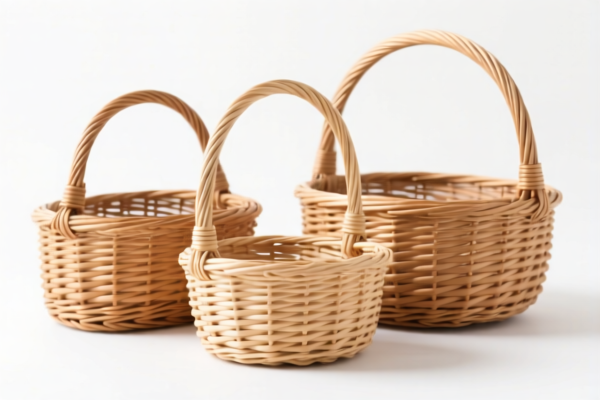
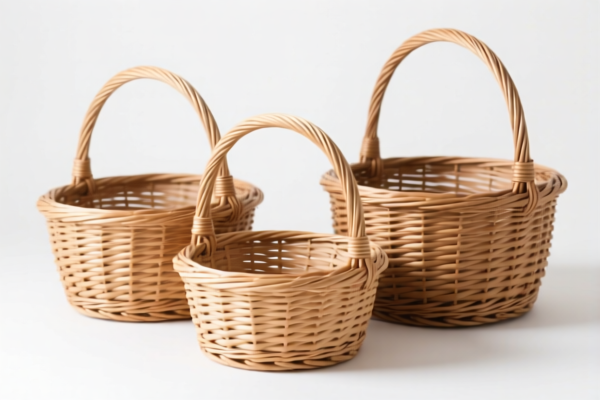
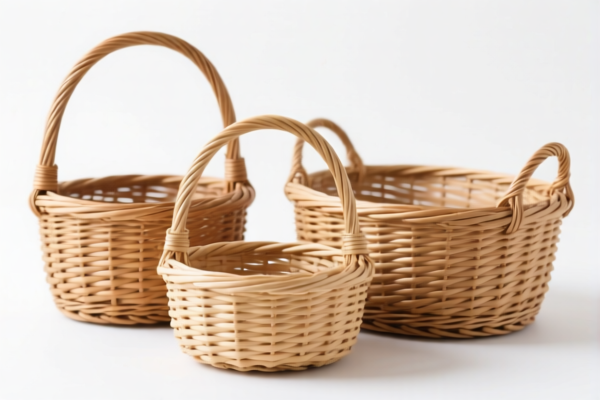
AI Analysis
🧺 Basketry & Wickerwork Products: The Ultimate 2026 HS Code & Tariff Guide
🌐 HS Code Reference & Customs Clearance Strategy | 2026 Latest Tariff Analysis | Professional Clearance Solutions
📌 I. Product Definition & Classification: Do You Really Know "Basketry"?
Basketry and wickerwork are not just rustic decor; they are functional goods used in storage, retail, agriculture, and interior design. In international trade, these products are strictly classified by material and manufacturing method. The key distinction lies in whether the article is made directly to shape from plaiting materials or made up from pre-formed articles (heading 4601).
Two Main Categories Identified in Data: 1. Bamboo Wickerwork: Articles made from bamboo strips, plaited directly into shape. 2. Rattan Other Articles: Articles made from rattan, excluding specific baskets/bags.
⚠️ Critical Distinction:
- If the product is made of Bamboo and is a basket/bag → Go to 4602.11.07.00
- If the product is made of Rattan and is NOT a basket/bag (e.g., furniture, trays, other shapes) → Go to 4602.12.16.00
📦 II. HS Code Classification Details (2026 Latest Tariff Authority)
| HS Code | Product Description | Material | Specific Type | Tax Detail (China Origin) |
|---|---|---|---|---|
4602.11.07.00 |
Basketwork/Wickerwork, Of vegetable materials: Of bamboo: Other baskets/bags, whether or not lined | Bamboo | Baskets & Bags | 25.0% |
4602.12.16.00 |
Basketwork/Wickerwork, Of vegetable materials: Of rattan: Other | Rattan | Other Articles (Non-basket/bag) | 30.0% |
🔍 Key Warning:
- Bamboo Baskets fall under4602.11.07.00.
- Rattan Items that are not baskets or bags (e.g., rattan chairs, shelves, decorative items) fall under4602.12.16.00.
- Misclassifying a bamboo basket as "other rattan items" or vice versa can lead to significant tariff discrepancies and customs delays.
💰 III. 2026 Latest Tariff Rate Breakdown (Including Surcharges)
✅ Applicable Country: United States (US)
✅ Origin: China (CN)
✅ Effective Time: Current (Subject to Section 301 & IEEPA rules)
🎯 1. 4602.11.07.00 —— Bamboo Baskets & Bags
| Item | Content |
|---|---|
| Base Tariff Rate | 0.0% (Ad valorem) |
| Additional Tariff | +25.0% (Section 301 / USITC) |
| Total Tax Rate | 25.0% |
| Tax Calculation | CIF Value × 25% |
| De Minimis Exemption? | ❌ NO (Denied for Section 301 goods) |
| Legal Basis Path | USITC:4602.11.07.00 → FOOTNOTE:Section 301 |
📌 Explanation:
- Although the base duty is 0%, the 25% surcharge applies due to the "List 4" or relevant Section 301 classification for Chinese-origin bamboo articles.
- This results in a 25% total landed cost increase solely on duties.
🎯 2. 4602.12.16.00 —— Other Rattan Articles
| Item | Content |
|---|---|
| Base Tariff Rate | 5.0% (Ad valorem) |
| Additional Tariff | +25.0% (Section 301 / USITC) |
| Total Tax Rate | 30.0% |
| Tax Calculation | CIF Value × 30% |
| De Minimis Exemption? | ❌ NO (Denied for Section 301 goods) |
| Legal Basis Path | USITC:4602.12.16.00 → FOOTNOTE:Section 301 |
📌 Note:
- Unlike bamboo baskets, rattan articles have a 5% base duty.
- Adding the 25% surcharge brings the total to 30%.
- This is 5% higher than bamboo baskets. Choosing the wrong HS code or material description can cost you extra.
🛠️ IV. Customs Clearance Practical Advice (Real-World Pitfall Guide)
✅ 1. Required Documentation Checklist (Non-Negotiable)
| Document | Mandatory? | Notes |
|---|---|---|
| ✅ Product Specifications | ✔️ | Must specify Material (Bamboo vs. Rattan) and Type (Basket/Bag vs. Other). |
| ✅ Product Photos | ✔️ | Clear images showing plaiting method, material texture, and final shape. |
| ✅ Commercial Invoice | ✔️ | Must state "Bamboo Wicker Basket" or "Rattan Article" precisely. |
| ✅ Packing List | ✔️ | Itemize baskets/bags separately from other rattan items if mixed. |
| ✅ Material Certificate | ✔️ | Prove origin of materials (e.g., Bamboo from China) to support HS code. |
✅ 2. Declaration Tips (Key Mantras)
🔥 "Material First, Shape Second, Type Clear, Tax Clear!"
| Scenario | Correct Declaration | Incorrect Practice |
|---|---|---|
| Bamboo Basket | 4602.11.07.00 |
Calling it "Rattan Basket" → 30% tax |
| Rattan Shelf/Chair | 4602.12.16.00 |
Calling it "Basket" → 25% tax (Wrong base rate) |
| Mixed Container | Separate Lines | Mixing bamboo and rattan on one line → Risk of rejection |
| Lined Basket | 4602.11.07.00 |
Claiming "Textile Basket" → Wrong Chapter |
✅ 3. Special Cases Handling
| Scenario | Handling Advice |
|---|---|
| Bamboo vs. Rattan Confusion | Provide microscopic analysis or supplier certification if materials look similar. |
| Composite Materials | If bamboo is coated with plastic, it may still be classified under 4602, but check if the plastic coating changes the "plaiting material" status. |
| Gift Sets | If baskets are part of a gift set (e.g., with candles), the whole set may be classified by its essential character, potentially changing the HS code. |
| Loofah Articles | Not included in this data set, but if present, they are also under heading 4602. Ensure they are separated from bamboo/rattan items. |
🌍 V. Global Market Comparison (2026 Latest)
| Country/Region | Recommended HS Code | Tariff Rate | Notes |
|---|---|---|---|
| 🇺🇸 USA | 4602.11.07.00 / 4602.12.16.00 |
25% / 30% | High surcharges apply. No de minimis. |
| 🇨🇳 China | 4602.11.07.00 / 4602.12.16.00 |
0% / 5% | No additional surcharges for domestic trade. |
| 🇪🇺 EU | 4602.11.00 / 4602.12.00 |
~5-6% | Generally lower base duties. No US-style surcharges. |
| 🇬🇧 UK | 4602.11.00 / 4602.12.00 |
~5-6% | Post-Brexit tariffs similar to EU. |
| 🇦🇺 Australia | 4602.11.00 / 4602.12.00 |
~5% | No significant surcharges. |
📌 Conclusion:
- The USA market is significantly more expensive for Chinese-made basketry due to the 25-30% total duty.
- For cost-sensitive markets, consider sourcing from Vietnam or Indonesia (if eligible for lower tariffs), but verify rules of origin.
📌 VI. Common Mistakes & Pitfalls (Lessons Learned)
❌ Mistake 1: Calling all wicker items "Bamboo"
👉 Consequence: If it's actually Rattan, you might underdeclare the base duty (5% vs 0%), leading to underpayment penalties when customs audits.
❌ Mistake 2: Ignoring the "Basket/Bag" distinction for Rattan
👉 Consequence: Rattan baskets are classified differently than "Other Rattan Articles." Misclassification leads to incorrect tariff application (25% vs 30%).
❌ Mistake 3: Assuming De Minimis Exemption Applies
👉 Consequence: Section 301 goods are NOT eligible for de minimis. Small shipments will still face duties.
❌ Mistake 4: Vague Descriptions like "Wicker Box"
👉 Consequence: Customs will ask for clarification, causing delays. Specify: "Bamboo Wicker Storage Basket" or "Rattan Decorative Tray."
✅ Correct Practice:
"Bamboo Wicker Basket, Hand-woven, Natural Color, Lined with Fabric, Model BW-101"
HS Code:4602.11.07.00| Tax: 25%
🎯 VII. Conclusion: Precision in Classification Saves Money!
🎯 Remember the Mantra:
🔹 "Bamboo Basket = 25% Total"
🔹 "Rattan Other = 30% Total"
🔹 "Material & Shape Define the Rate!"
📌 Pro Tip:
If you are shipping small quantities or samples, do NOT rely on de minimis exemption for these HS codes. Plan for the full 25-30% duty in your cost calculations.
📣 Immediate Action:
📞 Verify material with supplier (Bamboo vs. Rattan)
📸 Take clear photos of the product and its plaiting
📄 Apply for HS Code Pre-ruling if uncertain
🚀 Clear customs smoothly, avoid penalties, and protect your margins!
✨ Professional Customs Clearance Starts with Accurate Classification!
💼 Every Percent Matters in Global Trade!
Customer Reviews
About HS Code Classification
The Harmonized System (HS) is an internationally standardized nomenclature developed by the World Customs Organization (WCO) to classify traded products. Over 200 countries use the HS system as the basis for customs tariffs, trade statistics, and import/export regulations.
Each HS code follows a hierarchical structure:
- Chapter (2 digits) — Broad category of goods (e.g., Chapter 84: Machinery and Mechanical Appliances)
- Heading (4 digits) — More specific grouping within the chapter
- Subheading (6 digits) — Internationally standardized breakdown, used by all WCO member countries
- National subdivisions (8-10 digits) — Country-specific extensions for further classification, such as US HTSUS 10-digit codes
Correct HS code classification is essential for smooth customs clearance, accurate duty payment, and compliance with trade regulations. Misclassification can lead to customs delays, overpayment of duties, or penalties.
When importing from CN to US, the applicable tariff rates may include:
- Most-Favored-Nation (MFN) rate — The standard duty rate applied to WTO members
- General rate — Applied to countries without trade agreements
- Trade remedy duties — Additional tariffs such as Section 301 (anti-dumping), Section 232 (national security), or countervailing duties
The information provided on this page is for reference purposes only. For official classification, please consult with your local customs authority or a licensed customs broker.