Bath Salts Ball
CN → US| HS Code | Tariff Rate | Origin | Destination | Doc |
|---|---|---|---|---|
| 2501000000 | 35.0% | CN | US | Official Doc |
| 3307305000 | 39.9% | CN | US | Official Doc |
| 3304995000 | 35.0% | CN | US | Official Doc |
| 3304910050 | 35.0% | CN | US | Official Doc |
| 3307301000 | 40.8% | CN | US | Official Doc |
Product Images
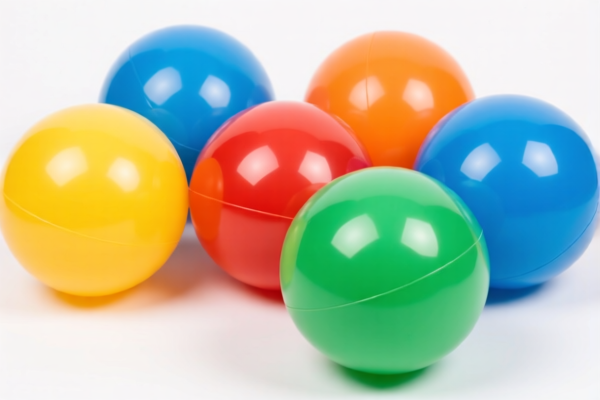
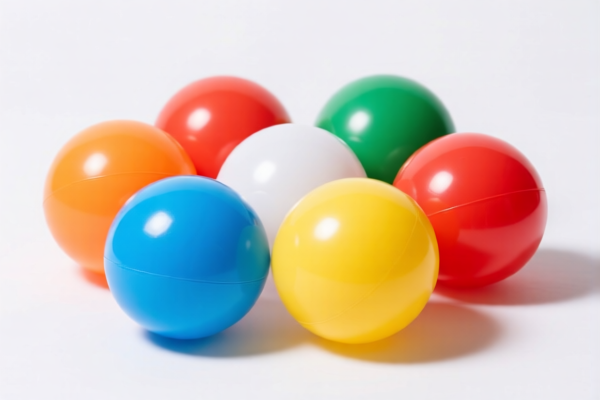
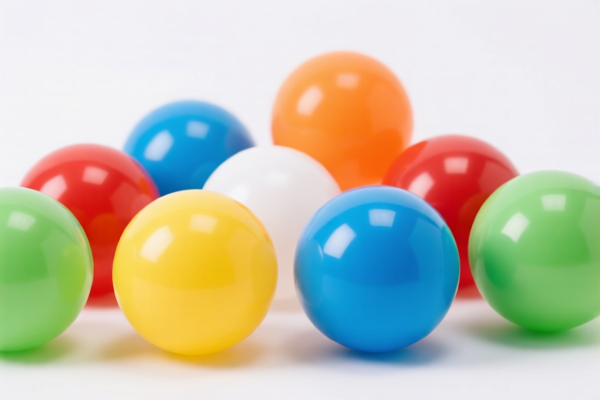
AI Analysis
🛁 Bath Salts Ball (Bath Bombs)
🌐 HS Code Reference & Customs Clearance Guide | 2026 Latest Tariff Analysis | Professional Clearance Strategy for US Market
📌 Part 1: Product Definition & Classification – Do You Really Understand "Bath Salts Ball"?
Bath Salts Balls (commonly known as Bath Bombs) are effervescent solid products primarily composed of sodium bicarbonate, citric acid, and various salts (such as Epsom salt or sea salt), often scented with essential oils and colored with dyes. In international trade, the classification depends heavily on the primary function (cleaning/cosmetic vs. fragrant) and chemical composition (pure salt vs. complex mixture).
⚠️ Key Distinction Points:
- If the product is primarily pure Sodium Chloride (NaCl) with no other significant ingredients → Classified as Salt (Heading 2501).
- If the product is a complex mixture used for fragrance, relaxation, or skin care → Classified under Cosmetics/Preparations (Heading 3307 or 3304).
- Form Factor: Solid, compacted powder vs. Loose crystals.
📦 Part 2: HS Code Classification Details (2026 Latest Tariff Authority Comparison)
Based on the provided data, here are the 5 potential HS Codes for "Bath Salts Ball," ranked by relevance and risk profile.
| HS Code | Product Description | Applicable Scenario | Tax Rate (Total) | Risk Level |
|---|---|---|---|---|
2501.00.00.00 |
Salt & Pure Sodium Chloride Primary ingredient is NaCl; simple formulation. |
Basic bath salts, simple saline soaks, minimal additives. | 35.0% | 🟢 Low (if purely salt) |
3304.99.50.00 |
Preparations for the Care of the Skin (Other) Skin care preparations, material is salt or oil-based. |
Bath salts marketed for moisturizing, exfoliation, or skin treatment. | 35.0% | 🟡 Medium (Function-based) |
3304.91.00.50 |
Other Powdered Preparations Compacted mineral/salt preparations in powder form. |
Pressed powder bath bombs, mineral-rich salts not elsewhere specified. | 35.0% | 🟡 Medium (Form-based) |
3307.30.50.00 |
Fragrant Bath Salts & Other Bath Preparations Fragranced bath salts, aromatherapy products. |
Most Common: Scented bath bombs with essential oils. | 39.9% | 🟠 High (Common misclassification) |
3307.30.10.00 |
Bath Salts (Specific Category) Definite definition of bath salts, form is bath product. |
Products explicitly labeled "Bath Salts" with specific aromatic profiles. | 40.8% | 🔴 Highest (Highest tariff) |
🔍 Critical Reminder:
-2501.00.00.00is the lowest tariff option but requires proof that the product is primarily Sodium Chloride and lacks significant cosmetic/fragrant properties.
-3307.30.50.00and3307.30.10.00are for fragranced/aesthetic products. If your product has essential oils, fragrances, or dyes, Customs will likely reject the2501classification.
-3304codes apply if the primary benefit is skin care (e.g., moisturizing, exfoliating) rather than just fragrance.
💰 Part 3: 2026 Latest Tariff Rate Details (Including Additional Taxes, Policy Surcharges)
✅ Applicable Country: United States (US)
✅ Origin: China (CN)
✅ Effective Time: November 10, 2025 (and subsequent imports)
🎯 1. 2501.00.00.00 – Salt & Pure Sodium Chloride
| Item | Content |
|---|---|
| Base Tariff | 0.0% |
| Section 301 Tariff (Additional) | +25.0% |
| Section 122 Tariff (IEEPA) | +10.0% |
| Total Tariff | 35.0% |
| Tax Calculation | CIF Value × 35.0% |
| De Minimis Eligibility | ❌ Not Eligible (Deny De Minimis for Section 301/122 goods) |
| Legal Basis Path | Section 301: 9903.88.01 → Section 122: 9903.01.25 → HS: 2501.00.00.00 |
📌 Explanation:
- Base 0%: Pure salt is generally duty-free.
- 25% Section 301: Standard tariff on many Chinese goods.
- 10% Section 122: Additional tariff on specific Chinese imports under IEEPA.
- Total 35%: Still the lowest among the 5 options, but only if the product is legally defined as "Salt."
🎯 2. 3307.30.50.00 – Fragrant Bath Salts & Other Bath Preparations
| Item | Content |
|---|---|
| Base Tariff | 4.9% |
| Section 301 Tariff (Additional) | +25.0% |
| Section 122 Tariff (IEEPA) | +10.0% |
| Total Tariff | 39.9% |
| Tax Calculation | CIF Value × 39.9% |
| De Minimis Eligibility | ❌ Not Eligible |
| Legal Basis Path | Section 301: 9903.88.01 → Section 122: 9903.01.25 → HS: 3307.30.50.00 |
📌 Note:
- This is the most common classification for commercial bath bombs with fragrances.
- The base tariff is higher (4.9%), leading to a 39.9% total rate.
🎯 3. 3307.30.10.00 – Bath Salts (Specific)
| Item | Content |
|---|---|
| Base Tariff | 5.8% |
| Section 301 Tariff (Additional) | +25.0% |
| Section 122 Tariff (IEEPA) | +10.0% |
| Total Tariff | 40.8% |
| Tax Calculation | CIF Value × 40.8% |
| De Minimis Eligibility | ❌ Not Eligible |
| Legal Basis Path | Section 301: 9903.88.01 → Section 122: 9903.01.25 → HS: 3307.30.10.00 |
📌 Warning:
- Highest tariff (40.8%) among the options.
- Only use if the product is explicitly classified as "Bath Salts" under this specific subheading.
🎯 4. 3304.99.50.00 & 3304.91.00.50 – Skin Care / Powder Preparations
| Item | Content |
|---|---|
| Base Tariff | 0.0% |
| Section 301 Tariff (Additional) | +25.0% |
| Section 122 Tariff (IEEPA) | +10.0% |
| Total Tariff | 35.0% |
| Tax Calculation | CIF Value × 35.0% |
| De Minimis Eligibility | ❌ Not Eligible |
| Legal Basis Path | Section 301: 9903.88.01 → Section 122: 9903.01.25 → HS: 3304.xxxxxxx |
📌 Strategy:
- These codes have a 0% base tariff, matching the salt code.
- Use if the product is marketed as a skin care treatment (e.g., "Moisturizing Bath Salt Scrub") rather than just a fragrance product.
- Requires documentation proving skin care benefits.
🛠️ Part 4: Customs Clearance Practical Advice (Combat Pitfall Guide)
✅ 1. Preparation Checklist (Must-Have Documents)
| Document | Required | Explanation |
|---|---|---|
| ✅ Ingredient List (INCI) | ✔️ | Must detail % of NaCl, Epsom Salt, Fragrance, Dyes. |
| ✅ Product Function Statement | ✔️ | Is it for cleaning, fragrance, or skin care? |
| ✅ Product Photos | ✔️ | Show packaging, labeling, and product form (ball vs. powder). |
| ✅ Third-Party Test Report | ✔️ | FDA compliance (if applicable), safety data for essential oils. |
| ✅ Commercial Invoice | ✔️ | Clearly state "Bath Salts Ball" or "Bath Bomb." |
| ✅ Certificate of Origin (CO) | ✔️ | To prove Chinese origin (triggering 301/122 tariffs). |
| ✅ HS Code Pre-Ruling Request | ✔️ | Highly Recommended to avoid misclassification. |
✅ 2. Declaration Tips (Key Mantra)
🔥 “Function First, Ingredients Clear, Avoid ‘Pure Salt’ Trap!”
| Scenario | Correct Declaration | Incorrect Practice |
|---|---|---|
| Simple Salt Soak | 2501.00.00.00 (35%) |
Mislabel as "Cosmetic" → 40%+ |
| Scented Bath Bomb | 3307.30.50.00 (39.9%) |
Claim as "Salt" → Audit Risk |
| Exfoliating Scrub | 3304.99.50.00 (35%) |
Mislabel as "Fragrance" → Higher Tax |
| Pressed Powder Form | 3304.91.00.50 (35%) |
Mislabel as "Loose Salt" → Form mismatch |
📌 Critical Warning:
- If your product contains essential oils, fragrances, or dyes, Customs will reject the2501.00.00.00classification.
- Penalty for Misclassification: Back taxes + fines + potential seizure.
- Best Practice: If the product is fragrant, declare as3307.30.50.00(39.9%) or3304(35%) if skin-care focused.
✅ 3. Special Cases
| Scenario | Handling Advice |
|---|---|
| OEM Custom Brand | Provide client agreement + design specs. Avoid generic "Bath Salts" claims if not true. |
| Organic/Eco-Friendly | Provide organic certification. Does not change HS code, but may help with marketing. |
| Gift Sets (Bath Bomb + Candle) | Split Declaration: Bath Bomb (HS 3307) + Candle (HS 3401/3407). Do not combine! |
| Small Samples (De Minimis) | ❌ Not Eligible: Section 301 and 122 tariffs apply even for small shipments. No $800 exemption. |
🌍 Part 5: Global Market Comparison (2026 Latest)
| Country/Region | Recommended HS Code | Tariff | Certification | Notes |
|---|---|---|---|---|
| 🇺🇸 USA | 3307.30.50.00 or 2501.00.00.00 |
35% - 40.8% | FDA (Cosmetic), CPSIA | Highest risk due to 301/122 tariffs. |
| 🇨🇳 China | 3307.30.50.00 |
5-10% | N/A | No Section 301/122. |
| 🇪🇺 EU | 3307.30.50.00 |
0-6.5% | CPNP, REACH | No US-style additional tariffs. |
| 🇬🇧 UK | 3307.30.50.00 |
0-6.5% | UKCA, CPNP | Post-Brexit rules apply. |
| 🇦🇺 Australia | 3307.30.50.00 |
5% | TGA | No additional US tariffs. |
📌 Conclusion:
- USA is the most expensive market due to Section 301 (25%) + Section 122 (10%) tariffs.
- EU/UK/AU have no additional geopolitical tariffs, making them more cost-effective.
- China has no import tariffs on these goods (domestic consumption).
📌 Part 6: Common Mistakes & Pitfall Guide (Blood-Tear Lessons)
❌ Mistake 1: Declaring Scented Bath Bombs as 2501.00.00.00 (Salt)
👉 Consequence: Customs audit → Back taxes + 200% penalty → Delayed shipment.
✅ Fix: Declare as 3307.30.50.00 if fragrant.
❌ Mistake 2: Claiming De Minimis ($800) for Section 301 Goods
👉 Consequence: Shipment seized or returned. Section 301 goods are excluded from de minimis.
✅ Fix: Pay duties at entry, even for small shipments.
❌ Mistake 3: Mixing Bath Bomb + Candle in one HS Code
👉 Consequence: Classification error → Refund of incorrect duty + fines.
✅ Fix: Split invoice and declare separately.
❌ Mistake 4: Using "Bath Salts" as Product Name for Cosmetic Products
👉 Consequence: Misleading labeling → FDA Warning Letter if not registered.
✅ Fix: Use "Bath Bomb" or "Effervescent Bath Product" if not pure salt.
✅ Correct Approach:
"Effervescent Bath Bomb, 100g, Scented with Lavender Oil, Packaged in Box, Model XYZ, FDA Compliant"
🎯 Part 7: Conclusion – Professional Declaration, Save Time & Money!
🎯 Remember the Mantra:
🔹 "Fragrance? Go 3307. Pure Salt? Go 2501. Skin Care? Go 3304."
🔹 "No De Minimis for 301/122. Pay Duties Early, Avoid Seizure."
📌 Pro Tip:
- If your product is 100% Sodium Chloride with no fragrance, aggressively pursue 2501.00.00.00 (35% total) as it is the lowest tariff.
- If your product is fragranted, accept 3307.30.50.00 (39.9%) or 3304.99.50.00 (35%) if skin-care focused.
- Apply for an Advance Ruling (CBP Ruling) before shipping to lock in the HS Code and avoid disputes.
📣 Immediate Action:
📞 Consult a licensed customs broker.
📄 Provide detailed ingredient lists.
🚀 Ensure accurate classification to avoid costly customs delays!
✨ Professional Clearance Starts with Accurate Classification!
💼 Every dollar of duty saved is a dollar of profit gained!
Customer Reviews
About HS Code Classification
The Harmonized System (HS) is an internationally standardized nomenclature developed by the World Customs Organization (WCO) to classify traded products. Over 200 countries use the HS system as the basis for customs tariffs, trade statistics, and import/export regulations.
Each HS code follows a hierarchical structure:
- Chapter (2 digits) — Broad category of goods (e.g., Chapter 84: Machinery and Mechanical Appliances)
- Heading (4 digits) — More specific grouping within the chapter
- Subheading (6 digits) — Internationally standardized breakdown, used by all WCO member countries
- National subdivisions (8-10 digits) — Country-specific extensions for further classification, such as US HTSUS 10-digit codes
Correct HS code classification is essential for smooth customs clearance, accurate duty payment, and compliance with trade regulations. Misclassification can lead to customs delays, overpayment of duties, or penalties.
When importing from CN to US, the applicable tariff rates may include:
- Most-Favored-Nation (MFN) rate — The standard duty rate applied to WTO members
- General rate — Applied to countries without trade agreements
- Trade remedy duties — Additional tariffs such as Section 301 (anti-dumping), Section 232 (national security), or countervailing duties
The information provided on this page is for reference purposes only. For official classification, please consult with your local customs authority or a licensed customs broker.