Bathroom Foot Mat
CN → US| HS Code | Tariff Rate | Origin | Destination | Doc |
|---|---|---|---|---|
| 3921135000 | 39.2% | CN | US | Official Doc |
| 4016100000 | 35.0% | CN | US | Official Doc |
| 6304920000 | 23.8% | CN | US | Official Doc |
| 6304910120 | 23.3% | CN | US | Official Doc |
| 4016910000 | 37.7% | CN | US | Official Doc |
Product Images
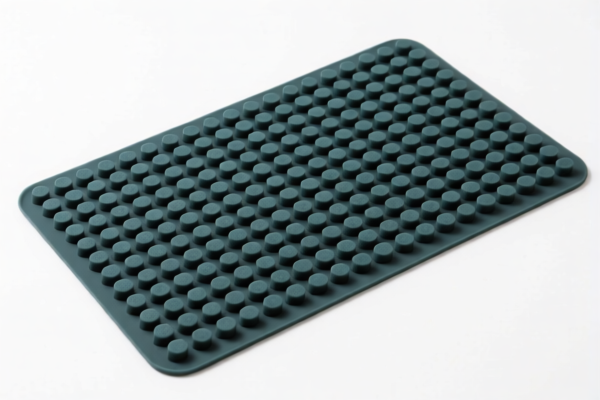
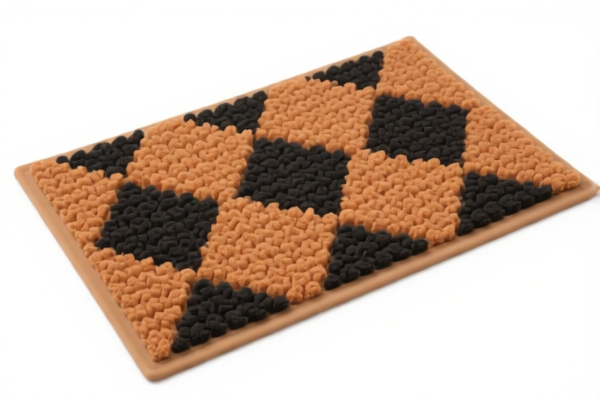
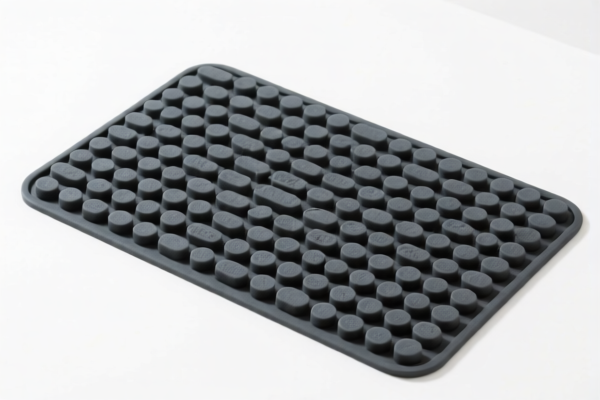
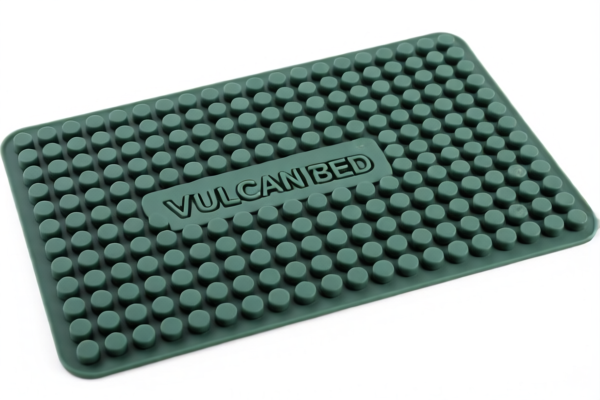
AI Analysis
🛁 Bathroom Foot Mat (Bath Mats / Rugs)
🌐 HS Code Reference & Customs Clearance Guide | 2026 Latest Tariff Analysis | Strategic Clearance Strategy for US Imports
📌 I. Product Definition & Classification: What Exactly is a "Bathroom Foot Mat"?
A bathroom foot mat is a non-slip or absorbent accessory designed for use in wet environments (bathrooms, showers, kitchens). In international trade, its classification strictly depends on the material composition. Misclassification here can lead to severe tariff penalties due to the high "Section 301" and "Section 122" additional duties applicable to Chinese goods.
There are five distinct categories based on material:
- Polyurethane/Plastic Mats: Solid rubbery or hard plastic materials.
- Rubber Mats: Other vulcanized rubber products.
- Cotton Mats (Non-Knitted): Woven or non-knitted cotton fabrics.
- Cotton Mats (Knitted): Knitted cotton fabrics.
- Other Rubber/Specialized Mats: Includes anti-slip rubber backing or other specific rubber articles.
⚠️ Critical Distinction:
- If the mat is knitted (looped texture like a towel) → Use 6304.91.01.20 (Lower Tax).
- If the mat is non-knitted (woven, terry cloth) → Use 6304.92.00.00 (Slightly Higher Tax).
- If the mat is Plastic/Polyurethane (common in cheap anti-slip mats) → Use 3921.13.50.00 (Highest Tax).
- If the mat is Pure Rubber (silicone or vulcanized) → Use 4016.10.00.00 or 4016.91.00.00.
📦 II. HS Code Classification Details (2026 Authoritative Reference)
Based on the provided data, here are the specific HS Codes for Bathroom Foot Mats:
| HS Code | Product Description | Material Type | Tax Category | Key Characteristic |
|---|---|---|---|---|
3921.13.50.00 |
Polyurethane or Plastic Bathroom Mat | Polyurethane / Plastic | High Tax | Plastic/PU sheets or plates for home use |
4016.10.00.00 |
Rubber Bathroom Mat | Rubber (Vulcanized) | Medium-High Tax | Other vulcanized rubber articles |
6304.92.00.00 |
Cotton Bathroom Mat (Non-Knitted) | Cotton (Non-Knitted) | Medium Tax | Non-knitted cotton home furnishings |
6304.91.01.20 |
Cotton Bathroom Mat (Knitted) | Cotton (Knitted) | Medium-Low Tax | Knitted cotton interior decoration items |
4016.91.00.00 |
Rubber/Anti-Slip Bath Mat | Rubber/Specialized | High Tax | Carpet/rug category, rubber-based |
🔍 Important Note:
- Textile Mats (Cotton) generally have the lowest total tax burden (~23-24%).
- Plastic/PU Mats have the highest total tax burden (~39%).
- Rubber Mats fall in the middle-to-high range (~35-38%) due to the 25% Section 301 tariff.
💰 III. 2026 Latest Tariff Rate Breakdown (Including Additional Duties)
✅ Applicable Country: United States (US)
✅ Origin: China (CN)
✅ Effective Date: Includes duties effective from 2025 onwards (Section 301 & Section 122)
🎯 1. 3921.13.50.00 – Polyurethane/Plastic Mats
| Item | Content |
|---|---|
| Base Duty Rate | 4.2% |
| Section 301 Additional Duty | +25.0% |
| Section 122 Additional Duty | +10.0% |
| Total Tax Rate | 39.2% |
| Tax Calculation | CIF Value × 39.2% |
| De Minimis Eligibility | ❌ No (Denied) |
| Legal Basis Path | HTSUS:3921.13.50.00 → Sec 301 Footnote → Sec 122 Authority |
📌 Explanation:
- Plastic/PU mats are heavily taxed due to their classification under Chapter 39.
- The combination of base duty (4.2%) + 301 (25%) + 122 (10%) results in a 39.2% effective rate.
- Risk: High. Avoid if cheaper textile alternatives exist.
🎯 2. 4016.10.00.00 – Rubber Mats (Other Vulcanized Rubber)
| Item | Content |
|---|---|
| Base Duty Rate | 0.0% |
| Section 301 Additional Duty | +25.0% |
| Section 122 Additional Duty | +10.0% |
| Total Tax Rate | 35.0% |
| Tax Calculation | CIF Value × 35.0% |
| De Minimis Eligibility | ❌ No (Denied) |
| Legal Basis Path | HTSUS:4016.10.00.00 → Sec 301 Footnote → Sec 122 Authority |
📌 Explanation:
- Base duty is 0%, but the 25% Section 301 and 10% Section 122 still apply.
- Total rate is 35.0%.
- Risk: Medium-High. Common for silicone mats.
🎯 3. 6304.92.00.00 – Cotton Mats (Non-Knitted)
| Item | Content |
|---|---|
| Base Duty Rate | 6.3% |
| Section 301 Additional Duty | +7.5% |
| Section 122 Additional Duty | +10.0% |
| Total Tax Rate | 23.8% |
| Tax Calculation | CIF Value × 23.8% |
| De Minimis Eligibility | ❌ No (Denied) |
| Legal Basis Path | HTSUS:6304.92.00.00 → Sec 301 Footnote → Sec 122 Authority |
📌 Explanation:
- Textile products have lower additional duties under Section 301 (7.5% vs 25%).
- Total rate is 23.8%.
- Opportunity: This is a more cost-effective option for woven cotton mats.
🎯 4. 6304.91.01.20 – Cotton Mats (Knitted)
| Item | Content |
|---|---|
| Base Duty Rate | 5.8% |
| Section 301 Additional Duty | +7.5% |
| Section 122 Additional Duty | +10.0% |
| Total Tax Rate | 23.3% |
| Tax Calculation | CIF Value × 23.3% |
| De Minimis Eligibility | ❌ No (Denied) |
| Legal Basis Path | HTSUS:6304.91.01.20 → Sec 301 Footnote → Sec 122 Authority |
📌 Explanation:
- Lowest Total Tax Rate among all categories (23.3%).
- Applies specifically to knitted cotton mats (e.g., terry cloth bath mats).
- Recommendation: If the product is a soft, looped cotton bath mat, always verify it qualifies as knitted to secure this lower rate.
🎯 5. 4016.91.00.00 – Other Rubber/Specialized Mats
| Item | Content |
|---|---|
| Base Duty Rate | 2.7% |
| Section 301 Additional Duty | +25.0% |
| Section 122 Additional Duty | +10.0% |
| Total Tax Rate | 37.7% |
| Tax Calculation | CIF Value × 37.7% |
| De Minimis Eligibility | ❌ No (Denied) |
| Legal Basis Path | HTSUS:4016.91.00.00 → Sec 301 Footnote → Sec 122 Authority |
📌 Explanation:
- Falls under "Other articles of vulcanized rubber."
- Subject to the full 25% Section 301 and 10% Section 122.
- Total rate is 37.7%.
- Risk: High. Avoid unless the product is uniquely classified here.
🛠️ IV. Customs Clearance Practical Advice (Avoiding Pitfalls)
✅ 1. Document Checklist (Mandatory)
| Document | Must Provide | Description |
|---|---|---|
| ✅ Product Specification Sheet | ✔️ | Detailed material composition (e.g., "100% Cotton, Knitted Loop"). |
| ✅ Material Test Report | ✔️ | Third-party lab report confirming material (Cotton vs. Plastic vs. Rubber). |
| ✅ Product Photos | ✔️ | Clear images showing texture (knitted loops vs. smooth plastic). |
| ✅ Commercial Invoice | ✔️ | Must state "Bathroom Mat" and material precisely. |
| ✅ Packing List | ✔️ | Weight and dimensions. |
| ✅ Origin Certificate (CO) | ✔️ | To prove Chinese origin (if applicable) and verify tariff applicability. |
✅ 2. Declaration Strategy (Key Tips)
🔥 “Material is King! Textile Wins, Plastic Loses!”
| Scenario | Correct HS Code | Incorrect Code | Consequence |
|---|---|---|---|
| Knitted Cotton Mat (Terry Cloth) | 6304.91.01.20 |
6304.92.00.00 or 3921.13.50.00 |
Overpaying ~14-16% in duties. |
| Woven Cotton Mat | 6304.92.00.00 |
6304.91.01.20 |
Minor overpay (~0.5%). |
| Plastic/PU Anti-Slip Mat | 3921.13.50.00 |
4016.10.00.00 |
Underpaying → Audit Risk, Penalties, Back-tariffs. |
| Rubber Silicone Mat | 4016.10.00.00 or 4016.91.00.00 |
6304.91.01.20 |
Severe misclassification → Goods Seized. |
📌 Key Takeaway:
- Do NOT declare a plastic mat as a "cotton mat" to save tax. Customs can test the material. If it fails, you face penalties + back-tariffs.
- If the mat has a mixed material (e.g., Cotton top + Rubber bottom), classify based on the essential character or the dominant material. Often, the rubber backing may trigger the higher rubber tariff (4016.xxxx). Check with a customs broker if the backing is significant.
✅ 3. Special Considerations
| Situation | Advice |
|---|---|
| Mixed Materials (Cotton + Rubber) | If the rubber backing is >50% by weight or essential function, it may be classified under Chapter 40. This increases tax. Consider sourcing mats with fabric backing or non-slip prints instead of full rubber backing if possible. |
| Set Packs (Mat + Rug) | Declare as a single set. Use the HS code of the component that gives the set its essential character. Usually, the bath mat. |
| Customs Exam | Have material test reports ready. Customs may pull samples for fiber analysis. |
🌍 V. Global Market Comparison (2026)
| Country | Recommended HS Code | Approx. Total Duty | Notes |
|---|---|---|---|
| 🇺🇸 USA | 6304.91.01.20 (Knitted Cotton) |
23.3% | Lowest among options. |
| 🇺🇸 USA | 3921.13.50.00 (Plastic) |
39.2% | Highest penalty. Avoid. |
| 🇨🇳 China | 6304.91.01.20 |
~5-10% | Lower than US due to no Section 301. |
| 🇪🇺 EU | 6302.60 (Textile) |
0-4% | No Section 301. |
| 🇨🇦 Canada | 6304.91.20 |
0-5% | CUSMA benefits may apply if from US/Mexico. |
📌 Conclusion:
- US Market is the most expensive due to Section 301 & 122 tariffs.
- Textile (Cotton) Mats are the most cost-effective for US import (~23.3%).
- Plastic/PU Mats are the most expensive (~39.2%).
- Rubber Mats are in the middle-high range (~35-38%).
📌 VI. Common Errors & Pitfalls (Lessons Learned)
❌ Error 1: Declaring a Plastic Mat as a "Bath Rug" (Textile)
👉 Result: Customs discovers material mismatch → Seizure, Fines, Back-tariffs (39.2% - 23.3% = 15.9% penalty + interest).
❌ Error 2: Not distinguishing between Knitted vs. Woven Cotton
👉 Result: Paying 23.8% instead of 23.3%. Small difference, but over large volumes, it adds up. Ensure your supplier specifies "Knitted" if it’s looped.
❌ Error 3: Ignoring the Rubber Backing
👉 Result: If the mat is cotton top + rubber bottom, it might be classified under Chapter 40 (Rubber) if rubber is essential. This jumps tax from 23.3% to 35%+.
✅ Correct Practice:
"Bathroom Bath Mat, 100% Cotton, Knitted Terry Cloth, Non-Slip PVC Print (No Rubber Backing)"
→ Use6304.91.01.20(23.3% Tax).
🎯 VII. Conclusion: Smart Sourcing for Lower Duties
🎯 Remember the Golden Rule:
🔹 "Cotton Knitted = 23.3% (Best)"
🔹 "Cotton Woven = 23.8%"
🔹 "Rubber = 35-38% (High)"
🔹 "Plastic/PU = 39.2% (Worst)"
📌 Actionable Advice:
1. Source Knitted Cotton Mats whenever possible to minimize duties.
2. Avoid Plastic/PU Mats if importing to the US; the 39.2% tax kills margins.
3. Verify Material Composition with suppliers before shipping.
4. Apply for Advance Rulings if you have mixed-material mats to ensure correct classification.
📣 Immediate Action:
📞 Consult a Customs Broker to verify your specific product’s material.
📄 Request Material Test Reports from your factory.
🚀 Optimize Your HS Code to save thousands in duties.
✨ Professional Clearance Starts with Accurate Classification!
💼 Your Bottom Line Depends on the Right HS Code!
Customer Reviews
About HS Code Classification
The Harmonized System (HS) is an internationally standardized nomenclature developed by the World Customs Organization (WCO) to classify traded products. Over 200 countries use the HS system as the basis for customs tariffs, trade statistics, and import/export regulations.
Each HS code follows a hierarchical structure:
- Chapter (2 digits) — Broad category of goods (e.g., Chapter 84: Machinery and Mechanical Appliances)
- Heading (4 digits) — More specific grouping within the chapter
- Subheading (6 digits) — Internationally standardized breakdown, used by all WCO member countries
- National subdivisions (8-10 digits) — Country-specific extensions for further classification, such as US HTSUS 10-digit codes
Correct HS code classification is essential for smooth customs clearance, accurate duty payment, and compliance with trade regulations. Misclassification can lead to customs delays, overpayment of duties, or penalties.
When importing from CN to US, the applicable tariff rates may include:
- Most-Favored-Nation (MFN) rate — The standard duty rate applied to WTO members
- General rate — Applied to countries without trade agreements
- Trade remedy duties — Additional tariffs such as Section 301 (anti-dumping), Section 232 (national security), or countervailing duties
The information provided on this page is for reference purposes only. For official classification, please consult with your local customs authority or a licensed customs broker.