Bathroom Plastic Toilet Seat
CN → US| HS Code | Tariff Rate | Origin | Destination | Doc |
|---|---|---|---|---|
| 6910100050 | 15.8% | CN | US | Official Doc |
| 6910900000 | 23.2% | CN | US | Official Doc |
| 3922200000 | 23.8% | CN | US | Official Doc |
| 3922900000 | 41.3% | CN | US | Official Doc |
| 3926305000 | 22.8% | CN | US | Official Doc |
| 3926909989 | 22.8% | CN | US | Official Doc |
Product Images
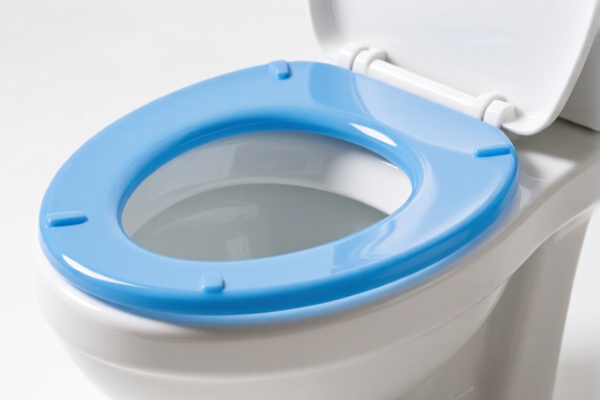
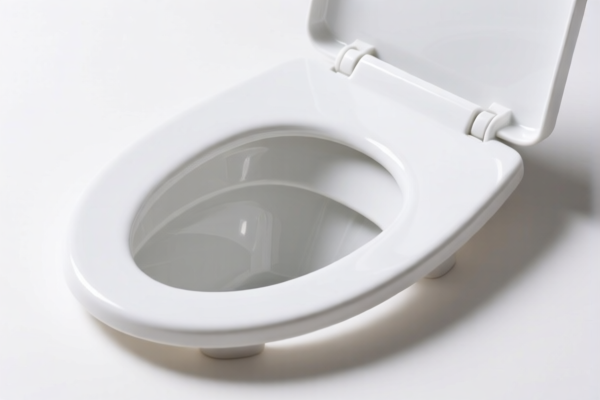
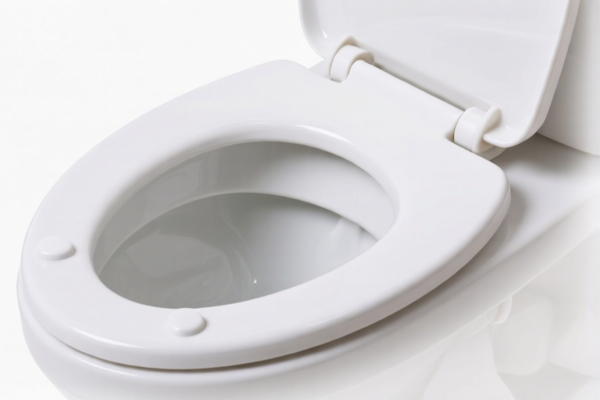
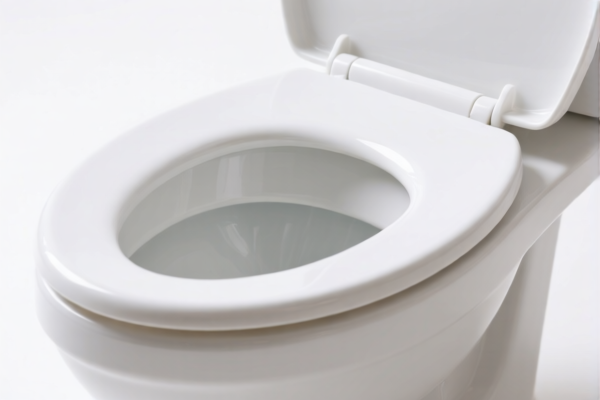
AI Analysis
🚽 Bathroom Plastic Toilet Seat (浴室塑料马桶盖)
🌐 HS Code Reference & Customs Clearance Guide | 2026 Latest Tariff Analysis | Professional Clearance Strategy
📌 I. Product Definition & Classification: What Exactly is a "Plastic Toilet Seat"?
A Bathroom Plastic Toilet Seat is a critical sanitary accessory designed for modern toilets. In international trade, its classification hinges on its specific function and material composition. It is generally categorized under Chapter 39 (Plastics and Articles Thereof), specifically as household articles or parts of vessels.
Key Distinction: * Household/Hygiene Articles: If viewed primarily as a domestic hygiene item (like a lid or cover for a sanitary vessel), it may fall under headings related to household plastics. * Parts/Accessories: If classified strictly as a component of a sanitary ware vessel (the toilet bowl itself), it falls under parts/accessories.
⚠️ Critical Classification Point:
- If deemed a "cover" or "lid" for household use (analogous to sink covers), it may qualify for lower tax rates under specific subheadings (e.g., 3924.10).
- If deemed a general "plastic article" or "other plastic part," it attracts higher tariffs under 3926.90 categories due to broader categorization.
📦 II. HS Code Classification Details (2026 Latest Tariff Reference)
Based on the provided data, here are the four potential HS Codes for a Plastic Bathroom Toilet Seat:
| HS Code | Product Description | Application Scenario | Tax Rate (Total) |
|---|---|---|---|
3924.10.40.00 |
Plastic material, for household articles (e.g., sink covers); analogous to bathroom plastic toilet seats | Viewed as a "cover/lid" for household sanitary use | 13.4% |
3926.90.10.00 |
Plastic material, classified as container accessories or lid products; applicable to bathroom plastic toilet seats | Viewed as a generic "lid" or "accessory" under general plastics | 20.9% |
3924.90.56.50 |
Plastic material, kitchen utensils/household articles category; analogously applicable to bathroom plastic toilet seats | Viewed broadly under household plastic articles (kitchen/bath overlap) | 20.9% |
3926.90.99.89 |
Plastic material, other plastic articles; applicable to bathroom plastic toilet seats | Generic "other plastic products" with no specific sub-category fit | 22.8% |
🔍 Key Observation:
- There is a 9.4% tax difference between the most favorable code (3924.10.40.00at 13.4%) and the most expensive (3926.90.99.89at 22.8%).
-3926.90.10.00appears twice in the source data with identical details, confirming it as a standard "lid/accessory" classification.
💰 III. 2026 Latest Tariff Rate Breakdown (Detailed Tax Clauses)
✅ Applicable Country: United States (US)
✅ Origin: China (CN) (Inferred from "122 Clause" and "Section 301" context common in such data)
✅ Effective Time: Current rates applied (Note: "122 Clause" refers to specific US trade remedy measures)
🎯 1. 3924.10.40.00 —— Household Plastic Articles (Most Favorable Rate)
| Item | Content |
|---|---|
| Base Tariff | 3.4% (MFN Rate for household plastic items) |
| Additional Tariff (Section 301) | 0.0% (Not subject to extra duties in this specific classification) |
| "122 Clause" Tariff | +10% (Specific trade remedy duty applicable to this HS code) |
| Total Tariff Rate | 13.4% |
| Tax Calculation | CIF Value × 13.4% |
| De Minimis Eligibility | ❌ No (Section 301/122 duties typically exclude de minimis exemption) |
| Legal Basis | Base Tariff 3.4% + 122 Clause 10% |
📌 Explanation:
- This is the lowest tax rate option.
- It relies on the argument that the toilet seat is functionally similar to a "sink cover" or general "household lid" under Heading 3924.
- Crucial: The 3.4% base rate is significantly lower than the 5.3% or 7.5% surcharges in other codes.
🎯 2. 3926.90.10.00 —— Container Accessories/Lids (Standard Rate)
| Item | Content |
|---|---|
| Base Tariff | 3.4% |
| Additional Tariff (Section 301) | +7.5% |
| "122 Clause" Tariff | +10% |
| Total Tariff Rate | 20.9% |
| Tax Calculation | CIF Value × 20.9% |
| De Minimis Eligibility | ❌ No |
| Legal Basis | Base Tariff 3.4% + Section 301 7.5% + 122 Clause 10% |
📌 Explanation:
- This code treats the toilet seat as a "container accessory" or "lid."
- It attracts a 7.5% Section 301 tariff (common for many plastic goods) PLUS the 10% 122 Clause.
- Higher Cost: 20.9% is significantly more expensive than 13.4%.
🎯 3. 3924.90.56.50 —— Other Household Plastic Articles (Standard Rate)
| Item | Content |
|---|---|
| Base Tariff | 3.4% |
| Additional Tariff (Section 301) | +7.5% |
| "122 Clause" Tariff | +10% |
| Total Tariff Rate | 20.9% |
| Tax Calculation | CIF Value × 20.9% |
| De Minimis Eligibility | ❌ No |
| Legal Basis | Base Tariff 3.4% + Section 301 7.5% + 122 Clause 10% |
📌 Explanation:
- This falls under "Other household articles" but triggers the same 7.5% + 10% surcharges as3926.90.10.00.
- No tax advantage over the previous code.
🎯 4. 3926.90.99.89 —— Other Plastic Articles (Highest Rate)
| Item | Content |
|---|---|
| Base Tariff | 5.3% |
| Additional Tariff (Section 301) | +7.5% |
| "122 Clause" Tariff | +10% |
| Total Tariff Rate | 22.8% |
| Tax Calculation | CIF Value × 22.8% |
| De Minimis Eligibility | ❌ No |
| Legal Basis | Base Tariff 5.3% + Section 301 7.5% + 122 Clause 10% |
📌 Explanation:
- This is a "catch-all" code for plastic products not specified elsewhere.
- Highest Base Rate (5.3%): Unlike the other codes, the base MFN rate is higher.
- Maximum Total Cost: 22.8% is the most expensive option. Avoid if possible.
🛠️ IV. Customs Clearance Practical Advice (Real-World Pitfall Guide)
✅ 1. Document Checklist (Must-Have)
| Document | Required | Notes |
|---|---|---|
| ✅ Product Specification Sheet | ✔️ | Must state material (e.g., PP, ABS), dimensions, and weight. |
| ✅ Product Photos | ✔️ | Clear images showing it is a complete seat (with hinges) or just the lid. |
| ✅ Commercial Invoice | ✔️ | Clearly describe as "Plastic Bathroom Toilet Seat" or "Sanitary Plastic Lid." |
| ✅ Bill of Lading | ✔️ | Ensure packaging details match invoice. |
| ✅ Origin Certificate | ✔️ | If claiming preferential rates (though unlikely for US/China plastics due to tariffs). |
✅ 2. Declaration Tips (Key Mantra)
🔥 "Classify as Household Cover, Not Generic Plastic! Save 9% on Tax!"
| Scenario | Correct Declaration | Wrong Practice |
|---|---|---|
| Toilet Seat (Complete) | 3924.10.40.00 (If argued as household cover) |
Using 3926.90.99.89 (Generic) → 22.8% tax |
| Toilet Lid Only | 3926.90.10.00 (Container Accessory) |
Using 3924.10.40.00 (Risk of rejection if not clearly a "cover") |
| Mixed Packaging | Declare as single unit | Splitting seat + hinges into different HS codes → Complicated clearance |
⚠️ Warning:
- Customs officers may challenge3924.10.40.00if they deem a toilet seat as a "part of sanitary ware" rather than a "household cover."
- Be Prepared: Have technical data ready to prove it is a "household article" rather than a mere "industrial part."
✅ 3. Special Case Handling
| Situation | Recommendation |
|---|---|
| OEM Custom Seats | Provide design specs to prove material and usage. |
| High-End Sanitary Ware | If sold as part of a premium toilet set, consider if "Parts of Sanitary Ware" codes apply (though not in this dataset, generally higher tax). |
| Bulk vs. Retail | Retail-packaged seats are more likely to be accepted as "Household Articles" (3924) than bulk industrial components. |
🌍 V. Global Market Comparison (2026 Latest)
| Country/Region | Recommended HS Code | Tariff (Approx.) | Certification | Notes |
|---|---|---|---|---|
| 🇺🇸 USA | 3924.10.40.00 |
13.4% | No specific | Best Rate: If accepted. Otherwise 20.9%-22.8%. |
| 🇨🇳 China | 3926.90.99.89 |
5.3% | No | Import duty is low, but US export tariffs are the main cost. |
| 🇪🇺 EU | 3922.10.00 |
3.7% | CE/REACH | Different HS structure; generally lower tariffs than US. |
| 🇬🇧 UK | 3922.10.00 |
3.7% | UKCA | Similar to EU post-Brexit. |
| 🇦🇺 Australia | 3922.10.00 |
5.0% | RCM | Moderate tariffs. |
📌 Conclusion:
- USA is the most expensive market due to Section 301 and "122 Clause" tariffs.
-3924.10.40.00is the ONLY code that avoids the 7.5% Section 301 surcharge, making it critical to justify this classification.
📌 VI. Common Mistakes & Pitfall Guide (Lessons Learned)
❌ Mistake 1: Using 3926.90.99.89 (Other Plastic) without justification.
👉 Consequence: 22.8% Tax – Overpaying by 9.4% compared to the best rate.
❌ Mistake 2: Claiming 3924.10.40.00 without evidence that it is a "cover."
👉 Consequence: Customs may reclassify to 3926.90.10.00 → 20.9% Tax + Delay.
❌ Mistake 3: Ignoring the "122 Clause" (10%).
👉 Consequence: Unexpected audit or penalty if duty is not paid. All codes listed include this 10% duty.
✅ Correct Approach:
"Plastic Toilet Seat, for Household Bathroom Use, Model XYZ, Material: PP, Imported from China"
Target HS Code:3924.10.40.00(Argue as household cover/lid).
🎯 VII. Conclusion: Professional Classification Saves Money!
🎯 Remember the Mantra:
🔹 "3924.10 is King (13.4%)! 3926.90 is Heavy (20.9-22.8%). Avoid the Catch-All!"
🔹 "Justify 'Household Cover' to Save 9% Tax. Don't Let Customs Call it 'Other Plastic'!"
📌 Pro Tip:
- Pre-Ruling: If shipping large volumes, consider applying for a Customs Ruling in the US to secure the
3924.10.40.00classification before shipment.- Supplier Coordination: Ensure your supplier provides a Product Description that aligns with "Household Plastic Articles" (e.g., "Plastic Seat Cover") rather than "Sanitary Ware Parts."
📣 Immediate Action:
📞 Consult a Customs Broker to validate if
3924.10.40.00is defensible for your specific product design.
🚀 Optimize Your Tax Rate: From 22.8% down to 13.4% is a significant profit margin improvement!
✨ Professional Clearance Starts with Precise Classification!
💼 Every Percent of Tax Saved is Pure Profit!
Customer Reviews
About HS Code Classification
The Harmonized System (HS) is an internationally standardized nomenclature developed by the World Customs Organization (WCO) to classify traded products. Over 200 countries use the HS system as the basis for customs tariffs, trade statistics, and import/export regulations.
Each HS code follows a hierarchical structure:
- Chapter (2 digits) — Broad category of goods (e.g., Chapter 84: Machinery and Mechanical Appliances)
- Heading (4 digits) — More specific grouping within the chapter
- Subheading (6 digits) — Internationally standardized breakdown, used by all WCO member countries
- National subdivisions (8-10 digits) — Country-specific extensions for further classification, such as US HTSUS 10-digit codes
Correct HS code classification is essential for smooth customs clearance, accurate duty payment, and compliance with trade regulations. Misclassification can lead to customs delays, overpayment of duties, or penalties.
When importing from CN to US, the applicable tariff rates may include:
- Most-Favored-Nation (MFN) rate — The standard duty rate applied to WTO members
- General rate — Applied to countries without trade agreements
- Trade remedy duties — Additional tariffs such as Section 301 (anti-dumping), Section 232 (national security), or countervailing duties
The information provided on this page is for reference purposes only. For official classification, please consult with your local customs authority or a licensed customs broker.