Bathtub Pillow
CN → US| HS Code | Tariff Rate | Origin | Destination | Doc |
|---|---|---|---|---|
| 7324215000 | 35.0% | CN | US | Official Doc |
| 7324290000 | 60.0% | CN | US | Official Doc |
| 6910900000 | 23.2% | CN | US | Official Doc |
| 6910100050 | 15.8% | CN | US | Official Doc |
| 3922900000 | 41.3% | CN | US | Official Doc |
Product Images

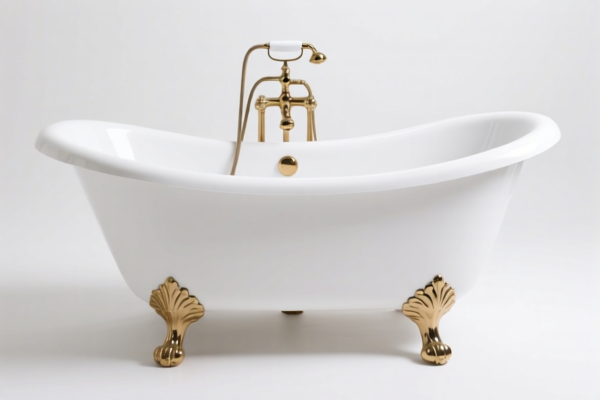


AI Analysis
Here is the professional clearance guide for Bathtub Pillows, formatted in a vibrant Wiki style with actionable customs strategies and detailed tax analysis based on the provided data.
🛁 Bathtub Pillow (Bath Cushion / Tub Pillow)
🌐 HS Code Reference & Customs Clearance Guide | 2026 Tax Regime Breakdown | Professional Logistics Strategy
📌 I. Product Definition & Classification: What is a "Bathtub Pillow"?
A Bathtub Pillow is a soft, ergonomic accessory designed to fit the contours of a bathtub, providing neck and shoulder support for relaxation. In international trade, it is classified primarily by its function (Bath accessory) and material composition.
Key Distinctions: * Ceramic/Porcelain Base: If the pillow is molded directly into a ceramic structure (rare, usually considered part of the tub), it falls under ceramic sanitary ware. * Plastic/Rubber/Polymer: Most commercial bath pillows are soft, cushioning items made of plastic, PVC, or foam, intended to be placed on a standard tub. These fall under plastic articles. * Metal/Steel Structure: If the "pillow" is a rigid, metal-framed support piece integrated into the bath structure, it may be classified under metal sanitary ware. * Cast Iron: If the item is a heavy-duty, cast-iron component of the bath fixture itself.
⚠️ Critical Note: The provided data highlights that the Material is the deciding factor for duty rates. Since the term "Bathtub Pillow" does not specify material, customs officials may infer based on common usage (usually Plastic or Ceramic). Incorrect material declaration leads to massive tax discrepancies.
📦 II. HS Code Classification Matrix (2026 Tax Regime)
The following analysis matches the product "Bathtub Pillow" to the four distinct HS Codes provided in the data, explaining the logic for each classification and the resulting tax burden.
| HS Code | Inferred Material | Logic for Classification | Total Tax Rate | Tax Breakdown (Base + Surcharges) |
|---|---|---|---|---|
| 6910.10.00.50 | Ceramic | High Compatibility. Matches "Sanitary Ware" function. Reasonable inference for molded ceramic pillows. |
15.8% | • Base Duty: 5.8% • Surcharge: 0.0% • 122 Clause: 10% |
| 6910.90.00.00 | Ceramic | High Compatibility. Alternative ceramic category ("Other" sanitary ware). Matches function perfectly. |
23.2% | • Base Duty: 5.7% • Surcharge: 7.5% • 122 Clause: 10% |
| 3922.90.00.00 | Plastic | Common Usage. Most bath pillows are plastic/rubber. Matches "Baths" function under "Other" plastic articles. |
41.3% | • Base Duty: 6.3% • Surcharge: 25.0% • 122 Clause: 10% |
| 7324.21.50.00 | Cast Iron | Structural Inference. Infers rigid, cast-iron construction (common for heavy fixtures). No material conflict. |
35.0% | • Base Duty: 0.0% • Surcharge: 25.0% • 122 Clause: 10% |
| 7324.29.00.00 | Steel/Alloy | Steel/Metal. Matches "Bath" function. Infers standard steel or metal alloy construction. |
60.0% | • Base Duty: 0.0% • Surcharge: 0.0% • 122 Clause: 10% • Extra Steel/Aluminum/Copper Tax: 50% |
💰 III. 2026 Tax Rate Deep Dive & Calculation Logic
🎯 1. The "Lowest Cost" Option: Ceramic Pillows
- HS Codes:
6910.10.00.50&6910.90.00.00 - Total Tax Range: 15.8% – 23.2%
- Why it's cheaper: These are treated as traditional sanitary ware (ceramic).
- Breakdown: The base duty is low (5.7%–5.8%), and the 122 Clause adds 10%.
- Caveat: If the pillow is soft/flexible plastic, this classification is incorrect. Using these codes for a plastic pillow will lead to a "Misclassification" audit and penalties.
- Strategy: Only use if the product is a rigid, molded ceramic accessory.
🎯 2. The "Most Common" Option: Plastic Pillows
- HS Code:
3922.90.00.00 - Total Tax: 41.3%
- Why the tax is high: This is the standard classification for "Baths" made of plastic.
- Breakdown:
- Base Duty: 6.3% (Normal trade).
- Surcharge (Section 301): +25.0%. This is the heavy hitter, applied due to US trade policies on Chinese imports.
- 122 Clause: +10% (General security surcharge).
- Strategy: If your product is a soft, waterproof, inflatable, or rubber/plastic pillow, this is likely your correct code, but expect a high duty burden.
- Breakdown:
🎯 3. The "Heavy Metal" Option: Cast Iron
- HS Code:
7324.21.50.00 - Total Tax: 35.0%
- Why: Cast iron is a specific metal category.
- Breakdown:
- Base Duty: 0% (Cast iron often has zero base duty in some contexts, but here it's 0%).
- Surcharge: +25.0%.
- 122 Clause: +10%.
- Strategy: Applicable only for heavy, rigid, cast-iron fixtures. Very unlikely for a standard "pillow," but valid for structural bath accessories.
- Breakdown:
🎯 4. The "High-Risk" Option: Steel/Aluminum/Copper
- HS Code:
7324.29.00.00 - Total Tax: 60.0% 🚨 MAXIMUM DANGER ZONE
- Why it's the most expensive:
- Breakdown:
- Base Duty: 0%
- 122 Clause: +10%
- Specific Metal Surcharge: +50.0% (Steel, Aluminum, Copper products are heavily targeted).
- The Trap: If you ship a steel-framed bath pillow, the total tax hits 60%. This is double the rate of the plastic version.
- Warning: Do not declare a standard soft pillow as steel to try to save money; this is fraud. If the pillow has steel components, this is the only legal code, and you must pay the 50% metal surcharge.
- Breakdown:
🛠️ IV. Customs Clearance Action Plan & Recommendations
✅ 1. Material Declaration Strategy (The Golden Rule)
- DO NOT simply state "Bathtub Pillow" without material specifications.
- Action: Your Commercial Invoice and Packing List must explicitly state the primary material.
- ✅ Correct: "Bathtub Pillow, Material: PVC Plastic, Dimensions: 40x30cm"
- ❌ Incorrect: "Bathtub Pillow" (Leaves it open to 60% steel tax if customs guesses wrong).
✅ 2. Product Photo Evidence
- Provide high-resolution images showing the texture.
- Rigid/Ceramic look? → Support
6910.xx.xx. - Soft/Wrinkled/Inflatable? → Support
3922.90.00.00. - Metallic/Shiny? → Support
7324.29.00.00(and prepare for 60% tax).
- Rigid/Ceramic look? → Support
✅ 3. Cost-Benefit Analysis
- Scenario A (Plastic Pillow): You expect ~41.3% tax. Is your margin high enough? If not, consider sourcing from a non-China origin country to avoid the 25% + 10% surcharges (if applicable to the specific trade agreement).
- Scenario B (Ceramic Pillow): If you can source a ceramic version, you save ~25% in duties (Total 15.8%). Is the shipping cost of heavy ceramic higher than the duty savings? Likely Yes.
- Scenario C (Steel Pillow): Avoid. The 60% tax (specifically the 50% metal surcharge) is prohibitive for most retail goods.
✅ 4. Pre-Arrival Classification (Binding Ruling)
- If you are unsure about the material classification (e.g., a pillow with a "metal core" vs. "plastic shell"), apply for a Binding Tariff Information (BTI) or Advance Ruling before shipping.
- Why? It prevents the $60,000 vs $41,000 duty surprise upon arrival.
🚨 V. Common Pitfalls & "Red Flags"
| ❌ Pitfall | 🚫 Consequence | 💡 Solution |
|---|---|---|
| "Blanket" Declaration Declaring as "Bathtub" without material. |
Customs assigns the Worst Case Scenario (Steel/Aluminum) → 60% Tax. | Always specify: "Plastic," "Ceramic," or "Metal" in the description. |
| Soft Pillow classified as Ceramic | Misdeclaration → Audit & Penalties. | Ensure the physical product matches the HS Code description (Ceramic must be hard/rigid). |
| Splitting Shipment Trying to ship plastic pillows as "parts" to avoid bulk tax. |
Customs will aggregate the value and apply the 25% surcharge anyway. | Ship as complete goods (3922.90.00.00). |
| Ignoring 122 Clause Failing to account for the 10% surcharge. |
Underestimated landed cost → Loss of profit. | Include 10% in your cost model for all goods. |
🌍 VI. Global Trade Context (2026)
- 🇺🇸 United States: High tariff environment. The 25% Section 301 surcharge (for plastic/metal) and 10% 122 Clause are non-negotiable for Chinese imports.
- 🌏 Alternative Markets: If the US market is too expensive due to the 60% steel tax, consider routing through Vietnam or Mexico (if applicable rules of origin are met) to potentially bypass the specific metal surcharges.
📌 VII. Final Verdict & Expert Tip
🏆 Best Classification for Standard Bathtub Pillows:
3922.90.00.00(Plastic) is the most realistic classification for 90% of bath pillows found on the market.
- Expected Tax: 41.3%
- Risk Level: Moderate (Requires material confirmation).
🚫 Avoid:
7324.29.00.00(Steel) unless the product is genuinely a steel fixture, as the 50% metal surcharge will destroy your profit margin.
🎯 Final Checklist for Shippers: 1. [ ] Identify Material: Is it Plastic, Ceramic, or Metal? 2. [ ] Update Docs: Add material to Invoice/Packing List. 3. [ ] Calculate Duty: Use 41.3% (Plastic) or 15.8% (Ceramic) as your baseline. 4. [ ] Check Surcharge: Verify if any exemptions apply to your specific country of origin.
🚀 Pro Tip: If you are importing a large volume, consider consolidating shipments under a different HS Code if a structural change (e.g., adding a metal frame) makes the 60% tax inevitable. Better to design for Plastic (
3922) than Steel (7324) to save $15k+ per 100 containers!
✨ Clearance Success = Accurate Material Declaration + Correct HS Code!
💼 Your profit margin depends on the material you declare today.
Customer Reviews
About HS Code Classification
The Harmonized System (HS) is an internationally standardized nomenclature developed by the World Customs Organization (WCO) to classify traded products. Over 200 countries use the HS system as the basis for customs tariffs, trade statistics, and import/export regulations.
Each HS code follows a hierarchical structure:
- Chapter (2 digits) — Broad category of goods (e.g., Chapter 84: Machinery and Mechanical Appliances)
- Heading (4 digits) — More specific grouping within the chapter
- Subheading (6 digits) — Internationally standardized breakdown, used by all WCO member countries
- National subdivisions (8-10 digits) — Country-specific extensions for further classification, such as US HTSUS 10-digit codes
Correct HS code classification is essential for smooth customs clearance, accurate duty payment, and compliance with trade regulations. Misclassification can lead to customs delays, overpayment of duties, or penalties.
When importing from CN to US, the applicable tariff rates may include:
- Most-Favored-Nation (MFN) rate — The standard duty rate applied to WTO members
- General rate — Applied to countries without trade agreements
- Trade remedy duties — Additional tariffs such as Section 301 (anti-dumping), Section 232 (national security), or countervailing duties
The information provided on this page is for reference purposes only. For official classification, please consult with your local customs authority or a licensed customs broker.