Battery Accessories
CN → US| HS Code | Tariff Rate | Origin | Destination | Doc |
|---|---|---|---|---|
| 8538903000 | 38.5% | CN | US | Official Doc |
| 8507908000 | 38.4% | CN | US | Official Doc |
| 8507904000 | 38.5% | CN | US | Official Doc |
Product Images
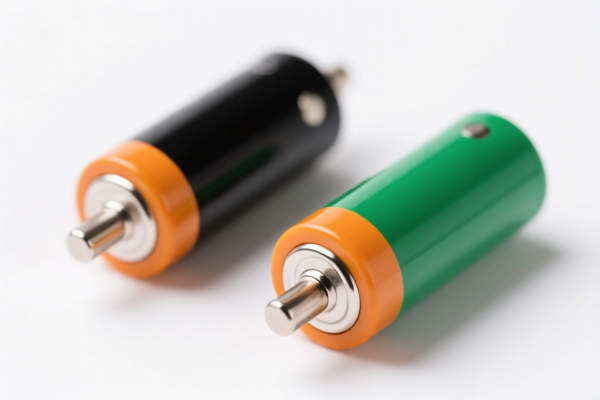
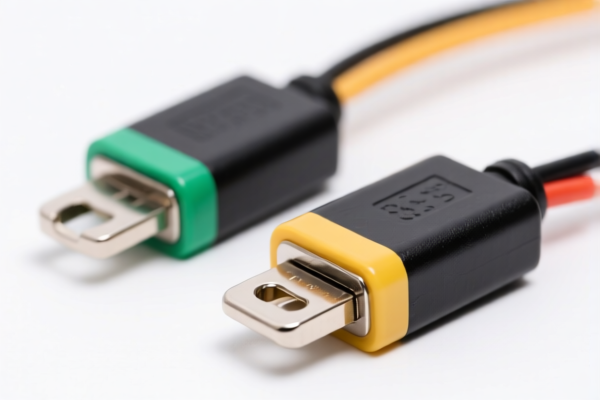
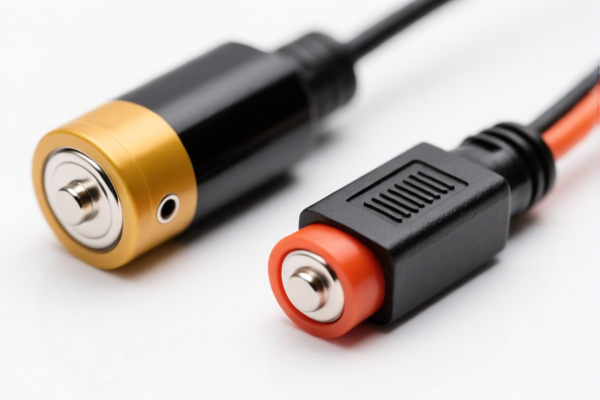
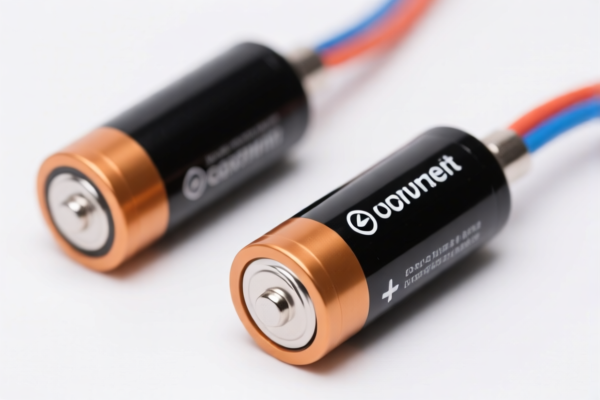
AI Analysis
🔋 Battery Accessories (Battery Parts & Components)
🌐 HS Code Reference & Customs Clearance Guide | 2026 Latest Tariff Analysis | Professional Compliance Strategy
📌 1. Product Definition & Classification: What Exactly Are "Battery Accessories"?
In international trade, "Battery Accessories" is a broad term that requires precise differentiation based on function, structure, and material. Improper classification can lead to significant tariff discrepancies and customs delays.
Generally, these items fall into two main categories: * General Battery Parts (8507.90.xxxx): Components specifically designed for or indispensable to electric storage batteries (e.g., battery casings, terminal plates, separator frames, internal cell components). * General Mechanical/Plastic Accessories (8538.90.xxxx): Parts of electrical apparatus not specifically named elsewhere, or generic accessories (e.g., mounting brackets, non-specific connectors, protective cases) that are not integral to the battery's electrochemical function.
⚠️ Key Distinction:
- If the part is essential for the battery's operation (e.g., a terminal connector specific to the cell chemistry, a separator, or a housing designed exclusively for a battery pack) → It belongs to Chapter 8507 (Electric Storage Batteries; Parts).
- If the part is generic or serves as an external accessory/framework without being part of the electrochemical system → It may belong to Chapter 8538 (Parts Suitable for Use Solely or Principally with the Apparatus of Headings 8535, 8536, or 8537).
📦 2. HS Code Classification Details (Based on Provided Data)
| HS Code | Product Description | Application Scenario | Material/Structure Conflict? |
|---|---|---|---|
8538.90.30.00 |
Battery Accessories (General Parts/Components) | Generic brackets, non-specific connectors, external casings. | ❌ No obvious material conflict. Default match. |
8507.90.80.00 |
Battery Parts | Explicitly defined as parts of electric storage batteries. | ✅ No material conflict. Matches purpose. |
8507.90.40.00 |
Battery Parts (Component Form) | Structural components consistent with battery usage. | ✅ No material or structural conflict. |
🔍 Critical Reminder:
- 8507.90 codes are generally preferred if the item is internally integral to the battery pack or cell.
- 8538.90.30.00 is often used for external or generic accessories that support the battery but are not part of its core energy storage mechanism.
- Misclassification between these can lead to different duty rates and potential audits.
💰 3. 2026 Latest Tariff Rate Breakdown (Including Surcharges)
✅ Applicable Country: United States (US)
✅ Origin: China (CN)
✅ Effective Date: Current rates include Section 301 and IEEPA surcharges.
🎯 1. 8538.90.30.00 —— Battery Accessories (General Parts)
| Item | Detail |
|---|---|
| Base Duty Rate | 3.5% (ad valorem) |
| Section 301 Surcharge | +25.0% |
| Section 122 Surcharge | +10.0% |
| Total Effective Duty | 38.5% |
| Tax Calculation | CIF Value × 38.5% |
| De Minimis Exemption | ❌ Not Eligible (High duty rate exceeds threshold for typical exemption considerations) |
| Legal Basis Path | HTSUS: 8538.90.30.00 → Section 301 (FTC Footnote 9903.88.01) → IEEPA Section 122 |
📌 Explanation:
- Base 3.5%: Standard Most Favored Nation (MFN) rate for parts of electrical apparatus.
- 25% Section 301: Applies to many electrical parts and accessories from China under the 301 investigation.
- 10% Section 122: Additional duty imposed on specific goods from China (often related to trade remedy or national security measures).
- Total 38.5%: A significant cost factor that must be pre-calculated in your landed cost.
🎯 2. 8507.90.80.00 —— Battery Parts (Specific)
| Item | Detail |
|---|---|
| Base Duty Rate | 3.4% (ad valorem) |
| Section 301 Surcharge | +25.0% |
| Section 122 Surcharge | +10.0% |
| Total Effective Duty | 38.4% |
| Tax Calculation | CIF Value × 38.4% |
| De Minimis Exemption | ❌ Not Eligible |
| Legal Basis Path | HTSUS: 8507.90.80.00 → Section 301 → IEEPA Section 122 |
📌 Note:
- This code is for parts explicitly defined as belonging to electric storage batteries.
- The rate is 1% lower than 8538.90.30.00 due to a slightly lower base rate (3.4% vs 3.5%), but the surcharges remain the same.
- Ensure the product documentation clearly states "Parts of Electric Storage Batteries" to justify this classification.
🎯 3. 8507.90.40.00 —— Battery Parts (Component Form)
| Item | Detail |
|---|---|
| Base Duty Rate | 3.5% (ad valorem) |
| Section 301 Surcharge | +25.0% |
| Section 122 Surcharge | +10.0% |
| Total Effective Duty | 38.5% |
| Tax Calculation | CIF Value × 38.5% |
| De Minimis Exemption | ❌ Not Eligible |
| Legal Basis Path | HTSUS: 8507.90.40.00 → Section 301 → IEEPA Section 122 |
📌 Note:
- Similar to 8507.90.80.00, but potentially different structural classification (e.g., specific subheading for certain types of components).
- Also subject to the full 38.5% total duty.
🛠️ 4. Customs Clearance Practical Advice (Pitfall Avoidance Guide)
✅ 1. Documentation Checklist (Essential for Smooth Clearance)
| Document | Required | Purpose |
|---|---|---|
| ✅ Product Specification Sheet | ✔️ | Must detail if the part is for internal use (battery cell/pack) or external use. |
| ✅ Technical Drawing / Diagram | ✔️ | Crucial to prove if the item is a "part" (8507) or an "accessory" (8538). |
| ✅ Product Photos (Label & Structure) | ✔️ | Show brand, model, and any markings indicating compatibility with specific battery types. |
| ✅ Commercial Invoice | ✔️ | Must clearly describe the item. Avoid vague terms like "Hardware"; use "Battery Terminal Plate" or "Battery Mounting Bracket". |
| ✅ Packing List | ✔️ | Separate battery packs from accessories if shipped together to avoid misclassification of the whole shipment. |
✅ 2. Declaration Strategy (Key Mantra)
🔥 "Part vs. Accessory: Function Dictates Fate!"
| Scenario | Correct Classification | Wrong Classification | Consequence |
|---|---|---|---|
| Internal Cell Component (e.g., separator, terminal) | 8507.90.80.00 or 8507.90.40.00 |
8538.90.30.00 |
May result in audit if 8507 is preferred; slight rate difference (38.4% vs 38.5%). |
| External Bracket / Case | 8538.90.30.00 |
8507.90.xxxx |
High risk of rejection if deemed integral to battery function. |
| Generic Connector | 8538.90.30.00 |
8507.90.xxxx |
If it's not exclusive to batteries, 8538 is safer. |
| Battery Pack (Complete) | 8507.60.00.00 (Not in list) |
Any of the above | CRITICAL ERROR: Do not classify complete packs as parts. |
✅ 3. Special Case Handling
| Situation | Recommendation |
|---|---|
| OEM Specific Parts | Provide the Original Equipment Manufacturer (OEM) documentation linking the part to a specific battery model. This strengthens the case for 8507 classification. |
| Mixed Shipment | Ship batteries (8507.60) and accessories (8538.90 or 8507.90) in separate boxes or clearly separate on the packing list to avoid confusion. |
| High-Value Items | For items over $800 (de minimis threshold), always use a licensed customs broker to verify HS codes pre-shipment. |
| Disputed Classification | Apply for a Customs Ruling from CBP (U.S. Customs and Border Protection) before shipping to mitigate risk. |
🌍 5. Global Market Comparison (2026 Insight)
| Country/Region | Recommended HS Code | Duty Rate | Certification | Note |
|---|---|---|---|---|
| 🇺🇸 USA | 8538.90.30.00 / 8507.90.xxxx |
38.4% - 38.5% | FCC, UL (if applicable) | High due to Section 301 & 122. |
| 🇨🇳 China | 8507.90 / 8538.90 |
~3-5% | CCC (if applicable) | Much lower duty than US. |
| 🇪🇺 EU | 8507.60 / 8538.90 |
0% - 4% | CE, RoHS, REACH | No Section 301 equivalent. |
| 🇯🇵 Japan | 8507.60 / 8538.90 |
0% - 3% | PSE, JIS | Competitive market. |
📌 Conclusion:
- The USA market is significantly more expensive for battery accessories due to multiple layers of tariffs (Base + 301 + 122).
- EU and Asian markets offer much lower duty costs, making them more attractive for non-US sales.
📌 6. Common Mistakes & Pitfalls (Lessons Learned)
❌ Mistake 1: Calling everything "Battery Accessories" on the invoice.
👉 Result: CBP may classify it based on physical characteristics, potentially leading to penalties if it’s actually a part (8507) or vice versa.
❌ Mistake 2: Ignoring Section 122.
👉 Result: Forgetting the 10% add-on leads to underpayment of duties and subsequent audits/fines.
❌ Mistake 3: Mixing complete battery packs with parts in one HS code.
👉 Result: Seizure or return of goods. Complete packs (8507.60) are valued and taxed differently.
✅ Best Practice:
Use precise descriptions:
"Plastic Battery Case Cover for Model XYZ" (Suggests 8538) vs. "Lithium-Ion Battery Terminal Connector for Model XYZ" (Suggests 8507).
🎯 7. Conclusion: Precision in Classification Saves Money!
🎯 Remember the Mantra:
🔹 "Function First, then Form. 8507 for Parts, 8538 for Accessories. 38.5% Duty in the US is No Joke!"
🔹 "Document Clearly, Declare Precisely, Avoid the 38.5% Surprise!"
📌 Pro Tip:
If you are exporting to the US, consider if any parts can be substantially transformed in a third country (e.g., Mexico or Vietnam) to potentially mitigate Section 301 duties, provided they meet USMCA or other Free Trade Agreement (FTA) rules of origin. Always consult a trade compliance expert before restructuring supply chains.
📣 Immediate Action:
📞 Engage a Customs Broker for pre-classification.
📄 Provide detailed technical specs to your supplier.
🚀 Optimize Landed Cost by choosing the right HS code from the start!
✨ Professional Clearance Starts with Accurate Classification!
💼 Every Percentage Point Matters in Global Trade!
Customer Reviews
About HS Code Classification
The Harmonized System (HS) is an internationally standardized nomenclature developed by the World Customs Organization (WCO) to classify traded products. Over 200 countries use the HS system as the basis for customs tariffs, trade statistics, and import/export regulations.
Each HS code follows a hierarchical structure:
- Chapter (2 digits) — Broad category of goods (e.g., Chapter 84: Machinery and Mechanical Appliances)
- Heading (4 digits) — More specific grouping within the chapter
- Subheading (6 digits) — Internationally standardized breakdown, used by all WCO member countries
- National subdivisions (8-10 digits) — Country-specific extensions for further classification, such as US HTSUS 10-digit codes
Correct HS code classification is essential for smooth customs clearance, accurate duty payment, and compliance with trade regulations. Misclassification can lead to customs delays, overpayment of duties, or penalties.
When importing from CN to US, the applicable tariff rates may include:
- Most-Favored-Nation (MFN) rate — The standard duty rate applied to WTO members
- General rate — Applied to countries without trade agreements
- Trade remedy duties — Additional tariffs such as Section 301 (anti-dumping), Section 232 (national security), or countervailing duties
The information provided on this page is for reference purposes only. For official classification, please consult with your local customs authority or a licensed customs broker.