Battery Box
CN → US| HS Code | Tariff Rate | Origin | Destination | Doc |
|---|---|---|---|---|
| 8543908885 | 85.0% | CN | US | Official Doc |
| 8543908865 | 35.0% | CN | US | Official Doc |
| 8517790000 | 67.5% | CN | US | Official Doc |
| 8517130000 | 10.0% | CN | US | Official Doc |
Product Images

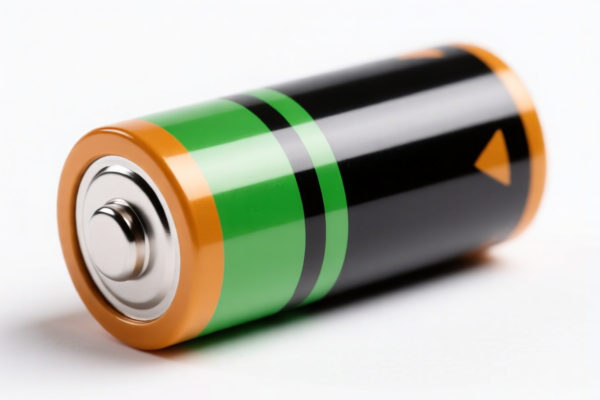
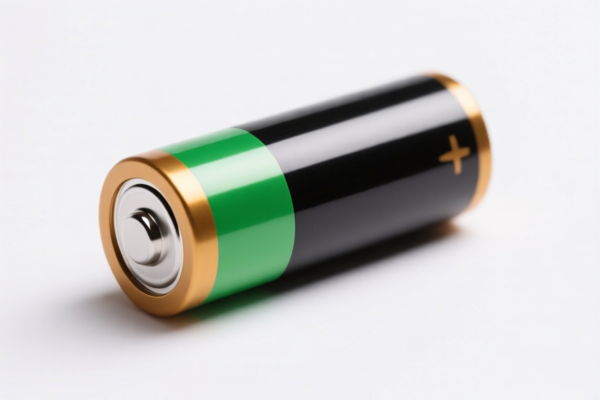
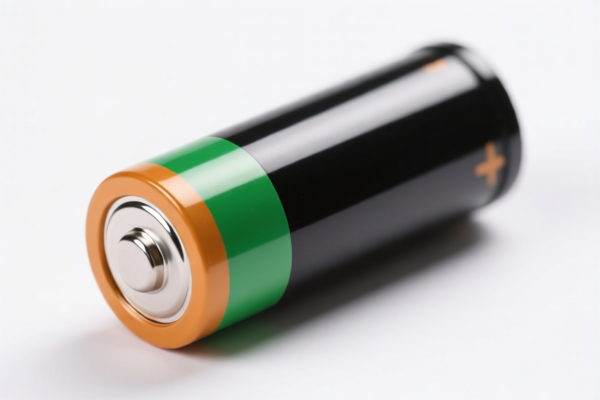
AI Analysis
🔋 Battery Box (Enclosures for Batteries)
🌐 HS Code Reference & Customs Clearance Guide | 2026 Latest Tariff Analysis | Professional-Level Clearance Strategy
📌 1. Product Definition & Classification: What Exactly is a "Battery Box"?
In international trade, "Battery Box" is a generic term that can refer to different types of containers depending on the material, capacity, and intended use. However, based on the provided data, these goods are primarily classified under two main categories: Iron/Steel Containers (Headings 73) and Plastic Articles (Heading 39).
Key Distinction Points: * Iron/Steel Containers: If the box is made of metal (iron/steel), used for storing any material (not just compressed gas), and has a capacity ≤ 300 liters, it falls under Chapter 73. * < 50 Liters: Specific sub-category for small metal containers. * ≥ 50 Liters: General metal containers. * Plastic Containers: If the box is made of plastic (e.g., buckets, pails, or general plastic fittings) and does not fit the technical definition of a pressure vessel or specialized industrial steel drum, it may fall under Chapter 39.
⚠️ Critical Classification Rule:
- If it is a metal drum/can (capacity < 50L) → 7310.29.00.65
- If it is a metal drum/can (capacity ≥ 50L) → 7310.10.00.90
- If it is a plastic bucket/pail → 3926.90.10.00
- If it is a plastic fitting/attachment → 3926.30.50.00
📦 2. HS Code Classification Details (Based on Provided Data)
| HS Code | Product Description | Capacity/Material | Key Characteristics |
|---|---|---|---|
7310.29.00.65 |
Tanks, casks, drums, cans... of iron or steel; Of a capacity of less than 50 liters; Other | Iron/Steel < 50 Liters |
Small metal battery enclosures, thin-walled steel cans, non-pressure tanks. Not fitted with mechanical/thermal equipment. |
7310.10.00.90 |
Tanks, casks, drums, cans... of iron or steel; Of a capacity of 50 liters or more; Other | Iron/Steel ≥ 50 Liters |
Larger metal battery boxes, industrial-grade steel drums used for battery storage or casing. |
8504.40.95.80 |
Electrical transformers, static converters...; Static converters; Other | Electrical Parts | Note: This code is for converters/rectifiers, NOT boxes. If your "Battery Box" includes integrated static converters, it might be misclassified here if described incorrectly. However, for a pure container, this is likely incorrect unless it's a converter unit. |
8504.90.96.90 |
Electrical transformers...; Parts; Other | Electrical Parts | Note: Similarly, this is for parts of transformers/converters. A simple plastic or metal box is not an electrical part of a transformer. |
3926.30.50.00 |
Other articles of plastics...; Fittings for furniture, coachwork or the like; Other | Plastic | Plastic fittings or attachments. If the "box" is a small plastic bracket or fitting for a battery compartment, it might fall here. |
3926.90.10.00 |
Other articles of plastics...; Other; Buckets and pails | Plastic | Plastic Battery Boxes/Buckets. If the box is a rigid plastic container resembling a bucket or pail (e.g., for large battery packs or water batteries), it falls here. |
🔍 Focus for "Battery Box":
For a typical "Battery Box" (enclosure), the most relevant codes from your data are: 1. Steel < 50L:7310.29.00.652. Steel ≥ 50L:7310.10.00.903. Plastic Bucket/Pail Type:3926.90.10.00
💰 3. 2026 Latest Tariff Rate Breakdown (Including Surtaxes)
✅ Applicable Country: United States (US)
✅ Origin: China (CN) (Assumed based on tax details in data)
✅ Effective Date: Current (2025/2026)
🎯 1. 7310.29.00.65 & 7310.10.00.90 —— Iron/Steel Containers
| Item | Detail |
|---|---|
| Base Tariff | 0.0% (Ad Valorem) |
| Section 301 Surtax | +25.0% (Steel/Aluminum/Copper products surtax applies) |
| Steel/Aluminum Surcharge | +50.0% (Specific note: "Steel, Aluminum, Copper products surtax: 50%") |
| Total Tariff Rate | 75.0% |
| Tax Calculation | CIF Value × 75% |
| De Minimis Exemption | ❌ Not Applicable (High tax rate exceeds de minimis thresholds) |
| Legal Basis | HTSUS 7310.29.00.65 / 7310.10.00.90 + Section 301 + Steel/Aluminum Surtax |
📌 Explanation:
- Base Rate: 0% because these are generic containers. - Surtax: The data explicitly states "Steel, Aluminum, Copper products surtax: 50%" and "Added Tariff: 25%".
- Total: 0% + 25% + 50% = 75%.
- This is a very high tariff. Steel containers face a total burden of 75%.
🎯 2. 3926.90.10.00 & 3926.30.50.00 —— Plastic Articles
| Item | Detail |
|---|---|
| Base Tariff | 0.0% |
| Added Tariff | 0.0% |
| Total Tariff Rate | 0.0% |
| Tax Calculation | CIF Value × 0% |
| De Minimis Exemption | ✅ May Apply (If value < $800 for Section 321) |
| Legal Basis | HTSUS 3926.90.10.00 / 3926.30.50.00 |
📌 Explanation:
- Plastic containers (buckets, pails, fittings) from China currently show 0% total tax in the provided data.
- This makes plastic battery boxes significantly cheaper to import than steel ones.
🎯 3. 8504.40.95.80 & 8504.90.96.90 —— Electrical Parts (Transformers/Converters)
Note: These codes are likely incorrect for a simple "Battery Box" unless it contains electrical conversion equipment.
| Item | Detail |
|---|---|
| Base Tariff | 0.0% |
| Added Tariff | +25.0% |
| Total Tariff Rate | 25.0% |
| Tax Calculation | CIF Value × 25% |
| De Minimis Exemption | ❌ Not Applicable |
🛠️ 4. Customs Clearance Practical Advice (Real-World Pitfall Guide)
✅ 1. Document Checklist (Must-Have)
| Document | Required | Description |
|---|---|---|
| ✅ Product Spec Sheet | ✔️ | Must clearly state Material (Steel vs. Plastic), Capacity (Liters), and Weight. |
| ✅ Material Declaration | ✔️ | Explicitly state "Made of Iron/Steel" or "Made of Plastic". Misdeclaration leads to severe penalties. |
| ✅ Capacity Label | ✔️ | For steel boxes, whether it is <50L or ≥50L is critical for HS code selection. |
| ✅ Photos (Labeled) | ✔️ | Show the entire box, interior, and any mechanical/thermal equipment (if none, state "No mechanical equipment"). |
| ✅ Commercial Invoice | ✔️ | Describe as "Steel Battery Enclosure, <50L" or "Plastic Battery Box, Bucket Type". Avoid vague terms like "Container". |
| ✅ Packing List | ✔️ | Include net/gross weight to support capacity claims if challenged. |
✅ 2. Declaration Tips (Key Mantra)
🔥 "Material First, Capacity Second, No Mech Equipment!"
| Situation | Correct Declaration | Incorrect Practice |
|---|---|---|
| Small Steel Box (<50L) | 7310.29.00.65 "Steel Battery Box, 20L, No Thermal Equipment" |
Misclassifying as plastic → 0% vs 75% (Audit Risk) |
| Large Steel Box (≥50L) | 7310.10.00.90 "Steel Battery Enclosure, 100L, Unlined" |
Under-declaring capacity to avoid 50% surtax |
| Plastic Bucket-Type Box | 3926.90.10.00 "Plastic Battery Container, Bucket Style" |
Calling it a "Tank" → Might be reclassified as steel if ambiguous |
| Box with Converter | 8504.40.95.80 "Battery Enclosure with Integrated Static Converter" |
Calling it a "Box" → Under-declares tax (25% vs 75% for steel) |
✅ 3. Special Situations
| Situation | Handling Advice |
|---|---|
| Steel vs. Plastic | If the box has a steel frame but plastic lining, it is still Iron/Steel (Chapter 73) because the primary material is steel. Tax: 75%. |
| Thermal Insulation | If the box is "heat insulated," it is still 7310 if it has no mechanical equipment. Insulation alone doesn't change HS code. |
| Mechanical Equipment | If the box has fans, pumps, or heating elements integrated, it may no longer be "unfitted with mechanical equipment." It could be reclassified as a machine part or apparatus, leading to different codes and potentially higher taxes. |
| Battery Inside | If batteries are shipped inside the box, the entire shipment might be classified as Batteries (Heading 8507), which has different tariffs. Ensure boxes are shipped empty if using the 7310/3926 codes. |
🌍 5. Global Market Comparison (2026 Latest)
| Country/Region | Recommended HS Code | Tariff (China Origin) | Certification | Remarks |
|---|---|---|---|---|
| 🇺🇸 USA | 7310.29.00.65 (Steel) |
75% | N/A | High tariff due to steel/aluminum surtax. |
| 🇺🇸 USA | 3926.90.10.00 (Plastic) |
0% | N/A | Plastic boxes are tariff-free. |
| 🇪🇺 EU | 7310.29.90 | ~6.5% | CE/REACH | No Section 301 equivalent. |
| 🇨🇳 China | 7310.29.90 | 0% | N/A | Import tax may be low, but focus on export. |
📌 Conclusion:
- Steel Battery Boxes face a 75% tariff in the US.
- Plastic Battery Boxes face 0% tariff.
- Strategic Advice: If possible, use plastic materials or composite materials with plastic dominance to reduce tariffs. If steel is mandatory, ensure the capacity is clearly documented and consider the high cost in your pricing model.
📌 6. Common Errors & Pitfalls (Blood & Tears Lessons)
❌ Error 1: Classifying a Steel Box as Plastic to avoid 75% tax.
👉 Consequence: Customs inspection finds steel → Penalty + Back Taxes + Fine.
❌ Error 2: Ignoring Capacity for Steel Boxes.
👉 Consequence: Shipping a 60L box under "Less than 50L" code → Under-declaration Audit.
❌ Error 3: Including Batteries inside the box and declaring as "Box".
👉 Consequence: Misclassification of hazardous goods (Lithium Batteries) → Shipment Rejected/Destroyed.
❌ Error 4: Claiming Thermal Equipment when none exists.
👉 Consequence: Confusion in classification. If you say "heat insulated," be ready to prove it's passive insulation only.
✅ Correct Practice:
"Empty Steel Battery Enclosure, 30 Liters Capacity, Unlined, No Mechanical Parts, Model ABC, Net Weight 5kg"
🎯 7. Conclusion: Professional Declaration, Save Costs, Ensure Smooth Clearance!
🎯 Remember the Mantra:
🔹 "Steel Box: Check Capacity. <50L: 75%. ≥50L: 75%. Plastic: 0%."
🔹 "Material Defines Code. Empty Box is Key. Batteries Inside? Change Code!"
🔹 "75% Tax for Steel is Real. Plastic is Free. Choose Wisely!"
📌 Pro Tip:
If your battery box is steel and destined for the US, calculate the 75% tax into your FOB/CIF pricing immediately. If the cost is prohibitive, consider switching to polypropylene (PP) plastic boxes, which are classified under 3926.90.10.00 with 0% tax in the provided data.
📣 Immediate Action:
📞 Verify Material & Capacity with Your Manufacturer
📄 Update Product Description on Invoice
🚀 Ensure Boxes Are EMPTY When Declared as Containers!
✨ Professional Customs Clearance Starts with Accurate Classification!
💼 Your Every Cent of Cost Should Be Precisely Calculated!
Customer Reviews
About HS Code Classification
The Harmonized System (HS) is an internationally standardized nomenclature developed by the World Customs Organization (WCO) to classify traded products. Over 200 countries use the HS system as the basis for customs tariffs, trade statistics, and import/export regulations.
Each HS code follows a hierarchical structure:
- Chapter (2 digits) — Broad category of goods (e.g., Chapter 84: Machinery and Mechanical Appliances)
- Heading (4 digits) — More specific grouping within the chapter
- Subheading (6 digits) — Internationally standardized breakdown, used by all WCO member countries
- National subdivisions (8-10 digits) — Country-specific extensions for further classification, such as US HTSUS 10-digit codes
Correct HS code classification is essential for smooth customs clearance, accurate duty payment, and compliance with trade regulations. Misclassification can lead to customs delays, overpayment of duties, or penalties.
When importing from CN to US, the applicable tariff rates may include:
- Most-Favored-Nation (MFN) rate — The standard duty rate applied to WTO members
- General rate — Applied to countries without trade agreements
- Trade remedy duties — Additional tariffs such as Section 301 (anti-dumping), Section 232 (national security), or countervailing duties
The information provided on this page is for reference purposes only. For official classification, please consult with your local customs authority or a licensed customs broker.