Battery Folder
CN → US| HS Code | Tariff Rate | Origin | Destination | Doc |
|---|---|---|---|---|
| 7616995170 | 37.5% | CN | US | Official Doc |
| 8507908000 | 38.4% | CN | US | Official Doc |
| 8507904000 | 38.5% | CN | US | Official Doc |
| 3926305000 | 22.8% | CN | US | Official Doc |
| 3923102000 | 35.0% | CN | US | Official Doc |
Product Images

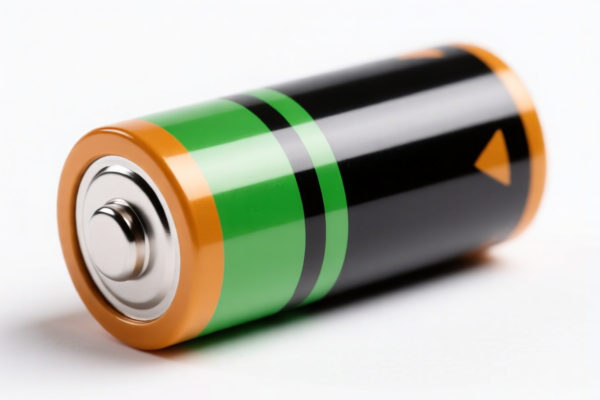
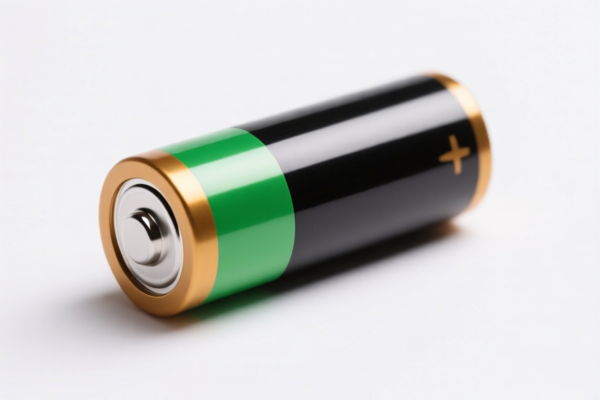
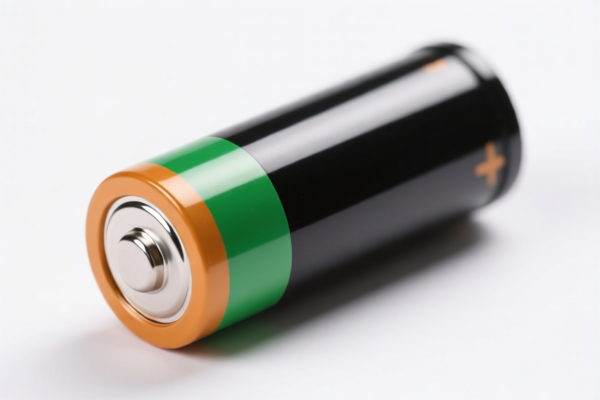
AI Analysis
📦 Battery Folder (Battery Box/Container)
🌐 HS Code Reference & Customs Clearance Guide | 2026 Latest Tariff Analysis | Professional Clearance Strategy
📌 I. Product Definition & Classification: What is a "Battery Folder"?
A "Battery Folder" (often referred to as a Battery Box, Battery Case, or Battery Housing) is a structural component designed to house, protect, and organize battery cells or modules. It serves as the mechanical shell, bracket, or container for battery packs.
In international trade, its classification depends heavily on two factors:
1. Material Composition: Is it plastic, metal, or a composite?
2. Specific Function: Is it a generic container, a specialized part of an electrical battery system, or a general packaging item?
⚠️ Key Distinction Point:
- If the product is a structural part of a battery (e.g., a hard shell for an EV battery pack or a specific housing for a rechargeable battery unit) → It may be classified under Chapter 85 (Electrical Machinery) as a battery part.
- If the product is a general-purpose container (e.g., a plastic storage box for AA batteries, or a generic metal bin for storing battery packs) → It is likely classified under Chapter 76 (Aluminum) or Chapter 39 (Plastics) as other articles.
📦 II. HS Code Classification Details (2026 Latest Tariff Alignment)
Based on the provided data, the following HS Codes are inferred candidates for "Battery Folder," depending on the specific material and intended use:
| HS Code | Product Description | Application Scenario | Material Basis |
|---|---|---|---|
7616.99.51.70 |
Other articles of aluminum | Aluminum battery housing, casing, or structural bracket | ✅ Metal (Aluminum/Steel) |
8507.90.80.00 |
Parts of electric storage batteries | Specialized battery box/casing for electric storage batteries (Li-ion, Lead-acid, etc.) | ✅ Plastic/Metal (No conflict inferred) |
8507.90.40.00 |
Other parts of electric storage batteries | Structural components (shell/box) for batteries, general classification | ✅ Plastic/Metal (No conflict inferred) |
3926.30.50.00 |
Other articles of plastics | Plastic battery storage box, container, or packaging part | ✅ Plastic (Inferred "Other" category) |
3923.10.20.00 |
Boxes, cases, crates for plastic goods | Plastic storage box/container for general use (e.g., AA battery storage) | ✅ Plastic (Inferred packaging/收纳) |
🔍 Key Note:
- The classification between Chapter 85 (Battery Parts) and Chapters 39/76 (General Parts/Packaging) is critical for tariff rates.
- Chapter 85 codes (8507.90.xxxx) generally attract higher additional tariffs due to their specific electrical nature.
- Chapter 39/76 codes (3926.30,7616.99) may have lower base duties but are still subject to US trade measures.
💰 III. 2026 Latest Tariff Rate Breakdown (Including Surcharges & Policy Add-ons)
✅ Applicable Country: United States (US)
✅ Origin: China (CN)
✅ Effective Date: From November 10, 2025 (including subsequent imports)
🎯 1. 7616.99.51.70 — Aluminum Articles (Metal Battery Housing)
| Item | Content |
|---|---|
| Base Duty Rate | 2.5% (Ad Valorem) |
| Section 301 Surcharge | +25.0% (From USITC Footnote 9903.88.01) |
| Section 122 Surcharge | +10.0% (Specific US Trade Measure) |
| Total Tax Rate | 37.5% |
| Tax Calculation | CIF Value × 37.5% |
| De Minimis Exemption? | ❌ Not Eligible |
| Legal Basis Path | USITC:7616.99.51.70 → FOOTNOTE:9903.88.01 → Section 122: 10% |
📌 Explanation:
- Aluminum products are subject to the standard 25% Section 301 tariff and a 10% Section 122 tariff.
- The base duty is low (2.5%), but the combined surcharges make the total rate 37.5%.
🎯 2. 8507.90.80.00 — Parts of Electric Storage Batteries (Plastic/Metal)
| Item | Content |
|---|---|
| Base Duty Rate | 3.4% (Ad Valorem) |
| Section 301 Surcharge | +25.0% |
| Section 122 Surcharge | +10.0% |
| Total Tax Rate | 38.4% |
| Tax Calculation | CIF Value × 38.4% |
| De Minimis Exemption? | ❌ Not Eligible |
| Legal Basis Path | USITC:8507.90.80.00 → FOOTNOTE:9903.88.01 → Section 122: 10% |
📌 Explanation:
- Classified as a "part" of an electric battery.
- Attracts the highest rate in the set (38.4%) due to the combination of base duty (3.4%) plus surcharges.
- Risk: Misclassifying a general plastic box as a battery part can lead to overpayment or underpayment audits.
🎯 3. 8507.90.40.00 — Other Parts of Electric Storage Batteries
| Item | Content |
|---|---|
| Base Duty Rate | 3.5% (Ad Valorem) |
| Section 301 Surcharge | +25.0% |
| Section 122 Surcharge | +10.0% |
| Total Tax Rate | 38.5% |
| Tax Calculation | CIF Value × 38.5% |
| De Minimis Exemption? | ❌ Not Eligible |
| Legal Basis Path | USITC:8507.90.40.00 → FOOTNOTE:9903.88.01 → Section 122: 10% |
📌 Note:
- This is the highest possible rate among the provided options (38.5%).
- Use this code only if the item is strictly defined as a structural component of an electric storage battery (e.g., EV battery pack housing) and not a general container.
🎯 4. 3926.30.50.00 — Other Plastic Articles (Plastic Battery Box)
| Item | Content |
|---|---|
| Base Duty Rate | 5.3% (Ad Valorem) |
| Section 301 Surcharge | +7.5% |
| Section 122 Surcharge | +10.0% |
| Total Tax Rate | 22.8% |
| Tax Calculation | CIF Value × 22.8% |
| De Minimis Exemption? | ❌ Not Eligible |
| Legal Basis Path | USITC:3926.30.50.00 → FOOTNOTE:9903.88.01 (Applies to specific plastic items) |
📌 Advantage:
- This code has a lower surcharge structure (7.5% instead of 25%) for certain plastic articles, resulting in a significantly lower total rate (22.8%).
- Ideal for plastic storage boxes or non-integrated housing that does not qualify as a "battery part" under Chapter 85.
🎯 5. 3923.10.20.00 — Plastic Boxes, Cases, Crates (Storage Container)
| Item | Content |
|---|---|
| Base Duty Rate | 0.0% (Ad Valorem) |
| Section 301 Surcharge | +25.0% |
| Section 122 Surcharge | +10.0% |
| Total Tax Rate | 35.0% |
| Tax Calculation | CIF Value × 35.0% |
| De Minimis Exemption? | ❌ Not Eligible |
| Legal Basis Path | USITC:3923.10.20.00 → FOOTNOTE:9903.88.01 → Section 122: 10% |
📌 Explanation:
- This code applies to general plastic packaging/storage boxes.
- Although the base duty is 0%, the 25% Section 301 tariff still applies, bringing the total to 35.0%.
- Suitable for AA/AAA battery storage boxes or general-purpose plastic containers.
🛠️ IV. Customs Clearance Practical Advice (Real-World Pitfall Avoidance)
✅ 1. Documentation Checklist (Mandatory)
| Document | Required | Description |
|---|---|---|
| ✅ Product Specification Sheet | ✔️ | Details dimensions, material (e.g., ABS Plastic, Aluminum 6061), and intended use. |
| ✅ Technical Drawings/Cutaway | ✔️ | To prove whether it is a standalone container or an integrated battery part. |
| ✅ Product Photos | ✔️ | Clear images showing branding, material texture, and any labels. |
| ✅ Commercial Invoice | ✔️ | Must explicitly state: "Plastic Battery Storage Box" or "Aluminum Battery Housing," not just "Battery Part." |
| ✅ Packing List | ✔️ | Show contents clearly; avoid mixing with battery cells unless declared as a kit. |
✅ 2. Declaration Tips (Key Mantra)
🔥 "Material Defines Code, Function Defines Chapter, Name Must Be Precise!"
| Scenario | Correct Declaration | Wrong Practice |
|---|---|---|
| Plastic Storage Box | 3926.30.50.00 (Plastic Articles) |
Misdeclare as 8507 (Battery Part) → Higher Tax (22.8% vs 38.5%) |
| Metal Aluminum Housing | 7616.99.51.70 (Aluminum Articles) |
Misdeclare as 3926 (Plastic) → Customs Audit & Penalty |
| Integrated EV Battery Case | 8507.90.40.00 or 80.00 (Battery Parts) |
Misdeclare as 3923 (Box) → Underpayment Risk & Back Taxes |
| General Plastic Bin | 3923.10.20.00 (Plastic Box) |
Misdeclare as 7616 (Aluminum) → Wrong Material Class |
✅ 3. Special Situations Handling
| Situation | Handling Advice |
|---|---|
| OEM Custom Battery Housing | Provide design drawings and customer PO. If it’s specifically shaped for a battery pack, consider Chapter 85. |
| Battery Box + Battery Cells | If declared as a "Kit," the entire set may be classified under the battery cell code (often higher duty). Declare separately if possible. |
| Plastic vs. Aluminum Confusion | If the material is unclear, customs may default to the higher-risk code. Provide material test reports (e.g., SGS report) to prove it’s plastic or aluminum. |
| Used/Refurbished Parts | Check for import restrictions on used electrical parts. New parts are safer for clearance. |
🌍 V. Global Market Comparison (2026 Latest)
| Country/Region | Recommended HS Code | Tariff Rate | Certification | Remarks |
|---|---|---|---|---|
| 🇺🇸 USA | 3926.30.50.00 (Plastic) |
22.8% | FCC/UL (if electrical) | Lowest effective rate for plastic boxes. |
| 🇺🇸 USA | 8507.90.80.00 (Battery Part) |
38.4% | FCC/UL | High rate for integrated battery parts. |
| 🇨🇳 China | 3926.30.50.00 |
5.5% | CCC (if applicable) | No Section 301/122 surcharges. |
| 🇪🇺 EU | 3926.30.50.00 |
4.5% | CE/RoHS | No anti-dumping tariffs on these codes. |
| 🇦🇺 Australia | 3926.30.50.00 |
5% | RCM | No special surcharges. |
📌 Conclusion:
- USA is the most complex market due to Section 301 and Section 122 tariffs.
- Plastic storage boxes (3926.30) offer the lowest US tariff (22.8%) compared to battery parts (8507~38%).
- Metal parts (7616) sit in the middle at 37.5%.
📌 VI. Common Mistakes & Pitfalls (Lessons Learned)
❌ Mistake 1: Calling a "Plastic Storage Box" a "Battery Part"
👉 Consequence: Paying 38.5% tax instead of 22.8%.
💡 Solution: Be honest about the product's primary function. If it’s a general container, use Chapter 39.
❌ Mistake 2: Declaring Aluminum Housing as "Plastic"
👉 Consequence: Customs inspection reveals metal → Penalty + Retrospective Tax + Potential Fraud Charges.
💡 Solution: Provide material certificates. Accuracy is key.
❌ Mistake 3: Ignoring Section 122 Surcharge
👉 Consequence: Underquoting the final landed cost by 10%.
💡 Solution: Always include 10% Section 122 and 25%/7.5% Section 301 in your cost model for US-bound goods from China.
✅ Correct Declaration Example:
"Plastic Battery Storage Box, Non-Electrical, For General Use, Model XYZ, Material: ABS Plastic"
🎯 VII. Conclusion: Precise Classification Saves Money!
🎯 Remember the Mantra:
🔹 "Plastic Box = 3926 (22.8%)"
🔹 "Battery Part = 8507 (38.5%)"
🔹 "Aluminum Part = 7616 (37.5%)"
🔹 "General Plastic Box = 3923 (35.0%)"📌 Pro Tip:
If your product is a general-purpose storage container, DO NOT classify it under Chapter 85. Use Chapter 39 (3926.30.50.00) to save over 15% in tariffs.
For integrated battery housings, ensure you have technical documentation to support the Chapter 85 classification, but weigh the cost against the higher duty rate.
📣 Immediate Action:
📞 Contact your customs broker + Provide material spec + Apply for an Advance Ruling (Ruling Letter) for your specific product.
🚀 Ensure smooth clearance, minimize costs, and maximize profits!
✨ Professional Clearance Starts with Accurate Classification!
💼 Every percentage point of tariff matters!
Customer Reviews
About HS Code Classification
The Harmonized System (HS) is an internationally standardized nomenclature developed by the World Customs Organization (WCO) to classify traded products. Over 200 countries use the HS system as the basis for customs tariffs, trade statistics, and import/export regulations.
Each HS code follows a hierarchical structure:
- Chapter (2 digits) — Broad category of goods (e.g., Chapter 84: Machinery and Mechanical Appliances)
- Heading (4 digits) — More specific grouping within the chapter
- Subheading (6 digits) — Internationally standardized breakdown, used by all WCO member countries
- National subdivisions (8-10 digits) — Country-specific extensions for further classification, such as US HTSUS 10-digit codes
Correct HS code classification is essential for smooth customs clearance, accurate duty payment, and compliance with trade regulations. Misclassification can lead to customs delays, overpayment of duties, or penalties.
When importing from CN to US, the applicable tariff rates may include:
- Most-Favored-Nation (MFN) rate — The standard duty rate applied to WTO members
- General rate — Applied to countries without trade agreements
- Trade remedy duties — Additional tariffs such as Section 301 (anti-dumping), Section 232 (national security), or countervailing duties
The information provided on this page is for reference purposes only. For official classification, please consult with your local customs authority or a licensed customs broker.