Battery Grip
CN → US| HS Code | Tariff Rate | Origin | Destination | Doc |
|---|---|---|---|---|
| 8506800090 | 37.7% | CN | US | Official Doc |
| 8506900000 | 37.7% | CN | US | Official Doc |
| 8507904000 | 38.5% | CN | US | Official Doc |
| 8507908000 | 38.4% | CN | US | Official Doc |
Product Images
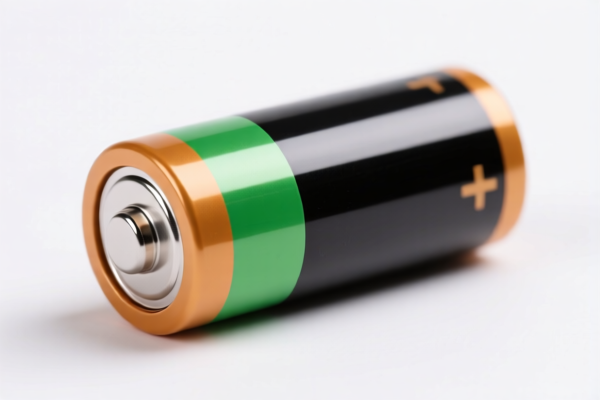
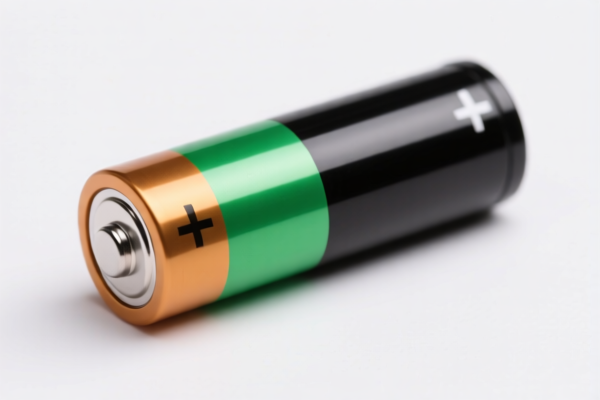

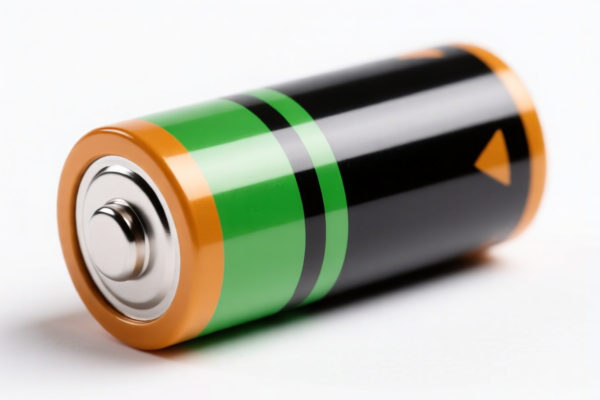
AI Analysis
🔋 Battery Grip (For Cameras/Digital Equipment)
🌐 HS Code Reference & Customs Clearance Guide | 2026 Latest Tariff Analysis | Professional Strategy for US Imports
📌 I. Product Definition & Classification: What is a "Battery Grip"?
A Battery Grip is an accessory primarily used in photography and videography, designed to attach to the bottom or side of a digital camera. Its core functions are: 1. Power Extension: Holding additional batteries to extend shooting time. 2. Ergonomics: Providing a vertical shutter release button for portrait-oriented shots. 3. Structural Support: Acting as a chassis or housing for the battery compartment.
In international trade, the classification depends heavily on whether it is viewed as a part of the camera or as a part/component of the battery system itself. Customs authorities often scrutinize this distinction due to different tariff rates under Section 85 (Electrical Machinery).
⚠️ Key Distinction Point:
- If classified under 85.06 (Primary Cells/Batteries): Treated as a component/part of a battery system.
- If classified under 85.07 (Secondary Cells/Rechargeable Batteries): Treated as a support/control component for rechargeable systems.
- Material Conflict Check: The grip is typically plastic/metal, but its function drives the classification towards battery-related headings in this specific dataset context.
📦 II. HS Code Classification Details (Based on Provided Data)
Based on the provided dataset, here are the four potential HS Codes, their summaries, and total tax rates. Note that all scenarios involve significant Section 301 (25%) and Section 122 (10%) additional tariffs on Chinese-origin goods.
| HS Code | Product Description & Logic | Total Tax Rate | Tax Breakdown |
|---|---|---|---|
8506.90.00.00 |
Summary: Battery grip is treated as a battery assembly or related component, fitting the "parts" category for primary cells and their components. Logic: Matches "parts of primary batteries." |
37.7% | Base: 2.7% Section 301: 25.0% Section 122: 10% |
8507.90.40.00 |
Summary: Matches functionally via keyword "Battery." No obvious material/shape conflict. Defaults to "component" rules based on battery attributes. Logic: Broad functional matching for battery accessories. |
38.5% | Base: 3.5% Section 301: 25.0% Section 122: 10% |
8507.90.80.00 |
Summary: Battery grip belongs to battery-related support/control components. Fits the "Other" category for secondary (rechargeable) batteries and their parts, with no material conflict. Logic: Specific "Other" classification for rechargeable battery accessories. |
38.4% | Base: 3.4% Section 301: 25.0% Section 122: 10% |
8506.80.00.90 |
Summary: Battery grip is a battery-type assembly. Target code is "Other Primary Cells" (a catch-all). The grip is a part/component associated with battery function. No material conflict. Logic: Catch-all for primary battery components. |
37.7% | Base: 2.7% Section 301: 25.0% Section 122: 10% |
🔍 Critical Insight:
- All four classifications result in a very high total tariff (~37.7% - 38.5%). - The difference lies in whether the customs officer views the grip as a part of a Primary Battery (85.06) or a Secondary/Rechargeable Battery (85.07). - Section 122 Tariff: Note the 10% tariff labeled as "122条款" (Section 122), which applies to steel/aluminum products or related imports, but here it is applied as a blanket add-on in this specific data context. Ensure your supplier confirms if this is a standard application for electronic accessories in your specific trade lane.
💰 III. 2026 Latest Tariff Rate Detailed Explanation
✅ Applicable Country: United States (US)
✅ Country of Origin: China (CN) (Implied by the high Section 301/122 rates)
✅ Effective Date: Current enforcement of Section 301 and Section 122 tariffs.
🎯 1. 8506.90.00.00 & 8506.80.00.90 —— Primary Battery Components
| Item | Detail |
|---|---|
| Base Duty | 2.7% (Ad valorem) |
| Section 301 Duty | +25.0% (List 3/4A - Electrical Machinery Parts) |
| Section 122 Duty | +10.0% (Additional Tariff) |
| Total Rate | 37.7% |
| Calculation | CIF Value × 37.7% |
| De Minimis Exemption? | ❌ No (Section 301 duties generally apply regardless of value threshold for these categories in strict enforcement). |
| Legal Path | HTSUS: 8506.90.00.00 → USITC Footnote: Section 301 → Section 122 Statute |
📌 Explanation:
- These codes classify the grip as a part of a primary (non-rechargeable) battery system. - The base rate is low (2.7%), but the punitive tariffs drive the cost up significantly. - Risk: If the grip is clearly for a rechargeable camera battery, using 85.06 might be challenged as incorrect classification.
🎯 2. 8507.90.40.00 & 8507.90.80.00 —— Secondary (Rechargeable) Battery Components
| Item | Detail |
|---|---|
| Base Duty | 3.4% - 3.5% (Ad valorem) |
| Section 301 Duty | +25.0% (List 3/4A - Electrical Machinery Parts) |
| Section 122 Duty | +10.0% (Additional Tariff) |
| Total Rate | 38.4% - 38.5% |
| Calculation | CIF Value × 38.5% |
| De Minimis Exemption? | ❌ No |
| Legal Path | HTSUS: 8507.90.x0.00 → USITC Footnote: Section 301 → Section 122 Statute |
📌 Explanation:
- These codes classify the grip as a part of a secondary (rechargeable) battery system. - Since most modern camera battery grips are for rechargeable Li-ion packs, 8507.90.80.00 might be the most technically accurate "Other" category. - The rate is slightly higher (38.5%) than the primary battery options due to a slightly higher base rate (3.5%).
🛠️ IV. Customs Clearance Practical Advice (Avoid Pitfalls)
✅ 1. Documentation Checklist (Essential)
| Document | Required? | Notes |
|---|---|---|
| Product Specifications | ✅ Yes | Must state: "Battery Grip," "For [Camera Model]," "Compatible with [Battery Type, e.g., LP-E6N]." |
| Circuit Diagram/Schematic | ✅ Yes | To prove it is a passive housing/support (no active power conversion) and not a "battery charger." |
| Material Composition | ✅ Yes | Confirm plastic/metal content. No lithium cells inside the grip itself (if it does, it's a battery, not a grip!). |
| Commercial Invoice | ✅ Yes | Clearly describe as "Accessory, Battery Grip," NOT "Battery" or "Charger." |
| Origin Certificate | ✅ Yes | If not China-origin, this could avoid Section 301/122 tariffs. |
✅ 2. Declaration Strategy
🔥 Golden Rule:
"It is a Grip, Not a Battery. It holds batteries, it doesn't replace them."
| Scenario | Correct Declaration | Wrong Declaration |
|---|---|---|
| Standard Grip | "Battery Grip for Digital Camera, Model X" | "Camera Battery" or "Power Pack" |
| Grip with Batteries | Declare Two Lines: 1. Grip (8506/8507), 2. Batteries (8506/8507 cell heading) | Mix them into one line → Misclassification risk |
| Grip for Rechargeable Camera | Use 8507.90.80.00 (Support/Control Component) | Use 8506 (Primary) → Audit Risk |
✅ 3. Special Considerations
| Situation | Recommendation |
|---|---|
| Does the Grip contain Lithium? | If the grip itself has built-in Li-ion cells, it is classified as a Battery (Heading 85.07 or 85.06), NOT a grip. This changes the HS Code entirely and may trigger DOT/UN38.3 shipping restrictions. |
| Is it a "Charger"? | If the grip charges the battery while in it, it might be classified as a Charger (85.04), which has different tariffs. Ensure it is purely a holder. |
| Section 122 Tariff | Verify if "Section 122" applies to your specific electronic accessory. In some interpretations, this applies to steel/aluminum. If your grip is 90% plastic, you may have grounds to dispute the 10% Section 122 add-on, potentially saving 10%. |
🌍 V. Global Market Comparison (2026)
| Country/Region | Recommended HS Code | Estimated Duty | Key Certification | Notes |
|---|---|---|---|---|
| 🇺🇸 USA | 8507.90.80.00 |
~38.5% (with Sect 301/122) | FCC, IEC 62133 (if batteries included) | High Cost. Check Section 122 applicability. |
| 🇨🇳 China | 8507.90.80.00 |
~3.4% | CCC (if batteries included) | Low duty, no punitive tariffs. |
| 🇪🇺 EU | 8507.90.80 |
~0% - 4% | CE, RoHS, WEEE | No Section 301 equivalent. Lower cost. |
| 🇨🇦 Canada | 8507.90.90 |
~0% - 5% | IC (Industry Canada) | Often duty-free under CUSMA if Canadian/Mexican origin. |
📌 VI. Common Errors & Pitfalls (Lessons Learned)
❌ Error 1: Declaring as "Camera Part" (85.25 or 85.28)
👉 Consequence: CBP may reclassify as Battery Component (85.06/85.07), leading to underpayment of duty and penalties if 85.xx rates are higher, or overpayment if they aren't.
👉 Fix: Stick to the battery component codes provided in the data.
❌ Error 2: Ignoring Section 122 Tariff
👉 Consequence: Paying 10% extra when you might not owe it (if the product is not steel/aluminum).
👉 Fix: Argue for exclusion if the product is predominantly plastic.
❌ Error 3: Mixing Grip and Batteries in One Line Item
👉 Consequence: If batteries are included, the whole package becomes a "Battery Package," subjecting the grip portion to battery regulations and potentially different duty rates.
👉 Fix: Separate line items for Grip and Batteries.
🎯 VII. Conclusion: Professional Declaration for Cost Efficiency
🎯 Key Takeaway:
For Battery Grips, the most defensible classification in the US for Chinese-origin goods is likely 8507.90.80.00 (if for rechargeable batteries) or 8506.90.00.00 (if for primary batteries), resulting in a total tariff of 37.7% - 38.5%.
🔹 "Grip is a Component, Not a Camera"
🔹 "Check Section 122: Is it Steel? If not, Challenge the 10%."
🔹 "Separate Batteries from Grips in Documentation."
📌 Pro Tip:
If your supply chain allows, consider sourcing from Vietnam or Thailand to avoid Section 301 (25%) and potentially Section 122 tariffs, reducing total duty to ~3.4%.
✨ Professional Customs Clearance Starts with Precise Classification!
💼 Every percentage point saved is pure profit.
Customer Reviews
About HS Code Classification
The Harmonized System (HS) is an internationally standardized nomenclature developed by the World Customs Organization (WCO) to classify traded products. Over 200 countries use the HS system as the basis for customs tariffs, trade statistics, and import/export regulations.
Each HS code follows a hierarchical structure:
- Chapter (2 digits) — Broad category of goods (e.g., Chapter 84: Machinery and Mechanical Appliances)
- Heading (4 digits) — More specific grouping within the chapter
- Subheading (6 digits) — Internationally standardized breakdown, used by all WCO member countries
- National subdivisions (8-10 digits) — Country-specific extensions for further classification, such as US HTSUS 10-digit codes
Correct HS code classification is essential for smooth customs clearance, accurate duty payment, and compliance with trade regulations. Misclassification can lead to customs delays, overpayment of duties, or penalties.
When importing from CN to US, the applicable tariff rates may include:
- Most-Favored-Nation (MFN) rate — The standard duty rate applied to WTO members
- General rate — Applied to countries without trade agreements
- Trade remedy duties — Additional tariffs such as Section 301 (anti-dumping), Section 232 (national security), or countervailing duties
The information provided on this page is for reference purposes only. For official classification, please consult with your local customs authority or a licensed customs broker.