Battery Holder
CN → US| HS Code | Tariff Rate | Origin | Destination | Doc |
|---|---|---|---|---|
| 8507908000 | 38.4% | CN | US | Official Doc |
| 8507904000 | 38.5% | CN | US | Official Doc |
| 8536698000 | 37.7% | CN | US | Official Doc |
| 8536610000 | 37.7% | CN | US | Official Doc |
| 8504909690 | 35.0% | CN | US | Official Doc |
| 8504909650 | 35.0% | CN | US | Official Doc |
Product Images
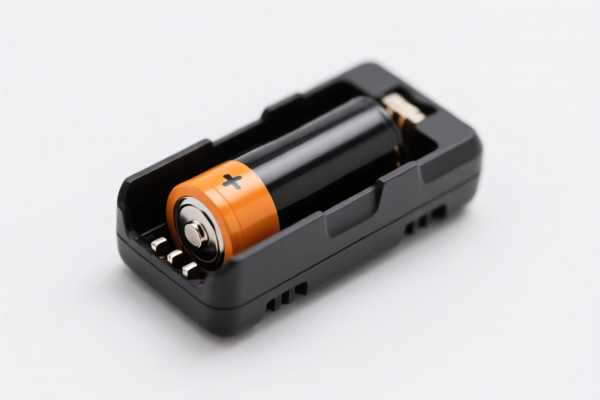
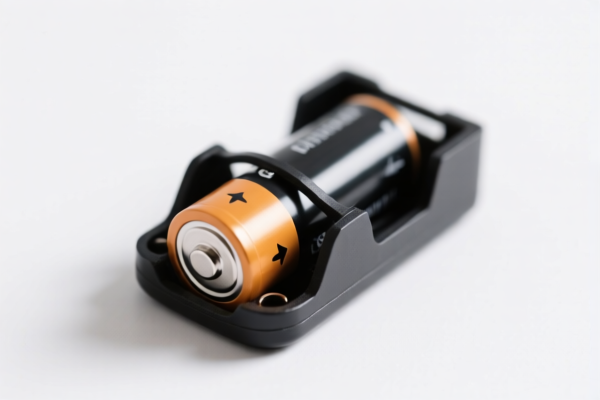
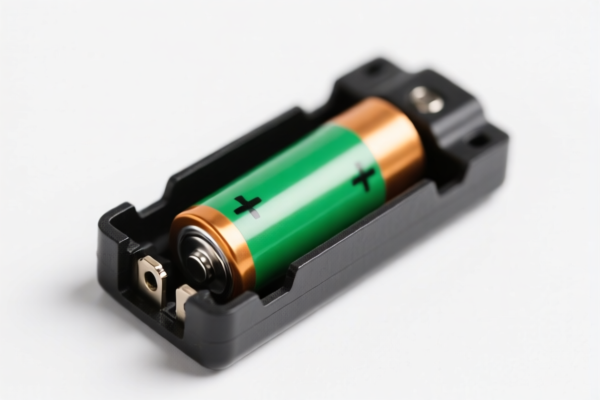
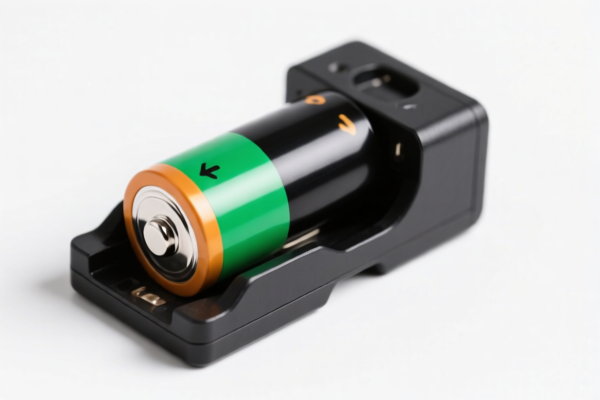
AI Analysis
🔋 Battery Holders & Electrical Connectors (Battery Housing/Parts)
🌐 HS Code Reference & Clearance Guide | 2026 Latest Tariff Analysis | Professional Customs Strategy
📌 I. Product Definition & Classification: What exactly is a "Battery Holder"?
In international trade, the term "Battery Holder" is ambiguous and often leads to significant tariff risks if not properly categorized. It generally falls into one of two distinct categories based on function and composition:
- Structural/Accessory Parts for Batteries: Devices used to house, secure, or connect electric storage batteries. If the holder is specifically designed as a part of the battery system (e.g., a lead-acid battery part or a generic battery accessory), it may fall under Chapter 8507.
- Electrical Connectors/Switches: Devices used to make connections to electrical circuits (including battery terminals) for voltage ≤ 1,000V. These are classified as switching/protecting apparatus or connectors under Chapter 8536.
⚠️ Critical Distinction:
- If it is a plug, socket, or lamp-holder used for general electrical connection (including battery terminals) → Go to 8536.
- If it is a part specifically for an electric storage battery (e.g., a lead-acid battery casing part) → Go to 8507.
- Note: The provided data does not include "Battery Holders" as a primary heading but rather their parts or related electrical connectors.
📦 II. HS Code Classification Details (Based on Provided Data)
The following HS Codes are extracted strictly from the <DATA> provided. They represent Parts of batteries or Connectors that may serve as battery holders.
| HS Code | Product Description | Applicable Scenario | Tax Rate (Total) |
|---|---|---|---|
8507.90.80.00 |
Electric storage batteries... parts thereof: Parts: Other | Generic battery parts (not lead-acid specific). e.g., Plastic housings, terminals for Li-ion or other battery types. | 0.0% |
8507.90.40.00 |
Electric storage batteries... parts thereof: Parts: Of lead-acid storage batteries | Parts specifically for lead-acid batteries. e.g., Lead-acid battery casings, separators, internal connectors. | 0.0% |
8536.69.80.00 |
Electrical apparatus for switching... connectors... Lamp-holders, plugs and sockets: Other: Other | General purpose electrical connectors, plugs, or sockets used for battery connections (≤ 1,000V). Includes non-specific battery terminal blocks. | 27.7% |
🔍 Key Reminder:
- 8507 Codes (0% Tax): Apply if the item is explicitly defined as a part of the battery itself. - 8536.69.80.00 (27.7% Tax): Apply if the item is a standalone electrical connector (plug/socket) used to connect the battery to a circuit. This rate includes a 25% additional duty.
💰 III. 2026 Latest Tariff Rate Details (Including Additional Duties)
✅ Applicable Country: United States (US)
✅ Origin: China (CN)
✅ Effective Time: 2025/2026 (Based on provided data)
🎯 1. 8507.90.80.00 & 8507.90.40.00 —— Battery Parts
| Item | Content |
|---|---|
| Base Tariff | 0.0% |
| Additional Duty (Section 301/Other) | 0.0% |
| Total Tax Rate | 0.0% |
| Calculation | No duty applied on CIF value. |
| De Minimis Eligibility | ✅ Yes (If applicable under current de minimis rules, though check specific trade restrictions). |
| Legal Basis | Chapter 8507 (Electric Storage Batteries; Parts Thereof) |
📌 Explanation:
- These parts are classified as battery accessories/parts.
- No additional tariffs are listed for these specific subheadings in the provided data.
- Optimization Tip: If your "battery holder" is indeed a part of the battery system (e.g., a housing or terminal assembly integral to the battery), ensure your declaration clearly states "Part of Electric Storage Battery" to utilize the 0% rate.
🎯 2. 8536.69.80.00 —— Electrical Connectors / Plugs / Sockets
| Item | Content |
|---|---|
| Base Tariff | 2.7% |
| Additional Duty (Section 301) | +25.0% |
| Total Tax Rate | 27.7% |
| Calculation | CIF Value × 27.7% |
| De Minimis Eligibility | ❓ Check Rules: High tariff rates may affect de minimis eligibility depending on current US CBP enforcement on Chinese goods. |
| Legal Basis | Chapter 8536 (Electrical Apparatus for Switching or Protecting Electrical Circuits; Connectors) |
📌 Explanation:
- This code applies to plugs, sockets, and lamp-holders for voltage ≤ 1,000V.
- If your "battery holder" is a detachable plug/connector used to link the battery to a device, it may be classified here.
- High Risk: The 25% additional duty significantly increases costs. Misclassifying a 27.7% item as a 0% battery part can lead to severe penalties.
🛠️ IV. Customs Clearance Practical Advice (Pitfall Avoidance Guide)
✅ 1. Preparation Checklist (Essential Documents)
| Document | Required | Notes |
|---|---|---|
| ✅ Product Specifications | ✔️ | Must clearly define: Is it a part of the battery or a standalone connector? |
| ✅ Technical Diagrams | ✔️ | Show how it connects. Is it integral to the battery case? Or a separate plug? |
| ✅ Product Photos | ✔️ | Clear shots of labeling, terminals, and mounting style. |
| ✅ Commercial Invoice | ✔️ | Description must be precise: "Part for Lead-Acid Battery" vs. "Electrical Socket for Battery Connection". |
| ✅ Origin Certificate | ✔️ | To verify origin and apply correct additional duties. |
✅ 2. Classification Strategy (Key Mnemonic)
🔥 "Integral Part = 0% | Standalone Plug = 27.7%"
| Scenario | Correct HS Code | Risk Level |
|---|---|---|
| Battery Casing/Housing (Integral to battery structure) | 8507.90.80.00 or 8507.90.40.00 |
🟢 Low (0% Tax) |
| Lead-Acid Battery Terminals/Parts | 8507.90.40.00 |
🟢 Low (0% Tax) |
| Detachble Plug/Socket (Used to connect battery to device) | 8536.69.80.00 |
🔴 High (27.7% Tax) |
| Generic Connector Block (Not specific to battery) | 8536.69.80.00 |
🔴 High (27.7% Tax) |
⚠️ Warning:
- Do not misdeclare a8536connector as8507part. CBP often audits electrical components.
- If the item is a plug/connector, even for batteries, it often falls under8536.
- Only items specifically identified as parts of the battery itself (e.g., internal separators, specific lead-acid components) qualify for8507.
✅ 3. Special Cases
| Case | Advice |
|---|---|
| OEM Battery Holders | Provide customer design specs to prove it is a "Part of Battery" not a generic connector. |
| Combined Packages | If battery and holder are sold together, ensure the holder is clearly a part, not a separate taxable connector. |
| High Voltage (>1,000V) | Not covered in this data. Likely falls under different HS codes with different rates. |
🌍 V. Global Market Comparison (Based on Provided Data)
| Market | Recommended HS Code | Tariff | Notes |
|---|---|---|---|
| 🇺🇸 USA | 8507.90.80.00 / 8507.90.40.00 |
0.0% | Best for battery parts. |
| 🇺🇸 USA | 8536.69.80.00 |
27.7% | High cost for connectors. |
| 🇨🇳 China | (Not in Data) | - | N/A |
| 🇪🇺 EU | (Not in Data) | - | N/A |
📌 Conclusion:
- For US imports, 0% duty is available if the item is correctly classified as a battery part (8507).
- Avoid8536unless the item is definitively a plug/socket.
📌 VI. Common Mistakes & Pitfalls (Blood & Tears Lessons)
❌ Mistake 1: Calling a plug/connector a "Battery Holder" to get 0% tax.
👉 Consequence: CBP may reclassify as 8536.69.80.00 → 27.7% duty + penalties.
❌ Mistake 2: Not distinguishing between Lead-Acid and Other battery parts.
👉 Consequence: Wrong HS Code selection (8507.90.40.00 vs 8507.90.80.00). Both are 0% in this data, but incorrect classification can still lead to delays.
❌ Mistake 3: Ignoring the 25% Additional Duty on 8536.
👉 Consequence: Unexpected high costs erode profit margins.
✅ Correct Approach:
"If it connects the battery to the circuit → Plug (8536, 27.7%). If it holds/protects the battery itself → Part (8507, 0%)."
🎯 VII. Conclusion: Professional Declaration, Save Costs!
🎯 Remember the Mnemonic:
🔹 "Parts are Free (0%), Connectors are Costly (27.7%)!"
🔹 "Be precise in description, avoid misclassification penalties!"
📌 Tips:
- If your product is a standalone connector, budget for 27.7% duty.
- If it is a battery housing/part, ensure documentation supports 8507 classification to enjoy 0% duty.
- Always consult with a licensed customs broker for final classification, especially for high-value shipments.
📣 Immediate Action:
📞 Contact your customs broker + Provide technical specs + Confirm classification
🚀 Ensure smooth clearance, avoid unexpected costs, and maximize profits!
✨ Professional Clearance Starts with Accurate Classification!
💼 Every dollar saved is a dollar earned!
Customer Reviews
About HS Code Classification
The Harmonized System (HS) is an internationally standardized nomenclature developed by the World Customs Organization (WCO) to classify traded products. Over 200 countries use the HS system as the basis for customs tariffs, trade statistics, and import/export regulations.
Each HS code follows a hierarchical structure:
- Chapter (2 digits) — Broad category of goods (e.g., Chapter 84: Machinery and Mechanical Appliances)
- Heading (4 digits) — More specific grouping within the chapter
- Subheading (6 digits) — Internationally standardized breakdown, used by all WCO member countries
- National subdivisions (8-10 digits) — Country-specific extensions for further classification, such as US HTSUS 10-digit codes
Correct HS code classification is essential for smooth customs clearance, accurate duty payment, and compliance with trade regulations. Misclassification can lead to customs delays, overpayment of duties, or penalties.
When importing from CN to US, the applicable tariff rates may include:
- Most-Favored-Nation (MFN) rate — The standard duty rate applied to WTO members
- General rate — Applied to countries without trade agreements
- Trade remedy duties — Additional tariffs such as Section 301 (anti-dumping), Section 232 (national security), or countervailing duties
The information provided on this page is for reference purposes only. For official classification, please consult with your local customs authority or a licensed customs broker.