Battery Monitor
CN → US| HS Code | Tariff Rate | Origin | Destination | Doc |
|---|---|---|---|---|
| 8543908885 | 85.0% | CN | US | Official Doc |
| 9031808060 | 35.0% | CN | US | Official Doc |
| 8543906800 | 35.0% | CN | US | Official Doc |
| 9027898090 | 35.0% | CN | US | Official Doc |
| 9027894590 | 35.0% | CN | US | Official Doc |
Product Images
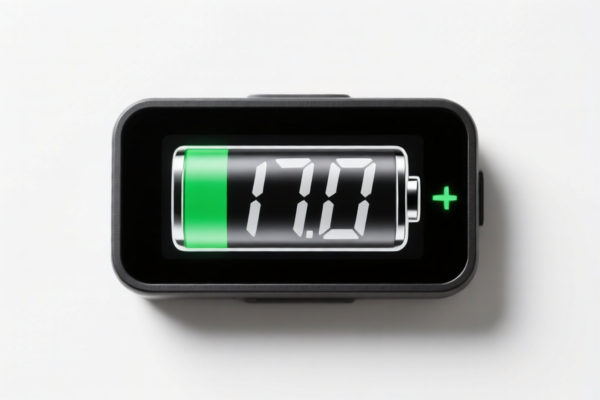
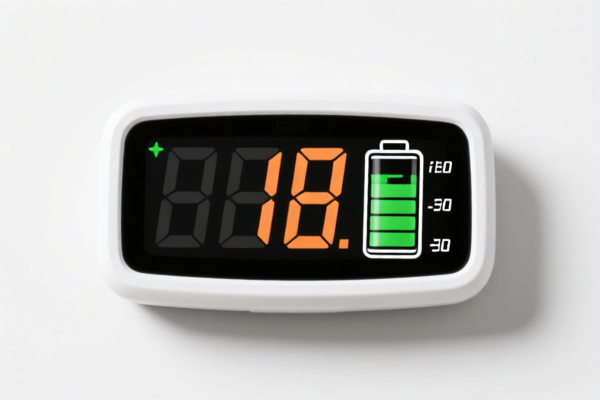
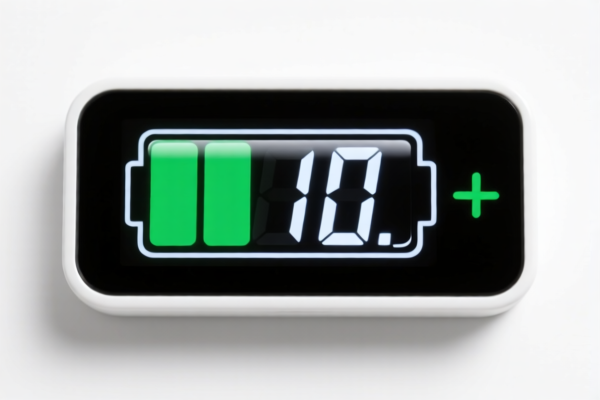

AI Analysis
🔋 Battery Monitor (Battery Monitoring Systems)
🌐 HS Code Reference & Customs Clearance Guide | 2026 Latest Tariff Analysis | Professional Strategy for High-Tax Items
📌 I. Product Definition & Classification: Do You Truly Understand the "Battery Monitor"?
A Battery Monitor is a specialized electronic device used to measure, track, and display the electrical characteristics of battery systems (voltage, current, temperature, state of charge, etc.). In international trade, its classification is highly controversial and depends entirely on its core function and technical implementation:
- Functional Electrical Device: If it acts as a general-purpose monitoring module with specific functions independent of measurement principles, it falls under Chapter 85.
- Instrumental/Electrical Apparatus: If it relies on printed circuit components to perform monitoring functions, it may be classified under Chapter 85 as an electrical apparatus.
- Testing & Measurement Instrument: If it is used to detect electrical characteristics of internal combustion engines or other machinery, it falls under Chapter 90.
- Analytical/Detecting Instrument: If it measures physical or chemical parameters (like voltage/current as physical quantities), it falls under Chapter 90.
- Electrical Analysis/Monitoring Apparatus: If it is an electrical device specifically for analysis/monitoring not elsewhere specified, it falls under Chapter 90.
⚠️ Key Distinction Point:
- Is it a general electrical control/monitoring unit? → HS 8543.90.88.85
- Is it an electrical performance detector for engines/machinery? → HS 9031.80.80.60
- Is it a monitoring device relying on PCBs? → HS 8543.90.68.00
- Is it a physical/chemical parameter measurer? → HS 9027.89.80.90
- Is it an electrical analysis/monitoring device? → HS 9027.89.45.90
📦 II. HS Code Classification Details (2026 Latest Tariff Authoritative Comparison)
| HS Code | Product Description | Application Scenario | Core Function Logic |
|---|---|---|---|
8543.90.88.85 |
Battery Monitor with Independent Function (Other Electrical Equipment) | General industrial battery management, standalone monitoring units | Independent Function: Acts as a distinct electrical device with specific functions outside standard categories. |
9031.80.80.60 |
Battery Monitor for Electrical Characteristic Detection | Engine testing labs, machinery performance testing | Testing Equipment: Used to detect electrical characteristics of internal combustion engines or other equipment. |
8543.90.68.00 |
Battery Monitor with Monitoring Function (PCB-Dependent) | Complex battery management systems (BMS), integrated circuits | PCB-Based Apparatus: Core function relies on printed circuit components for monitoring. |
9027.89.80.90 |
Battery Monitor for Physical/Chemical Parameter Measurement | Scientific labs, chemical battery analysis, physical parameter tracking | Analytical Instrument: Measures physical or chemical parameters (voltage, current, etc.). |
9027.89.45.90 |
Electrical Class Analysis/Monitoring Device | Specialized electrical testing, non-standard electrical analysis | Electrical Analysis: Electrical category analysis/monitoring device not elsewhere specified. |
🔍 Critical Reminder:
- HS 8543.90.88.85 carries the highest tariff burden due to additional duties; avoid this classification unless absolutely necessary.
- HS 9031, 8543.68, 9027.80, 9027.45 share the same tax structure but differ in functional justification. Choose the one that best matches your product’s primary purpose and technical documentation.
💰 III. 2026 Latest Tariff Rate Breakdown (Including Additional Taxes & Policy Surcharges)
✅ Applicable Country: United States (US)
✅ Origin: China (CN)
✅ Effective Date: From November 10, 2025 (including subsequent imports)
🎯 1. 8543.90.88.85 —— Battery Monitor (Independent Function, Other Electrical Equipment)
| Item | Content |
|---|---|
| Base Tariff | 0% (ad valorem) |
| Section 301 Additional Tariff | +25% |
| Section 122 Tariff | +10% |
| Section 232 Tariff (Steel, Aluminum, Copper Products) | +50% |
| Total Tariff Rate | 85.0% |
| Tax Calculation | CIF Value × 85% |
| De Minimis Eligibility | ❌ Not Eligible (deny_de_minimis) |
| Legal Basis Path | USITC:8543.90.88.85 → Section 301:301.99 → Section 122 → Section 232 |
📌 Explanation:
- This classification triggers ALL major additional tariffs: Section 301 (25%), Section 122 (10%), and Section 232 (50%) for steel/aluminum/copper components.
- Total 85% is extremely high. This is the most expensive classification.
- Must be avoided if any other functional justification exists.
🎯 2. 9031.80.80.60 —— Battery Monitor (Electrical Characteristic Detection)
| Item | Content |
|---|---|
| Base Tariff | 0% |
| Section 301 Additional Tariff | +25% |
| Section 122 Tariff | +10% |
| Section 232 Tariff | Not Applicable (unless specific steel/aluminum content triggers separate classification) |
| Total Tariff Rate | 35.0% |
| Tax Calculation | CIF Value × 35% |
| De Minimis Eligibility | ❌ Not Eligible (deny_de_minimis) |
| Legal Basis Path | USITC:9031.80.80.60 → Section 301:301.99 → Section 122 |
📌 Note:
- This classification is significantly cheaper than8543.90.88.85.
- Justification: The device is used to detect electrical characteristics of machinery (e.g., engine testing).
- Recommended if your product is used in testing environments.
🎯 3. 8543.90.68.00 —— Battery Monitor (Monitoring Function, PCB-Dependent)
| Item | Content |
|---|---|
| Base Tariff | 0% |
| Section 301 Additional Tariff | +25% |
| Section 122 Tariff | +10% |
| Section 232 Tariff | Not Applicable |
| Total Tariff Rate | 35.0% |
| Tax Calculation | CIF Value × 35% |
| De Minimis Eligibility | ❌ Not Eligible (deny_de_minimis) |
| Legal Basis Path | USITC:8543.90.68.00 → Section 301:301.99 → Section 122 |
📌 Note:
- Same tariff rate as above.
- Justification: Core function relies on printed circuit components.
- Recommended if your product is an integrated electronic module.
🎯 4. 9027.89.80.90 —— Battery Monitor (Physical/Chemical Parameter Measurement)
| Item | Content |
|---|---|
| Base Tariff | 0% |
| Section 301 Additional Tariff | +25% |
| Section 122 Tariff | +10% |
| Section 232 Tariff | Not Applicable |
| Total Tariff Rate | 35.0% |
| Tax Calculation | CIF Value × 35% |
| De Minimis Eligibility | ❌ Not Eligible (deny_de_minimis) |
| Legal Basis Path | USITC:9027.89.80.90 → Section 301:301.99 → Section 122 |
📌 Note:
- Justification: Measures physical or chemical parameters (e.g., voltage as a physical quantity, electrolyte levels as chemical).
- Recommended for scientific or analytical applications.
🎯 5. 9027.89.45.90 —— Electrical Class Analysis/Monitoring Device
| Item | Content |
|---|---|
| Base Tariff | 0% |
| Section 301 Additional Tariff | +25% |
| Section 122 Tariff | +10% |
| Section 232 Tariff | Not Applicable |
| Total Tariff Rate | 35.0% |
| Tax Calculation | CIF Value × 35% |
| De Minimis Eligibility | ❌ Not Eligible (deny_de_minimis) |
| Legal Basis Path | USITC:9027.89.45.90 → Section 301:301.99 → Section 122 |
📌 Note:
- Justification: Electrical category analysis/monitoring device.
- Recommended if the device performs analysis beyond simple monitoring.
📌 Critical Summary:
- HS 8543.90.88.85 is EXTREMELY EXPENSIVE (85%) due to Section 232, 301, and 122 tariffs. Avoid this classification unless no other functional description fits.
- HS 9031.80.80.60, 8543.90.68.00, 9027.89.80.90, and 9027.89.45.90 all have a much more reasonable 35% total tariff.
- Choose the 35% category that best matches your product’s primary function and technical documentation.
🛠️ IV. Customs Clearance Practical Advice (Battle-Tested Pitfall Guide)
✅ 1. Document Checklist (All Required)
| Document | Mandatory | Description |
|---|---|---|
| ✅ Product Specification Sheet | ✔️ | Must detail: Model, Voltage Range, Current Range, Communication Protocol (CAN, RS485, etc.), Interface Types. |
| ✅ Circuit Diagram / Block Diagram | ✔️ | CRITICAL: To prove if it relies on PCBs (for 8543.90.68.00) or is an independent module. |
| ✅ Product Photos (Including Nameplate) | ✔️ | Clear view of model, brand, input/output parameters, and any certification marks. |
| ✅ Third-Party Test Report | ✔️ | FCC, CE, RoHS, UL (if applicable). Proves electrical safety and compliance. |
| ✅ Commercial Invoice | ✔️ | Must clearly state: "Battery Monitor for [Specific Purpose: e.g., Engine Testing / BMS / Chemical Analysis]". |
| ✅ Certificate of Origin (CO) | ✔️ | If not Chinese origin, may qualify for lower tariffs. |
| ✅ Packing List | ✔️ | Clarify relationship between main unit and accessories. Avoid splitting申报. |
| ✅ Functional Justification Statement | ✔️ | NEW Requirement: Written explanation of why this HS Code is chosen (e.g., "Used to detect electrical characteristics of internal combustion engines"). |
✅ 2. Declaration Strategy (Key Mantra)
🔥 "Function Dictates Code, Tariff Differs by Function, Avoid Section 232!"
| Scenario | Correct Declaration | Wrong Practice |
|---|---|---|
| General Purpose Battery Monitor | 8543.90.68.00 (PCB-based) |
Misdeclare as 8543.90.88.85 → 85% Tariff! |
| Used in Engine Testing Lab | 9031.80.80.60 (Electrical Detection) |
Misdeclare as general electrical → Higher Risk |
| Scientific Lab Measurement | 9027.89.80.90 (Physical Parameter) |
Misdeclare as general monitor → Audit Risk |
| Electrical Analysis Device | 9027.89.45.90 (Electrical Analysis) |
Misdeclare as general monitor → Audit Risk |
| BMS Module (Standalone) | 8543.90.68.00 |
Misdeclare as 8543.90.88.85 → 85% Tariff! |
✅ 3. Special Case Handling
| Scenario | Handling Advice |
|---|---|
| OEM Custom Monitor | Provide customer PO + design drawings to prove specific function (e.g., engine testing). |
| BMS with Communication | Emphasize PCB dependency for 8543.90.68.00 to avoid 8543.90.88.85. |
| Used in Medical Vehicles | If for medical battery monitoring, still use 9027 or 8543.68, not 88.85. |
| Used in Military/Aerospace | Provide special use declaration, but tariff may not reduce unless specific exemptions apply. |
🌍 V. Global Market Clearance Comparison (2026 Latest)
| Country/Region | Recommended HS Code | Tariff (China Origin) | Certification Requirements | Notes |
|---|---|---|---|---|
| 🇺🇸 United States | 9031.80.80.60 / 8543.90.68.00 / 9027.89.80.90 / 9027.89.45.90 |
35% (Total) | FCC + CE + RoHS | Avoid 8543.90.88.85 (85%)! |
| 🇨🇳 China | 8543.90.88.85 or 9031.80.80.60 |
5% - 10% | CCC + RoHS | No additional US tariffs. |
| 🇪🇺 European Union | 8543.90.88.85 or 9031.80.80.60 |
0% (if CE Compliant) | CE + RoHS + REACH | No Section 301/122/232. |
| 🇦🇺 Australia | 8543.90.88.85 or 9031.80.80.60 |
5% | RCM | No additional tariffs. |
| 🇯🇵 Japan | 8543.90.88.85 or 9031.80.80.60 |
0% - 5% | PSE + JQA | No additional tariffs. |
📌 Conclusion:
- The US is the only market with extreme additional tariffs (up to 85%).
- For US imports, always aim for the 35% tariff classification by providing strong functional justification.
- Chinese-origin monitors imported to the US face high costs; consider supply chain adjustments if volume is large.
📌 VI. Common Errors & Pitfall Guide (Blood-Teaching Lessons)
❌ Error 1: Declaring as 8543.90.88.85 (Independent Function) without justification
👉 Consequence: 85% Tariff (Section 232 + 301 + 122). Huge cost increase!
❌ Error 2: Declaring as 8543.90.88.85 when it is clearly a testing instrument
👉 Consequence: Customs audit → Back taxes + Penalties for misclassification.
❌ Error 3: Not providing circuit diagrams or functional statements
👉 Consequence: Customs cannot verify function → Delay, detention, or forced reclassification.
❌ Error 4: Using "Battery Monitor" as the only description without application context
👉 Consequence: Customs defaults to highest tariff (8543.90.88.85) due to ambiguity.
✅ Correct Approach:
"Battery Monitor, Model XYZ, for Engine Electrical Characteristic Testing, FCC Certified, PCB-Based, Model: XYZ-100"
🎯 VII. Conclusion: Professional Declaration, Save Money, Avoid Risks!
🎯 Remember the Mantra:
🔹 "Avoid 8543.88.85! Aim for 35%: 9031, 8543.68, 9027.80, or 9027.45."
🔹 "Function is King: Prove your purpose, save 50% in tariffs."
📌 Pro Tip:
- If your battery monitor is produced in Vietnam, Mexico, Thailand, or Malaysia, you may qualify for Section 301/122/232 exemptions.
- Apply for an Advance Ruling (Pre-Ruling) from CBP before shipping to lock in the 35% tariff and avoid delays.
📣 Immediate Action:
📞 Contact a professional customs broker + Provide Technical Specs + Functional Statement + Apply for HS Code Pre-Ruling
🚀 Ensure your Battery Monitor clears US Customs smoothly, efficiently, and cost-effectively!
✨ Professional Clearance Starts with Accurate Classification!
💼 Every dollar of cost deserves precise calculation!
Customer Reviews
About HS Code Classification
The Harmonized System (HS) is an internationally standardized nomenclature developed by the World Customs Organization (WCO) to classify traded products. Over 200 countries use the HS system as the basis for customs tariffs, trade statistics, and import/export regulations.
Each HS code follows a hierarchical structure:
- Chapter (2 digits) — Broad category of goods (e.g., Chapter 84: Machinery and Mechanical Appliances)
- Heading (4 digits) — More specific grouping within the chapter
- Subheading (6 digits) — Internationally standardized breakdown, used by all WCO member countries
- National subdivisions (8-10 digits) — Country-specific extensions for further classification, such as US HTSUS 10-digit codes
Correct HS code classification is essential for smooth customs clearance, accurate duty payment, and compliance with trade regulations. Misclassification can lead to customs delays, overpayment of duties, or penalties.
When importing from CN to US, the applicable tariff rates may include:
- Most-Favored-Nation (MFN) rate — The standard duty rate applied to WTO members
- General rate — Applied to countries without trade agreements
- Trade remedy duties — Additional tariffs such as Section 301 (anti-dumping), Section 232 (national security), or countervailing duties
The information provided on this page is for reference purposes only. For official classification, please consult with your local customs authority or a licensed customs broker.