Battery Terminal Clamp
CN → US| HS Code | Tariff Rate | Origin | Destination | Doc |
|---|---|---|---|---|
| 8538908180 | 38.5% | CN | US | Official Doc |
| 8538908140 | 38.5% | CN | US | Official Doc |
Product Images
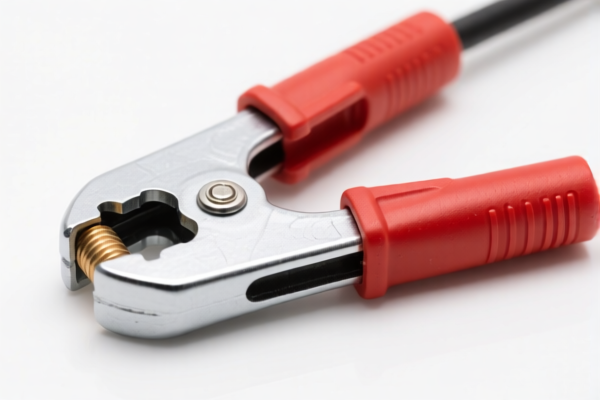
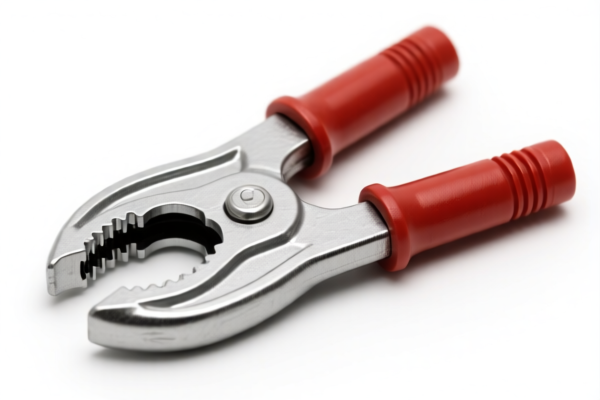
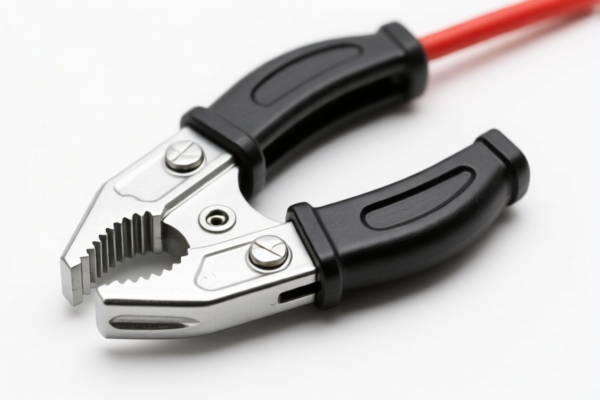
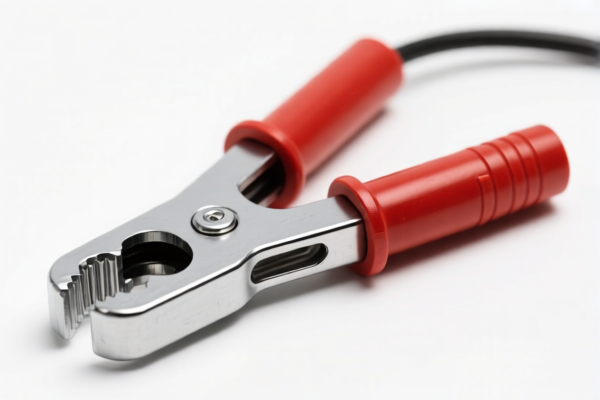
AI Analysis
🔋 Battery Terminal Clamps (Connectors)
🌐 HS Code Reference & Clearance Guide | 2026 Latest Tariff Analysis | Professional Clearance Strategy
📌 I. Product Definition and Classification: Do You Really Understand "Battery Terminal Clamps"?
Battery Terminal Clamps are critical components in electrical power transmission systems, specifically designed to establish a secure conductive connection between a battery terminal and a cable or wire. In international trade, these items are often mistaken for general "electrical accessories" or "auto parts." However, according to the Harmonized System (HS) Explanatory Notes, parts suitable for use solely or principally with apparatus of heading 8535 (switches, relays, etc.), 8536 (fuses, connectors, etc.), or 8537 (boards, panels, etc.) must be classified under Heading 8538.
Key Distinction: * Metal Contacts/Clamps: These are specific conductive parts designed to fit onto a terminal. They are not standalone switching devices but essential parts of the electrical connection system. * General Electrical Parts: If the item is not exclusively for 8535-8537 apparatus, it might fall elsewhere. However, battery terminals are integral to the power distribution apparatus covered under these headings.
⚠️ Critical Classification Point:
- If the clamp is a metal contact designed to attach to a battery post or cable lug → Classified under 8538.90.81.40
- If the clamp is an other type of part not specifically identified as a metal contact (e.g., complex assemblies, plastic housings with minimal metal contact functionality not classified separately) → Classified under 8538.90.81.80
📦 II. HS Code Classification Details (2026 Latest Tariff Authority Comparison)
| HS Code | Product Description | Applicable Scenario | Key Feature |
|---|---|---|---|
8538.90.81.40 |
Parts suitable for use solely or principally with the apparatus of heading 8535, 8536 or 8537: Other: Other: Other Other: Metal contacts | Battery terminal clamps, lug connectors, conductive clips for switchgear/relay panels | ✅ Metal Contact |
8538.90.81.80 |
Parts suitable for use solely or principally with the apparatus of heading 8535, 8536 or 8537: Other: Other: Other Other: Other | Other parts of electrical apparatus not specifically named (e.g., insulators, housings, non-contact fixtures) | ❌ Non-Specific / Other |
🔍 Important Reminder:
- Battery Terminal Clamps are fundamentally metal contacts or conductive parts. Therefore, 8538.90.81.40 is the most precise classification for standard metal clamps.
- Misclassifying a metal contact as "Other" (8538.90.81.80) may trigger customs scrutiny if the description does not match the physical nature of the good.
- Both codes fall under the broader category of parts for electrical apparatus (Headings 8535-8537).
💰 III. 2026 Latest Tariff Rate Detailed Explanation (Including Surcharges)
✅ Applicable Country: United States (US)
✅ Country of Origin: China (CN)
✅ Effective Time: Current Trade Policy (Section 301 / IEEPA)
🎯 1. 8538.90.81.40 —— Battery Terminal Clamps (Metal Contacts)
| Item | Content |
|---|---|
| Basic Tariff Rate | 3.5% (General Ad Valorem) |
| Additional Tariff (Section 301) | +25.0% (List 4A / 301 Tariffs) |
| Total Tariff Rate | 28.5% |
| Tax Calculation | CIF Value × 28.5% |
| De Minimis Exemption | ❌ Not Applicable (De Minimis usually applies to low-value shipments; industrial parts often face full scrutiny) |
| Legal Basis Path | HTSUS:8538.90.81.40 → Section 301: 25% → Total: 28.5% |
📌 Explanation:
- The 3.5% is the standard Most Favored Nation (MFN) rate for parts of electrical apparatus.
- The 25% additional tariff is imposed under Section 301 of the Trade Act of 1974 on specific Chinese imports.
- Total 28.5% is a significant cost factor that must be included in your landed cost calculation.
🎯 2. 8538.90.81.80 —— Other Parts (Non-Metal Contact / General)
| Item | Content |
|---|---|
| Basic Tariff Rate | 3.5% (General Ad Valorem) |
| Additional Tariff (Section 301) | +25.0% (List 4A / 301 Tariffs) |
| Total Tariff Rate | 28.5% |
| Tax Calculation | CIF Value × 28.5% |
| De Minimis Exemption | ❌ Not Applicable |
| Legal Basis Path | HTSUS:8538.90.81.80 → Section 301: 25% → Total: 28.5% |
📌 Note:
- Even if classified as "Other," the base rate and surcharge remain identical to metal contacts in this specific subheading group.
- The distinction between.40and.80is primarily for statistical accuracy and customs data reporting, not for immediate tax savings in this specific tier.
- However, correct classification is vital to avoid penalties for misdeclaration.
🛠️ IV. Clearance Practical Advice (Battle-Tested Pitfall Guide)
✅ 1. Required Documentation Checklist (All Are Mandatory)
| Document | Must Provide | Description |
|---|---|---|
| ✅ Product Specification Sheet | ✔️ | Material composition (e.g., copper, aluminum, steel), dimensions, torque specifications |
| ✅ Commercial Invoice | ✔️ | Must clearly state "Battery Terminal Clamp" or "Electrical Connector Part," not vague terms like "Hardware" |
| ✅ Packing List | ✔️ | Detail weight, volume, and item count |
| ✅ Certificate of Origin | ✔️ | Required to verify country of origin for Section 301 application |
| ✅ HS Code Pre-Ruling (Optional but Recommended) | ✔️ | Apply for an Advance Ruling from CBP to confirm 8538.90.81.40 vs .80 |
| ✅ Product Photos | ✔️ | Clear images showing the clamp structure, metal contact area, and insulation (if any) |
✅ 2. Declaration Tips (Key Mnemonics)
🔥 "Don't Call It Hardware, Call It Electrical Part!"
| Scenario | Correct Declaration | Wrong Practice |
|---|---|---|
| Standard Metal Clamp | "Battery Terminal Clamp, Copper Alloy, Part for Electrical Apparatus" | "Auto Parts" or "Hardware Accessories" → Risk of Misclassification |
| Clamp with Plastic Insulator | Still classify under 8538 if principally for electrical apparatus | Classify under "Plastic Parts" → High Risk of Penalty |
| Mixed Shipment (Clamps + Cables) | Declare separately: Clamps under 8538, Cables under 8544 | Combine into one line item → Customs Rejection |
✅ 3. Special Situation Handling
| Situation | Handling Advice |
|---|---|
| OEM Custom Clamps | Provide design drawings to prove they are specifically for 8535-8537 apparatus |
| High-Volume Bulk Import | Consider applying for Exclusions (if applicable) under Section 301, though rare for basic metal parts |
| Clamps with Non-Removable Insulation | Ensure the primary function is conductive contact. If insulation dominates, consult a customs broker |
| Used/Refurbished Clamps | New rules may apply. Ensure they meet US safety standards (UL/ASTM) |
🌍 V. Global Market Clearance Comparison (2026 Latest)
| Country/Region | Recommended HS Code | Tariff (China Origin) | Certification Requirements | Remarks |
|---|---|---|---|---|
| 🇺🇸 United States | 8538.90.81.40 |
28.5% (3.5% + 25%) | UL/CE (Optional but recommended) | High tariff; precise description needed |
| 🇨🇳 China | 8538.90.81.40 |
3.5% (Import Duty) | CCC (If for domestic equipment) | Lower duty than US |
| 🇪🇺 European Union | 8538.90.90 |
0% - 2.7% | CE | No Section 301 equivalent |
| 🇨🇦 Canada | 8538.90.90 |
0% - 5% | CSAC/UL | Check CUSMA eligibility |
| 🇬🇧 United Kingdom | 8538.90.90 |
0% - 4% | UKCA | Post-Brexit rules apply |
📌 Conclusion:
- The US market imposes a heavy 25% surcharge on these electrical parts from China.
- No tariff exemption is currently available for standard battery terminal clamps.
- Accurate classification is critical to avoid delays and penalties.
📌 VI. Common Errors & Pitfall Guide (Lessons Learned)
❌ Error 1: Declaring as "Auto Parts" (Chapter 87)
👉 Consequence: Wrong HS code (e.g., 8708.99), potential 27.5% tariff or more, plus penalties for misdeclaration.
👉 Truth: Battery clamps are electrical apparatus parts, not mechanical auto parts.
❌ Error 2: Vague Description "Electrical Parts"
👉 Consequence: Customs may detain shipment for inspection, causing delays and storage fees.
👉 Truth: Specify "Battery Terminal Clamp" and material.
❌ Error 3: Ignoring Section 301 Tariffs
👉 Consequence: Underpayment of duties, leading to back taxes + interest + fines.
👉 Truth: Always calculate 28.5% total duty for China-origin goods entering the US.
✅ Correct Approach:
"Battery Terminal Clamp, Model XYZ, Copper Alloy, For Electrical Apparatus (Headings 8535-8537), HS Code 8538.90.81.40"
🎯 VII. Conclusion: Precision Saves Money!
🎯 Remember the Rules:
🔹 "Battery Clamps are Electrical Parts, not Auto Parts!"
🔹 "China Origin = 28.5% Total Duty (3.5% Base + 25% Surcharge)"
🔹 "Metal Contacts = 8538.90.81.40; Other = 8538.90.81.80"
📌 Pro Tip:
If your volume is high, consider applying for a Customs Ruling before shipping. This provides legal certainty and protects against future audits.
For non-US markets, check local FTAs (Free Trade Agreements) for potential duty reductions.
📣 Action Item:
📞 Consult a licensed customs broker.
📄 Prepare detailed product specs.
🚀 Ensure accurate HS coding to avoid costly clearance delays!
✨ Professional Clearance Starts with Correct Classification!
💼 Your Cost Control Depends on It!
Customer Reviews
About HS Code Classification
The Harmonized System (HS) is an internationally standardized nomenclature developed by the World Customs Organization (WCO) to classify traded products. Over 200 countries use the HS system as the basis for customs tariffs, trade statistics, and import/export regulations.
Each HS code follows a hierarchical structure:
- Chapter (2 digits) — Broad category of goods (e.g., Chapter 84: Machinery and Mechanical Appliances)
- Heading (4 digits) — More specific grouping within the chapter
- Subheading (6 digits) — Internationally standardized breakdown, used by all WCO member countries
- National subdivisions (8-10 digits) — Country-specific extensions for further classification, such as US HTSUS 10-digit codes
Correct HS code classification is essential for smooth customs clearance, accurate duty payment, and compliance with trade regulations. Misclassification can lead to customs delays, overpayment of duties, or penalties.
When importing from CN to US, the applicable tariff rates may include:
- Most-Favored-Nation (MFN) rate — The standard duty rate applied to WTO members
- General rate — Applied to countries without trade agreements
- Trade remedy duties — Additional tariffs such as Section 301 (anti-dumping), Section 232 (national security), or countervailing duties
The information provided on this page is for reference purposes only. For official classification, please consult with your local customs authority or a licensed customs broker.