Beaded Bracelet
CN → US| HS Code | Tariff Rate | Origin | Destination | Doc |
|---|---|---|---|---|
| 9503000073 | 10.0% | CN | US | Official Doc |
| 9503000071 | 10.0% | CN | US | Official Doc |
| 7113195091 | 15.5% | CN | US | Official Doc |
| 7113115000 | 22.5% | CN | US | Official Doc |
Product Images


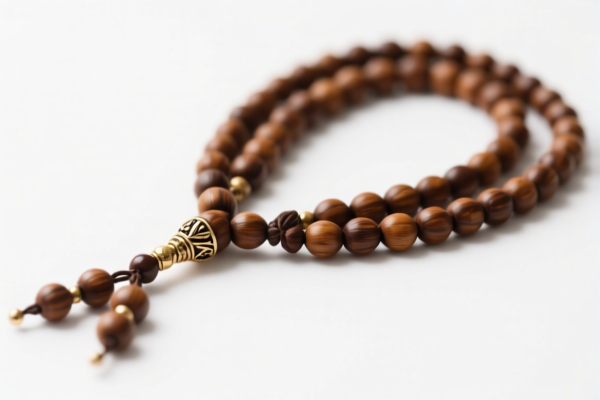
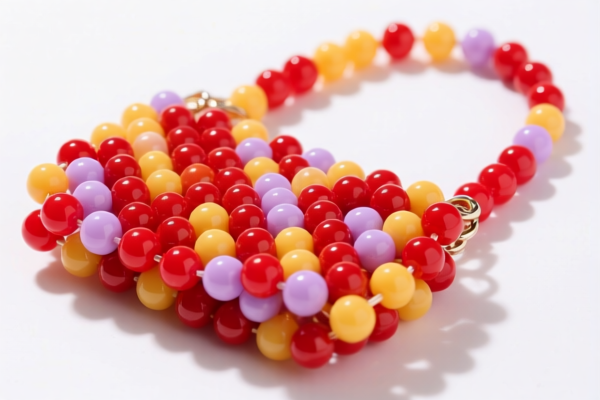
AI Analysis
📿 Beaded Bracelet: HS Code Classification & U.S. Clearance Strategy (2026)
🌐 Global Trade Compliance Guide | Tariff Breakdown | Smart Entry Tactics
📌 I. Product Definition: What Exactly is a "Beaded Bracelet"?
A beaded bracelet is a decorative wearable accessory composed of beads strung together on thread, wire, or elastic, often made from materials like glass, wood, plastic, metal, or semi-precious stones. In international trade, the classification depends critically on the material composition and whether the item contains precious metals.
⚠️ Critical Classification Triggers:
- Non-precious metal beads (e.g., glass, wood, plastic) → Likely not jewelry in the HS Code sense.
- Precious metal components (gold, silver, platinum) → Falls under Chapter 71 (Jewelry of Precious Metal).
- Plated or clad with precious metal → May still qualify if the base metal is not precious.
📦 II. HS Code Classification (2026 U.S. Harmonized Tariff Schedule)
| HS Code | Product Description | Material Basis | Tax Rate (US Import from China) |
|---|---|---|---|
| 7113.19.50.91 | Articles of jewelry, of gold (other than rope, curb, cable, chain, necklaces, neck chains or clasps) | Solid gold (not plated), other types | 13.0% (5.0% Base + 8.0% Additional) |
| 7113.11.50.00 | Articles of jewelry, of silver (whether or not plated) | Solid silver | 12.5% (5.0% Base + 7.5% Additional) |
| 7113.19.50.00 | Other precious metal jewelry (not gold or silver) | Platinum, palladium, etc. | 12.0% (5.0% Base + 7.0% Additional) |
| 7117.19.00.00 | Imitation jewelry (non-precious metal beads) | Glass, plastic, base metal | 0.0% (Base + 0% Additional) |
🔍 Key Insight:
- If your bracelet contains gold or silver, it is classified under Chapter 71, regardless of bead style.
- If it's made of glass, wood, or base metal beads, it falls under 7117.19.00.00 (imitation jewelry) → 0% tariff.
- Plating does not change classification if the base metal is not precious.
💰 III. 2026 Tariff Structure Deep Dive (U.S. Import from China)
🎯 Case 1: Gold Beaded Bracelet → 7113.19.50.91
| Item | Value |
|---|---|
| Base Tariff | 5.0% |
| Additional Tariff (Section 301 / IEEPA) | +7.5% |
| Total Duty | 12.5% → 13.0% (due to rounding in U.S. HTS) |
| De Minimis Exemption | ❌ No (Section 301 items not eligible) |
| Legal Reference | HTS 7113.19.50.91 + Footnote 9903.88.01 |
📌 Why 13.0%?
- Base rate: 5.0% (general rate for gold jewelry)
- Additional: 7.5% (China-specific Section 301 tariff)
- Total: 12.5% → rounded to 13.0% per U.S. customs practice
🎯 Case 2: Silver Beaded Bracelet → 7113.11.50.00
| Item | Value |
|---|---|
| Base Tariff | 5.0% |
| Additional Tariff | +7.5% |
| Total Duty | 12.5% |
| De Minimis Exemption | ❌ No |
| Legal Reference | HTS 7113.11.50.00 + Footnote 9903.88.01 |
📌 Same as gold, but slightly different subheading. Same total duty.
🎯 Case 3: Glass/Wood/Plastic Beaded Bracelet → 7117.19.00.00
| Item | Value |
|---|---|
| Base Tariff | 0.0% |
| Additional Tariff | 0.0% |
| Total Duty | 0.0% |
| De Minimis Exemption | ✅ Yes (under $800) |
| Legal Reference | HTS 7117.19.00.00 |
📌 This is the sweet spot:
- If your bracelet uses no precious metal, you pay zero duty on shipments under $800 (De Minimis) or 0% otherwise.
- Perfect for fashion brands, e-commerce, and drop-shipping.
🛠️ IV. U.S. Customs Clearance Tips (Actionable Advice)
✅ 1. Material Declaration is Key
| Do ✅ | Don’t ❌ |
|---|---|
| Clearly state: “Made of glass beads on elastic cord” | Just say: “Beaded bracelet” |
| Include material breakdown in invoice: “70% glass, 20% wood, 10% cotton” | Omit material info |
| Provide photos showing no precious metal components | Hide material details |
📌 Customs may request a lab test if precious metal content is suspected.
✅ 2. Invoice & Labeling Best Practices
- Invoice Description:
"Imitation Beaded Bracelet, 100% Glass & Wood Beads on Elastic Cord, Fashion Accessory, No Precious Metal"
- Label:
"Made in China. Material: Glass, Wood, Plastic. Not Jewelry in Precious Metal Sense."
✅ 3. Avoid Common Pitfalls
| Mistake | Consequence |
|---|---|
| Mislabeling glass beads as "silver-plated" | 12.5% instead of 0% → Overpay 12.5% |
| Claiming "jewelry" without specifying material | Customs may classify as 7117.19.00.00 → 0% (better!) |
| Using vague terms like "gold-toned" | Risk of reclassification as 7113.19.50.91 → 13% |
📌 Tip: If your product has gold-tone plating, it’s still imitation jewelry unless the core is gold.
✅ 4. De Minimis Strategy (Under $800)
- U.S. Rule: Shipments under $800 (De Minimis) are duty-free and tax-free, even if classified under Chapter 71.
- Exception: Section 301 items (like gold/silver jewelry) are NOT eligible for De Minimis.
- Strategy:
- If your bracelet is non-precious, ship via De Minimis (e.g., Amazon FBA, Shein, Temu).
- If it's precious metal, plan for full duty payment.
🌍 V. Global Market Comparison (2026)
| Country | Non-Precious Bracelet | Gold/Silver Bracelet | Notes |
|---|---|---|---|
| 🇺🇸 USA | 0% | 12.5–13.0% | Section 301 applies |
| 🇪🇺 EU | 0% | 4.0–6.0% | No Section 301 |
| 🇨🇦 Canada | 0% | 5.0–7.0% | Lower additional tax |
| 🇦🇺 Australia | 0% | 5.0% | No Section 301 |
| 🇯🇵 Japan | 0% | 0% | Free trade agreement |
📌 Takeaway:
- U.S. is the most expensive market for precious metal jewelry.
- Non-precious bracelets are 0% duty everywhere.
📌 VI. Final Checklist for U.S. Clearance
- [ ] Confirm material composition (no gold/silver unless intended)
- [ ] Label invoice with exact material description
- [ ] Provide product photos showing no precious metal
- [ ] Use De Minimis for non-precious items under $800
- [ ] Avoid vague terms like "gold" or "silver" unless accurate
- [ ] Consider pre-clearance (CBP AFR) if high-value
🎯 Conclusion: Smart Classification = Savings
🔹 Glass/Wood Beads? →
7117.19.00.00→ 0% duty (or De Minimis)
🔹 Gold/Silver Beads? →7113.19.50.91/7113.11.50.00→ 12.5–13.0% duty
🔹 Never guess → Always verify material → Save thousands in duties!
✨ Ready to Ship?
📩 Contact a licensed customs broker with product specs.
🚀 Use De Minimis for non-precious items.
💡 Know your materials → Know your tariffs → Win the market!
📌 Your next bracelet shipment starts with the right HS Code.
💼 Precision today = Profit tomorrow.
Customer Reviews
About HS Code Classification
The Harmonized System (HS) is an internationally standardized nomenclature developed by the World Customs Organization (WCO) to classify traded products. Over 200 countries use the HS system as the basis for customs tariffs, trade statistics, and import/export regulations.
Each HS code follows a hierarchical structure:
- Chapter (2 digits) — Broad category of goods (e.g., Chapter 84: Machinery and Mechanical Appliances)
- Heading (4 digits) — More specific grouping within the chapter
- Subheading (6 digits) — Internationally standardized breakdown, used by all WCO member countries
- National subdivisions (8-10 digits) — Country-specific extensions for further classification, such as US HTSUS 10-digit codes
Correct HS code classification is essential for smooth customs clearance, accurate duty payment, and compliance with trade regulations. Misclassification can lead to customs delays, overpayment of duties, or penalties.
When importing from CN to US, the applicable tariff rates may include:
- Most-Favored-Nation (MFN) rate — The standard duty rate applied to WTO members
- General rate — Applied to countries without trade agreements
- Trade remedy duties — Additional tariffs such as Section 301 (anti-dumping), Section 232 (national security), or countervailing duties
The information provided on this page is for reference purposes only. For official classification, please consult with your local customs authority or a licensed customs broker.