Beaded Cedar Wall Panel
CN → US| HS Code | Tariff Rate | Origin | Destination | Doc |
|---|---|---|---|---|
| 4409101020 | 35.0% | CN | US | Official Doc |
| 4409109020 | 35.0% | CN | US | Official Doc |
Product Images
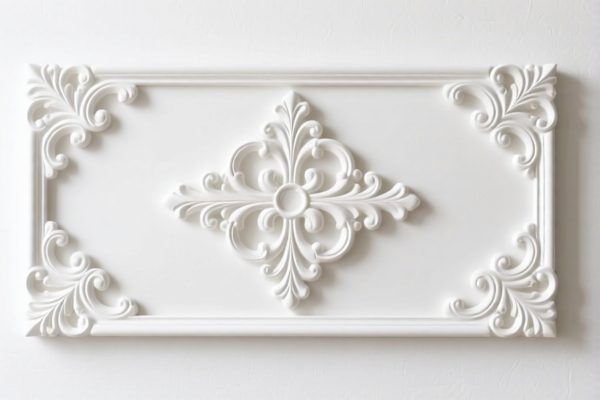
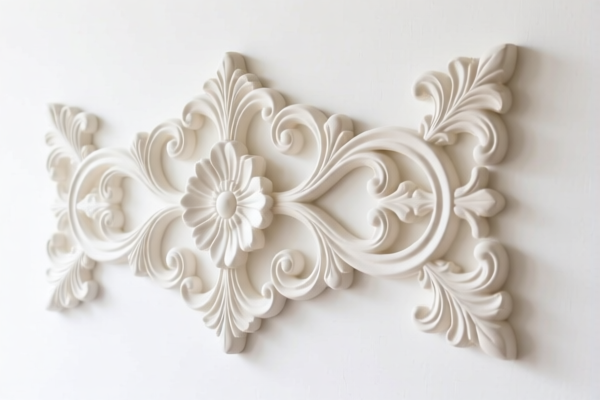
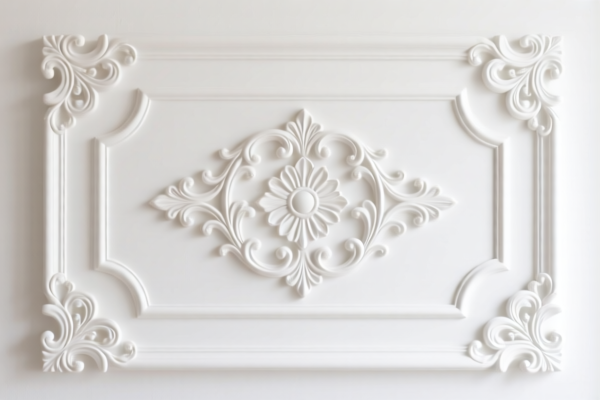
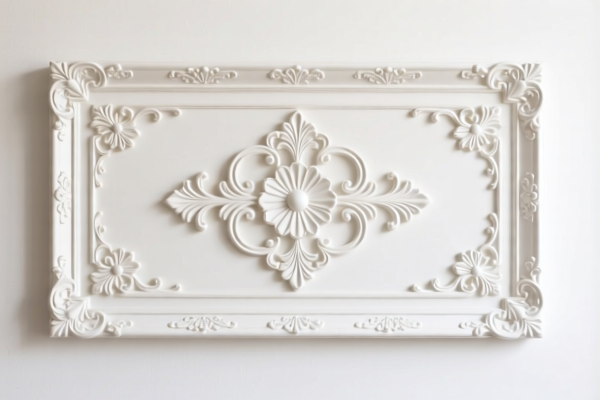
AI Analysis
🪵 Beaded Cedar Wall Panel (Western Red Cedar Siding)
🌐 HS Code Reference & Customs Clearance Guide | 2026 Latest Tariff Analysis | Professional Clearance Strategy
📌 I. Product Definition & Classification: Do You Really Understand "Beaded Cedar Wall Panel"?
Beaded Cedar Wall Panel, specifically referring to Western Red Cedar, is a premium natural wood product used primarily for interior/exterior wall cladding, tongue-and-groove paneling, and decorative architectural finishes. In international trade, its classification hinges on two critical factors: 1. Processing Level: Is it just cut lumber, or has it been "continuously shaped" (tongued, grooved, beaded, molded)? 2. Species: Is it Coniferous (Cedar) or Non-Coniferous?
⚠️ Key Distinction:
- If the wood is merely planed or sanded but lacks continuous shaping along edges/faces → It might fall under general sawn wood (4407).
- If it has been tongued, grooved, rebated, chamfered, V-jointed, beaded, or molded along any edge/face → It is classified as "Continuously Shaped Wood" (4409).
- Beaded panels specifically involve a molding profile, placing them firmly in Chapter 4409.
📦 II. HS Code Classification Details (2026 Latest Tariff Authority Comparison)
Based on the provided data, Western Red Cedar wall panels with bead profiles fall under 4409.10 (Coniferous wood, continuously shaped). There are two specific sub-codes depending on the exact profile definition:
| HS Code | Product Description | Applicable Scenario | Key Characteristic |
|---|---|---|---|
4409.10.10.20 |
Wood siding Resawn bevel siding: Western red cedar | Bevel siding made from Western Red Cedar, often resawn to create specific thicknesses/profiles. | Specific "Bevel Siding" profile. |
4409.10.90.20 |
Other Western red cedar | Other continuously shaped Western Red Cedar products (including bead panels, V-joint, etc.) not specifically listed as bevel siding. | General "Other" shaped cedar (includes Beaded Panels). |
🔍 Critical Reminder:
- "Beaded" implies a molded edge, which qualifies as "continuously shaped."
- Both codes fall under Coniferous wood.
- If the product is not continuously shaped (e.g., flat planks without tongue/groove/bead), it would be4407.33(Planed/Sanded Coniferous), but "Beaded" confirms 4409.
💰 III. 2026 Latest Tariff Rate Breakdown (Including Surtaxes & Policy Additions)
✅ Applicable Country: United States (US)
✅ Country of Origin: China (CN) (Assumed based on typical 25% surtax context; verify if origin is different)
✅ Effective Date: 2025 November 10 onwards (for subsequent imports)
🎯 1. 4409.10.10.20 —— Western Red Cedar Bevel Siding (Continuously Shaped)
| Item | Detail |
|---|---|
| Base Tariff | 0.0% (Ad Valorem) |
| Section 301 Surtax | +25.0% (Additional Tariff) |
| Total Tax Rate | 25.0% |
| Tax Calculation | CIF Value × 25% |
| De Minimis Exemption | ❌ Not Applicable (De minimis does not apply to Section 301 goods) |
| Legal Basis Path | HTSUS:4409.10.10.20 → Section 301 Footnote 9903.88.01 |
📌 Explanation:
- The 0% base rate applies to most coniferous wood products under normal MFN (Most Favored Nation) terms.
- The +25% surtax is the critical cost driver, applied under Section 301 of the Trade Act of 1974 against Chinese-origin goods.
- Total Effective Duty: 25%. This is significant for low-margin wood products.
🎯 2. 4409.10.90.20 —— Other Western Red Cedar (Continuously Shaped)
| Item | Detail |
|---|---|
| Base Tariff | 0.0% (Ad Valorem) |
| Section 301 Surtax | +25.0% (Additional Tariff) |
| Total Tax Rate | 25.0% |
| Tax Calculation | CIF Value × 25% |
| De Minimis Exemption | ❌ Not Applicable |
| Legal Basis Path | HTSUS:4409.10.90.20 → Section 301 Footnote 9903.88.01 |
📌 Note:
- Even if the product is "Other" shaped (not strictly bevel siding), as long as it is Continuously Shaped Western Red Cedar, it attracts the same 25% total duty.
- Do not attempt to misclassify as unshaped wood (4407) to avoid this tax; Customs uses physical inspection to detect tongue/groove/bead profiles.
🛠️ IV. Customs Clearance Practical Advice (Real-World Pitfall Guide)
✅ 1. Documentation Checklist (Missing Items = Delays)
| Document | Required? | Purpose |
|---|---|---|
| ✅ Commercial Invoice | ✔️ | Must clearly state "Western Red Cedar," "Continuously Shaped," "Beaded/Tongue & Groove." |
| ✅ Packing List | ✔️ | Weight, dimensions, number of bundles/containers. |
| ✅ Bill of Lading/Air Waybill | ✔️ | Standard transport doc. |
| ✅ Proof of Origin (COO) | ✔️ | Crucial: Must confirm Country of Origin. If not China, 301 surtax may not apply (verify US trade agreements). |
| ✅ Product Specification Sheet | ✔️ | Detailed dimensions, profile type (Beaded/Bevel), treatment (untreated/primed). |
| ✅ Fumigation Certificate | ✔️ | Mandatory for solid wood products entering the US (ISPM 15 standard) to prevent pests. |
✅ 2. Declaration Tips (Key Mnemonic)
🔥 “Profile is King, Origin is King, Fumigation is Mandatory!”
| Scenario | Correct Declaration | Incorrect Practice |
|---|---|---|
| Beaded Panel (Shaped) | 4409.10.10.20 or 4409.10.90.20 |
Misdeclare as 4407 (Sawn Wood) → Penalty + Back Tax |
| Western Red Cedar | Specify "Western Red Cedar" | Generic "Cedar" or "Coniferous Wood" → Delays |
| Origin: China | Accept 25% surtax | Try to hide origin → Seizure + Fraud Charges |
| Untreated Wood | Declare "Untreated" + Fumigation Cert | Declare "Treated" without proof → Rejection at Port |
✅ 3. Special Situations
| Situation | Handling Advice |
|---|---|
| Mixed Shipments | If container has both shaped (4409) and unshaped (4407) wood, separate lines on invoice. 4409 pays 25%, 4407 may pay 0% (if not 301-listed, but check updates). |
| Pre-Finished/Painted | If painted or sealed, still 4409 if shaped. Finish does not change HS Code for wood siding. |
| Reconstituted Wood | If not solid cedar but engineered (plywood/panel), it falls under Chapter 4412 (Plywood/Veneer), not 4409. Verify material. |
| Origin Non-China | If from Canada or EU, the 25% Section 301 surtax does not apply. Tax may be 0%. Provide valid Certificate of Origin. |
🌍 V. Global Market Customs Comparison (2026 Latest)
| Country/Region | Recommended HS Code | Tariff (China Origin) | Certification Required | Notes |
|---|---|---|---|---|
| 🇺🇸 USA | 4409.10.10.20 / .90 |
25% (Total) | Fumigation (ISPM 15) | High duty due to 301. |
| 🇨🇳 China | 4409.10.10.20 / .90 |
0% - 5% (Import) | None | Low import duty. |
| 🇪🇺 EU | 4409.10.10.00 / .90 |
0% (Generally) | CE (if applicable), Fumigation | No Section 301. |
| 🇨🇦 Canada | 4409.10.10.00 / .90 |
0% (USMCA) | Phytosanitary Cert | Duty-free if Canadian origin. |
| 🇬🇧 UK | 4409.10.10.00 / .90 |
0% - 5% | Fumigation | Post-Brexit rules apply. |
📌 Conclusion:
- USA is the only major market with the 25% surtax for Chinese-origin cedar siding.
- Fumigation is universally required for solid wood to enter any port.
- Misclassification is the #1 risk. Do not declare beaded panels as flat boards.
📌 VI. Common Mistakes & Pitfall Guide (Lessons Learned)
❌ Mistake 1: Declaring "Beaded Cedar Panel" as 4407.33 (Planed/Sawn Wood)
👉 Consequence: Customs inspection reveals tongue/bead profile → Reclassification to 4409 + 25% Back Duty + Penalties.
❌ Mistake 2: Forgetting Fumigation Certificate
👉 Consequence: Cargo held at port, fumigated at importer's expense, or returned/expelled.
❌ Mistake 3: Vague Description: "Wood Panel"
👉 Consequence: Customs officer may select for manual review → Delay in clearance by weeks.
❌ Mistake 4: Ignoring Origin Rules
👉 Consequence: If from China, 25% tax applies. If from Canada, 0%. Wrong origin on COO → Audit Risk.
✅ Correct Practice:
"Western Red Cedar, Continuously Shaped, Beaded Profile, Untreated, Fumigated per ISPM 15, HS Code 4409.10.10.20"
🎯 VII. Conclusion: Professional Clearance, Save Costs, Ensure Speed!
🎯 Remember the Mantra:
🔹 "Shape Dictates Code: Sided = 4409."
🔹 "Origin Dictates Tax: China = +25%."
🔹 "Wood Requires Fumigation: No Cert = No Entry."
📌 Pro Tip:
- If you are importing from China, budget for 25% total duty.
- If possible, consider pre-finishing or packaging to add value, but note that duty is based on CIF value.
- Apply for Advance Ruling if your product profile is unique (e.g., complex bead design) to avoid classification disputes.
📣 Immediate Action:
📞 Contact your customs broker with photos of the bead profile.
📋 Ensure Fumigation Certificate is in hand before shipping.
🚀 Clear your cedar walls, clear your customs, clear your profits!
✨ Professional Customs Clearance Starts with Accurate Classification!
💼 Every percentage point matters in the wood trade!
Customer Reviews
About HS Code Classification
The Harmonized System (HS) is an internationally standardized nomenclature developed by the World Customs Organization (WCO) to classify traded products. Over 200 countries use the HS system as the basis for customs tariffs, trade statistics, and import/export regulations.
Each HS code follows a hierarchical structure:
- Chapter (2 digits) — Broad category of goods (e.g., Chapter 84: Machinery and Mechanical Appliances)
- Heading (4 digits) — More specific grouping within the chapter
- Subheading (6 digits) — Internationally standardized breakdown, used by all WCO member countries
- National subdivisions (8-10 digits) — Country-specific extensions for further classification, such as US HTSUS 10-digit codes
Correct HS code classification is essential for smooth customs clearance, accurate duty payment, and compliance with trade regulations. Misclassification can lead to customs delays, overpayment of duties, or penalties.
When importing from CN to US, the applicable tariff rates may include:
- Most-Favored-Nation (MFN) rate — The standard duty rate applied to WTO members
- General rate — Applied to countries without trade agreements
- Trade remedy duties — Additional tariffs such as Section 301 (anti-dumping), Section 232 (national security), or countervailing duties
The information provided on this page is for reference purposes only. For official classification, please consult with your local customs authority or a licensed customs broker.