Beaded Silk Handbag
CN → US| HS Code | Tariff Rate | Origin | Destination | Doc |
|---|---|---|---|---|
| 4202227000 | 42.0% | CN | US | Official Doc |
| 4202228980 | 52.6% | CN | US | Official Doc |
| 4202224010 | 42.4% | CN | US | Official Doc |
| 4202227000 | 42.0% | CN | US | Official Doc |
| 4202224010 | 42.4% | CN | US | Official Doc |
Product Images
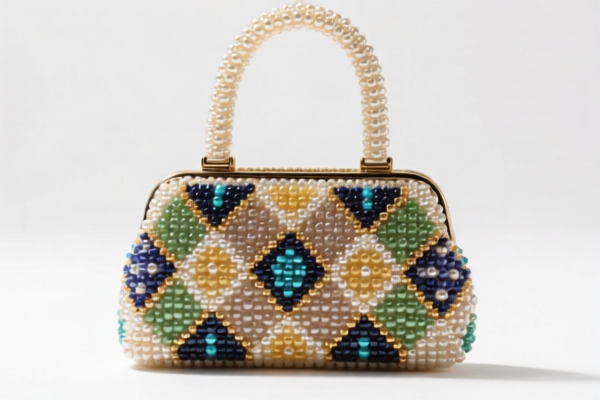
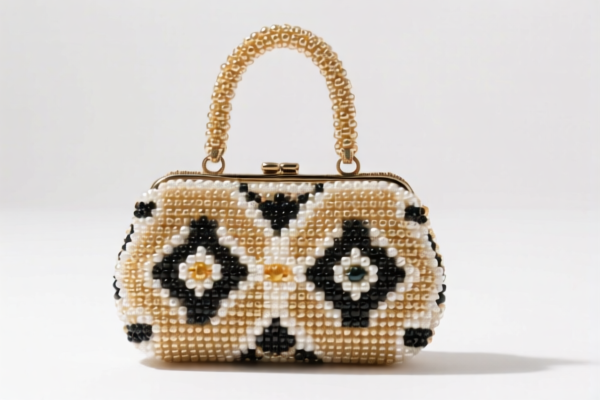
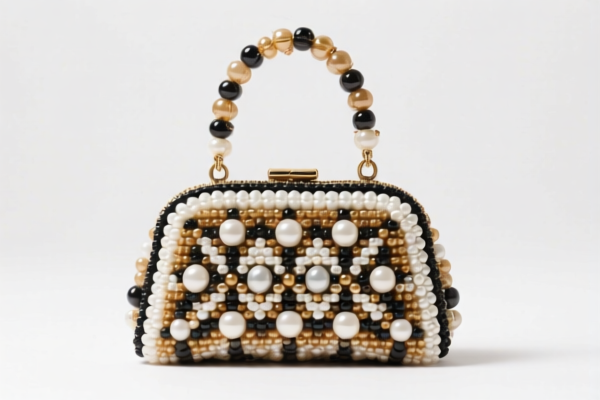
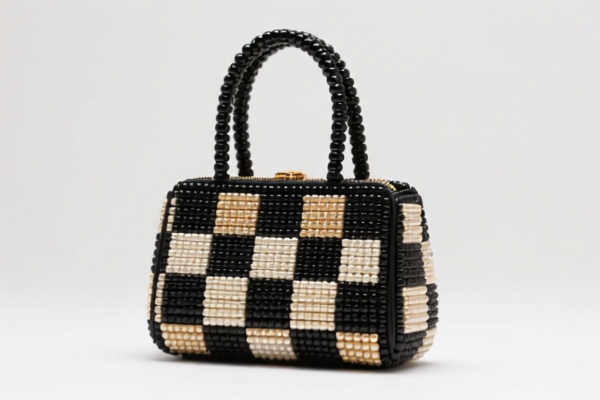
AI Analysis
👜 Beaded Silk Handbag (Silica & Pearl Decorated Tote/Shoulder Bag)
🌐 HS Code Reference & Customs Clearance Guide | 2026 Latest Tariff Analysis | Professional-Level Strategy
📌 I. Product Definition & Classification: Do You Really Understand "Silk Handbags"?
A beaded silk handbag is not just a fashion accessory; in international trade, its classification hinges on the material composition of the outer surface and the specific design features. Specifically, whether the silk content reaches 85% or more dramatically affects the HS Code and, consequently, the total tax burden.
Category A: High-Content Silk Bags (≥85% Silk) * Defined as bags where the outer surface is primarily silk, meeting the strict "85% silk" requirement. * Typically classified under headings reflecting high-value textile goods with specific silk content thresholds.
Category B: General Silk-Faced Bags (<85% Silk or Mixed Textiles) * Defined as bags where the outer surface is silk (or silk-blend), but may not meet the ≥85% threshold, or are broadly classified under "textile materials." * Often fall under broader textile bag categories with different duty structures.
⚠️ Key Distinction Point: - If the outer material is pure or high-content silk (≥85%) → Tends toward 4202.22.70.00 (Lower Base Duty). - If the outer material is silk-faced textile (general) → Tends toward 4202.22.89.80 or 4202.22.40.10 (Higher Base Duty). - Note on Beading: The presence of beads does not change the primary classification from "Handbag" but may affect the "principal material" determination if beads constitute the majority by weight/value (rare for silk bags, usually the fabric dominates).
📦 II. HS Code Classification Details (2026 Latest Tariff Authority对照)
| HS Code | Product Description | Applicable Scenario | Silk Content Requirement | Total Tax Rate (US/CN) |
|---|---|---|---|---|
4202.22.70.00 |
Silk-beaded handbag, silk material, meets ≥85% silk requirement | High-pure silk bags, luxury silk totes | ✅ ≥85% Silk | 42.0% |
4202.22.89.80 |
Silk-beaded handbag, outer surface silk, textile material handbag | General silk-finish bags, mixed textile silk bags | ❌ <85% or General Textile | 52.6% |
4202.22.40.10 |
Silk-fabric beaded handbag or shoulder bag, textile material outer surface | Silk-faced crossbody/shoulder bags, general textile classification | ❌ General Textile Description | 42.4% |
🔍 Critical Reminder: -
4202.22.70.00offers the lowest base duty (7.0%) but requires strict proof of ≥85% silk content. Misclassification here can lead to severe penalties. -4202.22.89.80has the highest total tax (52.6%) due to a higher base duty (17.6%). It is often the "default" for silk-finish bags that don't meet the pure silk threshold. -4202.22.40.10is a middle ground (42.4% total), often used for general silk-fabric bags (shoulder/crossbody) where the outer surface is described as "textile material."
💰 III. 2026 Latest Tariff Rate Breakdown (Including Additional Taxes & Policy Surcharges)
✅ Applicable Country: United States (US) ✅ Country of Origin: China (CN) ✅ Effective Time: 2025+ (Current Trade War Period)
🎯 1. 4202.22.70.00 —— High-Content Silk Handbag (≥85% Silk)
| Item | Content |
|---|---|
| Base Duty | 7.0% (Ad Valorem) |
| Section 301 Additional Duty | +25.0% |
| Section 122 Tariff (Specific) | +10.0% |
| Total Tax Rate | 42.0% |
| Tax Calculation | CIF Value × 42.0% |
| De Minimis Exemption? | ❌ No (Denied for Section 301/122 goods) |
| Legal Basis Path | USITC:4202.22.70.00 → Section 301 Footnote → Section 122 Specific |
📌 Explanation: - Base 7.0%: Reflects the specific subheading for high-content silk goods. - 25% Section 301: Standard penalty for most Chinese textile/accessories under current trade policies. - 10% Section 122: Additional surcharge applied to specific textile/apparel categories in certain periods. - Total 42.0%: A significant cost factor. Ensure your silk content test report is robust to justify this HS code.
🎯 2. 4202.22.89.80 —— General Silk-Faced Handbag (Textile Material)
| Item | Content |
|---|---|
| Base Duty | 17.6% |
| Section 301 Additional Duty | +25.0% |
| Section 122 Tariff (Specific) | +10.0% |
| Total Tax Rate | 52.6% |
| Tax Calculation | CIF Value × 52.6% |
| De Minimis Exemption? | ❌ No |
| Legal Basis Path | USITC:4202.22.89.80 → Section 301 Footnote → Section 122 Specific |
📌 Warning: - This is the most expensive classification among the options. - The 17.6% base duty is much higher than 7.0%. - Only use this if the bag does not meet the ≥85% silk criteria or if customs forces a broader "textile" classification. - Cost Impact: On a $100 bag, this results in $52.60 in duties, compared to $42.00 for
4202.22.70.00.
🎯 3. 4202.22.40.10 —— Silk-Fabric Shoulder/Crossbody Bag
| Item | Content |
|---|---|
| Base Duty | 7.4% |
| Section 301 Additional Duty | +25.0% |
| Section 122 Tariff (Specific) | +10.0% |
| Total Tax Rate | 42.4% |
| Tax Calculation | CIF Value × 42.4% |
| De Minimis Exemption? | ❌ No |
| Legal Basis Path | USITC:4202.22.40.10 → Section 301 Footnote → Section 122 Specific |
📌 Note: - Slightly higher than
4202.22.70.00(42.4% vs 42.0%) due to a slightly higher base duty (7.4% vs 7.0%). - Often used for crossbody or shoulder bags where the "textile material" description is more appropriate than "silk content." - A viable alternative if the product is clearly a shoulder/crossbody style and silk content is borderline.
🛠️ IV. Customs Clearance Practical Advice (Pitfall Avoidance Guide)
✅ 1. Required Documentation List (Non-Negotiable)
| Document | Must Provide | Explanation |
|---|---|---|
| ✅ Material Composition Test Report | ✔️ | Crucial! Must prove silk content is ≥85% for 4202.22.70.00. Issued by accredited lab (e.g., SGS, BV). |
| ✅ Product Photos | ✔️ | Clear images of the bag, including inner lining, exterior, and beading details. |
| ✅ Commercial Invoice | ✔️ | Must state: "Handbag, Silk, Beaded, Origin: China." |
| ✅ Packing List | ✔️ | Item quantity, weight, packaging type. |
| ✅ Bill of Lading/Air Waybill | ✔️ | Standard shipping docs. |
| ✅ HS Code Pre-Ruling (Optional but Recommended) | ✔️ | Apply to US CBP for binding decision on silk content classification. |
✅ 2. Declaration Tips (Key Mnemonic)
🔥 "Silk ≥85% is 7%, Base is Low; Silk <85% is 17.6%, Pay More! Beads don't change the fabric, but proof changes the fate!"
| Scenario | Correct HS Code | Mistake to Avoid |
|---|---|---|
| Pure Silk Bag (≥85%) | 4202.22.70.00 |
Misdeclaring as 4202.22.89.80 → Overpay $10.6 per $100. |
| Silk-Blend/Fashion Silk | 4202.22.89.80 |
Claiming 85% without proof → Penalties + Back Taxes. |
| Silk Shoulder Bag | 4202.22.40.10 |
Using 4202.22.70.00 if it's clearly a crossbody/style mismatch (though rare, description matters). |
| Non-Silk Beaded Bag | ❌ Not in List | If no silk, this data doesn't apply. Ensure origin is correct. |
✅ 3. Special Situation Handling
| Situation | Handling Advice |
|---|---|
| OEM Custom Silk Bags | Provide client design specs + material test report. Ensure silk content is explicitly stated in the PO. |
| "Silk-Look" Synthetic Bags | Do NOT use silk HS codes. If <85% silk, use 4202.22.89.80 or other synthetic textile codes. Misdeclaring synthetic as silk is fraud. |
| Mixed Material Bags | If lining is silk but exterior is leather → Different HS Code entirely (e.g., 4202.21.xx). Check outer surface material first. |
| High-Value Luxury Bags | Ensure insurance value is declared correctly. Duties are based on CIF (Cost, Insurance, Freight). |
🌍 V. Global Market Comparison (2026 Latest)
| Country/Region | Recommended HS Code | Total Duty (Est.) | Certification | Notes |
|---|---|---|---|---|
| 🇺🇸 USA | 4202.22.70.00 |
42.0% | No special cert | Highest barrier due to 301/122 tariffs. |
| 🇺🇸 USA | 4202.22.89.80 |
52.6% | No special cert | Avoid if possible; very high cost. |
| 🇨🇳 China | 4202.22.70.00 |
~10-15% | N/A | Lower export duties, but focus is on US clearance. |
| 🇪🇺 EU | 4202.22.70.00 |
~4-6% | CE (if applicable) | No Section 301/122. Much more favorable. |
| 🇬🇧 UK | 4202.22.70.00 |
~5-10% | N/A | Post-Brexit rules may vary; check UK Tariff. |
| 🇦🇺 Australia | 4202.22.70.00 |
~5-10% | N/A | Competitive duty rates. |
📌 Conclusion: - The US is the most challenging market for silk handbags due to the 25% Section 301 + 10% Section 122 tariffs, pushing total duties to 42-52.6%. - Europe and other markets are significantly more cost-effective (under 10%). - Strategy: If targeting the US, ensure your silk content is ≥85% to qualify for
4202.22.70.00(42.0%) rather than4202.22.89.80(52.6%). Saving 10.6% on duty is significant for margin protection.
📌 VI. Common Errors & Pitfall Guide (Lessons Learned)
❌ Error 1: Declaring a 70% silk bag as 4202.22.70.00
👉 Consequence: CBP rejects the declaration, demands proof, applies 4202.22.89.80 (52.6%), charges back taxes + penalties.
Fix: Get a lab test report proving ≥85% silk.
❌ Error 2: Ignoring the "Outer Surface" Rule
👉 Consequence: If the outer surface is silk, but the lining is dominant, classification might shift.
Fix: Always identify the outer surface material for HS 4202 classification.
❌ Error 3: Not Accounting for Section 122 Tariff
👉 Consequence: Using old tax calculators that only show 301 (25%) + Base. Missing the extra 10% leads to budget shortfalls.
Fix: Always add 10% Section 122 to calculations for textile/apparel from China to the US.
❌ Error 4: Mislabeling "Silk-Finish" as "Silk"
👉 Consequence: Synthetic bags with silk-like sheen declared as silk.
Fix: Be honest. If it's polyester with silk finish, it's not silk HS.
✅ Correct Declaration Example:
"Handbag, Women's, Outer Surface: Silk (≥85% Content), Beaded Embellishment, Origin: China, Model: XYZ, HS Code: 4202.22.70.00"
🎯 VII. Conclusion: Professional Declaration Saves Money!
🎯 Remember the Mnemonic:
🔹 "Silk ≥85% is 7%, Base is Low; Silk <85% is 17.6%, Pay More! Add 25% + 10% for US, Total is High!"
🔹 "Test Report is Key, Prove the Silk, Save 10% on Duty!"
📌 Pro Tip:
If your silk content is between 50-84%, you cannot use 4202.22.70.00. You must use 4202.22.89.80 (52.6%) or 4202.22.40.10 (42.4%).
Recommendation:
📞 Consult a Customs Broker + Get Material Test Report + Apply for HS Code Pre-Ruling
🚀 Maximize Profit, Minimize Duty, Clear Customs Smoothly!
✨ Professional Customs Clearance Starts with Accurate Classification!
💼 Every Percent of Duty Saves Count!
Customer Reviews
About HS Code Classification
The Harmonized System (HS) is an internationally standardized nomenclature developed by the World Customs Organization (WCO) to classify traded products. Over 200 countries use the HS system as the basis for customs tariffs, trade statistics, and import/export regulations.
Each HS code follows a hierarchical structure:
- Chapter (2 digits) — Broad category of goods (e.g., Chapter 84: Machinery and Mechanical Appliances)
- Heading (4 digits) — More specific grouping within the chapter
- Subheading (6 digits) — Internationally standardized breakdown, used by all WCO member countries
- National subdivisions (8-10 digits) — Country-specific extensions for further classification, such as US HTSUS 10-digit codes
Correct HS code classification is essential for smooth customs clearance, accurate duty payment, and compliance with trade regulations. Misclassification can lead to customs delays, overpayment of duties, or penalties.
When importing from CN to US, the applicable tariff rates may include:
- Most-Favored-Nation (MFN) rate — The standard duty rate applied to WTO members
- General rate — Applied to countries without trade agreements
- Trade remedy duties — Additional tariffs such as Section 301 (anti-dumping), Section 232 (national security), or countervailing duties
The information provided on this page is for reference purposes only. For official classification, please consult with your local customs authority or a licensed customs broker.