Bear shaped Placemat
CN → US| HS Code | Tariff Rate | Origin | Destination | Doc |
|---|---|---|---|---|
| 3924901050 | 13.3% | CN | US | Official Doc |
| 3924905650 | 20.9% | CN | US | Official Doc |
| 6302514000 | 23.8% | CN | US | Official Doc |
| 6302530030 | 28.8% | CN | US | Official Doc |
Product Images
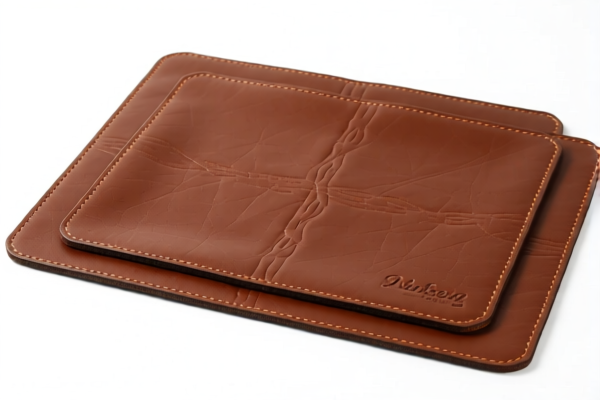
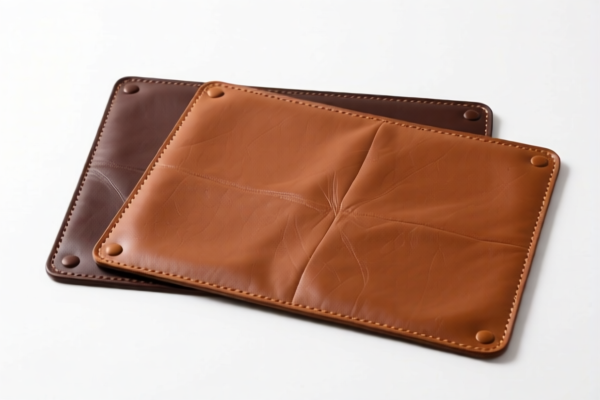
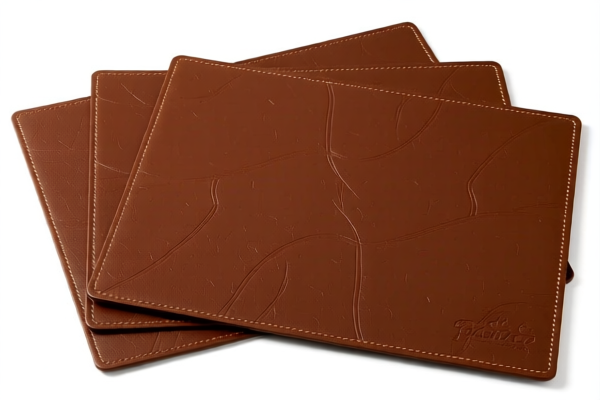
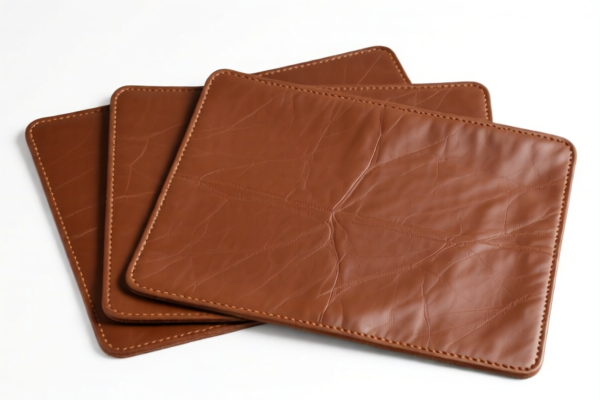
AI Analysis
🐻 Bear-Shaped Placemat (The "Cute Kitchen" Conundrum)
🌐 HS Code Reference & Customs Clearance Guide | 2026 Latest Tariff Analysis | Professional Level Clearance Strategy
📌 I. Product Definition & Classification: What Exactly Is a "Bear Placemat"?
A Bear-Shaped Placemat is a table accessory designed to protect table surfaces from heat, scratches, and spills, often featuring a decorative bear motif. In international trade, its classification is highly sensitive to material composition, not just its shape or function.
Based on common market realities and logical deduction, these items typically fall into two main material categories: 1. Textile-Based: Made of cotton, linen, polyester, or other fabric materials (soft, absorbent). 2. Plastic/Synthetic-Based: Made of PVC, silicone, plastic-coated cotton, or resin (waterproof, durable, rigid).
⚠️ Critical Distinction Point:
- If the primary characteristic is textile (absorbent, fabric-based) → It likely falls under Chapter 63 (Other Made-Up Textile Articles). - If the primary characteristic is plastic (waterproof, synthetic, non-absorbent) → It likely falls under Chapter 39 (Plastics and Articles Thereof).
📦 2. HS Code Classification Details (Based on Provided Data)
| HS Code | Product Description | Material Logic | Estimated Total Tax Rate |
|---|---|---|---|
| 3924.90.10.50 | Other table, kitchen, or other household articles of plastics | Plastic/PVC/Resin Inferred as plastic due to "other" household category; no material conflict. |
13.3% |
| 3924.90.56.50 | Other plastic tableware/household articles | Plastic/PVC Inferred as plastic; matches "plastic-made" requirement. |
20.9% |
| 6302.51.40.00 | Table linen of cotton | Cotton/Textile Inferred as textile (common for kitchen mats); "Cotton" category has no obvious conflict. |
23.8% |
| 6302.53.00.30 | Other table linen of synthetic fibers | Synthetic Fiber/Plastic Blend Inferred as synthetic fibers or plastic-like materials; matches "other table articles." |
28.8% |
🔍 Key Insight:
- Shape (Bear) does NOT change the HS code. Customs cares about Material and Function. - If your placemat is fabric-covered with a rubber/plastic backing, it may still be classified as textile (6302) or plastic (3924) depending on which material gives it its essential character. - Tax Rates Vary Significantly: From 13.3% to 28.8%, primarily due to differing base tariffs and Section 301/IEEPA surcharges.
💰 3. 2026 Latest Tariff Rate Breakdown (Including Surtaxes)
✅ Applicable Country: United States (US)
✅ Origin: China (CN) (Implied by 122 Clause & 301 rates in data)
✅ Effective Time: Current regulations (2025-2026)
🎯 1. 3924.90.10.50 — Plastic Household Articles (Lowest Tax Option)
| Item | Content |
|---|---|
| Base Tariff | 3.3% |
| Section 301 Surtax | 0.0% (Not applicable for this specific subheading in the provided data) |
| IEEPA Clause 122 Surtax | +10% |
| Total Tax Rate | 13.3% |
| Calculation | CIF Value × 13.3% |
| De Minimis Exemption | ❌ No (Section 301/IEEPA surcharges generally deny de minimis for China-origin goods) |
📌 Explanation:
- This is the most cost-effective classification if the product is purely plastic. - The 10% IEEPA surtax applies to all Chinese-origin goods under certain clauses. - Note: No additional 25% Section 301 tax is listed here, making it significantly cheaper than textile options.
🎯 2. 3924.90.56.50 — Plastic Tableware/Household Items
| Item | Content |
|---|---|
| Base Tariff | 3.4% |
| Section 301 Surtax | +7.5% |
| IEEPA Clause 122 Surtax | +10% |
| Total Tax Rate | 20.9% |
| Calculation | CIF Value × 20.9% |
| De Minimis Exemption | ❌ No |
📌 Explanation:
- This code attracts a 7.5% Section 301 surtax in addition to the IEEPA 10%. - Useful if the product is specifically classified as "tableware" rather than general "household articles."
🎯 3. 6302.51.40.00 — Table Linen of Cotton (Textile)
| Item | Content |
|---|---|
| Base Tariff | 6.3% |
| Section 301 Surtax | +7.5% |
| IEEPA Clause 122 Surtax | +10% |
| Total Tax Rate | 23.8% |
| Calculation | CIF Value × 23.8% |
| De Minimis Exemption | ❌ No |
📌 Explanation:
- Higher base tariff (6.3%) compared to plastics (3.3-3.4%). - Attracts both Section 301 (7.5%) and IEEPA (10%) surcharges. - Suitable if the placemat is predominantly cotton fabric.
🎯 4. 6302.53.00.30 — Other Table Linen (Synthetic/Other)
| Item | Content |
|---|---|
| Base Tariff | 11.3% |
| Section 301 Surtax | +7.5% |
| IEEPA Clause 122 Surtax | +10% |
| Total Tax Rate | 28.8% |
| Calculation | CIF Value × 28.8% |
| De Minimis Exemption | ❌ No |
📌 Explanation:
- Highest tax rate among options. - Base tariff is high (11.3%) due to "other" synthetic categories. - Avoid if possible unless material composition strictly requires this classification.
🛠️ 4. Customs Clearance Practical Advice (Real-World Pitfall Avoidance)
✅ 1. Essential Documentation Checklist
| Document | Required? | Explanation |
|---|---|---|
| ✅ Product Composition Report | ✔️ | Must specify % of plastic, cotton, polyester, etc. |
| ✅ Product Photos | ✔️ | Show the bear shape, texture, and any labels. |
| ✅ Bill of Lading/Invoice | ✔️ | Must match the declared HS Code and value. |
| ✅ Origin Certificate | ✔️ | Proof of China origin (triggers surtaxes). |
| ✅ Material Safety Data Sheet (MSDS) | ✔️ | If plastic/silicone, may be required for chemical compliance. |
✅ 2. Declaration Tips (Crucial for Accuracy)
🔥 "Material Dictates Code, Shape Does Not!"
| Scenario | Correct Declaration | Error to Avoid |
|---|---|---|
| Pure Plastic/Silicone Bear Mat | 3924.90.10.50 (13.3%) |
Misdeclare as "Textile" → 23.8%+ |
| Cotton Fabric Bear Mat | 6302.51.40.00 (23.8%) |
Misdeclare as "Plastic" → 13.3% (Risk of Penalty) |
| Plastic-Coated Cotton Mat | Analyze "Essential Character" | Ambiguous declaration → Customs audit delay |
| Set with Placemat + Napkins | Declare as Set (Primary Character) | Split declaration → Higher total tax |
✅ 3. Special Case Handling
| Situation | Recommendation |
|---|---|
| Hybrid Material (e.g., Cotton + PVC Backing) | If PVC backing provides essential character (waterproofing), consider HS 3924. If cotton face is dominant, consider HS 6302. Recommendation: Use 3924.90.10.50 for lower tax if PVC is substantial. |
| OEM Customization | Provide design files to prove the "bear" is aesthetic, not functional (e.g., not a bear-shaped cutting board). |
| De Minimis (Section 321) | Do Not Rely on It. Section 301 and IEEPA surcharges apply to de minimis shipments from China. Total tax applies. |
🌍 5. Global Market Comparison (2026 Latest)
| Country/Region | Recommended HS Code | Tax Rate (China Origin) | Certification | Notes |
|---|---|---|---|---|
| 🇺🇸 USA | 3924.90.10.50 |
13.3% | FDA (if food-contact) | Lowest tax option for plastic. |
| 🇨🇳 China | 6302.51.00.00 |
5-10% | CCC (if applicable) | Lower import duty, no IEEPA. |
| 🇪🇺 EU | 6302.51.00.00 |
4-12% | REACH | No 10% IEEPA surtax. |
| 🇬🇧 UK | 6302.51.00.00 |
4-12% | UKCA | Post-Brexit rules apply. |
| 🇯🇵 Japan | 6302.51.00.00 |
8-10% | PSE (if plastic) | Stable tariffs. |
📌 Conclusion:
- USA is the most complex market due to IEEPA 10% and Section 301 surtaxes. - Plastic (HS 3924) is generally cheaper than Textile (HS 6302) for China-origin goods due to lower base tariffs in some subheadings. - Always verify material composition before declaring. Misclassification leads to penalties + back taxes.
📌 6. Common Mistakes & Pitfalls (Lessons Learned)
❌ Mistake 1: Declaring a plastic-coated cotton mat as pure plastic (3924) to save tax.
👉 Consequence: If customs determine cotton is the essential character, they will reclassify to 6302 → Higher tax + Penalty.
❌ Mistake 2: Assuming "Bear Shape" qualifies for a special decorative exemption.
👉 Consequence: No such exemption exists. Shape is irrelevant to HS classification.
❌ Mistake 3: Using De Minimis ($800) for small orders from China.
👉 Consequence: Section 301/IEEPA surcharges apply. You will owe the full 13.3%-28.8% tax upon entry.
❌ Mistake 4: Ignoring FDA Food Contact Regulations for plastic placemats.
👉 Consequence: If the placemat is claimed as "food-safe," FDA compliance may be required. Misdeclaration can lead to detention.
✅ Correct Practice:
"Plastic Table Mat, Bear Shaped, 100% PVC, Food-Grade, Model XYZ, Made in China"
🎯 7. Conclusion: Professional Declaration, Cost Saving, Risk Reduction
🎯 Remember the Golden Rule:
🔹 "Material Over Shape! Plastic is Cheaper (13.3%) vs Textile (23.8%+)."
🔹 "No De Minimis for China! Tax Applies Even for Small Packages."
🔹 "Verify Composition! Misclassification = Penalties + Delays."
📌 Pro Tip:
If your bear placemat is mostly cotton with a plastic backing, consider HS 6302 but be prepared for higher taxes. If it is mostly plastic with a fabric print, HS 3924 is your best friend for cost efficiency.
Request a Pre-Ruling from CBP if the material blend is ambiguous.
📣 Immediate Action:
📞 Contact a Customs Broker with your product sample.
📦 Provide Material % Breakdown.
🚀 Declare Accurately to Avoid 30%+ Cost Spikes!
✨ Professional Clearance Starts with Accurate Classification!
💼 Your Profit Margin Depends on This 13.3% vs 28.8% Difference!
Customer Reviews
About HS Code Classification
The Harmonized System (HS) is an internationally standardized nomenclature developed by the World Customs Organization (WCO) to classify traded products. Over 200 countries use the HS system as the basis for customs tariffs, trade statistics, and import/export regulations.
Each HS code follows a hierarchical structure:
- Chapter (2 digits) — Broad category of goods (e.g., Chapter 84: Machinery and Mechanical Appliances)
- Heading (4 digits) — More specific grouping within the chapter
- Subheading (6 digits) — Internationally standardized breakdown, used by all WCO member countries
- National subdivisions (8-10 digits) — Country-specific extensions for further classification, such as US HTSUS 10-digit codes
Correct HS code classification is essential for smooth customs clearance, accurate duty payment, and compliance with trade regulations. Misclassification can lead to customs delays, overpayment of duties, or penalties.
When importing from CN to US, the applicable tariff rates may include:
- Most-Favored-Nation (MFN) rate — The standard duty rate applied to WTO members
- General rate — Applied to countries without trade agreements
- Trade remedy duties — Additional tariffs such as Section 301 (anti-dumping), Section 232 (national security), or countervailing duties
The information provided on this page is for reference purposes only. For official classification, please consult with your local customs authority or a licensed customs broker.