Beard Oil
CN → US| HS Code | Tariff Rate | Origin | Destination | Doc |
|---|---|---|---|---|
| 3307102000 | 39.9% | CN | US | Official Doc |
| 3307101000 | 39.9% | CN | US | Official Doc |
Product Images
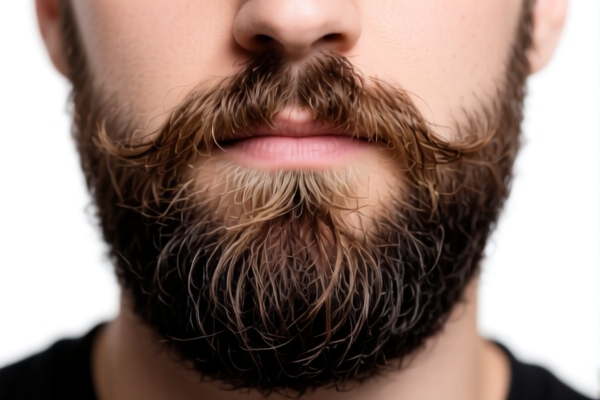
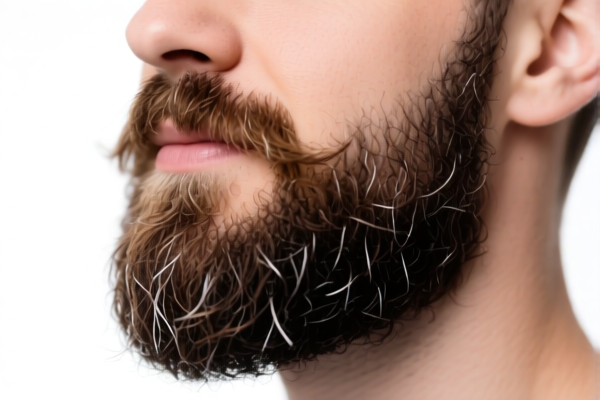
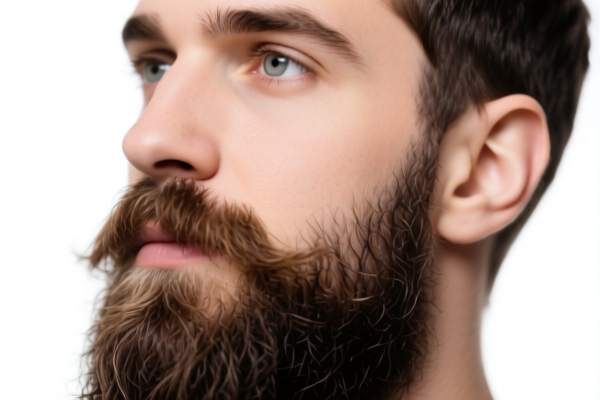

AI Analysis
🧴 Beard Oil & Grooming Preparations (Personal Care)
🌐 HS Code Reference & Customs Clearance Guide | 2024 Latest Tariff Analysis | Professional Clearance Strategy
📌 I. Product Definition & Classification: Do You Really Understand "Beard Oil"?
Beard oil is a popular grooming product used to soften facial hair, moisturize the skin underneath, and reduce itchiness. In international trade, it falls under the broader category of perfumery, cosmetic, or toilet preparations. The critical classification factor is not the primary ingredient (often jojoba, argan, or tea tree oil), but whether the final product formulation contains alcohol as a base or solvent.
Alcohol-Based Beard Oils: Often formulated for quick drying, a "wet" feel, or antimicrobial properties.
Non-Alcohol-Based Beard Oils: Typically 100% natural carrier oils, essential oils, and sometimes Vitamin E. These are heavier, slower to absorb, and marketed as "natural" or "organic."
⚠️ Key Distinction Point:
- If the ingredient list includes Ethanol, Denatured Alcohol, or Isopropyl Alcohol → HS Code 3307.10.20.00
- If the ingredient list contains only plant oils, essential oils, waxes, or water (no alcohol) → HS Code 3307.10.10.00
📦 II. HS Code Classification Details (2024 Latest Tariff Authority Comparison)
| HS Code | Product Description | Application Scenario | Alcohol Content |
|---|---|---|---|
3307.10.20.00 |
Pre-shave, shaving or after-shave preparations: Containing alcohol | Fast-drying beard oils, aftershave lotions, alcohol-based toners | ✅ Yes |
3307.10.10.00 |
Pre-shave, shaving or after-shave preparations: Not containing alcohol | Pure oil blends, natural grooming products, essential oil mixes | ❌ No |
🔍 Important Reminder:
- The classification depends on the final product composition, not just the marketing name. Even if the product is called "Beard Balm" or "Beard Wax," if it is primarily an after-shave grooming aid and contains alcohol, it may still fall under3307.10.20.00.
- If the product is purely a "room deodorizer" or "disinfectant," it would fall under a different subheading (3307.90), but for personal beard care, these two codes are the primary choices.
💰 III. 2024 Latest Tariff Rate Details (Including Additional Duties)
✅ Applicable Country: United States (US)
✅ Country of Origin: China (CN)
✅ Effective Time: 2024 (Current Tariff Schedule)
🎯 1. 3307.10.20.00 —— Pre-shave/Shaving/After-shave Preparations: Containing Alcohol
| Item | Content |
|---|---|
| Base Tariff | 4.9% |
| Section 301 Additional Duty | +25.0% |
| Total Tariff | 29.9% |
| Tax Calculation | CIF Value × 29.9% |
| De Minimis Eligibility | ❌ No (High value addition prevents de minimis exemption for most commercial shipments) |
| Legal Basis | HTSUS 3307.10.20.00 + Section 301 Footnote |
📌 Explanation:
- The 4.9% is the standard Most Favored Nation (MFN) rate for cosmetic preparations.
- The +25% is the Section 301 tariff imposed on Chinese-origin goods in this category.
- Total: 29.9%. This is a significant cost driver. If you are importing alcohol-based beard oils from China, you must budget for nearly 30% in duties alone.
🎯 2. 3307.10.10.00 —— Pre-shave/Shaving/After-shave Preparations: Not Containing Alcohol
| Item | Content |
|---|---|
| Base Tariff | 4.9% |
| Section 301 Additional Duty | +25.0% |
| Total Tariff | 29.9% |
| Tax Calculation | CIF Value × 29.9% |
| De Minimis Eligibility | ❌ No |
| Legal Basis | HTSUS 3307.10.10.00 + Section 301 Footnote |
📌 Note:
- Surprising Reality: Both alcohol-based and non-alcohol-based beard oils face the same total tariff rate of 29.9% when imported from China.
- There is no tariff advantage for choosing "alcohol-free" formulations to reduce duty costs.
- The primary difference is regulatory (FDA cosmetic labeling) and consumer preference, not customs duty savings.
🛠️ IV. Customs Clearance Practical Advice (Battle-Proven Pitfall Guide)
✅ 1. Documentation Checklist (Essential for Smooth Clearance)
| Document | Mandatory | Description |
|---|---|---|
| ✅ Certificate of Analysis (COA) | ✔️ | Must explicitly list ingredients and confirm alcohol content (%). This is the #1 document for HS code determination. |
| ✅ Product Label | ✔️ | Clear ingredient list, net weight, manufacturer info, and intended use ("For External Use Only"). |
| ✅ Commercial Invoice | ✔️ | Must state "Beard Oil - Cosmetic Preparation" and clearly declare country of origin. |
| ✅ FDA Registration | ✔️ | If importing into the US, facilities must be FDA registered, and products must comply with MoCRA (Modernization of Cosmetics Regulation Act). |
| ✅ Free Sales Certificate | ✔️ | Sometimes required to prove the product is legally sold in the country of origin. |
✅ 2. Declaration Tips (Key Mantra)
🔥 "Ingredient List is King, Alcohol Check is Key!"
| Scenario | Correct Declaration | Wrong Action |
|---|---|---|
| Product contains >1% Alcohol | 3307.10.20.00 |
Misclassifying as 3307.10.10.00 → Penalty + Back Duties |
| Product is 100% Natural Oils | 3307.10.10.00 |
Misclassifying as 3307.10.20.00 → Overpayment (but no penalty, just loss of profit) |
| Beard Balm (Solid/Paste) | Still 3307.10.xx if used for shaving/beard care |
Misclassifying as "Soap" (3401) → Incorrect Classification |
| Room Deodorizer Spray | 3307.90.xx |
Misclassifying as personal care → Regulatory Violation |
✅ 3. Special Handling Situations
| Situation | Handling Advice |
|---|---|
| High Alcohol Content (>70%) | May be classified as Flammable Liquid (Hazmat). Requires UN packaging and DOT labeling for transport. |
| "Alcohol-Free" Claims | Must be substantiated by lab testing. If FDA or Customs tests and finds ethanol, you will face fines for misrepresentation. |
| Sample Shipments | Even samples of cosmetic products from China are subject to the 29.9% tariff if declared as commercial samples. |
| Private Label (OEM) | Ensure the manufacturer provides a clear COA. Your brand name does not change the HS code; the formulation does. |
🌍 V. Global Market Comparison (2024 Latest)
| Country/Region | Recommended HS Code | Tariff (China Origin) | Certification Requirements | Notes |
|---|---|---|---|---|
| 🇺🇸 USA | 3307.10.10.00 / 3307.10.20.00 |
29.9% (Both) | FDA MoCRA Compliance | No duty difference between alcohol/no-alcohol. |
| 🇬🇧 UK | 33071000 | ~5-10% | UKCA / Safety Assessment | Post-Brexit rules apply. |
| 🇪🇺 EU | 33071000 | ~5-6.5% | CPNP Notification | Strict on alcohol labeling. |
| 🇨🇦 Canada | 3307.10.10 / 3307.10.20 | ~5-15% | COSMOS / Health Canada | No Section 301 equivalent. |
| 🇦🇺 Australia | 3307.10.00 | ~5% | TGA / AICIS | Lower overall tariff burden. |
📌 Conclusion:
- USA is the most expensive market for Chinese beard oils due to the 25% Section 301 tariff.
- No tariff arbitrage exists between alcohol-based and non-alcohol-based products in the US.
- Consider supply chain diversification (e.g., manufacturing in Vietnam or Thailand) to potentially avoid Section 301 tariffs if targeting the US market.
📌 VI. Common Mistakes & Pitfall Guide (Blood & Tears Lessons)
❌ Mistake 1: Assuming "Natural" means "Lower Duty"
👉 Result: You still pay 29.9% because the US tariff is based on the HS code subheading, which is identical for both alcohol types.
❌ Mistake 2: Misdeclaring "Beard Balm" as "Soap" (3401)
👉 Result: Customs may reject or reclassify, causing delays. Balms are often grouped with cosmetics/prep, not traditional soaps.
❌ Mistake 3: Ignoring Alcohol Percentage in Lab Test
👉 Result: If you declare 3307.10.10.00 (No Alcohol) but the COA shows 5% alcohol, you will be audited and fined.
❌ Mistake 4: Failing to Register with FDA under MoCRA
👉 Result: Product seizure or refusal of entry. The US now requires mandatory facility registration and product listing for cosmetics.
✅ Correct Action:
"Beard Oil, 30ml, Essential Oil Blend (Jojoba, Argan, Lavender), Alcohol-Free, Cosmetics, FDA Registered Facility, CN Origin"
🎯 VII. Conclusion: Professional Declaration, Save Time and Money
🎯 Remember the Mantra:
🔹 "Check the COA, Check the Alcohol, 29.9% is the Total, Don't be Folk."
🔹 "HS Code 3307, Tariff 29.9%, Supply Chain Shift if You Want to Thrive."
📌 Pro Tip:
If your profit margins are thin due to the 29.9% US tariff, strongly consider:
1. Manufacturing outside China (e.g., Vietnam, Indonesia, or Thailand) to bypass Section 301.
2. Applying for an Exclusion (if available and currently open).
3. Focusing on markets with lower tariffs (EU, UK, Canada) where the duty is only ~5-6%.
📣 Immediate Action:
📞 Contact your customs broker to verify the Alcohol Content on your Certificate of Analysis.
📄 Ensure your FDA Facility Registration is current under MoCRA.
🚀 Optimize your supply chain to mitigate the 25% additional duty burden.
✨ Professional Customs Clearance Starts with Accurate Classification!
💼 Every Percent of Duty Counts Towards Your Bottom Line!
Customer Reviews
About HS Code Classification
The Harmonized System (HS) is an internationally standardized nomenclature developed by the World Customs Organization (WCO) to classify traded products. Over 200 countries use the HS system as the basis for customs tariffs, trade statistics, and import/export regulations.
Each HS code follows a hierarchical structure:
- Chapter (2 digits) — Broad category of goods (e.g., Chapter 84: Machinery and Mechanical Appliances)
- Heading (4 digits) — More specific grouping within the chapter
- Subheading (6 digits) — Internationally standardized breakdown, used by all WCO member countries
- National subdivisions (8-10 digits) — Country-specific extensions for further classification, such as US HTSUS 10-digit codes
Correct HS code classification is essential for smooth customs clearance, accurate duty payment, and compliance with trade regulations. Misclassification can lead to customs delays, overpayment of duties, or penalties.
When importing from CN to US, the applicable tariff rates may include:
- Most-Favored-Nation (MFN) rate — The standard duty rate applied to WTO members
- General rate — Applied to countries without trade agreements
- Trade remedy duties — Additional tariffs such as Section 301 (anti-dumping), Section 232 (national security), or countervailing duties
The information provided on this page is for reference purposes only. For official classification, please consult with your local customs authority or a licensed customs broker.