Bearing
CN → US| HS Code | Tariff Rate | Origin | Destination | Doc |
|---|---|---|---|---|
| 8482105004 | 44.0% | CN | US | Official Doc |
| 8482105068 | 44.0% | CN | US | Official Doc |
| 8482105012 | 44.0% | CN | US | Official Doc |
| 7326190080 | 87.9% | CN | US | Official Doc |
| 7326908688 | 87.9% | CN | US | Official Doc |
| 8483204080 | 39.5% | CN | US | Official Doc |
Product Images
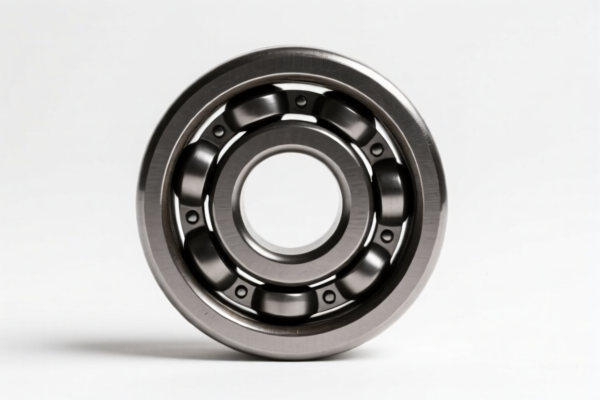
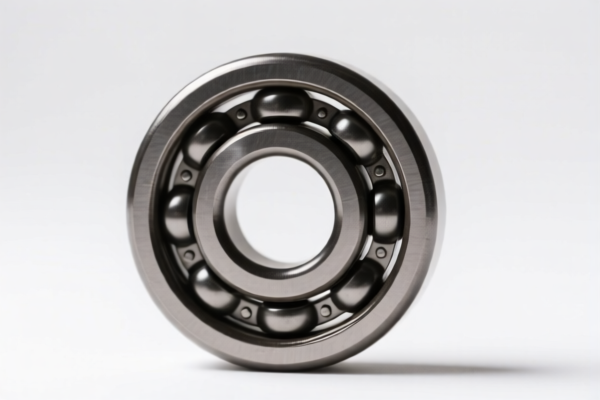
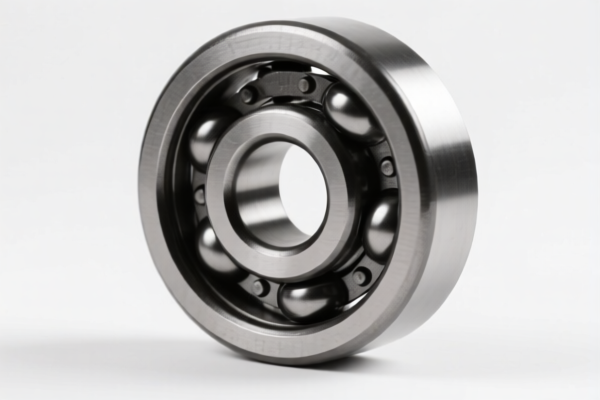
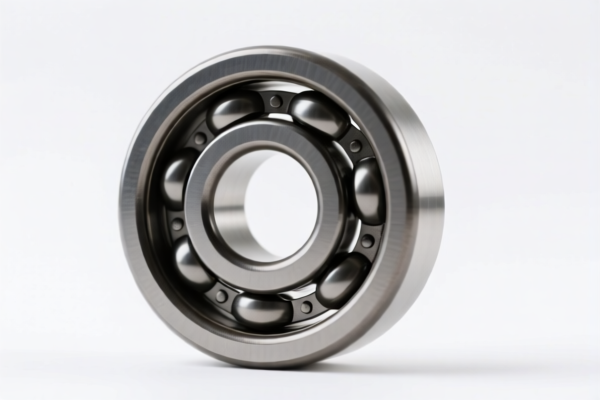
AI Analysis
🛠️ Bearing (Rolling Bearings)
🌐 HS Code Classification & Tariff Guide | 2026 Latest Customs Rules | Professional Clearance Strategy
📌 One Product, Multiple Codes — Why Bearings Are Taxed Differently Based on Classification
Bearings are critical mechanical components used in motors, machinery, vehicles, and industrial equipment. However, their HS code and resulting tariff depend heavily on material, structure, and classification logic — even if they look identical.
⚠️ Key Insight:
- A steel ball bearing may be taxed at 44.0% under 8482.10.50.04
- But if classified as "other iron or steel articles", it can jump to 87.9% under 7326.19.00.80
- Same product, different tax — due to classification!
📦 二、HS Code Classification Breakdown (2026 Updated Tariff Table)
| HS Code | Product Description | Classification Logic | Material/Structure Clue | Tax Rate |
|---|---|---|---|---|
8482.10.50.04 |
Ball bearings, not specified otherwise | Specifically for ball bearings under heading 8482.10 | No material conflict — clearly ball bearing | 44.0% |
8482.10.50.68 |
Other ball bearings (not elsewhere specified) | "Other" category within ball bearing subheading | No specific size/shape, but still ball bearing | 44.0% |
8482.10.50.12 |
Bearings, other (residual / catch-all) | "Other" or "miscellaneous" ball bearing | No clear specification — defaults to residual category | 44.0% |
7326.19.00.80 |
Other iron or steel articles, not elsewhere specified | Treated as general steel product | Implied steel construction, but not explicitly a bearing | 87.9% |
7326.90.86.88 |
Other iron or steel articles, not elsewhere specified | Based on axis/structural feature | May be inferred as “shaft-related” or “rotating part” | 87.9% |
8483.20.40.80 |
Other rolling bearings (not ball bearings) | Non-ball rolling bearings (e.g., roller, needle) | Matches mechanical function, but not ball-type | 39.5% |
🔍 Critical Note:
- Ball bearings (8482.10.50.) → 44.0%
- General steel articles (7326.) → 87.9% — double the tax!
- Non-ball rolling bearings (8483.20.40.) → 39.5% — cheapest option* if applicable
💰 三、2026 Latest Tariff Breakdown (With Full Legal Justification)
✅ Applicable Country: United States (US)
✅ Origin: China (CN)
✅ Effective Date: November 10, 2025 (and onward)
🎯 1. 8482.10.50.04 & 8482.10.50.68 & 8482.10.50.12 — Ball Bearings (All 44.0%)
| Item | Detail |
|---|---|
| Base Duty | 9.0% (ad valorem) |
| Section 301 (USITC) Additional Duty | +25.0% |
| Section 122 (IEEPA) Additional Duty | +10.0% |
| Total Tariff | 44.0% |
| Tax Calculation | CIF Value × 44.0% |
| De Minimis Threshold | ❌ Not applicable (denied) |
| Legal Basis Path | IEEPA:9903.01.25 → IEEPA:9903.01.24 → USITC:8482.10.50.04 → FOOTNOTE:9903.88.01 |
📌 Why This Applies:
- These codes are specifically for ball bearings, and the 301 + IEEPA tariffs apply to Chinese-origin goods. - Even if the bearing is small or unlabeled, if it fits the definition of a ball bearing, this applies.
🎯 2. 7326.19.00.80 & 7326.90.86.88 — Other Iron/Steel Articles (87.9%)
| Item | Detail |
|---|---|
| Base Duty | 2.9% |
| Section 301 (USITC) Additional Duty | +25.0% |
| Section 122 (IEEPA) Additional Duty | +10.0% |
| Steel, Aluminum, Copper Products Additional Duty | +50.0% |
| Total Tariff | 87.9% |
| Tax Calculation | CIF Value × 87.9% |
| De Minimis Threshold | ❌ Not applicable |
| Legal Basis Path | IEEPA:9903.01.25 → IEEPA:9903.01.24 → USITC:7326.19.00.80 → FOOTNOTE:9903.88.01 → 9903.88.01 (Steel Product Add-on) |
📌 Why This Applies:
- If the bearing is not clearly labeled or classified as a "ball bearing", customs may reclassify it as "other iron or steel articles". - This triggers the 50% additional tax on steel products — the highest tier. - Even a small steel bearing can be taxed at 87.9% if misclassified.
🎯 3. 8483.20.40.80 — Other Rolling Bearings (Non-Ball Type) (39.5%)
| Item | Detail |
|---|---|
| Base Duty | 4.5% |
| Section 301 (USITC) Additional Duty | +25.0% |
| Section 122 (IEEPA) Additional Duty | +10.0% |
| Total Tariff | 39.5% |
| Tax Calculation | CIF Value × 39.5% |
| De Minimis Threshold | ❌ Not applicable |
| Legal Basis Path | IEEPA:9903.01.25 → IEEPA:9903.01.24 → USITC:8483.20.40.80 → FOOTNOTE:9903.88.01 |
📌 Why This Applies:
- Applies only if the bearing is not a ball bearing (e.g., roller, needle, tapered). - Lower tax than ball bearings, but only if the product truly fits this category.
🛠️ 四、Customs Clearance Best Practices (Pro Tips to Avoid 87.9% Tax)
✅ 1. Must-Have Documentation (No Exceptions)
| Document | Required? | Why It Matters |
|---|---|---|
| ✅ Product Specification Sheet | ✔️ | Shows type (ball/roller), size, material, function |
| ✅ CAD/Engineering Drawings | ✔️ | Proves internal structure and design |
| ✅ Clear Product Photos (with model number) | ✔️ | Helps customs verify bearing type |
| ✅ Third-Party Test Report (ISO, SAE, etc.) | ✔️ | Supports material and function claims |
| ✅ Commercial Invoice | ✔️ | Must state “Ball Bearing, 30mm Diameter, Steel, for Industrial Motor” |
| ✅ Certificate of Origin (CO) | ✔️ | Required for tariff eligibility |
| ✅ Packing List | ✔️ | Shows quantity, weight, packaging — avoid splitting |
✅ 2.申报技巧(申报口诀)
🔥 “Ball bearing? Say it loud. Steel? Say it clear. Don’t hide — or pay 87.9%!”
| Scenario | Correct HS Code | Wrong Code | Risk |
|---|---|---|---|
| Ball bearing, clearly labeled | 8482.10.50.04 |
7326.19.00.80 |
+43.9% tax! |
| Roller bearing, not ball | 8483.20.40.80 |
8482.10.50.04 |
Underpaid → penalty |
| Unclear bearing, no label | 7326.19.00.80 |
8482.10.50.04 |
87.9% instead of 44% |
| Bearing + shaft + housing | Do NOT split | Split into parts | Each part taxed at 87.9% |
✅ 3. Special Cases & Workarounds
| Situation | Recommended Action |
|---|---|
| OEM Bearings with no brand | Label clearly: “Ball Bearing, 20mm, Chrome Steel, for Electric Motor” |
| Small bearings (<10mm) | Still classify under 8482.10.50 — do not use 7326 |
| Bearings with plastic parts | If still primarily steel, use 8482.10.50 — not 7326 |
| Bearings for aerospace/military | Apply for special use exemption — may reduce or waive tariffs |
| Bearings from Vietnam/Mexico | Can qualify for IEEPA exemption — 0% to 5% |
🌍 五、Global Market Tariff Comparison (2026)
| Country/Region | Recommended HS Code | Duty Rate | Certification | Notes |
|---|---|---|---|---|
| 🇺🇸 USA | 8482.10.50.04 |
44.0% (China) | None | 87.9% if misclassified |
| 🇨🇳 China | 8482.10.50.04 |
5% | CCC | No extra tariffs |
| 🇪🇺 EU | 8482.10.50.04 |
0% (if CE) | CE | No 301/IEEPA |
| 🇦🇺 Australia | 8482.10.50.04 |
5% | RCM | No extra duties |
| 🇯🇵 Japan | 8482.10.50.04 |
0% | PSE | No additional taxes |
📌 Insight:
- Only the US imposes 301 + IEEPA tariffs on Chinese bearings. - China, EU, Japan, Australia have no additional tariffs — ideal for export.
📌 六、Common Mistakes & Real-World Pitfalls (Learn from Others’ Errors)
❌ Mistake 1: Labeling a ball bearing as “steel part” or “metal component”
👉 Result: Customs reclassifies as 7326.19.00.80 → 87.9% tax
❌ Mistake 2: Splitting a bearing + housing + shaft into separate items
👉 Result: Each taxed at 87.9% → Total: 263.7% — insane
❌ Mistake 3: Using “bearing” in invoice but not specifying “ball”
👉 Result: Customs assumes “other steel article” → 44% → 87.9%
❌ Mistake 4: Not providing engineering drawings
👉 Result: Customs can’t verify structure → delay, audit, or penalty
✅ Correct Labeling Example:
“Ball Bearing, 30mm OD, 15mm ID, 10mm Width, Chrome Steel, for Industrial Gearbox, Model B-301510, ISO 9001 Certified”
🎯 七、Final Verdict: Accurate Classification = Big Savings!
🎯 Key Takeaway:
🔹 Ball bearings = 44.0% (OK)
🔹 Steel articles = 87.9% (Danger!)
🔹 Roller bearings = 39.5% (Best if applicable)
🔹 Don’t hide the truth — or pay double!
📌 Pro Tip:
If your bearing is from Vietnam, Mexico, or Thailand, apply for IEEPA exemption — tariff drops to 0%–5%.
📞 Action Step:
Contact a licensed customs broker + submit product photos + request HS Code Pre-Ruling (Advance Ruling)
✅ Avoid surprises. Lock in the lowest tax. Ship with confidence.
📣 Don’t Let Tax Kill Your Profit!
🚀 Your bearing’s fate is in the HS code — choose wisely.
💼 Precision in classification = Profit in the bank.
✨ Professional Clearance Starts with the Right Code!
💼 One misstep → 44% → 87.9% → 263% → Lost Orders.
✅ Be smart. Be accurate. Be ahead.
Customer Reviews
About HS Code Classification
The Harmonized System (HS) is an internationally standardized nomenclature developed by the World Customs Organization (WCO) to classify traded products. Over 200 countries use the HS system as the basis for customs tariffs, trade statistics, and import/export regulations.
Each HS code follows a hierarchical structure:
- Chapter (2 digits) — Broad category of goods (e.g., Chapter 84: Machinery and Mechanical Appliances)
- Heading (4 digits) — More specific grouping within the chapter
- Subheading (6 digits) — Internationally standardized breakdown, used by all WCO member countries
- National subdivisions (8-10 digits) — Country-specific extensions for further classification, such as US HTSUS 10-digit codes
Correct HS code classification is essential for smooth customs clearance, accurate duty payment, and compliance with trade regulations. Misclassification can lead to customs delays, overpayment of duties, or penalties.
When importing from CN to US, the applicable tariff rates may include:
- Most-Favored-Nation (MFN) rate — The standard duty rate applied to WTO members
- General rate — Applied to countries without trade agreements
- Trade remedy duties — Additional tariffs such as Section 301 (anti-dumping), Section 232 (national security), or countervailing duties
The information provided on this page is for reference purposes only. For official classification, please consult with your local customs authority or a licensed customs broker.