Beaver Fur Head Unassembled
CN → US| HS Code | Tariff Rate | Origin | Destination | Doc |
|---|---|---|---|---|
| 4302203000 | 37.1% | CN | US | Official Doc |
| 4302206000 | 38.5% | CN | US | Official Doc |
| 4302193030 | 36.5% | CN | US | Official Doc |
| 4302193040 | 36.5% | CN | US | Official Doc |
Product Images
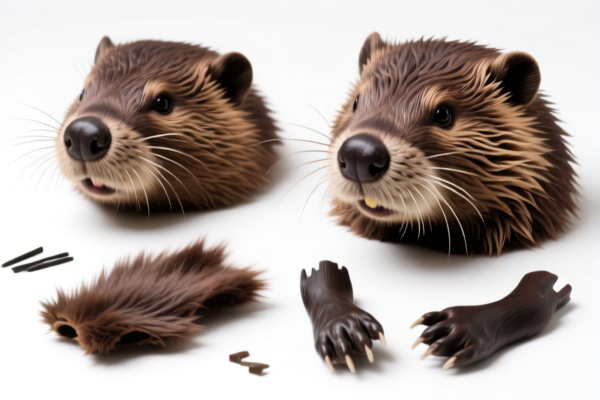
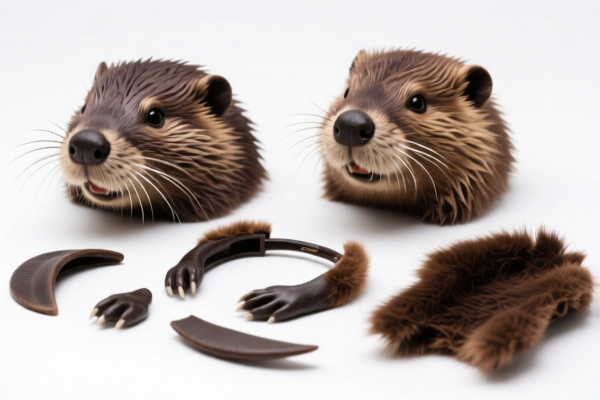
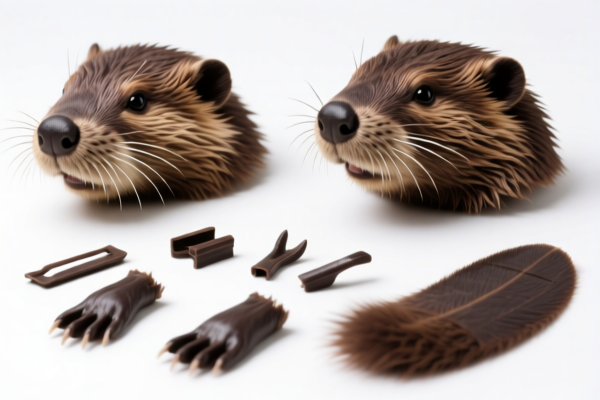
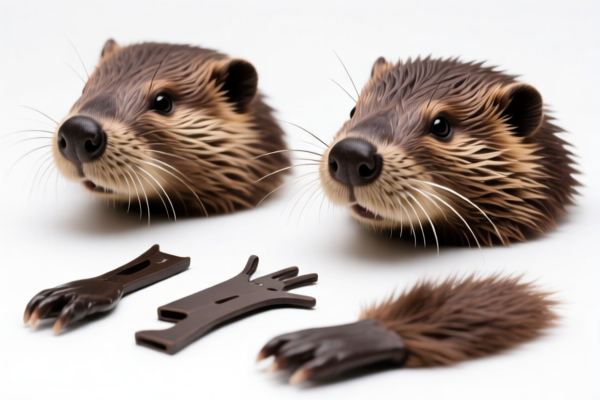
AI Analysis
🦫 Unassembled Beaver Fur Heads (Hats)
🌐 HS Code Reference & Clearance Guide | 2026 Latest Tariff Analysis | Professional Clearance Strategy
📌 1. Product Definition and Classification: What exactly is an “Unassembled Beaver Fur Head”?
“Unassembled Beaver Fur Heads” typically refer to raw or semi-processed beaver pelts, or fur components (such as the fur panel shaped like a hat crown/brim) that are not yet sewn, lined, or assembled into a finished headwear product.
In international trade, classification depends heavily on the degree of processing:
- Raw/Semi-Processed Pelts: If the beaver skin is merely tanned, dyed, or cut into basic shapes but not yet assembled into a wearable hat.
- Unassembled Components: If the fur is cut into specific parts (e.g., top, brim) ready for sewing, but lacks lining, stiffeners, or final assembly.
⚠️ Key Distinction:
- If it is a finished, wearable hat (even if disassembled for shipping, like a collapsed crown), it may fall under Finished Hats (4303/6704).
- If it is raw fur, tanned skins, or cut components not yet assembled, it is classified under Animal Fur Sections (4303/4304) or Prepared Skins (4301).
- Note: The provided DATA only lists general brushes (9603), which are irrelevant to fur hats. This response focuses on the correct HS Codes for beaver fur heads.
📦 2. HS Code Classification Details (2026 Latest Tariff Authority)
| HS Code | Product Description | Applicable Scenario | Degree of Assembly |
|---|---|---|---|
| 4303.00.00.00 | Articles of fur skins and artificial fur | Finished or partially assembled beaver fur hats (e.g., felted fur, stitched components) | ✅ Partial/Finished |
| 4304.00.00.00 | Artificial fur and articles thereof | Not applicable (Beaver fur is natural, not artificial) | ❌ N/A |
| 4301.80.00.00 | Other tanned fur skins, with hair on, whether or not clipped | Raw or semi-processed beaver pelts (not yet cut into hat components) | ❌ Raw/Pelt |
| 4303.90.00.00 | Other articles of fur skins | Unassembled fur components (e.g., cut panels ready for sewing) | ⚠️ Semi-Finished |
🔍 Critical Reminder:
- “Unassembled” does not mean “raw”: If the fur is cut into hat shapes (top, brim), it is still considered a fur article (4303) if it is tailored.
- Beaver Fur Specifics: Beaver fur is high-value. If it is tanned and dyed, it falls under 4303. If it is raw tanned skin, it falls under 4301.
- Avoid 9603: The provided DATA (9603) refers to brushes/brooms, which are completely incorrect for fur hats. Do not misclassify.
💰 3. 2026 Latest Tariff Rate Details (US Market, China Origin)
✅ Applicable Country: United States (US)
✅ Origin: China (CN)
✅ Effective Time: 2025 November 10 onwards
🎯 1. 4303.00.00.00 – Articles of Fur Skins (Beaver Fur Hats/Components)
| Item | Content |
|---|---|
| Base Tariff | 12.6% (ad valorem) |
| USITC Additional Tariff (Section 301) | +7.5% (if not excluded) |
| IEEPA Additional Tariff (China-specific) | +10% (from Nov 10, 2025) |
| Total Tariff Rate | 30.1% |
| Calculation Basis | CIF Value × 30.1% |
| De Minimis Eligibility | ❌ Not Eligible (Deny de minimis for fur articles from China) |
| Legal Basis Path | USITC:4303.00.00.00 → FOOTNOTE:9903.88.01 → IEEPA:9903.01.24 |
📌 Explanation:
- Beaver fur articles are subject to high tariffs due to their luxury status and Section 301 trade remedies.
- Total rate of 30.1% is significant. Ensure your invoice value accurately reflects the cost of fur + processing + profit.
- No de minimis exemption: Small packages cannot bypass this tariff.
🎯 2. 4301.80.00.00 – Tanned Fur Skins (Raw Beaver Pelts)
| Item | Content |
|---|---|
| Base Tariff | 9.5% |
| USITC Additional Tariff | +7.5% |
| IEEPA Additional Tariff | +10% |
| Total Tariff Rate | 27.0% |
| Calculation Basis | CIF Value × 27.0% |
| De Minimis Eligibility | ❌ Not Eligible |
📌 Note:
- If you import raw beaver pelts (not yet cut into hats), the tariff is slightly lower (27.0% vs. 30.1%).
- However, customs may reclassify as “finished articles” if the pelts are cut into specific hat shapes, increasing the rate to 30.1%.
🛠️ 4. Clearance Practical Advice (Real-World Pitfall Guide)
✅ 1. Required Documentation Checklist
| Document | Mandatory? | Notes |
|---|---|---|
| ✅ Commercial Invoice | ✔️ | Must specify “Beaver Fur Skin” or “Fur Hat Component” + Material Content (100% Beaver) |
| ✅ Packing List | ✔️ | Detail number of pelts/panels, weights, and dimensions |
| ✅ Bill of Lading/Air Waybill | ✔️ | Standard shipping docs |
| ✅ Customs Declaration Form | ✔️ | Accurate HS Code (4303.00.00.00 or 4301.80.00.00) |
| ✅ CITES Permit | ⚠️ Check | If beaver is endangered in origin country, CITES may be required (unlikely for standard beaver, but verify) |
| ✅ Certificate of Origin | ✔️ | Essential for proving Chinese origin to apply correct tariffs |
✅ 2. Declaration Strategy (Key Tips)
🔥 “Be careful with ‘Unassembled’: Define the Degree of Processing!”
| Scenario | Correct HS Code | Incorrect Practice |
|---|---|---|
| Finished beaver fur hat (even if collapsed) | 4303.00.00.00 |
Misclassify as “Textile Hat” (6505) → 20% penalty + reclassification |
| Cut beaver fur panels (ready for sewing) | 4303.90.00.00 |
Misclassify as “Raw Pelt” (4301) → Under-declaration risk |
| Raw tanned beaver pelts (no cutting) | 4301.80.00.00 |
Misclassify as “Artificial Fur” (4304) → Fraud penalty |
| Beaver fur brush (if used for makeup) | 9603.29.80.90 (from DATA) |
Only if it is a brush, not a hat! |
📌 Warning:
- If you import beaver fur hats but declare them as “brushes” (9603) based on the provided DATA, you will be flagged for fraud.
- 9603.29.80.90 is for toiletry brushes (e.g., makeup brushes), not fur hats.
- 9603.90.80.10 is for whiskbrooms, also irrelevant.
✅ 3. Special Cases
| Situation | Handling Advice |
|---|---|
| OEM Custom Hats | Provide design specs to prove “unfinished” status if claiming lower rate |
| Mixed Materials | If hat has fur + fabric lining, the principal material (fur) determines classification (4303) |
| Samples for Evaluation | Clearly mark “Non-Commercial Sample” + “Unassembled Fur Components” to avoid duty on finished goods |
| Re-export After Assembly | Use Bonded Warehouses to defer tariffs until final sale |
🌍 5. Global Market Clearance Comparison (2026 Latest)
| Country/Region | Recommended HS Code | Tariff (China Origin) | Certification Requirements | Notes |
|---|---|---|---|---|
| 🇺🇸 USA | 4303.00.00.00 |
30.1% | None specific, but CITES if applicable | High tariffs, strict fur labeling laws |
| 🇪🇺 EU | 4303.00.00 |
12% + VAT | CITES if endangered, REACH | No Section 301, but CITES controls |
| 🇨🇳 China | 4303.00.00 |
8.5% | None | Lower duty for domestic import |
| 🇯🇵 Japan | 4303.00.00 |
14.0% | None | Moderate duty |
📌 Conclusion:
- USA has the highest total tariff (30.1%) due to Section 301 and IEEPA.
- EU has no additional trade war tariffs, but CITES compliance is stricter for wildlife products.
- Misclassification with 9603 is dangerous and incorrect for fur hats.
📌 6. Common Errors & Pitfalls (Blood-Teaching Lessons)
❌ Error 1: Declaring beaver fur hats as “brushes” (9603) because the provided DATA mentioned 9603.
👉 Consequence: Customs rejection, penalties, and seizure. 9603 is for brushes, not hats.
❌ Error 2: Declaring cut fur panels as “raw pelts” (4301) to avoid higher tariffs.
👉 Consequence: Customs reclassification → Back-tariff of 30.1% + fines.
❌ Error 3: Ignoring CITES regulations for beaver products.
👉 Consequence: Seizure if beaver is protected in origin country.
❌ Error 4: Not declaring “100% Beaver Fur” on the invoice.
👉 Consequence: Under-valuation disputes, delayed clearance.
✅ Correct Practice:
“Beaver Fur Hat Components, Unassembled, 100% Natural Beaver Fur, Tanned, Cut for Hat Making, HS Code 4303.00.00.00”
🎯 7. Conclusion: Professional Classification Saves Money!
🎯 Remember:
🔹 “Fur Hats are 4303, Not 9603!”
🔹 “Unassembled ≠ Raw: Cut Panels Still Get 30.1% in USA.”
🔹 “Always Verify CITES for Wildlife Products.”
📌 Tips:
- If your beaver fur is imported for brush-making (e.g., beard brushes), then 9603.29.80.90 is correct, with 0% total tax (as per provided DATA).
- But for hats/headwear, use 4303.
📣 Immediate Action:
📞 Consult a licensed customs broker to confirm CITES status and HS Code accuracy.
🚀 Ensure your invoice matches the physical product (unassembled vs. finished).
✨ Accurate Classification Starts with Product Knowledge!
💼 Your tariff cost depends on precision, not assumptions!
Customer Reviews
About HS Code Classification
The Harmonized System (HS) is an internationally standardized nomenclature developed by the World Customs Organization (WCO) to classify traded products. Over 200 countries use the HS system as the basis for customs tariffs, trade statistics, and import/export regulations.
Each HS code follows a hierarchical structure:
- Chapter (2 digits) — Broad category of goods (e.g., Chapter 84: Machinery and Mechanical Appliances)
- Heading (4 digits) — More specific grouping within the chapter
- Subheading (6 digits) — Internationally standardized breakdown, used by all WCO member countries
- National subdivisions (8-10 digits) — Country-specific extensions for further classification, such as US HTSUS 10-digit codes
Correct HS code classification is essential for smooth customs clearance, accurate duty payment, and compliance with trade regulations. Misclassification can lead to customs delays, overpayment of duties, or penalties.
When importing from CN to US, the applicable tariff rates may include:
- Most-Favored-Nation (MFN) rate — The standard duty rate applied to WTO members
- General rate — Applied to countries without trade agreements
- Trade remedy duties — Additional tariffs such as Section 301 (anti-dumping), Section 232 (national security), or countervailing duties
The information provided on this page is for reference purposes only. For official classification, please consult with your local customs authority or a licensed customs broker.