Beech Rough Wood
CN → US| HS Code | Tariff Rate | Origin | Destination | Doc |
|---|---|---|---|---|
| 4403930100 | 35.0% | CN | US | Official Doc |
| 4403940100 | 35.0% | CN | US | Official Doc |
| 4407920000 | 35.0% | CN | US | Official Doc |
| 4407990295 | 35.0% | CN | US | Official Doc |
| 4408900197 | 35.0% | CN | US | Official Doc |
| 4408900181 | 35.0% | CN | US | Official Doc |
Product Images
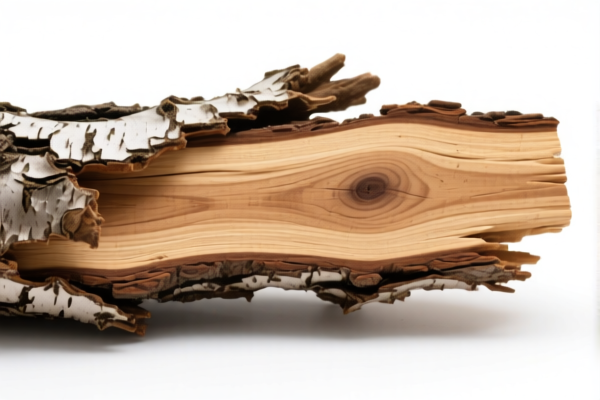
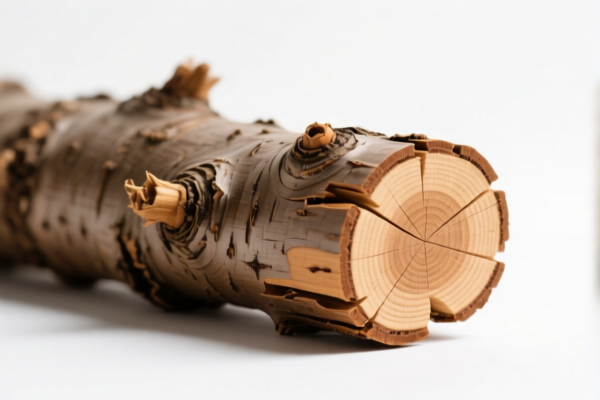
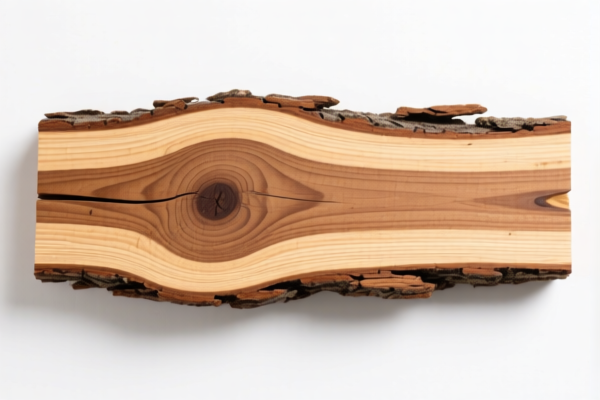
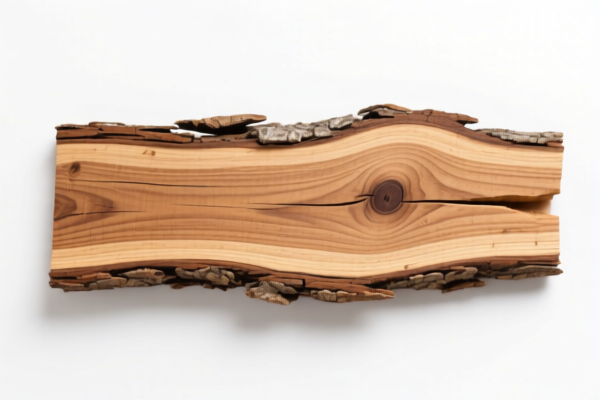
AI Analysis
🪵 Beech Rough Wood (Unprocessed Beech Logs/ Timber)
🌐 HS Code Reference & Customs Clearance Guide | 2026 Latest Tariff Analysis | Professional Entry Strategy
📌 I. Product Definition & Classification: Do You Really Understand "Beech Rough Wood"?
Beech rough wood refers to beech timber (Fagus spp.) that has been felled and debarked but remains in its natural state or has only been roughly squared. It is the raw material for further processing (sawing, veneering, furniture making). In international trade, classification hinges on two critical factors: 1. Smallest Cross-Sectional Dimension: Is it ≥15 cm or <15 cm? 2. Processing Stage: Is it truly "in the rough" or has it been partially processed (e.g., sawn >6mm)?
⚠️ Key Distinction Point:
- If the wood is simply debarked/squared but not sawn to a specific thickness >6mm or planed extensively → It falls under Chapter 44 (Wood in the Rough).
- If the wood has been sawn, chipped, sliced, or peeled with a thickness exceeding 6 mm → It moves to Chapter 44 (Sawn Wood) or Veneer Sheets depending on exact dimensions.
- Critical Threshold: The 15 cm dimension is the split point for "Rough Wood" sub-categories.
📦 II. HS Code Classification Details (2026 Latest Tariff Authority Comparison)
Based on your specific query for "Beech Rough Wood" and the provided data, here are the exact HS Codes and descriptions relevant to unprocessed or minimally processed beech logs.
| HS Code | Product Description | Application Scenario | Key Classification Criteria |
|---|---|---|---|
4403.93.01.00 |
Wood in the rough: Beech (Fagus spp.), smallest cross-sectional dimension 15 cm or more | Large logs, structural timber, veneer logs | ✅ Raw/Unprocessed |
4403.94.01.00 |
Wood in the rough: Beech (Fagus spp.), other (dimension <15 cm) | Smaller logs, industrial rounds, firewood logs | ✅ Raw/Unprocessed |
4407.92.00.00 |
Sawn wood >6mm: Beech (Fagus spp.), other | Planed, sanded, or end-jointed planks/lumber | ❌ Processed (Do NOT use if raw) |
4408.90.01.81 |
Veneer sheets ≤6mm: Oak (Quercus spp.) | Note: This is Oak, not Beech. Included for comparison only. | ❌ Irrelevant Material |
🔍 Critical Reminder:
- The user asked for "Beech Rough Wood". Therefore,4407.92.00.00(Sawn Beech) and4408.90.01.81(Oak Veneer) from the provided data are NOT the primary classification for "Rough Wood."
- Primary Classification:4403.93.01.00or4403.94.01.00.
- Why? "Rough wood" implies it hasn't been sawn into standard lumber thicknesses (>6mm) or sliced into veneers. It is the "log" stage.
💰 III. 2026 Latest Tariff Rate Breakdown (Detailed Tax Clauses)
✅ Applicable Country: United States (US)
✅ Origin: China (CN) (Assumed based on typical "25% additional" context in provided data)
✅ Effective Date: Current 2026 Tariff Structure
🎯 1. 4403.93.01.00 —— Beech Rough Wood (≥15 cm dimension)
| Item | Content |
|---|---|
| Product | Wood in the rough, Beech, ≥15 cm cross-section |
| Base Tariff (MFN) | 0.0% |
| Additional Tariff (Section 301/USITC) | +25.0% |
| Total Tariff Rate | 25.0% |
| Tax Calculation | CIF Value × 25.0% |
| Legal Basis Path | USITC: 4403.93.01.00 → FOOTNOTE: 9903.88.01 (Typical for Chinese Wood Products) |
📌 Explanation:
- The base tariff is 0%, meaning there is no standard WTO duty.
- The 25% additional tariff is the crucial cost driver. This is typically imposed under Section 301 of the Trade Act against Chinese-origin goods.
- No De Minimis: This amount is significant; small shipments do not qualify for exemption.
🎯 2. 4403.94.01.00 —— Beech Rough Wood (Other, <15 cm dimension)
| Item | Content |
|---|---|
| Product | Wood in the rough, Beech, <15 cm cross-section |
| Base Tariff (MFN) | 0.0% |
| Additional Tariff (Section 301/USITC) | +25.0% |
| Total Tariff Rate | 25.0% |
| Tax Calculation | CIF Value × 25.0% |
| Legal Basis Path | USITC: 4403.94.01.00 → FOOTNOTE: 9903.88.01 |
📌 Note:
- Identical tax treatment to4403.93.01.00.
- The distinction is purely physical (size), not fiscal.
⚠️ What About the Other Codes in Your Data?
4407.92.00.00(Sawn Beech >6mm): Also 25.0% total tax. If your "rough wood" is actually sawn lumber, use this.4408.90.01.97(Other Non-Coniferous Veneer ≤6mm): 0.0% total tax. DO NOT USE unless it is non-coniferous and specifically veneer sheets, and even then, verify if it's Beech. Note: The provided data shows4408.90.01.81for Oak (25%), but4408.90.01.97for "Other" at 0%. If Beech is considered "Other" in this specific 8-digit subheading, it MIGHT be 0%. HOWEVER, Beech is usually explicitly listed under 4403.92 or 4407.92. Please verify with a customs broker if Beech falls under "Other" in 4408.90.01.97. Usually, Beech has its own specific heading.
🔍 Verification Warning:
- In many tariff schedules, Beech is explicitly named in 4407.92 (Sawn) and 4403.93/94 (Rough).
- If the code4408.90.01.97("Other") does not explicitly exclude Beech, and Beech is not listed elsewhere in that 8-digit slot, it might apply. But standard practice lists Beech separately. Stick to 4403.93/94 for "Rough Wood".
🛠️ IV. Customs Clearance Practical Advice (Real-World Pitfall Guide)
✅ 1. Required Documentation Checklist
| Document | Must Provide | Explanation |
|---|---|---|
| ✅ Commercial Invoice | ✔️ | Must state: "Beech Wood (Fagus spp.), Rough/Squared, Origin: China" |
| ✅ Packing List | ✔️ | Detail dimensions (smallest cross-section) to prove ≥15cm or <15cm |
| ✅ Phytosanitary Certificate | ✔️ | Mandatory for raw wood. Must state no pests/quarantine pathogens. |
| ✅ Fumigation Certificate | ✔️ | Often required alongside Phyto cert for wood packaging/materials. |
| ✅ Bill of Lading/Air Waybill | ✔️ | Confirm weight and quantity. |
| ✅ Species Declaration | ✔️ | Scientific name Fagus spp. must be included. |
✅ 2. Declaration Tips (Key Mantras)
🔥 "Measure Cross-Section, Declare Species, Certify Phyto!"
| Scenario | Correct Declaration | Error to Avoid |
|---|---|---|
| Raw Logs ≥15cm | 4403.93.01.00 |
Misdeclaring as "Lumber" (4407) if not sawn to thickness. |
| Raw Logs <15cm | 4403.94.01.00 |
Not providing phyto cert → Detention/Rejection. |
| Sawn Planks >6mm | 4407.92.00.00 |
Misdeclaring as "Rough Wood" to avoid taxes (Fraud Risk). |
| Veneer Sheets ≤6mm | Check 4408.90.01.97 (if applicable) or specific Beech code |
Confusing "Rough" with "Veneer". |
✅ 3. Special Situations
| Situation | Handling Advice |
|---|---|
| Mixed Species Load | If Beech is mixed with other woods, the entire shipment may be re-classified to the highest tariff or rejected. Separate shipments! |
| Bark Status | "Rough wood" can be stripped or unstripped. Just ensure it hasn't been planed or sanded beyond "rough squaring." |
| Wood Packaging Materials | If the wood is inside pallets, pallets must be ISPM 15 compliant. The cargo wood itself needs a Phyto cert. |
🌍 V. Global Market Customs Comparison (2026 Latest)
| Country/Region | Recommended HS Code | Tariff Rate | Certification Required | Notes |
|---|---|---|---|---|
| 🇺🇸 USA | 4403.93.01.00 / 4403.94.01.00 |
25% | Phyto Cert, Fumigation | High additional tax for CN origin. |
| 🇪🇺 EU | 4403.93 / 4403.94 |
0-10%* | Phyto Cert, FSC/PEFC | Varies by country; strict on invasive species. |
| 🇨🇳 China | 4403.93 / 4403.94 |
0%* | Import License | Low tariff for raw material import. |
| 🇯🇵 Japan | 4403.93 / 4403.94 |
3-5% | Phyto Cert | Strict pest control. |
📌 Conclusion:
- The US Market imposes a steep 25% additional tariff on Chinese Beech Rough Wood.
- No De Minimis exemption applies.
- Phytosanitary compliance is as important as the tariff itself; failure here leads to immediate rejection.
📌 VI. Common Mistakes & Pitfalls Guide (Lessons Learned)
❌ Mistake 1: Measuring only the length, ignoring the smallest cross-sectional dimension.
👉 Consequence: Wrong HS Code (4403.93 vs 4403.94). While tax is same (25%), wrong code causes customs delays.
❌ Mistake 2: Calling it "Lumber" or "Sawn Wood" when it is "Rough Logs".
👉 Consequence: Incorrect classification. If it's not sawn >6mm, it's not 4407. Misdeclaration can lead to audits.
❌ Mistake 3: Missing Phytosanitary Certificate.
👉 Consequence: Shipment held in port for weeks, fumigated at owner's expense, or returned/destructed.
❌ Mistake 4: Assuming "Other" codes (4408.90.01.97) apply to Beech without verification.
👉 Consequence: Beech is often specifically listed. If you misclassify, you risk penalties for underpayment or overpayment.
✅ Correct Practice:
"Beech Wood (Fagus spp.), Rough, Unplaned, Cross-section ≥15cm, Origin: China, Phyto Certified"
🎯 VII. Conclusion: Precise Classification Saves Money & Time!
🎯 Remember the Mantra:
🔹 "Rough Wood: Measure Cross-Section, Check 15cm Line."
🔹 "US Tariff: 25% Additional on Beech, No Exemptions."
🔹 "Phyto Cert is King: No Cert, No Entry."
📌 Pro Tip:
If you are exporting to the US, pre-clearance with a licensed customs broker is essential. Provide them with photos of the cross-sections and the Phytosanitary Certificate draft before shipment to ensure HS Code 4403.93.01.00 or 4403.94.01.00 is accepted.
📣 Take Action Now:
📞 Contact your customs broker + Send Photos of Wood Ends + Verify Phyto Cert
🚀 Ensure Smooth Clearance, Avoid 25% Surprises, Protect Your Supply Chain!
✨ Professional Clearance Starts with Accurate Classification!
💼 Every Percent Counts in Wood Trade!
Customer Reviews
About HS Code Classification
The Harmonized System (HS) is an internationally standardized nomenclature developed by the World Customs Organization (WCO) to classify traded products. Over 200 countries use the HS system as the basis for customs tariffs, trade statistics, and import/export regulations.
Each HS code follows a hierarchical structure:
- Chapter (2 digits) — Broad category of goods (e.g., Chapter 84: Machinery and Mechanical Appliances)
- Heading (4 digits) — More specific grouping within the chapter
- Subheading (6 digits) — Internationally standardized breakdown, used by all WCO member countries
- National subdivisions (8-10 digits) — Country-specific extensions for further classification, such as US HTSUS 10-digit codes
Correct HS code classification is essential for smooth customs clearance, accurate duty payment, and compliance with trade regulations. Misclassification can lead to customs delays, overpayment of duties, or penalties.
When importing from CN to US, the applicable tariff rates may include:
- Most-Favored-Nation (MFN) rate — The standard duty rate applied to WTO members
- General rate — Applied to countries without trade agreements
- Trade remedy duties — Additional tariffs such as Section 301 (anti-dumping), Section 232 (national security), or countervailing duties
The information provided on this page is for reference purposes only. For official classification, please consult with your local customs authority or a licensed customs broker.