Beech Wood, 15cm+ Cross Section
CN → US| HS Code | Tariff Rate | Origin | Destination | Doc |
|---|---|---|---|---|
| 4407920000 | 35.0% | CN | US | Official Doc |
| 4407990295 | 35.0% | CN | US | Official Doc |
Product Images
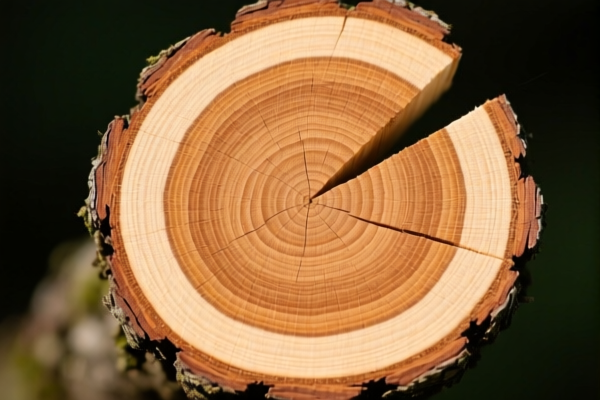
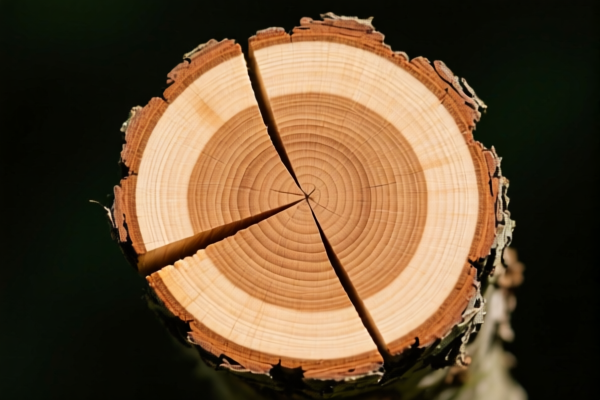
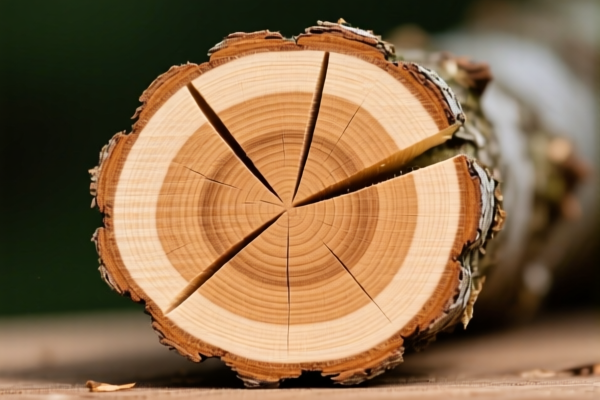

AI Analysis
🌳 Beech Wood (Sawn/Chipped > 6mm Thickness, 15cm+ Cross Section)
🌐 HS Code Reference & Customs Clearance Guide | 2026 Latest Tariff Analysis | Professional Clearance Strategy
📌 I. Product Definition & Classification: Do You Really Understand "Beech Wood"?
Beech wood (Fagus spp.) is a broadleaf hardwood prized for its hardness, density, and fine grain, widely used in furniture, flooring, tool handles, and cabinetry. In international trade, it falls under Chapter 44 (Wood and Articles of Wood), specifically categorized by processing method and thickness.
Key Distinction Points: * Processing Method: "Sawn or chipped lengthwise, sliced, or peeled" refers to logs or billets cut into planks, boards, or strips along the grain. * Thickness Threshold: The critical cutoff is 6 mm. * > 6 mm: Classified as Sawn Wood (Heading 4407). * ≤ 6 mm: Classified as Wood veneer sheets (Heading 4408) or other wood products. * Species: Must be specifically Beech (Fagus spp.) to qualify for the specific sub-heading. If it is another non-coniferous wood (e.g., Oak, Maple), it falls under "Other."
⚠️ Critical Note:
- If the wood is planed, sanded, or end-jointed, it still remains in 4407 as long as it exceeds 6mm thickness.
- If the cross-section is small (e.g., dowels, strips < specific dimensions), it might fall under different headings (e.g., 4409 for continuously shaped), but for standard "beams/planks/lumber" with significant cross-section (like 15cm+), 4407 is correct.
📦 II. HS Code Classification Details (2026 Latest Tariff Authority Cross-Reference)
Based on the provided data, the correct HS Codes for Beech Wood (thickness > 6mm) are:
| HS Code | Product Description | Specific Material | Applicable Scenario |
|---|---|---|---|
4407.92.00.00 |
Sawn wood, thickness > 6mm: Of Beech (Fagus spp.) | ✅ Beech | Standard beech lumber, planks, beams, raw material for furniture/flooring |
4407.99.02.95 |
Sawn wood, thickness > 6mm: Other Other nonconiferous | ❌ Non-Beech | DO NOT USE for Beech. Used for Oak, Maple, Birch, etc. |
🔍 Important Clarification:
- Your product is Beech. Therefore, ONLY4407.92.00.00is correct.
-4407.99.02.95is for other non-coniferous woods (not Beech). Misclassifying Beech here is a common error that can lead to customs queries or penalties.
- Both codes have identical tax treatment in this dataset, but correct species identification is mandatory for compliance.
💰 III. 2026 Latest Tariff Rate Breakdown (Detailed Tax Clauses)
✅ Applicable Country: United States (US)
✅ Origin: China (CN) (Implied by tax structure "Add-on Tariff")
✅ Effective Time: As per current USITC/IEEPA regulations
🎯 1. 4407.92.00.00 — Beech Wood (Sawn/Chipped > 6mm)
| Item | Detail |
|---|---|
| Basic Tariff Rate | 0.0% (Most Favored Nation / General Rate) |
| Section 301 Additional Tariff | +25.0% |
| Total Tax Rate | 25.0% |
| Tax Calculation | CIF Value × 25% |
| De Minimis Exemption | ❌ Not Applicable (Section 301 goods generally do not qualify for de minimis) |
| Legal Basis Path | USITC:4407.92.00.00 → SECTION 301 FOOTNOTE: 9903.01.01 (or relevant footnote for wood products) |
📌 Explanation of Tax Clauses:
- "Basic Tariff: 0.0%": The base MFN duty for sawn wood of beech is zero. This reflects the US reliance on imported hardwoods.
- "Add-on Tariff: 25.0%": This is the Section 301 tariff imposed on Chinese-origin goods. It is a punitive additional duty.
- Total 25%: This is a high-cost import. You must budget for this 25% on top of the CIF value (Cost + Insurance + Freight).
- No Exemptions: Unlike some tech products, wood products often do not qualify for the "exclusion list" anymore. Check latest USTR lists, but generally, beech lumber is fully taxable.
🛠️ IV. Customs Clearance Practical Advice (Real-World Pitfall Guide)
✅ 1. Documentation Checklist (Mandatory)
| Document | Required | Notes |
|---|---|---|
| Commercial Invoice | ✔️ | Must clearly state: "Sawn Beech Wood, Fagus Spp., Thickness > 6mm" |
| Packing List | ✔️ | Detail dimensions, volume (CBM), weight, and number of pieces |
| Certificate of Origin | ✔️ | Crucial: Must certify Chinese origin. If origin is EU/US, tax may be 0%. |
| Fumigation Certificate | ✔️ | ISPM 15 Required: All wood packaging and raw wood must be heat-treated or fumigated to prevent pests |
| Phytosanitary Certificate | ✔️ | Issued by the exporting country’s plant protection agency |
| Product Specification | ✔️ | Include moisture content, grade (A/B/C), and exact species (Fagus sylvatica or Fagus grandifolia) |
✅ 2. Declaration Tips (Key Mnemonics)
🔥 “Species First, Thickness Clear, Fumigation Mandatory, Origin Key!”
| Scenario | Correct Declaration | Wrong Practice |
|---|---|---|
| Standard Beech Planks | 4407.92.00.00 + "Sawn Beech Wood" |
Calling it "Wood Parts" → Misclassification |
| Beech Veneer (< 6mm) | 4408.10.00.00 (Different HS!) |
Using 4407 → Delayed clearance |
| Wood Packaging (Pallets) | Separate HS Code (e.g., 4415.20.00.00) |
Mixing with cargo → Violation of ISPM 15 |
| Origin: USA/EU | File for Exclusion (if applicable) | Paying 25% unnecessarily |
✅ 3. Special Handling for Beech
| Issue | Handling Advice |
|---|---|
| Moisture Content | US customs may check for moisture. High moisture can lead to mold claims or rejection. Ensure MC is within contract specs (usually 8-12%). |
| Grade Dispute | Bech wood is graded (Common, Select, etc.). Ensure commercial invoice matches the physical grade to avoid "Misdescription" penalties. |
| End-Jointed Wood | Even if end-jointed, if >6mm, it stays in 4407. Do not misclassify as "Wooden Articles" (4421). |
| Phytosanitary | Strict Enforcement: Bech is susceptible to pests. No Phytosanitary Certificate = Rejection/Deportation. |
🌍 V. Global Market Clearance Comparison (2026)
| Country/Region | Recommended HS Code | Tariff (CN Origin) | Key Requirements | Notes |
|---|---|---|---|---|
| 🇺🇸 USA | 4407.92.00.00 |
25% (Section 301) | ISPM 15, Phytosanitary | High tariff; consider origin shifting |
| 🇨🇳 China | 4407.92.00.00 |
0% - 5% (varies) | CCC (if processed), Import License | Low tariff for import into China |
| 🇪🇺 EU | 4407.92.00 |
0% (FPA) | EORI, ISPM 15 | No anti-dumping on raw beech |
| 🇬🇧 UK | 4407.92.00 |
0% | UKCA, ISPM 15 | Post-Brexit rules apply |
📌 Conclusion:
- USA is the most costly market due to the 25% Section 301 tariff.
- Phytosanitary compliance is globally critical for all wood products.
📌 VI. Common Errors & Pitfalls (Lessons Learned)
❌ Error 1: Misidentifying Beech as "Other Non-Coniferous" (4407.99)
👉 Consequence: While tax is same, it triggers a customs audit for species verification. Delays!
❌ Error 2: Omitting "Thickness > 6mm" in description
👉 Consequence: Customs cannot determine if it’s sawn wood (4407) or veneer (4408). Hold for inspection.
❌ Error 3: Lack of ISPM 15 Mark on Pallets/Blocks
👉 Consequence: Entire shipment rejected or re-exported at your cost.
❌ Error 4: Not declaring Chinese Origin on Invoice
👉 Consequence: Cannot apply for any potential exemptions; may face higher duty rates if deemed from a non-MFN country.
✅ Correct Practice:
"Sawn Beech Wood (Fagus Spp.), Thickness 25mm, Grade A, Heat-Treated per ISPM 15, Origin: China"
🎯 VII. Conclusion: Professional Declaration, Cost Control, Risk Mitigation
🎯 Remember the Mnemonic:
🔹 "Beech is 4407.92, 25% Tariff in US, Phytosanitary is a Must, Misclassification Costs a Bust!"
🔹 "Thickness >6mm is the Line, Below it goes to Veneer, Don't Confuse the Two, or Customs Will Sue You!"
📌 Pro Tip:
If you are importing into the USA, consider:
1. Pre-Ruling: Apply for a Binding Ruling from CBP to confirm 4407.92.00.00 classification.
2. Supply Chain Diversification: If possible, source Beech from Vietnam, Poland, or Romania to avoid the 25% Section 301 tariff.
3. Fumigation Proof: Keep digital copies of ISPM 15 stamps and certificates readily available for CBP officers.
📣 Immediate Action:
📞 Consult with a licensed customs broker + Provide Phytosanitary Certs + Verify Origin Documentation
🚀 Ensure smooth clearance, avoid demurrage fees, and protect your margins!
✨ Professional clearance starts with precise classification!
💼 Every percentage point of tax matters in global trade!
Customer Reviews
About HS Code Classification
The Harmonized System (HS) is an internationally standardized nomenclature developed by the World Customs Organization (WCO) to classify traded products. Over 200 countries use the HS system as the basis for customs tariffs, trade statistics, and import/export regulations.
Each HS code follows a hierarchical structure:
- Chapter (2 digits) — Broad category of goods (e.g., Chapter 84: Machinery and Mechanical Appliances)
- Heading (4 digits) — More specific grouping within the chapter
- Subheading (6 digits) — Internationally standardized breakdown, used by all WCO member countries
- National subdivisions (8-10 digits) — Country-specific extensions for further classification, such as US HTSUS 10-digit codes
Correct HS code classification is essential for smooth customs clearance, accurate duty payment, and compliance with trade regulations. Misclassification can lead to customs delays, overpayment of duties, or penalties.
When importing from CN to US, the applicable tariff rates may include:
- Most-Favored-Nation (MFN) rate — The standard duty rate applied to WTO members
- General rate — Applied to countries without trade agreements
- Trade remedy duties — Additional tariffs such as Section 301 (anti-dumping), Section 232 (national security), or countervailing duties
The information provided on this page is for reference purposes only. For official classification, please consult with your local customs authority or a licensed customs broker.