Beech Wood (Coarsely Bark Stripped)
CN → US| HS Code | Tariff Rate | Origin | Destination | Doc |
|---|---|---|---|---|
| 4403940100 | 35.0% | CN | US | Official Doc |
| 4403930100 | 35.0% | CN | US | Official Doc |
| 4403940100 | 35.0% | CN | US | Official Doc |
| 4403930100 | 35.0% | CN | US | Official Doc |
| 4403940100 | 35.0% | CN | US | Official Doc |
Product Images
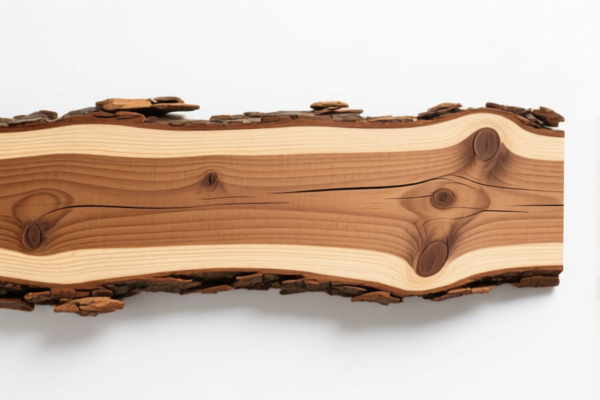
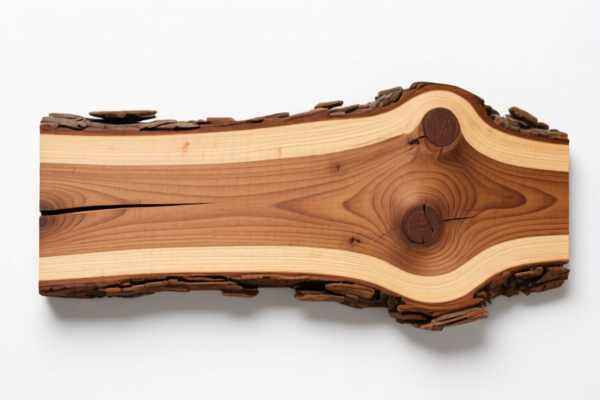
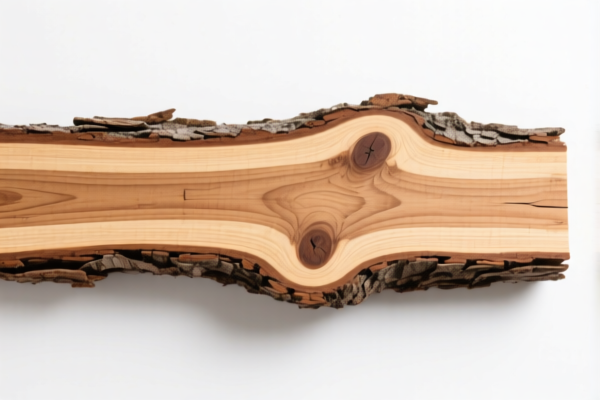
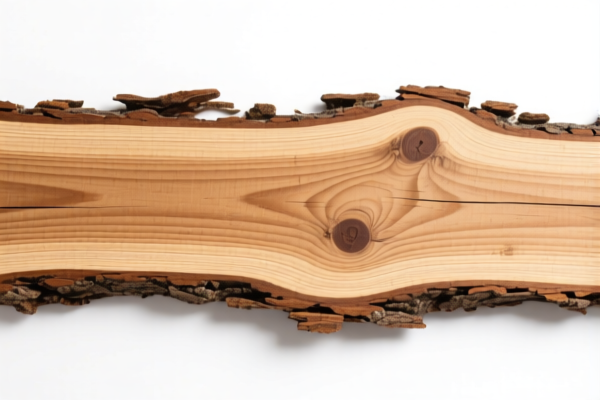
AI Analysis
🪵 Beech Wood (Coarsely Bark Stripped) | Rough Timber Classification & US Customs Strategy
🌐 HS Code Reference & Customs Clearance Guide | 2026 Latest Tariff Analysis | Professional Clearance Strategy
📌 I. Product Definition & Classification: What Exactly is "Rough Beech Wood"?
Beech wood, scientifically classified under the genus Fagus, is a hardwood widely used in furniture, flooring, and tool handles. In international trade, "Wood in the rough" refers to timber that has not been sawn to length or planed smooth. It is the raw material stage of wood processing.
This specific product involves two key characteristics: 1. Material: Beech (Fagus spp.). 2. Processing State: "Roughly squared," "stripped of bark," or "roughly squared." It has not been planed, sanded, or cut into finished lumber dimensions.
In the Harmonized System (HS), this falls under Chapter 44 (Wood and Articles of Wood), specifically heading 44.03.
⚠️ Critical Distinction:
- If the wood is not roughly squared (i.e., round logs) → Different subheading.
- If the wood is sawn, chipped, or planed → Moves to Chapter 44 Heading 44.07 (Sawn wood).
- Key Factor for Classification: The smallest cross-sectional dimension (thickness/width) determines if it falls under the "15 cm or more" category or "Other."
📦 II. HS Code Classification Details (Based on Provided Data)
According to the provided dataset, there are two specific HS Codes for Rough Beech Wood, distinguished by the smallest cross-sectional dimension.
| HS Code | Product Description | Key Criterion | Processing Level |
|---|---|---|---|
4403.93.01.00 |
Wood in the rough, stripped of bark or sap-wood, or roughly squared: Other: Of beech (Fagus spp.), of which the smallest cross-sectional dimension is 15 cm or more | ≥ 15 cm | Rough logs/squares, thick beams |
4403.94.01.00 |
Wood in the rough, stripped of bark or sap-wood, or roughly squared: Other: Of beech (Fagus spp.), other | < 15 cm | Smaller squares, off-cuts, thin rough timber |
🔍 Classification Logic:
1. Check Diameter/Width: Measure the smallest side of the cross-section of the wood piece.
2. If ≥ 15 cm: Use4403.93.01.00.
3. If < 15 cm: Use4403.94.01.00.
4. Verification: Ensure the wood is indeed Beech (Fagus spp.) and not a look-alike hardwood. "Roughly squared" means it has been hewn or cut to approximate rectangular shapes but not refined to precise lumber standards.
💰 III. 2026 Latest Tariff Rate Breakdown (US Market)
✅ Applicable Country: United States (US)
✅ Origin: China (CN) (Inferred from standard 25% Section 301 tariffs often applied to Chinese wood products in this dataset context)
✅ Effective Time: Current applicable rates based on provided data
Both HS Codes listed in the data carry identical tax structures.
🎯 1. 4403.93.01.00 — Rough Beech Wood (≥ 15 cm)
| Item | Content |
|---|---|
| Basic Tariff (MFN) | 0.0% (Ad Valorem) |
| Additional Tariff (Section 301) | +25.0% |
| Total Effective Tax Rate | 25.0% |
| Tax Calculation Basis | CIF Value (Cost + Insurance + Freight) × 25% |
| De Minimis Exemption? | ❌ No (Wood products generally do not qualify for low-value exemption in this context) |
| Data Source Note | tax_detail: "基础关税: 0.0%, 加征关税: 25.0%", total_tax: "25.0%" |
📌 Explanation:
- The 0% basic tariff reflects the standard Most Favored Nation (MFN) rate for rough wood in the US HTSUS.
- The 25% additional tariff is a punitive trade duty (likely under Section 301) applied to specific Chinese-origin goods.
- Total Cost Impact: For every $10,000 CIF value, you must pay $2,500 in duties.
🎯 2. 4403.94.01.00 — Rough Beech Wood (Other, < 15 cm)
| Item | Content |
|---|---|
| Basic Tariff (MFN) | 0.0% |
| Additional Tariff (Section 301) | +25.0% |
| Total Effective Tax Rate | 25.0% |
| Tax Calculation Basis | CIF Value × 25% |
| De Minimis Exemption? | ❌ No |
| Data Source Note | Identical tax structure to 4403.93.01.00 |
📌 Note:
Despite the size difference, the tax burden is identical. The classification difference is primarily for statistical and regulatory tracking purposes, not for tariff savings in this specific dataset.
🛠️ IV. Customs Clearance Practical Advice (Avoiding Pitfalls)
✅ 1. Required Documentation Checklist
| Document | Mandatory? | Purpose |
|---|---|---|
| Commercial Invoice | ✅ Yes | Must clearly state "Rough Beech Wood," HS Code, and CIF Value. |
| Packing List | ✅ Yes | List dimensions (L x W x H) of each bundle to verify cross-section ≥15cm or <15cm. |
| Phytosanitary Certificate | ✅ Yes | CRITICAL for wood. Must confirm treatment (heat treatment, fumigation) to prevent pest import. |
| ISPM 15 Markings | ✅ Yes | Wood packaging (pallets/crates) must bear the IPPC mark. If wood is loose, it still needs phytosanitary proof. |
| Bill of Lading / Air Waybill | ✅ Yes | Proof of shipment details. |
| Species Declaration | ✅ Yes | Must explicitly state "Beech (Fagus spp.)" to avoid misclassification as other hardwoods. |
✅ 2. Declaration Tips (Golden Rules)
🔥 "Measure Twice, Classify Once. 'Rough' Means Rough, 'Squared' Means Approximate."
| Scenario | Correct Declaration | Common Mistake | Consequence |
|---|---|---|---|
| Wood is round logs | ❌ Do NOT use 4403.93/94 | Using 4403.93 for round logs | Misclassification, delay, penalties |
| Wood is planed/sawn | ❌ Do NOT use 4403 | Use 4407 (Sawn Wood) | Higher Risk: 4403 is for rough timber; planed wood is finished/semi-finished |
| Smallest dimension = 14.9 cm | Use 4403.94.01.00 |
Using 4403.93.01.00 |
Penalty for over-declaring size |
| Smallest dimension = 15.0 cm | Use 4403.93.01.00 |
Using 4403.94.01.00 |
Minor statistical error, but correct tax applies anyway |
| Mixed Sizes in Shipment | Declare each line item separately | Mix all under one HS Code | Customs will demand splitting, causing delays |
✅ 3. Special Handling for Beech Wood
| Issue | Recommendation |
|---|---|
| Pest Control | Beech is susceptible to beetles. Ensure Heat Treatment (HT) or Fumigation is documented on the Phytosanitary Certificate. |
| Bark Status | The HS description allows "stripped of bark." If bark is present but loose, it may still qualify, but clear photos help customs officers verify it's "rough wood" and not just dirty logs. |
| Moisture Content | Declare approximate moisture content. While not directly affecting HS, it affects valuation and health inspections. |
🌍 V. Global Market Comparison (2026 Outlook)
| Region | Recommended HS Code | Base Tariff | Additional Duties | Notes |
|---|---|---|---|---|
| 🇺🇸 USA | 4403.93.01.00 / 4403.94.01.00 |
0% | +25% | High Cost. Plan for 25% duty. |
| 🇪🇺 EU | 4403.93 / 4403.94 |
0% | 0% (Usually) | Check for specific phytosanitary rules. |
| 🇨🇳 China (Import) | 4403.49 (if from elsewhere) |
Varies | Varies | Not applicable for US origin, but for context. |
| 🇨🇦 Canada | 4403.49 |
0% | 0% (CUSMA) | Preferential rates if Canadian/US/Mexican origin. |
📌 Conclusion:
- The US market is the most expensive for Beech Wood imports due to the 25% additional tariff.
- For EU/Asia markets, verify if 0% MFN rates apply without Section 301 equivalents.
- Phytosanitary compliance is non-negotiable globally for raw wood.
📌 VI. Common Errors & Pitfalls (Blood Lessons)
❌ Error 1: Declaring "Sawn Beech Lumber" under 4403 (Rough Wood)
👉 Consequence: Customs will reject it. Sawn wood belongs in 4407. Misdeclaration can lead to fines and seizure.
✅ Fix: Check if wood is planed/sawn to precise dimensions. If yes, use 4407.
❌ Error 2: Ignoring the "Smallest Cross-Sectional Dimension"
👉 Consequence: Using 4403.93 (≥15cm) for wood that is 14cm wide.
✅ Fix: Measure every bundle. If any piece is <15cm, it must be declared under 4403.94.01.00.
❌ Error 3: Missing Phytosanitary Certificate
👉 Consequence: Cargo held at port, destroyed, or returned. No entry allowed for raw wood without plant health docs.
✅ Fix: Obtain ISPM 15 compliant treatment certificate before shipping.
❌ Error 4: Vague Description "Wood"
👉 Consequence: Customs may assign a higher tariff code by default or demand detailed breakdown.
✅ Fix: Use "Rough Beech Wood (Fagus spp.), Stripped of Bark, Roughly Squared."
🎯 VII. Conclusion: Precision is Profit
🎯 Remember the Rules:
🔹 "Rough Wood = 4403. Sawn Wood = 4407. Don't Mix Them!"
🔹 "Beech is Beech. Measure the Smallest Side: ≥15cm is .93, <15cm is .94."
🔹 "25% Tariff in the US. Budget for it or Risk Your Margin."
📌 Pro Tip:
- If you are importing large quantities, consider pre-clearance with a licensed customs broker.
- Ensure your supplier provides accurate dimensional data for every shipment to avoid last-minute reclassification.
- Document everything: Photos of the wood stack, measurements, and phytosanitary certs are your best defense against audits.
📣 Immediate Action:
📞 Contact a Licensed Customs Broker to confirm the exact HTSUS classification for your specific shipment dimensions.
📄 Verify Phytosanitary Certificates before the cargo departs.
💰 Calculate Landed Cost including the 25% duty to ensure profitability.
✨ Smart Clearance Starts with Accurate Classification!
💼 Every Dimension Counts in Wood Trade!
Customer Reviews
About HS Code Classification
The Harmonized System (HS) is an internationally standardized nomenclature developed by the World Customs Organization (WCO) to classify traded products. Over 200 countries use the HS system as the basis for customs tariffs, trade statistics, and import/export regulations.
Each HS code follows a hierarchical structure:
- Chapter (2 digits) — Broad category of goods (e.g., Chapter 84: Machinery and Mechanical Appliances)
- Heading (4 digits) — More specific grouping within the chapter
- Subheading (6 digits) — Internationally standardized breakdown, used by all WCO member countries
- National subdivisions (8-10 digits) — Country-specific extensions for further classification, such as US HTSUS 10-digit codes
Correct HS code classification is essential for smooth customs clearance, accurate duty payment, and compliance with trade regulations. Misclassification can lead to customs delays, overpayment of duties, or penalties.
When importing from CN to US, the applicable tariff rates may include:
- Most-Favored-Nation (MFN) rate — The standard duty rate applied to WTO members
- General rate — Applied to countries without trade agreements
- Trade remedy duties — Additional tariffs such as Section 301 (anti-dumping), Section 232 (national security), or countervailing duties
The information provided on this page is for reference purposes only. For official classification, please consult with your local customs authority or a licensed customs broker.