Beech Wood Coarsely Bark Stripped
CN → US| HS Code | Tariff Rate | Origin | Destination | Doc |
|---|---|---|---|---|
| 4403930100 | 35.0% | CN | US | Official Doc |
| 4403940100 | 35.0% | CN | US | Official Doc |
Product Images
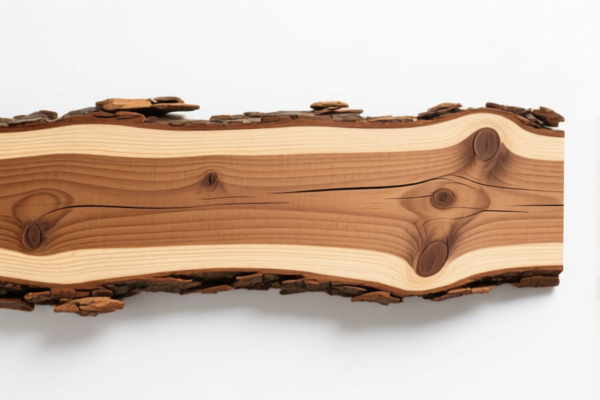
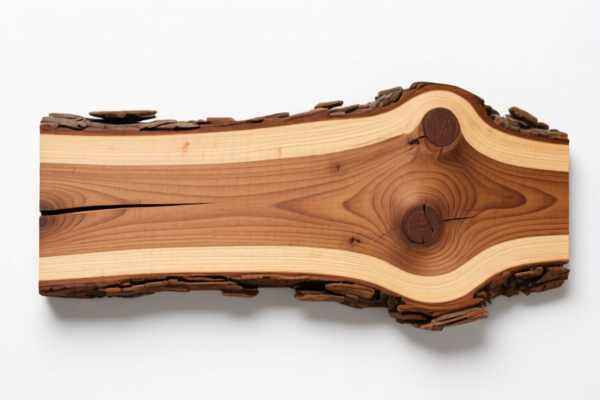
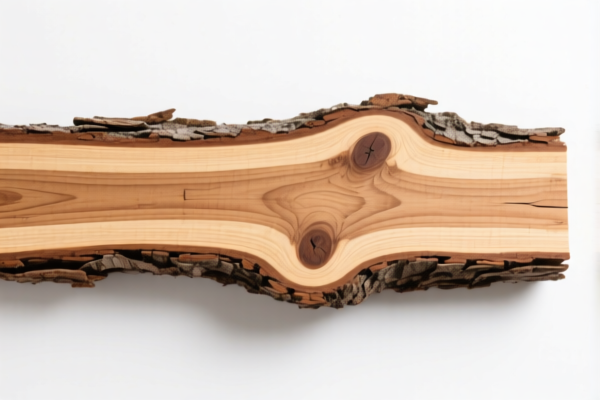
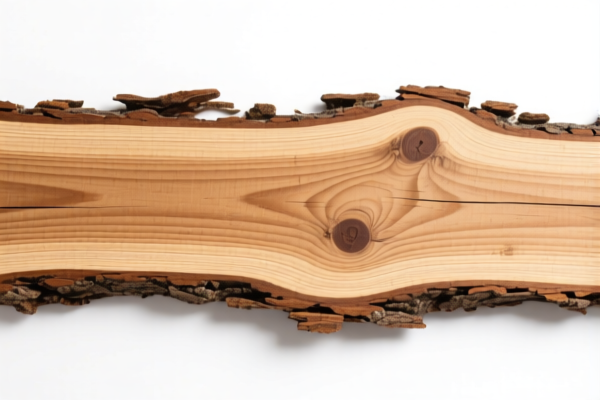
AI Analysis
🪵 Beech Wood: Coarsely Bark Stripped & Roughly Squared
🌐 HS Code Reference & Customs Clearance Guide | 2026 Latest Tariff Analysis | Professional Clearance Strategy
📌 I. Product Definition & Classification: Do You Really Understand "Beech Wood"?
Beech wood, derived from the Fagus genus, is a prized hardwood known for its durability and fine grain. In international trade, "wood in the rough" is a broad category that requires precise subdivision based on processing level and cross-sectional dimensions.
The input "Beech wood coarsely bark stripped" typically refers to logs or poles that have had their bark removed (whether manually or mechanically) but have not yet been sawn into planks or squared for specific furniture use. However, customs classification depends heavily on the smallest cross-sectional dimension.
⚠️ Critical Distinction: - If the smallest cross-sectional dimension is ≥ 15 cm, it falls under 4403.93.01.00. - If it is < 15 cm (or does not meet the specific threshold for "large diameter"), it falls under 4403.94.01.00. - "Coarsely bark stripped" implies the wood is still "in the rough" (not planed or finely finished), which aligns with Chapter 44 (Wood and articles of wood).
📦 II. HS Code Classification Details (2026 Latest Tariff Authority Comparison)
Based on the provided data, here are the two relevant HS Codes for Beech Wood (Fagus spp.) that is roughly squared or stripped of bark:
| HS Code | Product Description | Applicable Scenario | Cross-Sectional Dimension |
|---|---|---|---|
4403.93.01.00 |
Wood in the rough, stripped of bark or sapwood, or roughly squared: Of beech (Fagus spp.), of which the smallest cross-sectional dimension is 15 cm or more | Large diameter logs, beams, or rough-squared timber suitable for heavy construction or large-scale milling | ≥ 15 cm |
4403.94.01.00 |
Wood in the rough, stripped of bark or sapwood, or roughly squared: Of beech (Fagus spp.), other | Smaller diameter logs, poles, or rough-squared timber that does not meet the 15 cm threshold | < 15 cm (or unspecified/other) |
🔍 Key Reminder: - The term "roughly squared" means the wood has been hewn or sawn to have four roughly straight sides but is not yet planed or finished. - "Coarsely bark stripped" fits under "stripped of bark" in the HS heading. - The deciding factor between the two codes is strictly the size (15 cm threshold). Misclassifying based on size can lead to significant discrepancies, although in this specific dataset, the tax rate is identical.
💰 III. 2026 Latest Tariff Rate Details (Including Additional Duties & Policy Add-ons)
✅ Applicable Country: United States (US) ✅ Origin: China (CN) (Assumed based on common context for such high additional tariffs; please verify origin) ✅ Effective Date: Current Rates Apply (See Footnotes)
🎯 1. 4403.93.01.00 —— Beech Wood (Cross-section ≥ 15 cm)
| Item | Content |
|---|---|
| Base Tariff Rate | 0.0% (Ad valorem) |
| Section 301 Additional Tariff | +25.0% |
| Total Effective Tax Rate | 25.0% |
| Tax Calculation | CIF Value × 25% |
| De Minimis Eligibility | ❌ No (Deny De Minimis) |
| Legal Basis Path | USITC:4403.93.01.00 → SECTION_301_FOOTNOTE |
📌 Explanation: - The 0% base tariff reflects the standard Most Favored Nation (MFN) rate for certain rough timber imports. - The 25% additional tariff is imposed under Section 301 of the Trade Act of 1974 due to unfair trade practices. This is a non-negotiable additional duty for Chinese-origin goods in this category. - Total Cost Impact: For every $100,000 CIF value, expect $25,000 in duties.
🎯 2. 4403.94.01.00 —— Other Beech Wood (Cross-section < 15 cm or Other)
| Item | Content |
|---|---|
| Base Tariff Rate | 0.0% (Ad valorem) |
| Section 301 Additional Tariff | +25.0% |
| Total Effective Tax Rate | 25.0% |
| Tax Calculation | CIF Value × 25% |
| De Minimis Eligibility | ❌ No (Deny De Minimis) |
| Legal Basis Path | USITC:4403.94.01.00 → SECTION_301_FOOTNOTE |
📌 Note: - Despite being a different subheading, the tax structure is identical to the 15cm+ category. - Both codes are subject to the same 25% total tax burden. - Ensure accurate measurement of the smallest cross-sectional dimension to determine the correct code for inventory and documentation consistency, even if the tax impact is the same.
🛠️ IV. Customs Clearance Practical Advice (Real-World Pitfall Guide)
✅ 1. Required Documentation Checklist (Mandatory)
| Document | Must Provide | Description |
|---|---|---|
| ✅ Commercial Invoice | ✔️ | Must clearly state "Beech Wood (Fagus spp.)", "Roughly Squared", and "Bark Stripped". |
| ✅ Packing List | ✔️ | Detail the quantity, volume (CBM), and weight. |
| ✅ Phytosanitary Certificate | ✔️ | CRITICAL: Required to prove the wood is free from pests and diseases. Issued by the exporting country's agricultural authority. |
| ✅ Fumigation Certificate | ✔️ | Often required in conjunction with the Phytosanitary Certificate, especially for raw wood. |
| ✅ Bill of Lading (B/L) | ✔️ | Must match invoice and packing list descriptions exactly. |
| ✅ Measurements/Dimensions Proof | ✔️ | Photos or surveyor report showing cross-sectional dimensions to justify 4403.93 vs 4403.94. |
✅ 2. Declaration Tips (Key Mantras)
🔥 "Size Matters, Phytosanitary Saves, Section 301 Adds 25!"
| Scenario | Correct Declaration | Incorrect Action |
|---|---|---|
| Wood with 16cm diameter | 4403.93.01.00 |
Misreporting as 4403.94 → Audit risk for misclassification |
| Wood with 10cm diameter | 4403.94.01.00 |
Misreporting as 4403.93 → Potential penalty for false declaration |
| Unstripped Bark | NOT Covered in Data | Do not declare as "stripped" if bark is present. Likely different HS code. |
| Sawn Planks (Planed) | NOT Covered in Data | "Roughly squared" is different from planed lumber (Chapter 4404/4407). Ensure it is truly "rough". |
✅ 3. Special Situations
| Situation | Handling Advice |
|---|---|
| Mixed Dimensions in One Shipment | Classify each item separately. If a container has both ≥15cm and <15cm wood, split the invoice and declaration accordingly. |
| Origin Misdeclaration | If wood is from Ukraine, Canada, or the EU, the 25% Section 301 tariff may not apply. Provide Certificate of Origin. |
| Pest Inspection | Be prepared for USDA-APHIS inspection at the port. Ensure wood is properly fumigated before shipment to avoid rejection or re-export. |
| Wood Treatment | If the wood is chemically treated (creosote, etc.), it may fall under different headings (e.g., 4403.10). Ensure "coarsely bark stripped" implies natural/unpreserved wood unless stated otherwise. |
🌍 V. Global Market Clearance Comparison (2026 Latest)
| Country/Region | Recommended HS Code | Tariff (China Origin) | Certification Requirements | Notes |
|---|---|---|---|---|
| 🇺🇸 USA | 4403.93.01.00 / 4403.94.01.00 |
25.0% | Phytosanitary + Fumigation | High duty due to Sec 301 |
| 🇨🇳 China | 4403.93.00 / 4403.94.00 |
Varies (Import Duty) | Phytosanitary | Check local tariffs for import into China |
| 🇪🇺 EU | 4403.93 / 4403.94 |
0% (Most Cases) | Fitosanitary + ISPM 15 | Strict wood pest regulations |
| 🇬🇧 UK | 4403.93 / 4403.94 |
Varies | Phytosanitary | Post-Brexit regulations apply |
📌 Conclusion: - USA imposes a flat 25% additional tariff on these beeched wood products from China. - Phytosanitary compliance is the biggest operational hurdle, not just the tariff. - Accurate measurement is key to correct HS code assignment, ensuring no customs delays.
📌 VI. Common Errors & Pitfall Guide (Lessons Learned)
❌ Error 1: Ignoring cross-sectional dimensions 👉 Consequence: Misclassification. While tax is same here, documentation mismatch can lead to audits.
❌ Error 2: Forgetting Phytosanitary Certificate 👉 Consequence: Seizure or Destruction of goods by USDA-APHIS. Raw wood is high-risk for pests.
❌ Error 3: Declaring "Planed" wood as "Roughly Squared" 👉 Consequence: Wrong HS Code. Planed wood is 4404/4407, not 4403. Different rules apply.
❌ Error 4: Assuming "Bark Stripped" means "Sawmilled" 👉 Consequence: Confusion. "Roughly squared" is a specific state of processing. Ensure description matches.
✅ Correct Practice:
"Beech Wood (Fagus spp.), Roughly Squared, Coarsely Bark Stripped, Cross-Section ≥ 15cm, Fumigated, Origin: [Country]"
🎯 VII. Conclusion: Professional Declaration, Time-Saving, Cost-Efficiency!
🎯 Remember the Mantra:
🔹 "Measure Size, Check Phytosanitary, Pay 25% Extra for Sec 301!" 🔹 "HS Code 4403 is for Rough Wood, Not Planed Planks!"
📌 Pro Tip: If your wood is sourced from non-China countries (e.g., Ukraine, US, Canada), you may avoid the 25% Section 301 tariff. Ensure your Certificate of Origin clearly reflects the non-China origin.
📣 Immediate Action:
📞 Contact your customs broker + Provide Phytosanitary Certs + Verify Cross-Sectional Measurements 🚀 Let your Beech wood clear customs smoothly, efficiently, and profitably!
✨ Professional Clearance Starts with Accurate Classification! 💼 Every dollar of duty is worth precise calculation!
Customer Reviews
About HS Code Classification
The Harmonized System (HS) is an internationally standardized nomenclature developed by the World Customs Organization (WCO) to classify traded products. Over 200 countries use the HS system as the basis for customs tariffs, trade statistics, and import/export regulations.
Each HS code follows a hierarchical structure:
- Chapter (2 digits) — Broad category of goods (e.g., Chapter 84: Machinery and Mechanical Appliances)
- Heading (4 digits) — More specific grouping within the chapter
- Subheading (6 digits) — Internationally standardized breakdown, used by all WCO member countries
- National subdivisions (8-10 digits) — Country-specific extensions for further classification, such as US HTSUS 10-digit codes
Correct HS code classification is essential for smooth customs clearance, accurate duty payment, and compliance with trade regulations. Misclassification can lead to customs delays, overpayment of duties, or penalties.
When importing from CN to US, the applicable tariff rates may include:
- Most-Favored-Nation (MFN) rate — The standard duty rate applied to WTO members
- General rate — Applied to countries without trade agreements
- Trade remedy duties — Additional tariffs such as Section 301 (anti-dumping), Section 232 (national security), or countervailing duties
The information provided on this page is for reference purposes only. For official classification, please consult with your local customs authority or a licensed customs broker.