Beech Wood Peel Rough
CN → US| HS Code | Tariff Rate | Origin | Destination | Doc |
|---|---|---|---|---|
| 4403930100 | 35.0% | CN | US | Official Doc |
| 4403940100 | 35.0% | CN | US | Official Doc |
Product Images
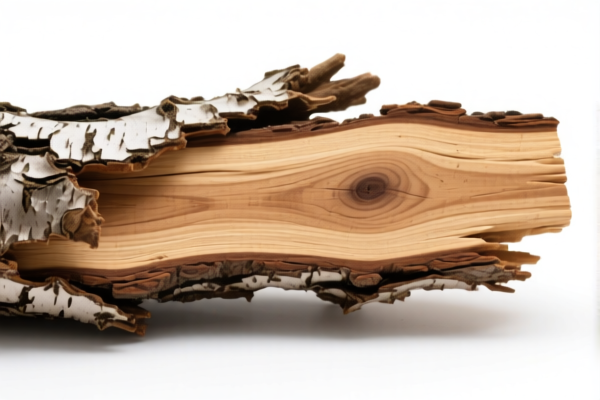
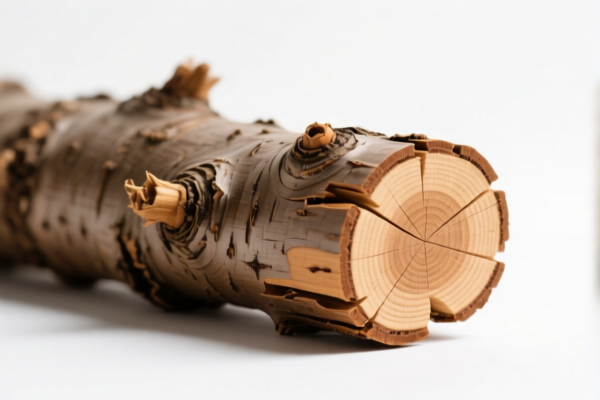
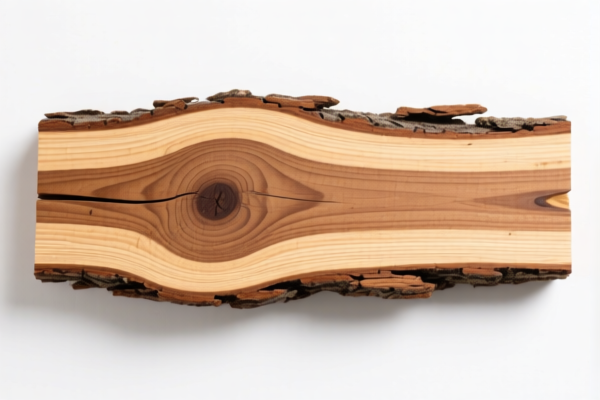
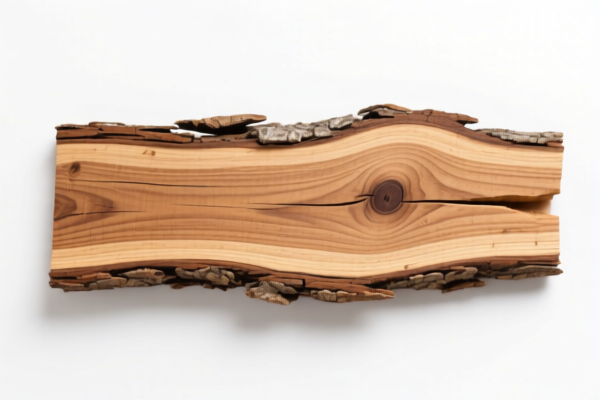
AI Analysis
🌲 Raw Beech Wood Logs (Unprocessed & Roughly Squared)
🌐 HS Code Reference & Customs Clearance Guide | 2024/2025 Latest Tariff Analysis | Professional Transit Strategy
📌 1. Product Definition & Classification: What Exactly Is "Rough Beech"?
"Rough Beech Wood" refers to beech timber (Fagus spp.) that has undergone minimal processing. It is the primary raw material for furniture, flooring, and veneer production. In international trade, the classification hinges on two critical factors:
1. State of Processing: Is it stripped of bark/sapwood? Is it roughly squared?
2. Dimensions: What is the smallest cross-sectional dimension?
The data provided distinguishes between two specific sub-categories based on size:
Large Logs/Timbers: Smallest cross-sectional dimension ≥ 15 cm.
Smaller/Other Rough Wood: Smallest cross-sectional dimension < 15 cm (or not specified as large).
⚠️ Key Distinction Point:
- If the wood is a log or burl with a smallest side ≥ 15 cm (even if bark is removed) →归入 4403.93.01.00
- If the wood is roughly squared or has a smallest side < 15 cm → 归入 4403.94.01.00
📦 2. HS Code Classification Details (Authoritative对照)
| HS Code | Product Description | Application Scenario | Dimension Requirement |
|---|---|---|---|
4403.93.01.00 |
Of beech (Fagus spp.), of which the smallest cross-sectional dimension is 15 cm or more |
Large logs, timber for sawmills, structural beams (roughly squared or round) | ≥ 15 cm |
4403.94.01.00 |
Of beech (Fagus spp.), other |
Smaller rough logs, blocks, or wood not meeting the 15 cm threshold; roughly squared timber of smaller size | < 15 cm |
🔍 Important Reminder:
- Both codes fall under Chapter 44: "Wood and articles of wood; wood charcoal."
- The prefix 4403 refers to "Wood in the rough, whether or not stripped of bark or sap-wood, or roughly squared."
- "Roughly squared" means the wood has been cut to a rectangular cross-section but not planed or smoothed.
- Do not confuse with4407(Sawn wood) or4408(Veneer sheets). This is raw timber.
💰 3. 2024/2025 Tariff Rate Details (Including Surcharge)
✅ Applicable Country: United States (US)
✅ Origin: China (CN) (Assumed based on typical 25% surcharge context; if non-China, base rate may apply differently)
✅ Effective Time: Current trade policy (Section 301 Tariffs Active)
🎯 1. 4403.93.01.00 — Large Rough Beech Logs (≥ 15 cm)
| Item | Content |
|---|---|
| Base Tariff | 0.0% (ad valorem) |
| Section 301 Surcharge | +25.0% |
| Total Tariff Rate | 25.0% |
| Tax Calculation | CIF Value × 25% |
| De Minimis Exemption? | ❌ No (Deny de minimis for wood products from China) |
| Legal Basis Path | HTSUS:4403.93.01 → USITC Footnote 9903.88.01 (Section 301) |
📌 Explanation:
- The base tariff for raw wood from most countries is 0%, but the 25% Section 301 surcharge applies specifically to Chinese-origin goods.
- No VAT or additional fees are listed in the data beyond the 25%.
- High Impact: This is a significant cost factor for timber importers.
🎯 2. 4403.94.01.00 — Other Rough Beech Wood (< 15 cm)
| Item | Content |
|---|---|
| Base Tariff | 0.0% (ad valorem) |
| Section 301 Surcharge | +25.0% |
| Total Tariff Rate | 25.0% |
| Tax Calculation | CIF Value × 25% |
| De Minimis Exemption? | ❌ No |
| Legal Basis Path | HTSUS:4403.94.01 → USITC Footnote 9903.88.01 (Section 301) |
📌 Note:
- Same tariff structure as above.
- "Other" is a catch-all for beech wood in the rough that does not meet the ≥15 cm criterion.
- Whether it's small logs, blocks, or roughly squared pieces under 15 cm, the 25% surcharge remains.
🛠️ 4. Customs Clearance Practical Advice (Avoid Pitfalls)
✅ 1. Required Documentation Checklist
| Document | Mandatory? | Description |
|---|---|---|
| ✅ Phytosanitary Certificate | ✔️ YES | Critical! Wood products are subject to strict ISPM 15 regulations. Must prove no pests (beetles, borers). |
| ✅ Commercial Invoice | ✔️ | Must clearly state "Beech Wood, Rough, Origin: [Country]", HS Code, and Value. |
| ✅ Packing List | ✔️ | List dimensions (length, width, height) to verify the 15 cm threshold. |
| ✅ Bill of Lading/Air Waybill | ✔️ | Standard shipping documents. |
| ✅ IPPC Mark (on Pallets) | ✔️ | If packaged in wooden pallets/crates, they must be heat-treated and marked with IPPC. |
| ✅ Certificate of Origin | ✔️ | To prove origin (if claiming any preferential treatment, though unlikely for raw wood). |
✅ 2. Declaration Tips (Key Mantras)
🔥 "Dimension is King, Pest is Queen, HS is Specific!"
| Scenario | Correct Declaration | Wrong Practice |
|---|---|---|
| Logs ≥ 15 cm | 4403.93.01.00 - "Rough Beech Logs, Fagus spp., Min Dim: 16cm" |
Vague description "Wooden Logs" → Audit risk |
| Logs < 15 cm | 4403.94.01.00 - "Rough Beech Timber, Fagus spp., Min Dim: 10cm" |
Misdeclaring as "Sawn Wood" (4407) → Higher duty/complexity |
| Bark Status | Specify "Bark Removed" or "Bark On" | If bark is present, ensure it doesn't trigger additional pest inspections |
| Treatment Status | Specify "Heat Treated" if applicable | Untreated wood may be rejected at border |
✅ 3. Special Situations
| Situation | Handling Advice |
|---|---|
| Mixed Dimensions | If a shipment contains both ≥15 cm and <15 cm pieces, separate them or declare the majority. Mixed declarations can cause delays. |
| Beech vs. Other Hardwood | Beech (Fagus) has specific subheadings. Misdeclaring as "Other Hardwood" (4403.99) may lead to incorrect tax assessment or rejection if origin is China. |
| Sapwood vs. Heartwood | The description says "whether or not stripped of bark or sap-wood". This means it doesn't matter if sapwood is removed for the HS code classification. |
| Roughly Squared | Ensure the wood is not planed or sanded. If it’s too smooth, it might be classified as 4407 (Sawn Wood), which has different duties. |
🌍 5. Global Market Comparison (2024/2025)
| Country/Region | Recommended HS Code | Tariff (China Origin) | Certification Required | Notes |
|---|---|---|---|---|
| 🇺🇸 USA | 4403.93.01.00 / 4403.94.01.00 |
25% (301 Tariff) | Phytosanitary, IPPC | High tariff, strict pest control |
| 🇪🇺 EU | 4403.93 / 4403.94 |
0% (Most Favored Nation) | Timber Regulation (EUTR), FSC/PEFC | Zero duty, but strict legality proof |
| 🇨🇳 China | 4403.93.01.00 / 4403.94.01.00 |
5% (Import Duty) | Phytosanitary | Lower duty, major importer of beech |
| 🇬🇧 UK | 4403.93 / 4403.94 |
0% | UK Timber Regulation | Zero duty post-Brexit for many wood products |
| 🇯🇵 Japan | 4403.93 / 4403.94 |
0% (CPTPP/General) | Phytosanitary | Zero duty for many origins |
📌 Conclusion:
- USA is the only market in this list with a 25% surcharge for Chinese-origin beech wood.
- EU and UK have zero base tariffs but enforce strict due diligence laws (Timber Regulation) to prevent illegal logging.
- China is a major consumer of beech wood, often importing from Europe.
📌 6. Common Errors & Pitfalls (Lessons Learned)
❌ Error 1: Declaring as "Sawn Wood" (4407) instead of "Rough Wood" (4403)
👉 Consequence: Wrong HS Code, potential penalty, or duty discrepancy (Sawn wood may have different rates).
Fix: Ensure the wood is not planed or sanded.
❌ Error 2: Ignoring the 15 cm threshold
👉 Consequence: Misclassification between 4403.93 and 4403.94.
Fix: Measure the smallest cross-sectional dimension accurately.
❌ Error 3: Missing Phytosanitary Certificate
👉 Consequence: Cargo held at port, fined, or destroyed due to pest risk.
Fix: Ensure the exporter provides a valid certificate issued by the national plant protection organization.
❌ Error 4: Not specifying "Beech (Fagus spp.)"
👉 Consequence: Customs may classify as "Other Wood" (4403.99), leading to higher duties or delays.
Fix: Use precise scientific naming: Fagus spp..
✅ Correct Declaration Example:
"Rough Beech Logs,
Fagusspp., bark removed, smallest cross-sectional dimension 18 cm, Origin: China, Phytosanitary Cert: XXXXX"
🎯 7. Conclusion: Professional Declaration Saves Money
🎯 Remember the Mantra:
🔹 "Raw Wood? Check 4403."
🔹 "15 cm? It’s 93. Smaller? It’s 94."
🔹 "China Origin? 25% Surcharge. Don’t Skip the Phytosanitary!"
📌 Pro Tip:
- If importing to the USA, factor in the 25% tariff in your cost model.
- If importing to the EU, invest in FSC/PEFC certification to meet the EU Timber Regulation.
- Always verify the smallest cross-sectional dimension before shipping to ensure the correct HS Code.
📣 Immediate Action:
📞 Contact a customs broker to pre-verify the HS Code.
📄 Ensure the Phytosanitary Certificate is valid and matches the invoice.
📏 Measure samples to confirm the 15 cm threshold.
🚀 Clear customs smoothly, avoid delays, and control costs!
✨ Professional clearance starts with precise classification!
💼 Your timber is valuable; protect its value with accurate documentation!
Customer Reviews
About HS Code Classification
The Harmonized System (HS) is an internationally standardized nomenclature developed by the World Customs Organization (WCO) to classify traded products. Over 200 countries use the HS system as the basis for customs tariffs, trade statistics, and import/export regulations.
Each HS code follows a hierarchical structure:
- Chapter (2 digits) — Broad category of goods (e.g., Chapter 84: Machinery and Mechanical Appliances)
- Heading (4 digits) — More specific grouping within the chapter
- Subheading (6 digits) — Internationally standardized breakdown, used by all WCO member countries
- National subdivisions (8-10 digits) — Country-specific extensions for further classification, such as US HTSUS 10-digit codes
Correct HS code classification is essential for smooth customs clearance, accurate duty payment, and compliance with trade regulations. Misclassification can lead to customs delays, overpayment of duties, or penalties.
When importing from CN to US, the applicable tariff rates may include:
- Most-Favored-Nation (MFN) rate — The standard duty rate applied to WTO members
- General rate — Applied to countries without trade agreements
- Trade remedy duties — Additional tariffs such as Section 301 (anti-dumping), Section 232 (national security), or countervailing duties
The information provided on this page is for reference purposes only. For official classification, please consult with your local customs authority or a licensed customs broker.