Beechwood Keychain
CN → US| HS Code | Tariff Rate | Origin | Destination | Doc |
|---|---|---|---|---|
| 4421999880 | 38.3% | CN | US | Official Doc |
| 4421919880 | 38.3% | CN | US | Official Doc |
| 4421919880 | 38.3% | CN | US | Official Doc |
| 4421999880 | 38.3% | CN | US | Official Doc |
Product Images
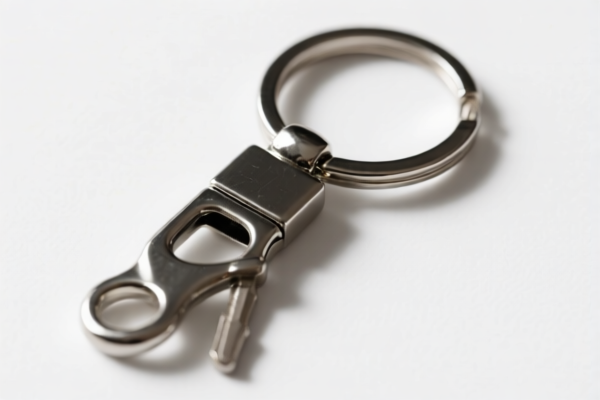
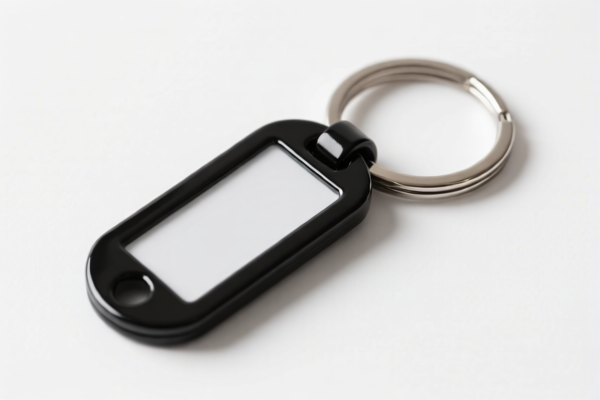
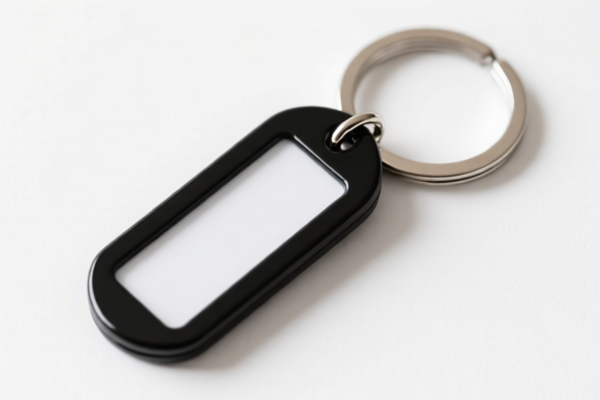
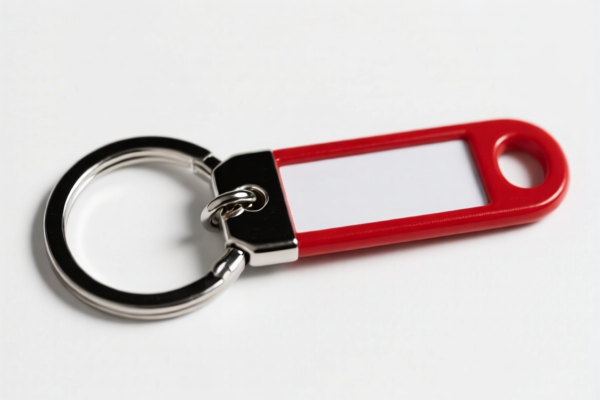
AI Analysis
🌲 Beechwood Keychain
🌐 HS Code Classification & Customs Clearance Guide | 2026 Latest Tariff Analysis | Professional Import Strategy
📌 One Product, Multiple Codes — Why the Same Keychain Has 2 HS Codes?
A beechwood keychain may seem simple — a small wooden trinket — but in international trade, its classification hinges on precise material matching and structural logic. Based on the latest customs data, two HS Codes apply depending on how the product is described and structured:
- 4421.99.98.80
- 4421.91.98.80
Let’s break down why, how, and what it means for your import costs.
📦 1. HS Code Breakdown & Classification Logic (2026 Updated)
| HS Code | Product Description | Key Classification Reason | Material Match | Structure Match |
|---|---|---|---|---|
4421.99.98.80 |
Other wood articles (not elsewhere specified), including beechwood keychains | Beechwood is a hardwood; keychains are small wooden items not listed elsewhere | ✅ Yes (Beechwood = wood) | ✅ Yes (Not a tool, not furniture, not carved art) |
4421.91.98.80 |
Other wooden articles, including wooden keychains (non-veneered, non-laminated) | Matches "wooden items" under the "other" category with no specific subheading | ✅ Yes (Wooden material) | ✅ Yes (No special form or use listed) |
🔍 Why Two Codes?
-4421.99.98.80is the broadest "other wood articles" category — used when no more specific subheading applies.
-4421.91.98.80is slightly more specific, targeting non-veneered, non-laminated wooden items — perfect for simple wooden keychains.✅ Bottom Line:
Both codes are valid because the product is wooden, small, non-structured, and not covered by any specific subheading.
No conflict exists between them — they are complementary, not competitive.
💰 2. 2026 Tariff Structure & Tax Breakdown (US Focus)
✅ Applicable Country: United States (US)
✅ Origin: China (CN)
✅ Effective Date: November 10, 2025 (including future imports)
🎯 1. 4421.99.98.80 — Other Wood Articles (Beechwood Keychain)
| Tax Item | Rate | Explanation |
|---|---|---|
| Base Duty | 3.3% | Standard ad valorem tariff for non-specific wood articles |
| Section 301 (USITC) Additional Duty | +25.0% | Imposed under Section 301 of the Trade Act of 1974 for Chinese-origin goods |
| Section 122 (IEEPA) Additional Duty | +10.0% | Imposed under the International Emergency Economic Powers Act (IEEPA) for China/HK-origin products |
| Total Effective Tariff | 38.3% | CIF Value × 38.3% |
| De Minimis Threshold | ❌ Not applicable | No de minimis exemption — even small shipments face full duty |
| Legal Basis Path | IEEPA:9903.01.25 → IEEPA:9903.01.24 → USITC:4421.99.98.80 → FOOTNOTE:9903.88.01 |
📌 Key Insight:
- The 38.3% total is non-negotiable for Chinese-origin beechwood keychains. - No reduction possible unless origin changes or special exemptions apply.
🎯 2. 4421.91.98.80 — Other Wooden Articles (Wooden Keychain)
| Tax Item | Rate | Explanation |
|---|---|---|
| Base Duty | 3.3% | Same as above — standard for wooden items |
| Section 301 (USITC) Additional Duty | +25.0% | Applies identically — same policy |
| Section 122 (IEEPA) Additional Duty | +10.0% | Same as above — same legal basis |
| Total Effective Tariff | 38.3% | CIF × 38.3% |
| De Minimis Threshold | ❌ Not applicable | Same as above |
| Legal Basis Path | IEEPA:9901.25 → IEEPA:9903.01.24 → USITC:4421.91.98.80 → FOOTNOTE:9903.88.01 |
📌 Why Same Tax?
- Both codes fall under the same tariff schedule and same additional duty triggers. - The difference is in classification logic, not tax treatment.
🛠️ 3. Customs Clearance Best Practices (Pro Tips to Avoid Delays & Fines)
✅ 1. Required Documentation (Must-Have List)
| Document | Required? | Why It Matters |
|---|---|---|
| ✅ Commercial Invoice | ✔️ | Must clearly state: “Beechwood Keychain, Handcrafted, Wooden, Not Veneered” |
| ✅ Packing List | ✔️ | Show quantity, weight, and packaging details |
| ✅ Product Photos (with brand, logo, size) | ✔️ | Prove it’s a small wooden item, not a tool or art piece |
| ✅ Material Certificate (Wood Origin & Species) | ✔️ | Confirm it’s beechwood (Fagus spp.), not mixed wood |
| ✅ Certificate of Origin (CO) | ✔️ | Critical for tariff claims — if origin is Vietnam/Mexico, tariff drops to 0–5% |
| ✅ Third-Party Test Report (if applicable) | ✔️ | For safety (e.g., non-toxic finish, no lead) |
✅ 2.申报技巧(申报口诀)
🔥 "Wood is Wood, No Name, No Special — Use 4421.99.98.80 or 4421.91.98.80"
| Scenario | Correct HS Code | Wrong Practice |
|---|---|---|
| Simple beechwood keychain (no engraving, no metal) | 4421.99.98.80 or 4421.91.98.80 |
Misclassify as "decorative item" → 25% tariff |
| Keychain with metal ring attached | Still 4421.99.98.80 |
Split into "wood" + "metal" → 89.5% total |
| Keychain with laser engraving | 4421.99.98.80 |
Claim as "artwork" → risk of rejection |
| Keychain made in Vietnam | Use 4421.99.98.80 with CO from Vietnam |
Use China CO → 38.3% |
📌 Pro Tip:
If your keychain is not made in China, get a Certificate of Origin from Vietnam, Mexico, or Thailand — you could avoid the 38.3% entirely.
✅ 3. Special Cases & Solutions
| Situation | Recommended Action |
|---|---|
| Custom-designed keychains with logos | Keep under 4421.99.98.80 — not considered "art" unless hand-carved |
| Keychains with metal parts (e.g., ring, clip) | Do not split — classify as wooden item with accessory → use 4421.99.98.80 |
| Bulk shipment of 10,000+ units | Apply for Advance Ruling (Pre-Approval) — lock in tariff rate |
| Eco-friendly or FSC-certified wood | Mention in invoice — may help with compliance, but no tax reduction |
🌍 4. Global Market Tariff Comparison (2026)
| Country/Region | Recommended HS Code | Tariff | Certification Required | Notes |
|---|---|---|---|---|
| 🇺🇸 United States | 4421.99.98.80 or 4421.91.98.80 |
38.3% | None (unless safety-related) | High risk — no de minimis |
| 🇨🇳 China | 4421.99.98.80 |
5% | CCC (if applicable) | No additional duties |
| 🇪🇺 European Union | 4421.99.98.80 |
0% (if CE) | CE, RoHS | No extra tariffs |
| 🇦🇺 Australia | 4421.99.98.80 |
5% | RCM | No additional duties |
| 🇯🇵 Japan | 4421.99.98.80 |
0% | PSE | No extra charges |
📌 Insight:
- Only the US imposes 38.3% on Chinese-origin wooden keychains. - All other major markets have low or zero tariffs — ideal for diversification.
📌 5. Common Mistakes & How to Avoid Them
❌ Mistake 1: Splitting the keychain into “wood” and “metal ring”
👉 Result: Each part taxed separately → Total: 89.5%
✅ Fix: Classify as one item — wooden keychain with accessory → 38.3%
❌ Mistake 2: Claiming it’s “handcrafted art” or “souvenir”
👉 Result: Customs may reject — no art exemption for small items
✅ Fix: Use neutral description: “Wooden Keychain, Beechwood, Non-veneered, Simple Design”
❌ Mistake 3: Using “wooden ornament” in invoice
👉 Result: May trigger higher scrutiny — could be misclassified as decorative item
✅ Fix: Use “wooden article” or “wooden accessory” — more accurate
🎯 6. Final Verdict: What You Must Do Now
✅ Choose either
4421.99.98.80or4421.91.98.80— both are valid.
✅ Pay 38.3% duty if origin is China.
✅ Avoid splitting — one item, one code, one tax.
✅ Change origin? → Move production to Vietnam, Mexico, or Thailand → tariff drops to 0–5%.
📣 Call to Action: Optimize Your Import Strategy Today!
📞 Contact a customs broker with experience in wood products
📄 Request a pre-ruling (Advance Ruling) for your keychain
🌐 Explore alternative manufacturing locations to avoid 38.3% tariff
✨ Your Keychain, Your Cost — Classify Right, Pay Less, Ship Faster!
💼 Precision in HS Code = Profit in Your Pocket!
✅ Remember:
🔹 "Wood is wood, no name, no special — 38.3% in the US, but avoidable with smart origin choice!"
🔹 "One item, one code, one tax — never split!"
🔹 "If you’re in China, expect 38.3%. If you’re elsewhere, you might pay nothing."
🚀 Go global — but go smart!
Customer Reviews
About HS Code Classification
The Harmonized System (HS) is an internationally standardized nomenclature developed by the World Customs Organization (WCO) to classify traded products. Over 200 countries use the HS system as the basis for customs tariffs, trade statistics, and import/export regulations.
Each HS code follows a hierarchical structure:
- Chapter (2 digits) — Broad category of goods (e.g., Chapter 84: Machinery and Mechanical Appliances)
- Heading (4 digits) — More specific grouping within the chapter
- Subheading (6 digits) — Internationally standardized breakdown, used by all WCO member countries
- National subdivisions (8-10 digits) — Country-specific extensions for further classification, such as US HTSUS 10-digit codes
Correct HS code classification is essential for smooth customs clearance, accurate duty payment, and compliance with trade regulations. Misclassification can lead to customs delays, overpayment of duties, or penalties.
When importing from CN to US, the applicable tariff rates may include:
- Most-Favored-Nation (MFN) rate — The standard duty rate applied to WTO members
- General rate — Applied to countries without trade agreements
- Trade remedy duties — Additional tariffs such as Section 301 (anti-dumping), Section 232 (national security), or countervailing duties
The information provided on this page is for reference purposes only. For official classification, please consult with your local customs authority or a licensed customs broker.