Beef Granules
CN → US| HS Code | Tariff Rate | Origin | Destination | Doc |
|---|---|---|---|---|
| 160239 | 0.0% | CN | US | Official Doc |
| 160290 | 0.0% | CN | US | Official Doc |
| 1602500720 | 17.5% | CN | US | Official Doc |
| 1602502120 | 18.9% | CN | US | Official Doc |
Product Images
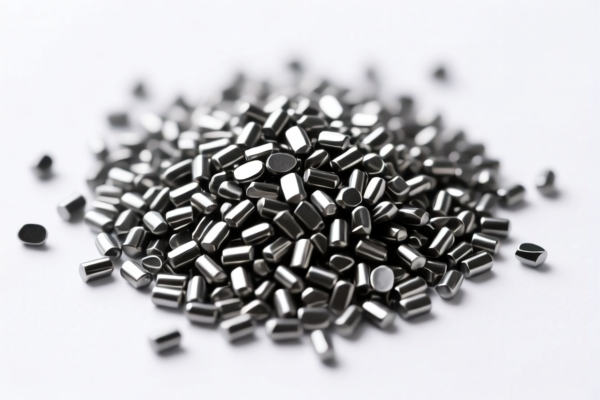
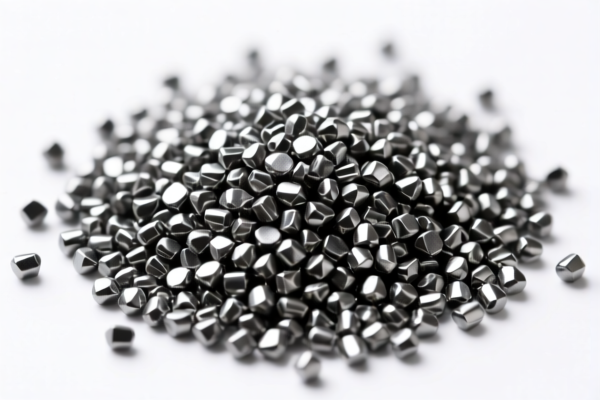
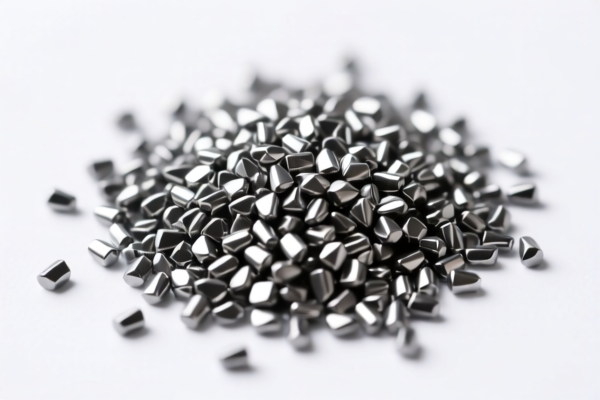
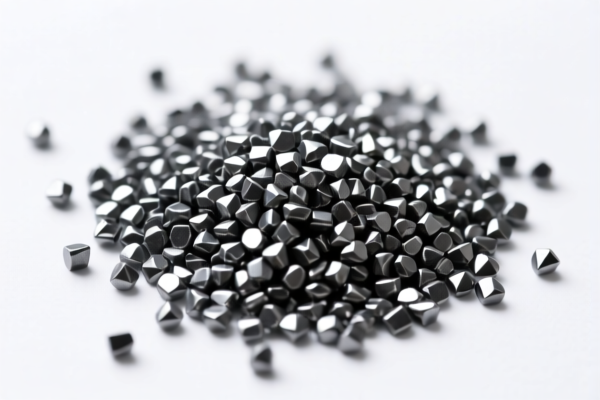
AI Analysis
🥩 Beef Granules (Prepared or Preserved Meat Products)
🌐 HS Code Reference & Customs Clearance Guide | 2026 Latest Tariff Breakdown | Professional Entry Strategies
📌 I. Product Definition & Classification: Do You Really Understand "Beef Granules"?
Beef Granules are concentrated, dried, or preserved pieces of beef, typically intended for human consumption. In international trade, they fall under the broader category of "Other prepared or preserved meat, meat offal, blood, or insects."
However, not all beef granules are created equal. The correct HS Code depends entirely on: 1. The specific formulation (whether it contains cereals or vegetables). 2. The preservation method (cured/pickled vs. other). 3. The packaging (airtight containers and weight).
⚠️ Critical Distinction:
- If the product is pure beef (no cereals/vegetables) and cured/pickled (corned) in small airtight containers → 1602.50.07.20
- If the product is pure beef (no cereals/vegetables) but not cured/pickled (e.g., jerky, dried, roasted) in small airtight containers → 1602.50.21.20
- If the product is a general meat preparation (e.g., seasoned granules with additives not fitting specific sub-headings) → 1602.39 or 1602.90 (Note: Tax info unavailable for these general codes in this dataset).
📦 II. HS Code Classification Details (2026 Latest Tariff Authority Comparison)
| HS Code | Product Description | Key Characteristics | Packaging/Condition |
|---|---|---|---|
1602.50.07.20 |
Corned Beef in airtight containers, <1 kg | - Of bovine animals - Not containing cereals/vegetables - Cured or pickled |
Airtight container, <1 kg |
1602.50.21.20 |
Other Prepared Beef in airtight containers, <1 kg | - Of bovine animals - Not containing cereals/vegetables - NOT cured/pickled (e.g., dried, roasted, jerky-style) |
Airtight container, <1 kg |
1602.39 |
Beef granules, prepared/preserved, NESI* | - Specific beef preparations not elsewhere specified - May contain seasonings/additives |
General packaging |
1602.90 |
Other meat preparations, including beef granules, NESI* | - Broad category for mixed meat preparations - Less specific than 1602.39/50 |
General packaging |
*NESI = Not Elsewhere Specified or Included
🔍 Key Clarification:
- "Corned Beef" refers specifically to beef that has been cured or pickled (salted/brined). This is a specific preservation method. - "Other" refers to beef that has been prepared but not by the cured/pickled method (e.g., dried, cooked, or processed in ways that don’t fall under "cured"). - Packaging matters: The codes1602.50.07.20and1602.50.21.20require the product to be in airtight containers holding less than 1 kg. If packaged in larger containers or non-airtight packaging, different HS codes may apply (not covered in this specific dataset).
💰 III. 2026 Latest Tariff Rate Breakdown (Including Surtaxes)
✅ Applicable Country: United States (US)
✅ Origin: China (CN) (Assumed based on typical dataset context for US-China trade)
✅ Effective Date: Current rates apply as per 2026 tariff schedule.
🎯 1. 1602.50.07.20 — Corned Beef (Cured/Pickled), Airtight, <1 kg
| Item | Detail |
|---|---|
| Base Tariff | 0.0% |
| Surtax (Section 301 / IEEPA) | 7.5% |
| Total Tax Rate | 7.5% |
| Tax Calculation | CIF Value × 7.5% |
| Tax Details | Base: 0.0%, Surtax: 7.5% |
📌 Explanation:
- This is a low-tariff entry for corned beef in small airtight packs. - The 7.5% surtax is the only additional cost. - No base duty, making it highly competitive for small-pack, cured beef products.
🎯 2. 1602.50.21.20 — Other Beef Preparations (Not Cured), Airtight, <1 kg
| Item | Detail |
|---|---|
| Base Tariff | 1.4% |
| Surtax (Section 301 / IEEPA) | 7.5% |
| Total Tax Rate | 8.9% |
| Tax Calculation | CIF Value × 8.9% |
| Tax Details | Base: 1.4%, Surtax: 7.5% |
📌 Explanation:
- This applies to beef granules that are not cured/pickled (e.g., dried beef jerky, roasted beef bits). - The 1.4% base tariff adds to the 7.5% surtax, resulting in a slightly higher total duty. - Critical: Ensure your product is not classified as "cured" if you want to avoid the lower base rate of corned beef. Misclassification can lead to penalties.
⚠️ 3. 1602.39 & 1602.90 — General Beef Preparations
| Item | Detail |
|---|---|
| Tax Information | Failed to retrieve tax information |
| Total Tax | Error |
📌 Warning:
- These codes are general categories. Do not use them if your product fits the specific descriptions in1602.50.07.20or1602.50.21.20. - Using generic codes can lead to customs delays, audits, or incorrect tax assessments. - Always provide detailed product descriptions to customs brokers to ensure the most specific and accurate HS Code is used.
🛠️ IV. Customs Clearance Practical Advice (Avoiding Pitfalls)
✅ 1. Documentation Checklist (Essential for Smooth Clearance)
| Document | Required? | Purpose |
|---|---|---|
| ✅ Commercial Invoice | ✔️ | Must clearly state "Beef Granules," HS Code, and origin. |
| ✅ Product Specification Sheet | ✔️ | Detail ingredients: Confirm if cured/pickled. Crucial for distinguishing between 1602.50.07.20 and 1602.50.21.20. |
| ✅ Packaging Details | ✔️ | Prove container is airtight and <1 kg. Label must show net weight. |
| ✅ Certificate of Origin | ✔️ | To prove origin (e.g., China) for surtax calculation. |
| ✅ FDA Prior Notice | ✔️ | Mandatory for all meat products entering the US. File before shipment. |
| ✅ FSVP (Food Safety Verification) | ✔️ | US Importers must have a Foreign Supplier Verification Program in place. |
✅ 2. Declaration Strategy (Key Mnemonic)
🔥 “Cured = Corned, Not Cured = Other, Airtight & Small = Specific Codes”
| Scenario | Correct HS Code | Common Mistake | Consequence |
|---|---|---|---|
| Corned Beef in 500g tin | 1602.50.07.20 |
Misclassify as "Other Beef" | Overpay 1.4% base duty (minor) |
| Dried Beef Jerky in 200g pouch | 1602.50.21.20 |
Misclassify as "Corned Beef" | Underpay 1.4% base duty → Penalties |
| Seasoned Beef Bits in 1kg bag | Check Specifics | Use 1602.90 |
High risk of audit, tax recalculation |
| Beef Granules in 5kg bag | Not Covered | Use 1602.50.21.20 |
Incorrect packaging size → Rejection |
📌 Important:
- Packaging Size: The codes1602.50.07.20and1602.50.21.20only apply to containers holding LESS THAN 1 kg.
- If your product is in a 1 kg or larger container, or non-airtight packaging, these codes DO NOT APPLY. You must find alternative HS Codes (not provided in this dataset).
✅ 3. Special Cases & Handling
| Case | Handling Advice |
|---|---|
| OEM/White Label | Ensure the product description matches the actual formulation. Do not claim "corned" if it’s dried. |
| Mixed Ingredients | If the granules contain cereals or vegetables, they do NOT qualify for 1602.50.xx.xx. They must be classified under different codes (e.g., 1602.90), but tax info is unavailable. Avoid this risk by keeping products pure beef or consulting a customs broker. |
| Labeling | Ensure labels clearly state "Net Weight < 1 kg" and "Airtight Container" if claiming these codes. |
🌍 V. Global Market Comparison (2026 Latest)
| Country/Region | Recommended HS Code | Tariff Rate | Notes |
|---|---|---|---|
| 🇺🇸 USA | 1602.50.07.20 |
7.5% | For corned beef, <1kg, airtight. |
| 🇺🇸 USA | 1602.50.21.20 |
8.9% | For other beef, <1kg, airtight. |
| 🇨🇳 China | 1602.50 |
Varies | China imports beef; check specific PRC tariffs. |
| 🇪🇺 EU | 1602.50 |
Varies | EU has strict labeling and health certificates for meat. |
| 🇯🇵 Japan | 1602.50 |
Varies | Japan requires detailed origin and processing info. |
📌 Conclusion:
- The US market offers clear, specific HS codes for small, airtight beef packages. - Corned beef benefits from a lower base rate (0%) compared to other beef preparations (1.4%). - Packaging is key: Stay <1 kg and airtight to access these specific codes.
📌 VI. Common Errors & Pitfalls (Lessons Learned)
❌ Error 1: Claiming "Corned Beef" for dried, uncured beef jerky.
👉 Consequence: Customs may reclassify as 1602.50.21.20 and charge back taxes + penalties.
❌ Error 2: Using 1602.50.07.20 for a 1.5 kg container.
👉 Consequence: Invalid HS Code. Goods may be held, inspected, or re-routed.
❌ Error 3: Ignoring the "Not containing cereals or vegetables" clause.
👉 Consequence: If your product contains even a small amount of grains or veggies, it cannot be classified under 1602.50.xx.xx. You must use 1602.90, but tax info is unavailable, leading to uncertainty.
❌ Error 4: Assuming all beef granules are the same.
👉 Consequence: Failing to distinguish between cured and non-cured leads to incorrect duty payments.
✅ Correct Practice:
“Cured Beef Granules, Airtight Tin, 500g Net Weight, No Vegetables, Origin: China, FDA Prior Notice Filed.”
🎯 VII. Conclusion: Precision in Classification Saves Money!
🎯 Remember the Rules:
🔹 “Cured = Corned (7.5%)”
🔹 “Not Cured = Other (8.9%)”
🔹 “<1kg & Airtight = Specific Codes”
🔹 “>1kg or Non-Airtight = Find Other Codes”🔹 “Pure Beef = Safe; Mixed Ingredients = Risky”
📌 Pro Tip:
If your product contains cereals or vegetables, or is packaged in containers ≥1 kg, DO NOT use the codes in this dataset. Consult a customs broker immediately to find the correct HS Code and tax rate, as the current dataset does not provide tax information for those scenarios.
📣 Take Action Now:
📞 Verify Your Product: Check if it’s cured, airtight, and <1 kg.
📄 Prepare Documents: FDA Prior Notice, FSVP, Certificate of Origin.
🚀 File Accurately: Use1602.50.07.20or1602.50.21.20only if conditions are met.
✨ Professional Clearance, Start with Accurate Classification!
💼 Every Percent Counts in Meat Import Tariffs!
Customer Reviews
About HS Code Classification
The Harmonized System (HS) is an internationally standardized nomenclature developed by the World Customs Organization (WCO) to classify traded products. Over 200 countries use the HS system as the basis for customs tariffs, trade statistics, and import/export regulations.
Each HS code follows a hierarchical structure:
- Chapter (2 digits) — Broad category of goods (e.g., Chapter 84: Machinery and Mechanical Appliances)
- Heading (4 digits) — More specific grouping within the chapter
- Subheading (6 digits) — Internationally standardized breakdown, used by all WCO member countries
- National subdivisions (8-10 digits) — Country-specific extensions for further classification, such as US HTSUS 10-digit codes
Correct HS code classification is essential for smooth customs clearance, accurate duty payment, and compliance with trade regulations. Misclassification can lead to customs delays, overpayment of duties, or penalties.
When importing from CN to US, the applicable tariff rates may include:
- Most-Favored-Nation (MFN) rate — The standard duty rate applied to WTO members
- General rate — Applied to countries without trade agreements
- Trade remedy duties — Additional tariffs such as Section 301 (anti-dumping), Section 232 (national security), or countervailing duties
The information provided on this page is for reference purposes only. For official classification, please consult with your local customs authority or a licensed customs broker.