Beehive Powder Trap
CN → US| HS Code | Tariff Rate | Origin | Destination | Doc |
|---|---|---|---|---|
| 8421390115 | 35.0% | CN | US | Official Doc |
| 8421390130 | 35.0% | CN | US | Official Doc |
Product Images
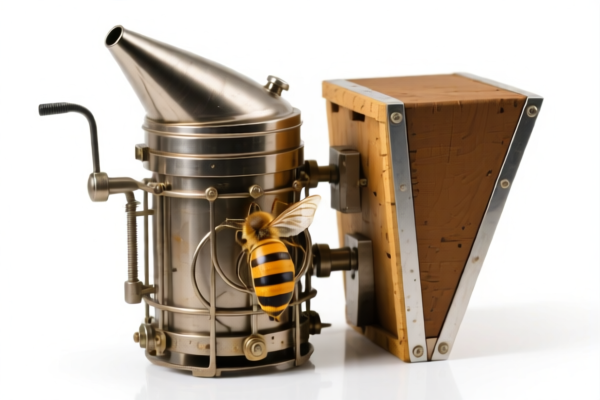
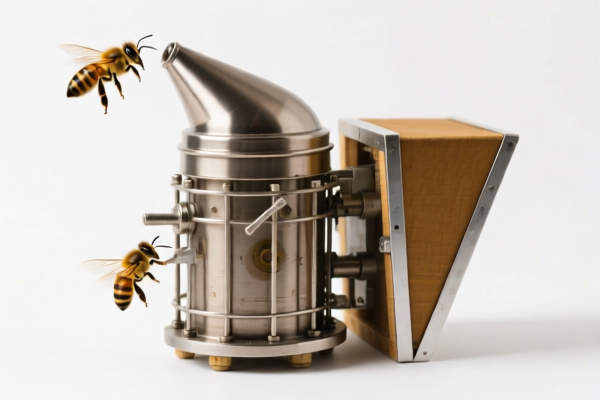
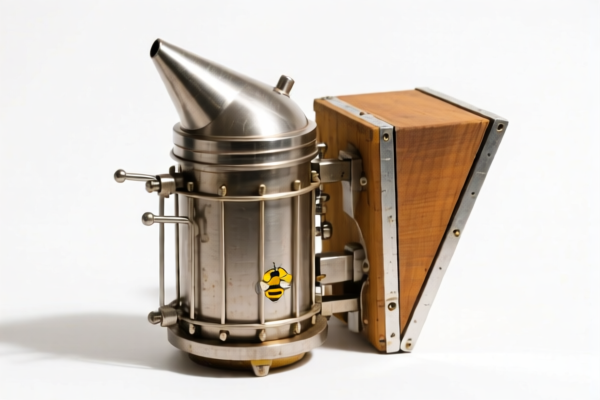
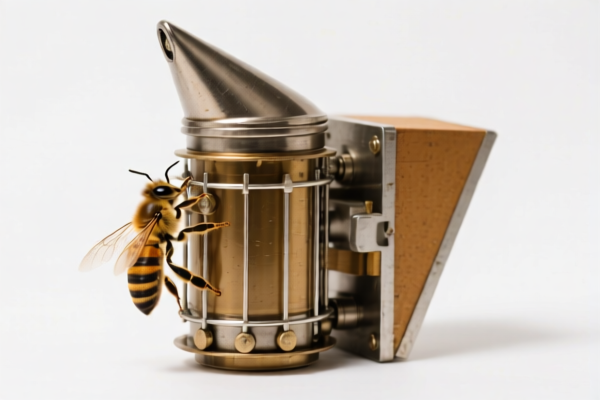
AI Analysis
🐝 Beehive Powder Trap (Hive Powder Trap)
🌐 HS Code Reference & Customs Clearance Guide | 2026 Latest Tariff Analysis | Professional Clearance Strategy
📌 I. Product Definition & Classification: What is a "Beehive Powder Trap"?
A Beehive Powder Trap is a specialized agricultural accessory used in apiary (beekeeping) management. It is typically installed within or at the entrance of a beehive. Its primary function is to collect debris, pollen, or chemical powder residues (such as acaricides for mite control) from the hive environment without harming the bees.
In international trade, these devices fall under Filtering or Purifying Machinery, as they physically separate solid particles (powder/debris) from the air or hive environment.
⚠️ Key Distinction:
- If the device is a mechanical trap/filter designed to catch solid particles (powder/debris) from air or hive spaces → It is classified under HS Code 8421.
- If it is a manual tool (e.g., a simple scoop or brush) → It would fall under Hand Tools (Chapter 82), but "Traps" imply a stationary or integrated mechanical function.
- Most Beehive Powder Traps are mechanical devices designed to trap specific particulates, making 8421.39.01 the correct chapter.
📦 II. HS Code Classification Details (2026 Latest Tariff Authority)
Based on the provided data, Beehive Powder Traps are classified under:
| HS Code | Product Description | Applicable Scenario | Tax Rate (Total) |
|---|---|---|---|
8421.39.01.15 |
Other Dust collection and air purification equipment: Other | Small-scale apiary powder traps, hive entrance filters, non-industrial scale | 25.0% |
8421.39.01.30 |
Industrial gas cleaning equipment: Other | Large-scale apiary operations, industrial honey processing facility air purification, bulk powder collection systems | 25.0% |
🔍 Key Insight:
- Both codes carry a Total Tax of 25.0% (0% Base + 25% Additional).
- The distinction between15and30is primarily based on scale and application:
-8421.39.01.15: For non-industrial or general use dust/powder collection. Most commercial beekeeping powder traps fall here.
-8421.39.01.30: For industrial gas cleaning. Use this only if the device is part of a large-scale industrial air filtration system for honey processing plants, not for individual hives.
💰 III. 2026 Latest Tariff Rate Breakdown (Including Surtaxes)
✅ Applicable Country: United States (US)
✅ Origin: China (CN)
✅ Effective Date: 2025 November 10 onwards
🎯 1. 8421.39.01.15 – Non-Industrial Dust/Powder Collection Equipment
| Item | Detail |
|---|---|
| Base Tariff | 0% (ad valorem) |
| Section 301 Surtax | +25% |
| Total Tariff | 25.0% |
| Tax Calculation | CIF Value × 25% |
| De Minimis Exemption | ❌ Not Applicable (Section 301 tariffs apply to all shipments) |
| Legal Basis | USITC:8421.39.01.15 → Section 301: Footnote 9903.88.01 |
📌 Explanation:
- The 0% base rate applies to general filtering machinery under HTSUS 8421.39.01.
- However, due to Section 301 tariffs on Chinese imports, an additional 25% is levied.
- No de minimis exemption (like the $800 threshold for personal parcels) applies to Section 301 goods.
🎯 2. 8421.39.01.30 – Industrial Gas Cleaning Equipment
| Item | Detail |
|---|---|
| Base Tariff | 0% (ad valorem) |
| Section 301 Surtax | +25% |
| Total Tariff | 25.0% |
| Tax Calculation | CIF Value × 25% |
| De Minimis Exemption | ❌ Not Applicable |
| Legal Basis | USITC:8421.39.01.30 → Section 301: Footnote 9903.88.01 |
📌 Note:
- The tariff rate is identical to the non-industrial code.
- Classification depends on proof of industrial use. If unclear, Customs may default to8421.39.01.15for smaller devices.
🛠️ IV. Customs Clearance Practical Advice (Avoid Pitfalls)
✅ 1. Required Documentation Checklist
| Document | Required | Notes |
|---|---|---|
| ✅ Product Specification Sheet | ✔️ | Must clearly state: "Powder Trap for Beehives," material, dimensions, and function (mechanical separation). |
| ✅ Product Photos | ✔️ | Show the trap installed in a hive or as a standalone unit. Highlight any filters or collection trays. |
| ✅ Commercial Invoice | ✔️ | Describe as "Beehive Powder Trap, Mechanical Air/Powder Filter," NOT "Beekeeping Tool" (vague). |
| ✅ Packing List | ✔️ | List items clearly. Avoid mixing with unrelated agricultural chemicals. |
| ✅ Origin Declaration | ✔️ | Must state "Made in China" to confirm Section 301 applicability. |
✅ 2. Declaration Tips (Critical Keywords)
🔥 "Be Precise: 'Filter' or 'Trap,' Not 'Tool'!"
| Situation | Correct Declaration | Wrong Declaration | Consequence |
|---|---|---|---|
| Standard Hive Powder Trap | 8421.39.01.15 – "Beehive Powder Trap, Air Filter" |
"Beekeeping Accessory" | Risk of misclassification, potential higher duties or penalties. |
| Large Industrial Air Filter | 8421.39.01.30 – "Industrial Gas Cleaning Equipment" |
"Beehive Accessory" | May be downgraded to 8421.39.01.15 if not proven industrial. |
| Manual Brush for Cleaning Hives | Not 8421 (Chapter 82) | 8421.39.01.15 |
Overpayment of 25% tariff. Manual tools are cheaper. |
✅ 3. Special Considerations
| Scenario | Advice |
|---|---|
| OEM/Custom Designs | Provide design drawings to prove it is a "filter/trap" and not a container or box. |
| Combo Products | If sold with chemical powder (acaricide), declare only the trap as 8421. The chemical is a separate HS Code (likely Chapter 38). Do not mix in one line item. |
| Small Samples | Even small samples are subject to 25% tariff if declared as Section 301 goods. No de minimis exemption. |
🌍 V. Global Market Clearance Comparison (2026)
| Country/Region | Recommended HS Code | Tariff Rate | Certification | Notes |
|---|---|---|---|---|
| 🇺🇸 USA | 8421.39.01.15 |
25% (301 Tariff) | None | High tariff on Chinese goods. |
| 🇪🇺 EU | 8421.39.90 |
~0% (MFN) | CE, REACH | No additional surtaxes. Lower cost. |
| 🇨🇳 China | 8421.39.90 |
0% | CCC (if applicable) | Low entry barrier. |
| 🇨🇦 Canada | 8421.39.90 |
0% | None | Free trade under CUSMA. |
| 🇦🇺 Australia | 8421.39.90 |
5% | ACCC | Moderate tariff. |
📌 Conclusion:
- The USA is the most expensive market due to the 25% Section 301 tariff.
- For US-bound goods, ensure accurate description to avoid penalties.
- Consider sourcing from Vietnam or Thailand to mitigate US tariffs, if applicable.
📌 VI. Common Mistakes & Pitfalls (Blood & Tears Lessons)
❌ Mistake 1: Declaring as "Beekeeping Tool" or "Accessories"
👉 Consequence: CBP may reclassify under 8421, leading to 25% retroactive duty + penalties.
❌ Mistake 2: Mixing Powder Traps with Acaricide Chemicals in One Line Item
👉 Consequence: Misdeclaration. Chemicals have different HS Codes and possibly different tariffs. Split the items.
❌ Mistake 3: Ignoring Section 301 for Small Packages
👉 Consequence: Many importers think small parcels are exempt. They are not. 25% applies to all Chinese-origin 8421 goods.
✅ Correct Practice:
"Beehive Powder Trap, Mechanical Air Filtration Device, For Apiculture Use, Model XYZ, Made in China"
🎯 VII. Conclusion: Professional Clearance, Cost Efficiency!
🎯 Remember This:
🔹 "If it filters or traps powder, it's 8421."
🔹 "25% US Tariff is non-negotiable for Chinese origin."
🔹 "Declare as 'Filter/Trap,' not 'Tool,' to match HS Code."
📌 Pro Tip:
If you are importing small quantities for personal use, ensure the value is below the de minimis threshold AND confirm if your carrier/Broker will apply Section 301 tariffs (often they do for commercial shipments). For business imports, budget 25% duty.
📣 Immediate Action:
📞 Consult a Customs Broker to verify if your specific model qualifies for
8421.39.01.15vs8421.39.01.30.
📄 Prepare detailed specs to prove it is a "filter/trap" mechanism.
🚀 Optimize supply chain to reduce landed cost in the US market.
✨ Precision in Classification, Savings in Tariffs!
💼 Your profit margin depends on accurate HS Codes!
Customer Reviews
About HS Code Classification
The Harmonized System (HS) is an internationally standardized nomenclature developed by the World Customs Organization (WCO) to classify traded products. Over 200 countries use the HS system as the basis for customs tariffs, trade statistics, and import/export regulations.
Each HS code follows a hierarchical structure:
- Chapter (2 digits) — Broad category of goods (e.g., Chapter 84: Machinery and Mechanical Appliances)
- Heading (4 digits) — More specific grouping within the chapter
- Subheading (6 digits) — Internationally standardized breakdown, used by all WCO member countries
- National subdivisions (8-10 digits) — Country-specific extensions for further classification, such as US HTSUS 10-digit codes
Correct HS code classification is essential for smooth customs clearance, accurate duty payment, and compliance with trade regulations. Misclassification can lead to customs delays, overpayment of duties, or penalties.
When importing from CN to US, the applicable tariff rates may include:
- Most-Favored-Nation (MFN) rate — The standard duty rate applied to WTO members
- General rate — Applied to countries without trade agreements
- Trade remedy duties — Additional tariffs such as Section 301 (anti-dumping), Section 232 (national security), or countervailing duties
The information provided on this page is for reference purposes only. For official classification, please consult with your local customs authority or a licensed customs broker.