Beer cork stoppers
CN → US| HS Code | Tariff Rate | Origin | Destination | Doc |
|---|---|---|---|---|
| 4504104700 | 35.0% | CN | US | Official Doc |
| 3926909989 | 22.8% | CN | US | Official Doc |
| 4503106000 | 35.0% | CN | US | Official Doc |
| 4503102000 | 35.0% | CN | US | Official Doc |
| 4503106000 | 35.0% | CN | US | Official Doc |
Product Images
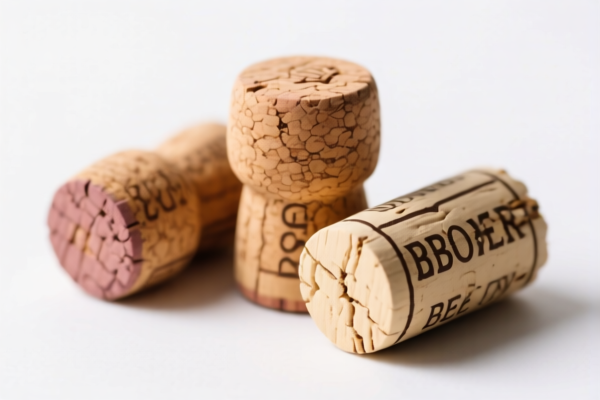


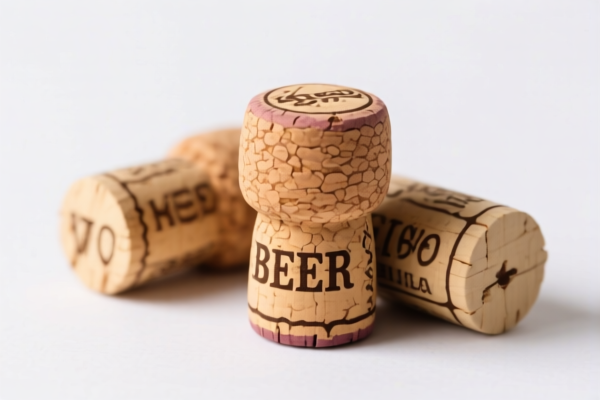
AI Analysis
🍾 Beer Cork Stoppers (Softwood Corks)
🌐 HS Code Reference & Customs Clearance Guide | 2026 Latest Tariff Analysis | Professional Clearance Strategy
📌 I. Product Definition & Classification: Do You Truly Understand "Beer Cork Stoppers"?
Beer cork stoppers are sealing elements primarily made from natural cork (softwood bark) or composite materials (cork/plastic blends). In international trade, their classification hinges on two critical factors:
1. Material Composition: 100% natural cork vs. composite (cork + plastic).
2. Form & Function: Specifically designed as "stoppers" (塞子) for beverage containers.
⚠️ Key Distinction Points:
- 100% Natural Cork: Falls under Chapter 45 (Cork and Articles of Cork).
- Cork-Plastic Composite: Often classified as plastic articles (Chapter 39) if plastic is the essential character, or cork if cork dominates. However, US customs often scrutinizes "composite" claims strictly.
- Non-Cork Materials (e.g., pure plastic caps): Would fall under Chapter 39, but this guide focuses strictly on the data provided for cork/composite stops.
📦 II. HS Code Classification Details (2026 Latest Tariff Authority Match)
Based on the provided data, here are the precise HS Codes and their rationales:
| HS Code | Product Description | Classification Rationale | Total Tax Rate |
|---|---|---|---|
4504.10.47.00 |
Cork Stoppers (Matched Material: Cork; Form: Stopper) | Direct match: Material is cork, form is stopper. | 35.0% |
3926.90.99.89 |
Inferred Material: Cork/Plastic Composite. Classified as "Other articles of plastics and other materials." | Composite assumption: If customs deems plastic the essential character, it falls under plastics. | 22.8% |
4503.10.60.00 |
Beer Cork Stopper: Full match with "Cork Stoppers" in classification. Material: Natural Cork. | Primary classification for natural cork stoppers. Name and material align perfectly. | 35.0% |
4503.10.20.00 |
Cork Material, Stopper Form: Core component of this category. | Core classification for cork stoppers. Emphasizes material (cork) and form (stopper). | 35.0% |
4503.10.60.00 |
Name "Beer Cork Stopper" fully matches "Cork Stoppers". Material: Natural Cork. | Duplicate entry reinforcing natural cork classification. Highlights name-material alignment. | 35.0% |
🔍 Key Insight:
- Natural Cork Stoppers consistently fall under4503.10.xx.xxwith a 35% total tax rate.
- Composite Stoppers might be classified under3926.90.99.89(Plastics) at a lower 22.8% rate, but this carries risk if material composition is not clearly documented as composite.
-4504.10.47.00is a specific subheading for cork articles, also at 35%.
💰 III. 2026 Latest Tariff Rate Breakdown (Including Surtaxes & Policy Add-ons)
✅ Applicable Country: United States (US)
✅ Origin: China (CN)
✅ Effective Date: November 10, 2025 (for subsequent imports)
🎯 1. 4503.10.60.00, 4503.10.20.00, 4504.10.47.00 — Natural Cork Stoppers
| Item | Details |
|---|---|
| Base Duty Rate | 0.0% (ad valorem) |
| Section 301 Surtax | +25.0% (USITC Footnote for Chinese-origin goods) |
| Section 122 Tariff | +10.0% (Specific surtax under IEEPA Section 122) |
| Total Tax Rate | 35.0% |
| Tax Calculation | CIF Value × 35% |
| De Minimis Exemption | ❌ Not Applicable (deny_de_minimis) |
| Legal Basis Path | USITC:4503.10.60.00 → USITC:4504.10.47.00 → Section 301: Footnote 9903.88.01 → IEEPA:122 |
📌 Explanation:
- Base Duty (0%): Cork articles from China enjoy low base duties.
- Section 301 (+25%): Standard surtax on Chinese goods.
- Section 122 (+10%): Additional surtax under IEEPA, specific to certain categories.
- Total (35%): High tariff burden. No de minimis exemption for shipments under $800.
🎯 2. 3926.90.99.89 — Cork/Plastic Composite Stoppers (Inferred)
| Item | Details |
|---|---|
| Base Duty Rate | 5.3% (ad valorem) |
| Section 301 Surtax | +7.5% (Reduced Section 301 rate for specific plastic articles) |
| Section 122 Tariff | +10.0% |
| Total Tax Rate | 22.8% |
| Tax Calculation | CIF Value × 22.8% |
| De Minimis Exemption | ❌ Not Applicable |
| Legal Basis Path | USITC:3926.90.99.89 → Section 301: Reduced Footnote → IEEPA:122 |
📌 Caution:
- This lower rate (22.8%) only applies if the product is definitively classified as a composite plastic article.
- If customs inspects the product and determines it is >50% natural cork by weight/value, they may reclassify it to Chapter 45 (35% rate), leading to back taxes and penalties.
- Do not misdeclare composite goods to gain lower rates. Provide material certificates.
🛠️ IV. Customs Clearance Practical Advice (Real-World Pitfall Avoidance)
✅ 1. Required Documentation Checklist (Mandatory)
| Document | Required? | Purpose |
|---|---|---|
| ✅ Material Composition Certificate | ✔️ | Proves % of cork vs. plastic (critical for 3926 vs 4503). |
| ✅ Product Photos (Clear Label) | ✔️ | Shows shape, branding, and any composite seams. |
| ✅ Commercial Invoice | ✔️ | Must specify "Beer Cork Stoppers" and material (e.g., "Natural Cork" or "Cork-Plastic Composite"). |
| ✅ Packing List | ✔️ | Details quantity, weight, and packaging. |
| ✅ Test Report (Optional but Recommended) | ✔️ | FDA/LFGB compliance for food contact (corks are food-grade). |
📌 Critical Tip:
If claiming3926.90.99.89(22.8%), you must provide a material breakdown proving plastic is the essential character. Otherwise, customs will default to4503(35%).
✅ 2. Declaration Strategy (Key Mantra)
🔥 "Material First, Form Second, Name Precise, Tax Right!"
| Scenario | Correct Declaration | Risk if Wrong |
|---|---|---|
| 100% Natural Cork | 4503.10.60.00 or 4503.10.20.00 |
Misdeclaring as composite → 35% back tax + penalty. |
| Cork-Plastic Composite | 3926.90.99.89 (with material proof) |
No proof → Customs reclassifies to 4503 (35%). |
| Pure Plastic Stoppers | 3926.90.99.89 |
Mislabeling as cork → Potential fraud penalty. |
| Mixed Shipments | Declare per item type | Blurring types → Whole shipment flagged. |
✅ 3. Special Cases Handling
| Situation | Recommendation |
|---|---|
| OEM Custom Stoppers | Provide client design specs + material sheet. Avoid generic "cork stopper" if composite. |
| Small Sample Shipments (<$800) | ❌ No De Minimis! Even under $800, Section 122 and 301 taxes apply. Plan for full tax payment. |
| Food-Grade Compliance | Ensure FDA 21 CFR compliance for food contact surfaces. Missing docs = Hold/Destroy. |
| High-Volume Imports | Apply for Advance Ruling from CBP to lock in HS Code and tax rate. |
🌍 V. Global Market Comparison (2026 Latest)
| Country/Region | Recommended HS Code | Tax Rate (China Origin) | Certification | Notes |
|---|---|---|---|---|
| 🇺🇸 USA | 4503.10.60.00 |
35% | FDA | Section 122 (+10%) applies. No de minimis. |
| 🇪🇺 EU | 4503.10.00 |
0% | CE/REACH | No surtaxes. Low duty. |
| 🇨🇳 China | 4503.10.20.00 |
0% | N/A | Import duty 0%. |
| 🇬🇧 UK | 4503.10.00 |
0% | UKCA | Post-Brexit alignment with EU. |
| 🇯🇵 Japan | 4503.10.00 |
0% | PSE (if applicable) | No surtaxes. |
📌 Conclusion:
- USA is the highest-cost market due to Section 301 (+25%) and Section 122 (+10%).
- EU/UK/JP offer 0% duty, making them more attractive for export pricing.
- Composite vs. Natural: The 12.2% difference (35% vs 22.8%) is significant, but risk-reward must be weighed. Misclassification leads to penalties.
📌 VI. Common Errors & Pitfall Guide (Lessons from the Field)
❌ Error 1: Declaring 100% cork as composite to save 12.2%
👉 Consequence: CBP inspection reveals pure cork → Back taxes + 20% penalty.
❌ Error 2: Ignoring Section 122 (+10%) in cost calculation
👉 Consequence: Profit margin eroded by 10% unexpected tax.
❌ Error 3: Assuming de minimis ($800) applies
👉 Consequence: No de minimis for China-origin goods under Section 122/301. Full tax applies.
❌ Error 4: Vague description "Cork Stopper" without material type
👉 Consequence: Customs assigns highest possible duty rate (35%) due to uncertainty.
✅ Correct Approach:
"Beer Cork Stoppers, 100% Natural Cork, Diameter 23mm, Food-Grade, Model ABC, FDA Compliant"
OR
"Composite Cork-Plastic Stopper, 40% Cork / 60% Plastic, Diameter 23mm, Model XYZ"
🎯 VII. Conclusion: Professional Declaration, Cost Efficiency, Smooth Clearance
🎯 Remember the Mantra:
🔹 "Material Defines Code, Code Defines Tax. 35% for Cork, 22.8% for Composite, 12.2% Savings with Proof!"
🔹 "No De Minimis for China, Section 122 Hits Hard, Document Everything!"
📌 Pro Tip:
- If your cork stoppers are not from China (e.g., Vietnam, Portugal), you may avoid Section 301/122 surtaxes.
- Always request an Advance Ruling from CBP if your composite material ratio is borderline.
- Keep material certificates readily available for customs inspection.
📣 Immediate Action:
📞 Contact your customs broker + Provide material specs + Apply for Advance Ruling
🚀 Ensure your beer cork stoppers clear customs smoothly, predictably, and profitably!
✨ Professional clearance starts with precise classification!
💼 Every percentage point of tax difference impacts your bottom line!
Customer Reviews
About HS Code Classification
The Harmonized System (HS) is an internationally standardized nomenclature developed by the World Customs Organization (WCO) to classify traded products. Over 200 countries use the HS system as the basis for customs tariffs, trade statistics, and import/export regulations.
Each HS code follows a hierarchical structure:
- Chapter (2 digits) — Broad category of goods (e.g., Chapter 84: Machinery and Mechanical Appliances)
- Heading (4 digits) — More specific grouping within the chapter
- Subheading (6 digits) — Internationally standardized breakdown, used by all WCO member countries
- National subdivisions (8-10 digits) — Country-specific extensions for further classification, such as US HTSUS 10-digit codes
Correct HS code classification is essential for smooth customs clearance, accurate duty payment, and compliance with trade regulations. Misclassification can lead to customs delays, overpayment of duties, or penalties.
When importing from CN to US, the applicable tariff rates may include:
- Most-Favored-Nation (MFN) rate — The standard duty rate applied to WTO members
- General rate — Applied to countries without trade agreements
- Trade remedy duties — Additional tariffs such as Section 301 (anti-dumping), Section 232 (national security), or countervailing duties
The information provided on this page is for reference purposes only. For official classification, please consult with your local customs authority or a licensed customs broker.