Beeswax
CN → US| HS Code | Tariff Rate | Origin | Destination | Doc |
|---|---|---|---|---|
| 3406000000 | 17.5% | CN | US | Official Doc |
| 1521904000 | 17.5% | CN | US | Official Doc |
| 1521902000 | 22.3% | CN | US | Official Doc |
Product Images
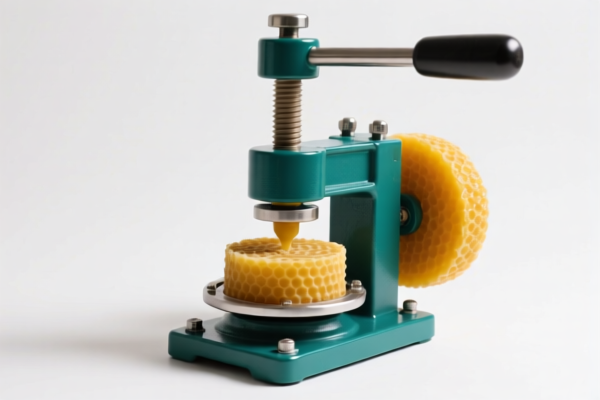
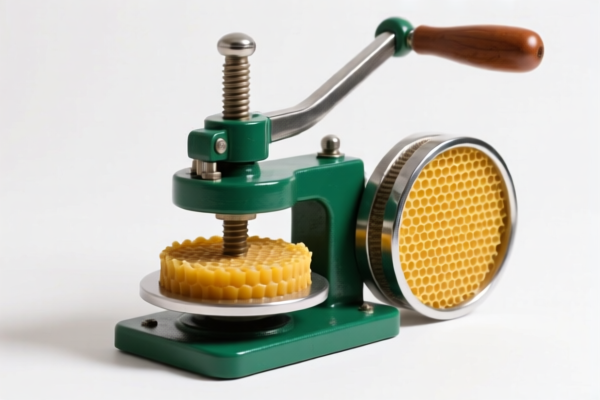
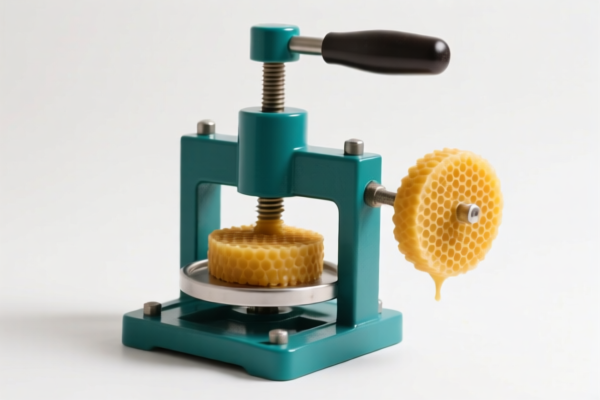
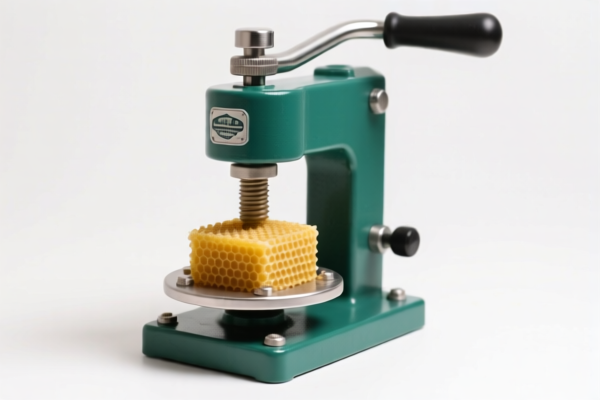
AI Analysis
🐝 Beeswax (Natural Wax Material)
🌐 HS Code Reference & Customs Clearance Guide | 2026 Latest Tariff Analysis | Professional Entry Strategy
📌 I. Product Definition & Classification: Understanding "Beeswax"
Beeswax is a natural wax substance produced by honey bees. In international trade, its classification depends heavily on the purity, processing state, and intended use of the material. While often associated with candle-making, beeswax can fall under different tariff headings depending on whether it is treated as a raw material for wax products or as a standalone chemical/vegetable-like product.
⚠️ Key Distinction Point:
- If considered primarily as a raw material for candles/wax products → It may be grouped under 3406.00.00.00 (Candles, Tapers, and Similar Articles).
- If considered as a distinct natural wax material (regardless of end-use) → It may be grouped under 1521.90.40.00 (Vegetable/Wax Materials) or 1521.90.20.00 (Other Waxes).
📦 II. HS Code Classification Details (2026 Latest Tariff Authority Comparison)
| HS Code | Product Description | Application Scenario | Material Consistency |
|---|---|---|---|
3406.00.00.00 |
Candles, tapers, and similar articles | Beeswax categorized by its material attribute fitting the category of "candle-like items" | ✅ Matches "Wax" attribute for candle classification |
1521.90.40.00 |
Vegetable waxes and other animal/vegetable waxes, not compounded or in the form of sheets, film, or similar, in bulk or in blocks | Beeswax classified by core material identity (Pure Beeswax) | ✅ Exact match with "Beeswax" as a core material |
1521.90.20.00 |
Other waxes (including laminated waxes) | Beeswax classified under "Other Category" when not strictly defined as compounded or specific bulk forms | ✅ Name matches "Beeswax", but falls into "Other" sub-category |
🔍 Key Reminder:
-3406.00.00.00focuses on the functional classification (as a candle material);
-1521.90.40.00focuses on the material classification (as a natural wax);
-1521.90.20.00is a catch-all for beeswax if it doesn't fit the specific definitions of the above, often resulting in higher duties due to less specific categorization.
💰 III. 2026 Latest Tariff Rate Details (Including Surcharges & Policy Add-ons)
✅ Applicable Country: United States (US)
✅ Origin: China (CN)
✅ Effective Date: 2025 November 10 onwards (including subsequent imports)
🎯 1. 3406.00.00.00 —— Beeswax as Candle Material
| Item | Content |
|---|---|
| Base Tariff | 0.0% (Ad Valorem) |
| Section 301 Surcharge | +7.5% |
| Section 122 Tariff | +10% |
| Total Rate | 17.5% |
| Tax Calculation | CIF Value × 17.5% |
| De Minimis Eligibility | ❌ Not Applicable (Standard trade rules apply) |
| Legal Basis Path | Base: 0% + 301: 7.5% + 122: 10% |
📌 Explanation:
- When beeswax is classified under Chapter 34 (as a component of candles), the base duty is 0%.
- However, it is subject to Section 301 (7.5%) and Section 122 (10%) surcharges.
- Total Rate: 17.5%. This is a moderate rate compared to other categories, making it potentially cost-effective if the functional classification is accepted.
🎯 2. 1521.90.40.00 —— Pure Beeswax (Material Classification)
| Item | Content |
|---|---|
| Base Tariff | 0.0% |
| Section 301 Surcharge | +7.5% |
| Section 122 Tariff | +10% |
| Total Rate | 17.5% |
| Tax Calculation | CIF Value × 17.5% |
| De Minimis Eligibility | ❌ Not Applicable |
| Legal Basis Path | Base: 0% + 301: 7.5% + 122: 10% |
📌 Note:
- This classification aligns with the core material identity of beeswax.
- The tax structure is identical to3406.00.00.00.
- Total Rate: 17.5%.
- This is a strong candidate for clearance if the product is pure, un-compounded beeswax.
🎯 3. 1521.90.20.00 —— Other Waxes (Catch-All Category)
| Item | Content |
|---|---|
| Base Tariff | 4.8% |
| Section 301 Surcharge | +7.5% |
| Section 122 Tariff | +10% |
| Total Rate | 22.3% |
| Tax Calculation | CIF Value × 22.3% |
| De Minimis Eligibility | ❌ Not Applicable |
| Legal Basis Path | Base: 4.8% + 301: 7.5% + 122: 10% |
📌 Warning:
- This classification applies when beeswax is considered under "Other Waxes" and does not fit the specific "Vegetable/Animal Wax" bulk definition (1521.90.40.00).
- Higher Base Rate: 4.8% vs. 0% for others.
- Total Rate: 22.3%.
- Avoid if possible: This category results in the highest tax burden for beeswax imports.
🛠️ IV. Customs Clearance Practical Advice (Pitfall Avoidance Guide)
✅ 1. Documentation Checklist (All Required)
| Document | Must Provide | Description |
|---|---|---|
| ✅ Product Specification | ✔️ | Detailed purity level (e.g., Food Grade, Cosmetic Grade, Industrial), melting point, color, odor. |
| ✅ Material Safety Data Sheet (MSDS) | ✔️ | Confirms non-hazardous nature of natural beeswax. |
| ✅ Certificate of Origin (CO) | ✔️ | Essential for proving Chinese origin and applying correct surcharges. |
| ✅ Commercial Invoice | ✔️ | Must clearly state "Beeswax" and avoid vague terms like "Wax Mix" unless specified. |
| ✅ Packing List | ✔️ | Net/Gross weight, packaging type (blocks, pellets, liquid). |
| ✅ Usage Declaration | ✔️ | Explicitly state intended use (e.g., "For Candle Manufacturing" vs. "Raw Wax Material"). |
✅ 2. Declaration Strategies (Key Tips)
🔥 "Match Material, Choose Low Base, Avoid 'Other'!"
| Scenario | Correct Declaration | Wrong Approach |
|---|---|---|
| Pure Beeswax Blocks/Pellets | 1521.90.40.00 (17.5%) |
Using 1521.90.20.00 (22.3%) → Unnecessary 4.8% base tax loss |
| Beeswax intended for Candles | 3406.00.00.00 (17.5%) |
Declaring as "Candles" if only raw wax is shipped → Misclassification Risk |
| Compounded/Processed Beeswax | Check specific processing; may fall under 1521.90.20.00 (22.3%) |
Claiming "Raw" status for compounded wax → Customs Penalty |
| Beeswax for Cosmetics | 1521.90.40.00 (17.5%) |
Declaring under cosmetic chapters → Complex Compliance & Higher Taxes |
✅ 3. Special Situation Handling
| Situation | Handling Advice |
|---|---|
| OEM Custom Wax Blocks | Provide manufacturing specs showing standard beeswax properties, not custom blends, to qualify for 1521.90.40.00. |
| Beeswax with Additives | If additives exceed standard limits, it may be considered "Compounded," pushing it to 1521.90.20.00 (22.3%). |
| Multiple Uses (Candles & Cosmetics) | Clearly define the primary commercial use in the invoice. If ambiguous, customs may default to the higher-rate "Other" category. |
| Organic/Certified Beeswax | Certification does not change HS Code, but must be declared to avoid additional regulatory checks (FDA, USDA). |
🌍 V. Global Market Clearance Comparison (2026 Latest)
| Country/Region | Recommended HS Code | Tariff Rate | Certification Requirements | Notes |
|---|---|---|---|---|
| 🇺🇸 USA | 1521.90.40.00 or 3406.00.00.00 |
17.5% | None (Non-Hazardous) | Avoid 1521.90.20.00 (22.3%) |
| 🇨🇳 China | 1521.90.40.00 |
~0-5% | N/A | Low duty for re-export or domestic use |
| 🇪🇺 EU | 1521.90.90 |
0% | REACH Registration | No US-style surcharges |
| 🇬🇧 UK | 1521.90.90 |
0-5% | UKCA Mark (if finished goods) | Post-Brexit rules may vary |
| 🇯🇵 Japan | 1521.90.90 |
0-2% | FSC (if food contact) | Low tariffs, high quality standards |
📌 Conclusion:
- USA is the primary market with specific surcharges (Section 301 + 122);
- Correct classification is critical to avoid the 22.3% rate;
- EU/UK/Japan offer lower or zero tariffs but require stricter compliance (REACH, FSC).
📌 VI. Common Errors & Pitfall Guide (Lessons Learned)
❌ Mistake 1: Declaring "Beeswax" under 1521.90.20.00 without justification
👉 Result: Paying 22.3% instead of 17.5% → Loss of 4.8% base tax advantage
❌ Mistake 2: Confusing "Beeswax" with "Paraffin Wax"
👉 Result: Paraffin (mineral wax) may have different tariffs (2710.12 etc.) → Misclassification & Delays
❌ Mistake 3: Failing to specify "Pure" vs. "Compounded"
👉 Result: Customs may assume compounded → Default to 1521.90.20.00 (22.3%)
❌ Mistake 4: Using "Wax" as a generic term on the invoice
👉 Result: Customs demands detailed breakdown → Clearance Delay & Potential Audit
✅ Best Practice:
"Beeswax, Natural, Pure, Uncompounded, For Candle Manufacturing, HS Code 1521.90.40.00"
🎯 VII. Conclusion: Precision in Classification Saves Costs!
🎯 Remember the Key Rule:
🔹 "Pure Beeswax? Aim for
1521.90.40.00or3406.00.00.00(17.5%). Avoid1521.90.20.00(22.3%)."
🔹 "Base Tax Difference is 4.8%. On $100,000 shipment, that’s $4,800 saved!"
📌 Pro Tip:
- If your beeswax is organic or food-grade, ensure you have FDA/EU compliance documents ready, even though the HS Code is the same.
- For large volumes, consider Advance Rulings from US Customs to lock in the 17.5% rate and avoid disputes.
📣 Immediate Action:
📞 Consult with a licensed customs broker.
📝 Provide MSDS and Product Specifications.
🚀 Secure the 17.5% rate and ensure smooth clearance!
✨ Professional Clearance, Start with Accurate Classification!
💼 Every percentage point counts in global trade!
Customer Reviews
About HS Code Classification
The Harmonized System (HS) is an internationally standardized nomenclature developed by the World Customs Organization (WCO) to classify traded products. Over 200 countries use the HS system as the basis for customs tariffs, trade statistics, and import/export regulations.
Each HS code follows a hierarchical structure:
- Chapter (2 digits) — Broad category of goods (e.g., Chapter 84: Machinery and Mechanical Appliances)
- Heading (4 digits) — More specific grouping within the chapter
- Subheading (6 digits) — Internationally standardized breakdown, used by all WCO member countries
- National subdivisions (8-10 digits) — Country-specific extensions for further classification, such as US HTSUS 10-digit codes
Correct HS code classification is essential for smooth customs clearance, accurate duty payment, and compliance with trade regulations. Misclassification can lead to customs delays, overpayment of duties, or penalties.
When importing from CN to US, the applicable tariff rates may include:
- Most-Favored-Nation (MFN) rate — The standard duty rate applied to WTO members
- General rate — Applied to countries without trade agreements
- Trade remedy duties — Additional tariffs such as Section 301 (anti-dumping), Section 232 (national security), or countervailing duties
The information provided on this page is for reference purposes only. For official classification, please consult with your local customs authority or a licensed customs broker.