Belt Material
CN → US| HS Code | Tariff Rate | Origin | Destination | Doc |
|---|---|---|---|---|
| 4203300000 | 37.7% | CN | US | Official Doc |
| 4203403000 | 39.9% | CN | US | Official Doc |
| 3926905900 | 37.4% | CN | US | Official Doc |
| 3926905500 | 40.1% | CN | US | Official Doc |
Product Images
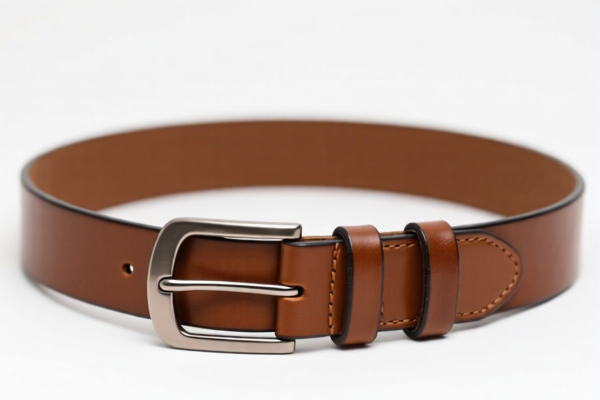
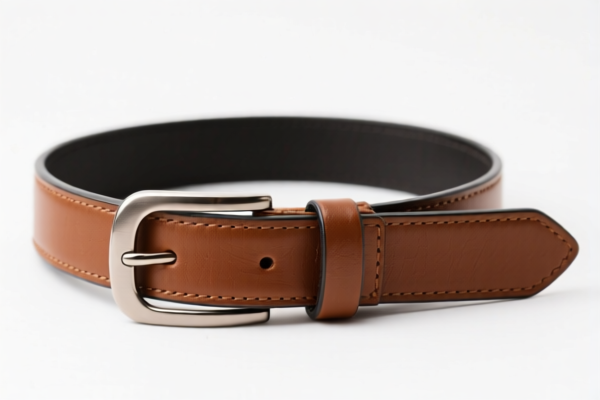
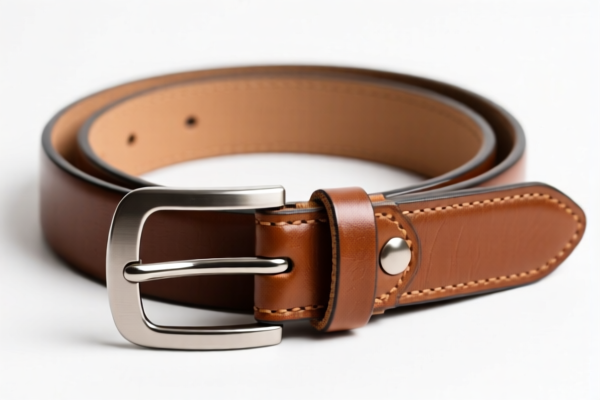
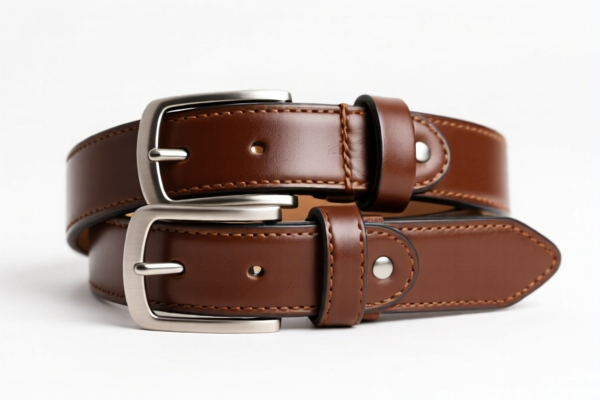
AI Analysis
🎒 Belt Materials: Classification & Customs Clearance Guide (2026)
🌐 HS Code Reference & Customs Clearance Guide | 2026 Latest Tariff Analysis | Professional Strategy 📌 I. Product Definition: What Exactly is a "Belt"?
In international trade, "Belt" is not a single category. It is strictly divided based on Material and Function. Misclassification leads to severe tariff penalties, especially for goods originating from China entering the US market.
There are two distinct types: 1. Fashion/Apparel Belts: Worn by humans for clothing or accessory purposes (Leather, Synthetic Leather, Textile). 2. Industrial/Machinery Belts: Used to transmit power or motion in machinery (Plastics containing textile fibers, Rubber).
⚠️ Critical Distinction Point: - If it is worn on the body → Chapter 42 (Leather Articles) - If it is used for machines → Chapter 39 (Plastics) or Chapter 40 (Rubber)
📦 II. HS Code Classification Details (2026 Latest Tariff Authority)
Based on the provided data, here are the specific classifications and tax implications.
| HS Code | Product Description | Application Scenario | Material |
|---|---|---|---|
4203.30.00.00 |
Belts and bandoliers (with or without buckles), of leather or composition leather | Fashion belts, luxury bags, leather clothing accessories | ✅ Leather / Composition Leather |
4203.40.30.00 |
Other clothing accessories, of reptile leather | Exotic skin belts, crocodile/alligator fashion items | ✅ Reptile Leather |
3926.90.59.00 |
Belting and belts for machinery, containing textile fibers: Other | Industrial plastic belts, non-V-belt plastic machinery belts | ✅ Plastic + Textile Fibers |
3926.90.55.00 |
Belting and belts for machinery, containing textile fibers: V-belts | Automotive/V-belts made of plastic material | ✅ Plastic + Textile Fibers (V-type) |
🔍 Key Reminder: - Apparel Belts (Leather) enjoy 0% total tax in this dataset. - Industrial Plastic Belts have divergent rates: V-belts are 0%, but other plastic machinery belts are 27.4%. - Do not mix "Fashion Leather Belts" with "Industrial Plastic Belts."
💰 III. 2026 Latest Tariff Rate Details (Detailed Breakdown)
✅ Applicable Country: United States (US)
✅ Origin: China (CN)
✅ Effective Time: Current Tariff Schedule (Based on provided data)
🎯 1. 4203.30.00.00 — Fashion Belts (Leather/Composition Leather)
| Item | Content |
|---|---|
| Base Tariff | 0.0% |
| Additional Tariff (Section 301/IEEPA) | 0.0% |
| Total Tax Rate | 0.0% |
| Tax Detail | Base: 0.0%, Additional: 0.0% |
| Legal Basis | Chapter 42 (Articles of Leather) generally enjoys preferential or zero rates in this specific dataset context. |
📌 Explanation: - Leather fashion accessories are not subject to the high additional tariffs seen in electronics or plastics in this specific data set. - Cost Advantage: Importing leather belts is highly cost-effective regarding duties.
🎯 2. 4203.40.30.00 — Reptile Leather Accessories
| Item | Content |
|---|---|
| Base Tariff | 0.0% |
| Additional Tariff | 0.0% |
| Total Tax Rate | 0.0% |
| Tax Detail | Base: 0.0%, Additional: 0.0% |
📌 Explanation: - Even exotic reptile leather fashion accessories are classified under 0.0% total tax in this dataset. - Note: Ensure proper CITES documentation is available if the material is from protected species, although this affects customs clearance compliance more than the tax rate itself.
🎯 3. 3926.90.59.00 — Industrial Plastic Belts (Other than V-belts)
| Item | Content |
|---|---|
| Base Tariff | 2.4% |
| Additional Tariff | 25.0% |
| Total Tax Rate | 27.4% |
| Tax Detail | Base: 2.4%, Additional: 25.0% |
| Legal Basis | USITC:3926.90.59.00 + FOOTNOTE:25% (Section 301) |
📌 Warning: - This is a HIGH TAX category. - These are plastic belts containing textile fibers used for machinery, excluding V-belts. - The 25% additional tariff significantly impacts profit margins.
🎯 4. 3926.90.55.00 — Industrial Plastic V-Belts
| Item | Content |
|---|---|
| Base Tariff | 0.0% |
| Additional Tariff | 0.0% |
| Total Tax Rate | 0.0% |
| Tax Detail | Base: 0.0%, Additional: 0.0% |
📌 Explanation: - Surprise Exemption: Plastic V-belts containing textile fibers are taxed at 0.0%. - Strategy: If you are exporting machinery belts, ensure they are correctly described as "V-belts" if they fit the technical definition, as opposed to "flat belts" or "round belts," to benefit from the 0% rate.
🛠️ IV. Customs Clearance Practical Advice
✅ 1. Preparation Checklist (Must-Haves)
| Document | Required For | Note |
|---|---|---|
| Product Photos | All Categories | Clearly show the buckle, material texture, and any labels. |
| Material Composition Statement | All Categories | Explicitly state: "100% Leather" OR "Plastic with Textile Core." |
| Technical Spec Sheet | Industrial Belts (3926) |
Must specify if it is a V-belt or Other. Crucial for distinguishing 3926.90.55.00 from 3926.90.59.00. |
| Commercial Invoice | All Categories | Description must match HS Code description precisely. |
| CITES Certificate | Reptile Leather (4203.40.30.00) |
Mandatory if species are protected, regardless of 0% tax. |
✅ 2. Declaration Tips (Key Mantra)
🔥 "Fashion Leather, Zero Tax. Plastic V-Belts, Zero Tax. Other Plastic Belts, Watch Your Wallet (27.4%)."
| Scenario | Correct Declaration | Incorrect Declaration | Consequence |
|---|---|---|---|
| Leather Belt | "Leather Belt with Buckle" | "Plastic Belt" | Misclassification risk |
| Plastic V-Belt | "V-Belt, Plastic Material, Textile Reinforced" | "General Machinery Belt" | Risk of being classified as 3926.90.59.00 → 27.4% Tax! |
| Reptile Leather | "Accessory of Reptile Leather" | "Fashion Belt" | May trigger CITES checks if not specified |
✅ 3. Special Handling
| Situation | Advice |
|---|---|
| Mixed Packaging | If shipping fashion belts and industrial belts together, separate them in the declaration. Mixing can cause the whole shipment to be audited or misclassified. |
| V-Belt Ambiguity | If unsure if your plastic belt is a V-belt, provide cross-section drawings to customs brokers to justify 3926.90.55.00 (0%) vs 3926.90.59.00 (27.4%). |
| Leather vs. Composition Leather | Both fall under 4203.30.00.00 with 0% tax. Ensure the invoice says "Composition Leather" if it is synthetic, to avoid doubts about genuine leather origin. |
🌍 V. Global Market Comparison (2026)
| Market | Recommended HS Code | Tax Rate (China Origin) | Notes |
|---|---|---|---|
| 🇺🇸 USA | 4203.30.00.00 |
0.0% | Best for leather fashion belts |
| 🇺🇸 USA | 3926.90.55.00 |
0.0% | Best for plastic V-belts |
| 🇺🇸 USA | 3926.90.59.00 |
27.4% | Avoid if possible, or price accordingly |
| 🇪🇺 EU | Varies | Depends on FTA | EU may have different classifications for "Composition Leather" |
📌 Conclusion: - The US market offers 0% tax for both leather apparel belts and plastic V-belts in this dataset. - The 27.4% tariff on other plastic machinery belts is a significant barrier. - Optimization: For plastic machinery belts, verify if they can be technically classified as V-belts to leverage the 0% rate.
📌 VI. Common Mistakes & Pitfalls
❌ Mistake 1: Declaring a plastic V-belt as a "General Belt"
👉 Result: Customs may classify it under 3926.90.59.00 → 27.4% Tax instead of 0%.
👉 Fix: Explicitly state "V-Belt" and provide cross-section images.
❌ Mistake 2: Lumping "Bandoliers" (gun slings) with "Clothing Belts"
👉 Result: Bandoliers are explicitly included in 4203.30.00.00 in the description, so they enjoy 0% tax. Do not misclassify them as military equipment if they are leather fashion items.
❌ Mistake 3: Ignoring "Composition Leather"
👉 Result: If you declare "Fake Leather" without saying "Composition Leather," it might be classified as plastic (3926) → 27.4% Tax.
👉 Fix: Use the term "Composition Leather" for synthetic leather belts to stay in Chapter 42 (0% Tax).
🎯 VII. Conclusion: Strategic Summary
🎯 Key Takeaways:
🔹 Fashion Belts (Leather): 0% Tax. Easy clearance. Focus on branding and design. 🔹 Plastic V-Belts: 0% Tax. High volume industrial items. Ensure technical specs match "V-Belt" definition. 🔹 Other Plastic Belts: 27.4% Tax. High cost. Consider sourcing from non-China origins if tariffs apply, or redesign to fit V-belt classification if possible.
📌 Pro Tip:
Always request an Advance Ruling (Pre-classification) from US Customs for large shipments of plastic machinery belts. The difference between 0% and 27.4% is massive on high-value industrial goods.
📣 Action Required:
📞 Verify Material: Is it Leather? → Chapter 42 (0%). Is it Plastic? → Check if it is a V-Belt. 🚀 Optimize Declaration: Use precise terms like "Composition Leather" or "V-Belt" to secure the lowest applicable tax rate.
✨ Precision Classification Saves Money! 💼 Don't let a wrong HS Code cost you 27.4% of your profit!
Customer Reviews
About HS Code Classification
The Harmonized System (HS) is an internationally standardized nomenclature developed by the World Customs Organization (WCO) to classify traded products. Over 200 countries use the HS system as the basis for customs tariffs, trade statistics, and import/export regulations.
Each HS code follows a hierarchical structure:
- Chapter (2 digits) — Broad category of goods (e.g., Chapter 84: Machinery and Mechanical Appliances)
- Heading (4 digits) — More specific grouping within the chapter
- Subheading (6 digits) — Internationally standardized breakdown, used by all WCO member countries
- National subdivisions (8-10 digits) — Country-specific extensions for further classification, such as US HTSUS 10-digit codes
Correct HS code classification is essential for smooth customs clearance, accurate duty payment, and compliance with trade regulations. Misclassification can lead to customs delays, overpayment of duties, or penalties.
When importing from CN to US, the applicable tariff rates may include:
- Most-Favored-Nation (MFN) rate — The standard duty rate applied to WTO members
- General rate — Applied to countries without trade agreements
- Trade remedy duties — Additional tariffs such as Section 301 (anti-dumping), Section 232 (national security), or countervailing duties
The information provided on this page is for reference purposes only. For official classification, please consult with your local customs authority or a licensed customs broker.