Bias Passenger Car Tire 13 Inch Rim Diameter
CN → US| HS Code | Tariff Rate | Origin | Destination | Doc |
|---|---|---|---|---|
| 4011101010 | 39.0% | CN | US | Official Doc |
| 4011105000 | 38.4% | CN | US | Official Doc |
| 7019643000 | 35.0% | CN | US | Official Doc |
| 7019655100 | 35.0% | CN | US | Official Doc |
| 8708704530 | 37.5% | CN | US | Official Doc |
| 8708704548 | 37.5% | CN | US | Official Doc |
Product Images
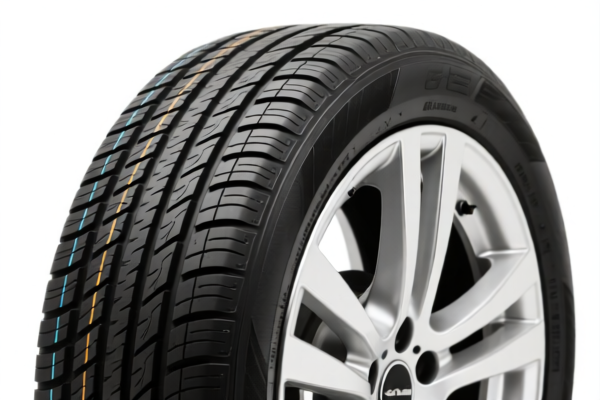
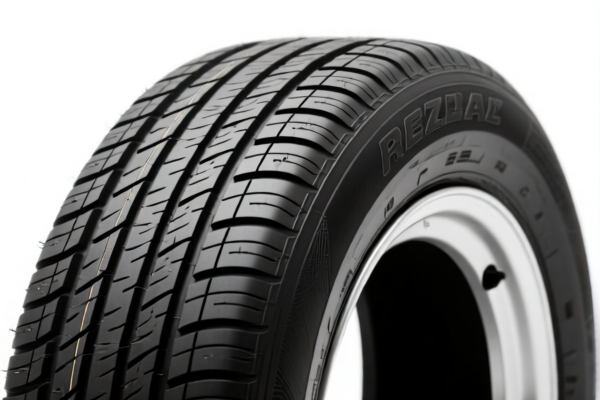
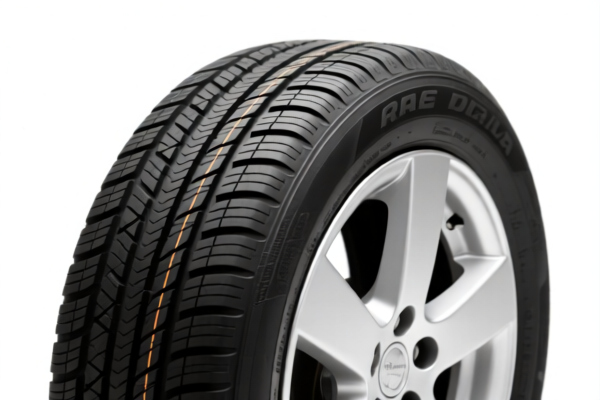
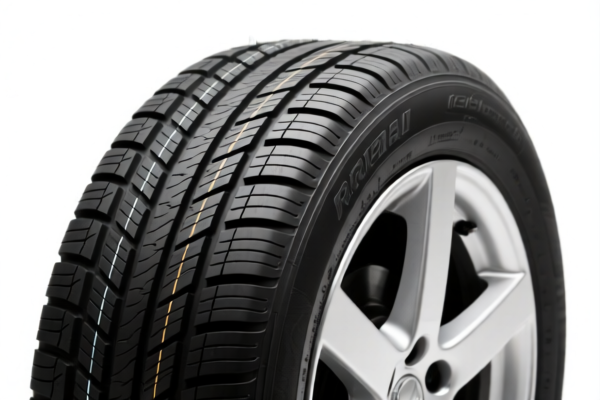
AI Analysis
🚗 Bias Passenger Car Tire (13-inch Rim)
🌐 HS Code Reference & Customs Clearance Guide | 2026 Latest Tariff Analysis | Professional Clearance Strategy
📌 I. Product Definition & Classification: Do You Really Understand "Bias Tires"?
Bias passenger car tires are pneumatic rubber tires traditionally constructed with crisscrossing cord plies. They are distinct from "Radial" tires, which have cords running perpendicular to the direction of travel. In international trade, specifically under the Harmonized System (HS), the construction type (Bias vs. Radial) and rim diameter are the primary determinants for classification.
For a 13-inch rim diameter tire (defined as having a rim diameter of 33.02 cm or less), the classification hinges on whether it is a Bias construction or a Radial construction. Based on the provided , we analyze the two possible scenarios.
⚠️ Key Distinction Point:
- If the tire is Radial (modern standard): It falls under HS Code 4011.10.10.10.
- If the tire is Bias (older/niche standard): It falls under HS Code 4011.10.50.00 ("Other" than Radial).
📦 II. HS Code Classification Details (2026 Latest Tariff Authority Comparison)
Since the user input specifies "Bias" tires, we must look at the "Other" category under Motor Car Tires. However, for completeness and risk avoidance, we present the relevant codes from .
| HS Code | Product Description | Applicable Scenario | Construction Type | Tax Rate (Total) |
|---|---|---|---|---|
4011.10.10.10 |
New pneumatic tires, of rubber: Of a kind used on motor cars: Radial Having a rim diameter of 33.02 cm (13 inches) or less | Modern passenger cars, SUVs, racing cars with 13" wheels | ✅ Radial | 29.0% |
4011.10.50.00 |
New pneumatic tires, of rubber: Of a kind used on motor cars: Other | Vehicles requiring Bias-ply tires (vintage, off-road, or specific regional markets) | ❌ Bias (Non-Radial) | 0.0% |
🔍 Critical Alert:
- Bias vs. Radial: Most modern passenger cars use Radial tires. If your product is mistakenly declared as "Bias" when it is actually Radial, you risk misclassification.
- 13-Inch Limit: The rim diameter must be ≤ 33.02 cm. If the rim is larger (e.g., 14-inch), it falls under a different subheading not listed in .
- Tax Disparity: There is a massive tax difference between the two codes (29% vs. 0%). Correct classification is financially critical.
💰 III. 2026 Latest Tariff Rate Details (Including Additional Taxes)
✅ Applicable Country: United States (US)
✅ Origin: China (CN)
✅ Effective Date: Current regulations apply
🎯 1. 4011.10.10.10 —— Radial Tires (13-inch or less)
Note: Included for comparison. If your "Bias" tire is misclassified as Radial, this tax applies.
| Item | Content |
|---|---|
| Base Tariff | 4.0% (ad valorem) |
| Section 301 Additional Tariff | +25.0% |
| Total Tax Rate | 29.0% |
| Tax Calculation | CIF Value × 29% |
| De Minimis Exemption | ❌ Not Applicable (High tariff threshold) |
| Legal Basis | Based on : tax_detail: "基础关税: 4.0%, 加征关税: 25.0%" |
📌 Explanation:
- The 29% total rate is punitive for Radial tires of this size originating from China.
- This is the standard classification for 90% of modern 13-inch passenger car tires.
🎯 2. 4011.10.50.00 —— Bias Tires (13-inch or less)
Note: This is the correct classification for "Bias" construction tires as per user input.
| Item | Content |
|---|---|
| Base Tariff | 0.0% |
| Additional Tariff | 0.0% |
| Total Tax Rate | 0.0% |
| Tax Calculation | $0 |
| De Minimis Exemption | ❌ N/A (No tax to exempt) |
| Legal Basis | Based on : tax_detail: "基础关税: 0.0%, 加征关税: 0.0%" |
📌 Explanation:
- Zero Tariff Advantage: Bias tires for motor cars are classified as "Other" and currently enjoy 0% duty.
- Strict Definition: The product must be demonstrably Bias construction (plies cross at angles other than 90°). If it is Radial, using this code is fraud.
- Risk: US Customs may challenge "Bias" declarations if the physical product appears Radial. Documentation is key.
🛠️ IV. Customs Clearance Practical Advice (Combat Pitfall Guide)
✅ 1. Required Documentation Checklist (Mandatory)
| Document | Must Provide | Description |
|---|---|---|
| ✅ Product Specification Sheet | ✔️ | Must explicitly state "Bias Ply" construction, not Radial. |
| ✅ Cross-Section Diagram | ✔️ | Visual proof of crisscrossing cord layers vs. radial belts. |
| ✅ Product Photos (Sidewall) | ✔️ | Clear image of the tire sidewall showing construction markers if any. |
| ✅ Commercial Invoice | ✔️ | Description: "New Pneumatic Rubber Tire, Bias Construction, 13-inch Rim, for Passenger Car" |
| ✅ Packing List | ✔️ | Item quantity and weight. |
| ✅ Origin Certificate | ✔️ | Required for US Customs origin verification. |
✅ 2. Declaration Tips (Key Mnemonic)
🔥 "Bias is Zero, Radial is Twenty-Nine, Don't Mix the Two or You'll Lose Money!"
| Situation | Correct Declaration | Wrong Practice |
|---|---|---|
| True Bias Tire | HS 4011.10.50.00 (0% Tax) |
Declaring as Radial → 29% Tax |
| True Radial Tire | HS 4011.10.10.10 (29% Tax) |
Declaring as Bias → Fraud/Penalty |
| 14-inch Tire | Not in (Different Code) | Using 13-inch code → Rejection |
✅ 3. Special Case Handling
| Situation | Handling Advice |
|---|---|
| OEM Private Label Tires | Provide brand authorization and manufacturing specs to prove construction type. |
| Mixed Containers | If the container has both Radial and Bias tires, separate declarations are required. Do not lump them. |
| Used Tires | specifies "New pneumatic tires". Used tires have different HS codes (e.g., 4012.12). Do not use these codes for used goods. |
🌍 V. Global Market Clearance Comparison (2026 Latest)
| Country/Region | Recommended HS Code | Tariff | Notes |
|---|---|---|---|
| 🇺🇸 United States | 4011.10.50.00 (Bias) |
0% | Best for cost savings, but strict verification. |
| 🇺🇸 United States | 4011.10.10.10 (Radial) |
29% | Standard for most modern imports. |
| 🇨🇳 China | Check Chinese Tariff Book | Varies | Export from US requires different HS codes. |
| 🇪🇺 EU | Check EU TARIC | Varies | EU may have different anti-dumping duties. |
📌 Conclusion:
- For Bias tires specifically, the US duty is 0%, offering a significant cost advantage over Radial tires (29%).
- However, misclassifying a Radial tire as Bias to evade tax is a serious offense.
📌 VI. Common Errors & Pitfalls (Blood & Tears Lessons)
❌ Error 1: Declaring a Radial tire as Bias to save 29% tax
👉 Consequence: Customs audit, seizure of goods, fines, and potential loss of import privileges.
👉 Detection: Physical inspection or lab test of tire cord orientation.
❌ Error 2: Ignoring the 13-inch limit
👉 Consequence: If the tire is 14-inch, it does not fit 4011.10.10.10 or 4011.10.50.00. It falls under "Other" headings, potentially attracting different or higher tariffs not covered in .
❌ Error 3: Not specifying Construction Type in Invoice
👉 Consequence: Customs may classify as "Not elsewhere specified," leading to disputes or higher default rates.
👉 Fix: Always write "Bias Ply" or "Radial" in the description.
✅ Correct Practice:
"New Pneumatic Rubber Tire, Bias Construction, Rim Diameter 13 inches, for Passenger Cars, Model XYZ"
🎯 VII. Conclusion: Precision in Classification Saves Money!
🎯 Remember the Mnemonic:
🔹 "Bias is Zero, Radial is Twenty-Nine, Specify Construction Clearly!"
🔹 "13-inch limit is key, don't guess the size, check the rim!"
📌 Tips:
- If you are unsure whether your tire is Bias or Radial, consult a tire engineer or lab test.
- Bias tires are less common in modern passenger cars; ensure there is genuine demand.
- Always verify the Rim Diameter. 13 inches = 33.02 cm.
📣 Immediate Action:
📞 Verify Construction Type + Check Rim Diameter + Declare Correct HS Code
🚀 Avoid 29% Tax if Bias, Avoid Fraud if Radial!
✨ Professional Clearance Starts with Accurate Classification!
💼 Every Dollar Saved in Tariffs is Pure Profit!
Customer Reviews
About HS Code Classification
The Harmonized System (HS) is an internationally standardized nomenclature developed by the World Customs Organization (WCO) to classify traded products. Over 200 countries use the HS system as the basis for customs tariffs, trade statistics, and import/export regulations.
Each HS code follows a hierarchical structure:
- Chapter (2 digits) — Broad category of goods (e.g., Chapter 84: Machinery and Mechanical Appliances)
- Heading (4 digits) — More specific grouping within the chapter
- Subheading (6 digits) — Internationally standardized breakdown, used by all WCO member countries
- National subdivisions (8-10 digits) — Country-specific extensions for further classification, such as US HTSUS 10-digit codes
Correct HS code classification is essential for smooth customs clearance, accurate duty payment, and compliance with trade regulations. Misclassification can lead to customs delays, overpayment of duties, or penalties.
When importing from CN to US, the applicable tariff rates may include:
- Most-Favored-Nation (MFN) rate — The standard duty rate applied to WTO members
- General rate — Applied to countries without trade agreements
- Trade remedy duties — Additional tariffs such as Section 301 (anti-dumping), Section 232 (national security), or countervailing duties
The information provided on this page is for reference purposes only. For official classification, please consult with your local customs authority or a licensed customs broker.