Bias car tires
CN → US| HS Code | Tariff Rate | Origin | Destination | Doc |
|---|---|---|---|---|
| 4011101070 | 39.0% | CN | US | Official Doc |
| 4011105000 | 38.4% | CN | US | Official Doc |
| 8708704560 | 37.5% | CN | US | Official Doc |
| 8708704548 | 37.5% | CN | US | Official Doc |
Product Images
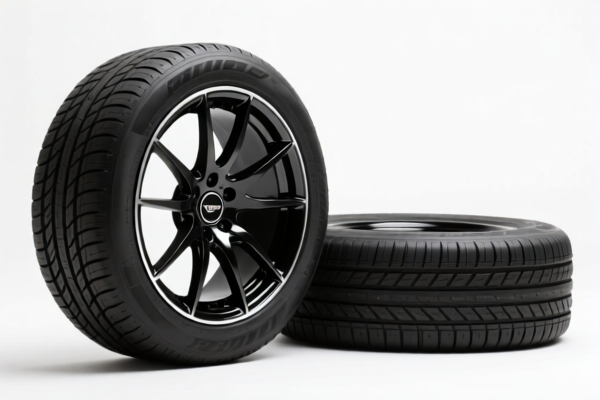
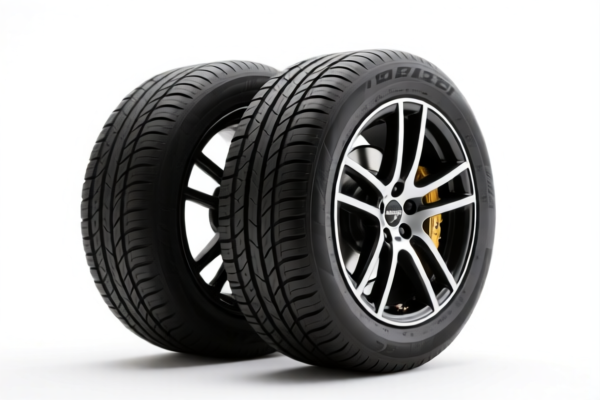
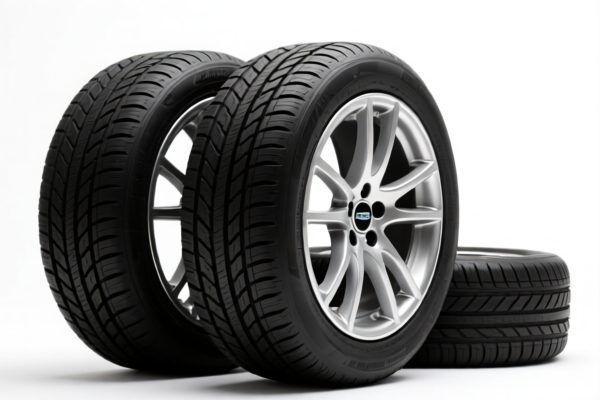
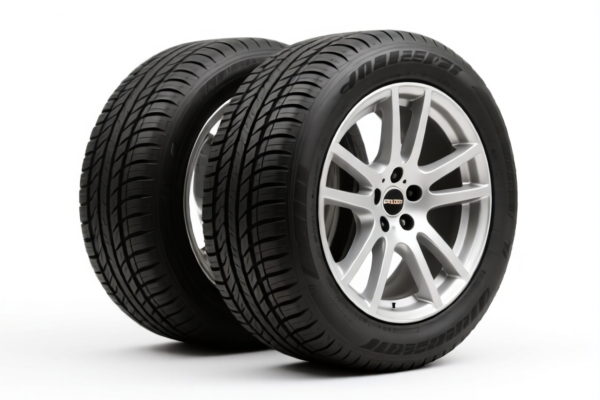
AI Analysis
🚗 Bias Car Tires (Bias Ply Tires) – HS Code Classification & Tariff Strategy
🌐 HS Code Reference & Customs Clearance Guide | 2026 Latest Tariff Analysis | Professional Clearance Strategy
📌 Part I: Product Definition & Classification – Do You Really Know “Bias Car Tires”?
Bias car tires (also known as diagonal tires) are pneumatic rubber tires designed for motor vehicles (including station wagons and racing cars), where the cords in the carcass are laid at angles to the centerline (typically less than 90 degrees) and alternate in direction from one ply to the next.
In international trade, tires are strictly classified based on two key factors: 1. Construction Type: Radial vs. Bias (Diagonal). 2. Rim Diameter: Specifically, whether the rim diameter is greater than 45.72 cm (18 inches) or not.
⚠️ Critical Distinction:
- Radial Tires: Cords run radially across the tire; most modern passenger car tires are radial.
- Bias Tires: Cords cross diagonally; often found in vintage cars, off-road vehicles, or specialized applications.
- Rim Diameter Threshold: The HS Code differentiates heavily based on whether the rim diameter is > 18 inches (45.72 cm).
For Bias Tires, the HS Code classification depends on the rim diameter: - If rim diameter is > 18 inches → Falls under specific subheading. - If rim diameter is ≤ 18 inches or other bias types → Falls under “Other.”
However, looking at the provided , we notice that the exact HS Code for “Bias” tires with rim diameter > 18 inches is NOT explicitly listed. Instead, the data provides:
1. 4011.10.10.70 – Radial tires, rim diameter > 18 inches.
2. 4011.10.50.00 – Other tires (which includes Bias tires of any rim diameter, or Radial tires with rim diameter ≤ 18 inches).
This is a crucial point: “Bias” tires generally fall under “Other” (4011.10.50.00) unless specified otherwise in national subheadings. Since the prompt asks about “Bias car tires,” and the data does not list a specific code for bias tires > 18 inches, we must classify them under “Other” (4011.10.50.00).
📦 Part II: HS Code Classification Details (Based on Provided )
| HS Code | Product Description | Applicable Scenario | Tariff Rate (US/China) |
|---|---|---|---|
| 4011.10.50.00 | New pneumatic tires, of rubber: Of a kind used on motor cars (including station wagons and racing cars): Other | Bias-ply tires for motor cars (any rim diameter), or radial tires with rim diameter ≤ 18 inches | 0.0% (0% Base + 0% Additional) |
| 4011.10.10.70 | New pneumatic tires, of rubber: Of a kind used on motor cars: Radial, rim diameter > 18 inches | Modern radial car tires, sport tires, luxury car tires | 29.0% (4% Base + 25% Additional) |
🔍 Key Insight:
- Bias tires are NOT radial. Therefore, they do NOT fall under4011.10.10.70.
- They fall under “Other” →4011.10.50.00.
- Tariff Advantage: Bias tires enjoy 0% total tariff under this classification, while radial tires > 18 inches are subject to 29%.
💰 Part III: Detailed Tariff Explanation (Including Additional Duties)
✅ Applicable Country: United States (US)
✅ Origin: China (CN)
✅ Effective Date: 2025 onwards (based on provided data)
🎯 1. 4011.10.50.00 – Other New Pneumatic Tires (Includes Bias Tires)
| Item | Content |
|---|---|
| Base Tariff | 0.0% (ad valorem) |
| Additional Tariff (Section 301) | 0.0% |
| Total Tariff | 0.0% |
| Tax Calculation | CIF Value × 0% = $0 |
| De Minimis Eligibility | ✅ Yes (if value < $800, though tires may have specific restrictions; consult customs) |
| Legal Basis | USHTS 4011.10.50.00 |
📌 Explanation:
- “Other” in heading 4011.10 includes non-radial tires (i.e., bias-ply tires).
- Unlike radial tires > 18 inches, bias tires are not subject to the 25% Section 301 additional tariff.
- This results in a significant cost advantage for bias tire importers compared to radial tire importers.
⚠️ Important Note on 4011.10.10.70 – Radial Tires > 18 Inches
| Item | Content |
|---|---|
| Base Tariff | 4.0% |
| Additional Tariff (Section 301) | 25.0% |
| Total Tariff | 29.0% |
| De Minimis Eligibility | ❌ No (high-risk category) |
📌 Warning:
- Do NOT misclassify bias tires as radial. If you incorrectly declare a bias tire as radial > 18 inches, you may face 29% duty instead of 0%, plus potential penalties.
- Ensure your product description clearly states “Bias-ply” or “Diagonal” construction.
🛠️ Part IV: Customs Clearance Practical Advice (Avoid Pitfalls)
✅ 1. Required Documentation Checklist
| Document | Mandatory? | Description |
|---|---|---|
| ✅ Product Specification Sheet | ✔️ | Must clearly state tire construction: Bias/Diagonal |
| ✅ Tire Sidewall Photos | ✔️ | Show “Bias,” “Diagonal,” or pattern of cords |
| ✅ Commercial Invoice | ✔️ | Describe as “New Pneumatic Bias Tire for Motor Cars” |
| ✅ Packing List | ✔️ | Itemize tires, include dimensions and rim size |
| ✅ Certificate of Origin | ✔️ | To prove origin (China) |
| ✅ HTS Code Declaration | ✔️ | Declare 4011.10.50.00, NOT 4011.10.10.70 |
✅ 2. Declaration Tips (Key Phrases)
🔥 “Bias ≠ Radial! Describe Construction Clearly!”
| Scenario | Correct Declaration | Incorrect Declaration |
|---|---|---|
| Bias tire, 15-inch rim | 4011.10.50.00 – “Bias-ply tire” |
4011.10.10.70 – “Radial tire” |
| Bias tire, 20-inch rim | 4011.10.50.00 – “Bias-ply tire” |
4011.10.10.70 – “Radial tire” |
| Radial tire, 20-inch rim | 4011.10.10.70 – “Radial tire” |
4011.10.50.00 – “Other” |
📌 Crucial Point:
- Rim diameter does NOT matter for bias tires in this data set. Both small and large bias tires fall under4011.10.50.00.
- Only radial tires with rim > 18 inches are separated into a different code with high tariffs.
✅ 3. Special Cases
| Case | Handling Advice |
|---|---|
| OEM Bias Tires for Classic Cars | Provide vintage model documentation to justify “bias” construction |
| Bias Tires with Steel Belts | Still classified as bias if the primary structure is diagonal; clarify in specs |
| Mixed Shipments (Bias + Radial) | Separate line items on invoice; declare each with correct HS code |
| Used Tires | Not covered in this data; used tires have different rules (often restricted) |
🌍 Part V: Global Market Comparison (2026)
| Country/Region | Recommended HS Code | Tariff (China Origin) | Notes |
|---|---|---|---|
| 🇺🇸 USA | 4011.10.50.00 |
0% | Bias tires enjoy 0% tariff; radial >18" face 29% |
| 🇨🇳 China | 4011.10.50.00 |
~5% | Standard import duty applies |
| 🇪🇺 EU | 4011.10.00 |
0% | No additional tariffs for bias tires |
| 🇦🇺 Australia | 4011.10.50.00 |
5% | Standard MFN rate |
| 🇯🇵 Japan | 4011.10.00 |
0% | Free trade agreement benefits may apply |
📌 Conclusion:
- USA is the most favorable market for bias tires due to 0% tariff under4011.10.50.00.
- Radial tires > 18 inches face 29% in the US, making bias tires a cost-effective alternative for certain applications.
📌 Part VI: Common Mistakes & Pitfalls
❌ Mistake 1: Declaring bias tires as “Radial” to match common inventory codes
👉 Consequence: Incorrect classification → 29% tariff instead of 0% → Refund claims or penalties
❌ Mistake 2: Ignoring rim diameter for radial tires
👉 Consequence: Radial tires ≤ 18 inches may have different rates; radial > 18 inches are heavily taxed.
❌ Mistake 3: Not specifying “Bias” in the description
👉 Consequence: Customs may default to “Other” but could request clarification → Delays
❌ Mistake 4: Mixing bias and radial tires in one HS code line
👉 Consequence: Customs audit → Fines or seizure
✅ Correct Approach:
“New Pneumatic Bias-Ply Tire for Motor Cars, 15x8.00-8, 4PR, Bias Construction, Model XYZ”
🎯 Part VII: Conclusion – Professional Classification Saves Money!
🎯 Key Takeaway:
🔹 “Bias tires = 0% tariff in the US! Radial >18” = 29%!”
🔹 “Never mix bias and radial in the same HS line!”
🔹 “Describe construction type clearly: Bias, Diagonal, or Radial!”
📌 Pro Tip:
If your tires are radial but have rim diameter ≤ 18 inches, they also fall under 4011.10.50.00 → 0% tariff.
Only radial tires > 18 inches are taxed at 29%.
📣 Action Required:
📞 Confirm tire construction: Bias or Radial?
📐 Measure rim diameter: > 18 inches or ≤ 18 inches?
📝 Declare accurately:4011.10.50.00for bias/small radial,4011.10.10.70for large radial
🚀 Save 29% on duties by classifying correctly!
✨ Precision in Classification = Savings in Costs!
💼 Every tariff percentage counts – don’t leave money on the table!
Customer Reviews
About HS Code Classification
The Harmonized System (HS) is an internationally standardized nomenclature developed by the World Customs Organization (WCO) to classify traded products. Over 200 countries use the HS system as the basis for customs tariffs, trade statistics, and import/export regulations.
Each HS code follows a hierarchical structure:
- Chapter (2 digits) — Broad category of goods (e.g., Chapter 84: Machinery and Mechanical Appliances)
- Heading (4 digits) — More specific grouping within the chapter
- Subheading (6 digits) — Internationally standardized breakdown, used by all WCO member countries
- National subdivisions (8-10 digits) — Country-specific extensions for further classification, such as US HTSUS 10-digit codes
Correct HS code classification is essential for smooth customs clearance, accurate duty payment, and compliance with trade regulations. Misclassification can lead to customs delays, overpayment of duties, or penalties.
When importing from CN to US, the applicable tariff rates may include:
- Most-Favored-Nation (MFN) rate — The standard duty rate applied to WTO members
- General rate — Applied to countries without trade agreements
- Trade remedy duties — Additional tariffs such as Section 301 (anti-dumping), Section 232 (national security), or countervailing duties
The information provided on this page is for reference purposes only. For official classification, please consult with your local customs authority or a licensed customs broker.