Bible Printing Paper
CN → US| HS Code | Tariff Rate | Origin | Destination | Doc |
|---|---|---|---|---|
| 4811904090 | 35.0% | CN | US | Official Doc |
| 4901990093 | 17.5% | CN | US | Official Doc |
| 4811592000 | 35.0% | CN | US | Official Doc |
| 4901990040 | 17.5% | CN | US | Official Doc |
| 4901990093 | 17.5% | CN | US | Official Doc |
Product Images
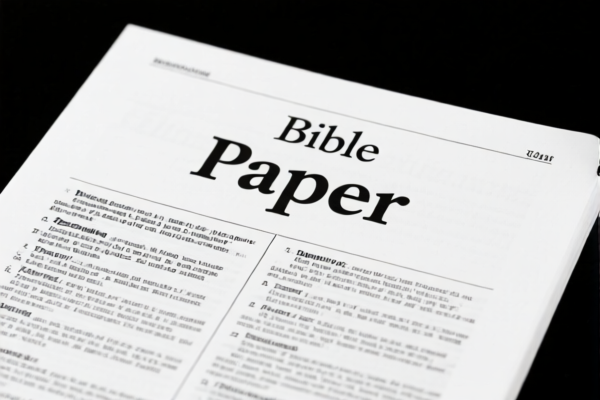
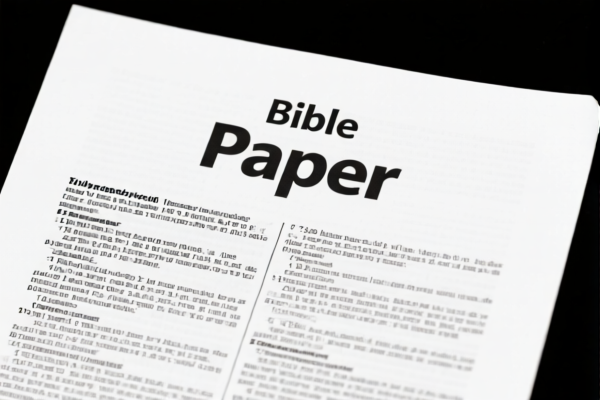

AI Analysis
📖 Bible Printing Paper (Bible Paper / Rags Paper)
🌐 HS Code Reference & Customs Clearance Guide | 2026 Latest Tariff Breakdown | Professional Entry Strategy
📌 Part I: Product Definition & Classification: What is "Bible Paper"?
Bible paper, also known as rag paper or bible tissue, is an ultra-thin, opaque, high-strength paper used primarily for printing Bibles and other religious or academic texts. Its defining characteristics are extreme thinness (low basis weight), high opacity, and durability.
In international trade, it falls into two main categories based on its processing state:
1. Coated/Printed Paper Stock (Raw Material):
Unbound sheets of paper, often calendered (smooth) or coated, specifically designed for high-speed rotary printing.
2. Printed Matter/Books (Finished Good):
Bound books, leaflets, or unbound printed pages that constitute the final reading product.
⚠️ Key Distinction Point:
- If the product is unbound paper rolls or sheets intended for printing → Classified under Chapter 48 (Paper)
- If the product is printed text, bound, or ready-to-read → Classified under Chapter 49 (Printed Books/Newspapers)
📦 Part II. HS Code Classification Details (2026 Latest Tariff Authority Match)
| HS Code | Product Description | Application Scenario | Material/State Conflict? |
|---|---|---|---|
4811.90.40.90 |
Other paper, paperboard, cellulose wadding and webs of cellulose fibers, coated, impregnated, covered, surface-colored, surface-decorated or printed, other | Coated/calendered Bible paper rolls; printed paper stock not meeting specific book definitions. "Printing use matches processing characteristics." | ❌ No material conflict. |
4901.99.00.93 |
Printed books, brochures, leaflets and similar printed matter, whether in single or multiple parts; single prints, other | Printed Bible pages (unbound) or printed paper media. "Printing use matches form of books/brochures." | ❌ No material conflict. |
4811.59.20.00 |
Paper, paperboard, cellulose wadding and webs of cellulose fibers, coated with asphaltin, bitumen or other bituminous substances, in rolls or sheets, other | Paper with specific coating properties for printing. "Material is paper, form/use is printing, matches coated/printed paper features." | ❌ No material conflict. |
4901.99.00.40 |
Printed books, brochures, leaflets and similar printed matter, whether in single or multiple parts; single prints, other | Bible pages as a component of religious books. "Final use falls under religious books." | ❌ No material conflict. |
4901.99.00.93 |
Printed books, brochures, leaflets and similar printed matter, whether in single or multiple parts; single prints, other | Printed Bible pages. "Form is printed matter, matches printing category, no page count conflict." | ❌ No material conflict. |
🔍 Critical Reminder:
- Unbound, unprinted, or merely coated paper rolls → Must classify under Chapter 48 (4811series).
- Printed text, whether bound or unbound sheets of printed content → Must classify under Chapter 49 (4901series).
- Do not split printed text into "paper" + "ink" for duty purposes; the printed nature dictates Chapter 49.
💰 Part III. 2026 Latest Tariff Rate Breakdown (Including Surtaxes & Policy Add-ons)
✅ Applicable Country: United States (US)
✅ Origin: China (CN)
✅ Effective Date: From November 10, 2025 (and subsequent imports)
🎯 1. 4811.90.40.90 —— Coated/Printed Paper Stock (Chapter 48)
| Item | Content |
|---|---|
| Base Tariff Rate | 0.0% |
| USITC Surcharge (Section 301) | +25.0% |
| IEEPA Surcharge (122-Clause) | +10.0% |
| Total Tariff Rate | 35.0% |
| Tax Calculation | CIF Value × 35% |
| De Minimis Eligibility | ❌ Not Eligible (deny_de_minimis) |
| Legal Basis Path | IEEPA:9903.01.25 → USITC:4811.90.40.90 → FOOTNOTE:301 |
📌 Explanation:
- The "25% USITC surcharge" stems from the Section 301 tariffs on Chinese imports.
- The "10% IEEPA surcharge" is the additional tariff imposed on Chinese products under the International Emergency Economic Powers Act.
- Total 35% applies to the paper material itself, regardless of whether it is printed or unprinted, as long as it falls under Chapter 48.
🎯 2. 4811.59.20.00 —— Other Coated Paper (Chapter 48)
| Item | Content |
|---|---|
| Base Tariff Rate | 0.0% |
| USITC Surcharge (Section 301) | +25.0% |
| IEEPA Surcharge (122-Clause) | +10.0% |
| Total Tariff Rate | 35.0% |
| Tax Calculation | CIF Value × 35% |
| De Minimis Eligibility | ❌ Not Eligible |
| Legal Basis Path | IEEPA:9903.01.25 → USITC:4811.59.20.00 → FOOTNOTE:301 |
📌 Note:
- Same tariff structure as4811.90.40.90.
- Applies to specific coated paper rolls/sheets that do not fall under the "other printed" sub-category but still match the "coated/printed paper" definition.
🎯 3. 4901.99.00.93 & 4901.99.00.40 —— Printed Matter / Bible Pages (Chapter 49)
| Item | Content |
|---|---|
| Base Tariff Rate | 0.0% |
| USITC Surcharge (Section 301) | +7.5% |
| IEEPA Surcharge (122-Clause) | +10.0% |
| Total Tariff Rate | 17.5% |
| Tax Calculation | CIF Value × 17.5% |
| De Minimis Eligibility | ❌ Not Eligible |
| Legal Basis Path | IEEPA:9903.01.24 → USITC:4901.99.00.93 / 4901.99.00.40 → FOOTNOTE:301 |
📌 Note:
- Significantly Lower Rate (17.5% vs 35%): Printed books/paper goods often benefit from lower Section 301 surcharges compared to raw paper stocks.
- Key Condition: The product must be printed (text/image applied). If you ship unprinted bible paper rolls, you face 35%. If you ship printed Bible pages (even unbound), you face 17.5%.
- Sub-category4901.99.00.40specifically references religious books, reinforcing the 17.5% rate.
🛠️ Part IV. Customs Clearance Practical Advice (Real-World Pitfall Guide)
✅ 1. Documentation Checklist (Mandatory)
| Document | Required | Description |
|---|---|---|
| ✅ Product Specification Sheet | ✔️ | Details basis weight (gsm), opacity, roll length, width. |
| ✅ Proof of Printing Status | ✔️ | Crucial: Photos showing printed text vs. blank paper. Determines Ch. 48 vs. Ch. 49. |
| ✅ Commercial Invoice | ✔️ | Must clearly state: "Printed Bible Pages" or "Coated Bible Paper Rolls". Avoid generic "Paper". |
| ✅ Packing List | ✔️ | Show weight and dimensions. Ensure no mixed shipments of printed/unprinted if different HS codes apply. |
| ✅ Certificate of Origin (CO) | ✔️ | If non-Chinese origin, may reduce/eliminate surcharges. |
✅ 2. Classification Strategy (Key Mantra)
🔥 "Printed = Ch. 49 (17.5%), Unprinted/Raw = Ch. 48 (35%)! Declare Accurately!"
| Scenario | Correct HS Code | Tariff Rate | Common Error |
|---|---|---|---|
| Blank Bible Paper Rolls | 4811.90.40.90 or 4811.59.20.00 |
35.0% | Misdeclaring as "Printed Paper" → Penalty. |
| Printed Bible Pages (Unbound) | 4901.99.00.93 or 4901.99.00.40 |
17.5% | Misdeclaring as "Raw Paper" → Overpaying 17.5%. |
| Bound Bibles | 4901.99.00.40 (Religious Books) |
17.5% | Misdeclaring as "Paper" → 35%. |
| Mixed Shipment (Printed + Unprinted) | Split Declaration | 17.5% + 35% | Single declaration for mixed goods → Customs holds entire shipment. |
✅ 3. Special Case Handling
| Situation | Handling Advice |
|---|---|
| OEM Printed Paper for Third-Party Binding | Declare as Chapter 49 (4901.99.00.93). Provide proof of printed text. |
| Unprinted Paper with "Bible Paper" Marketing Name | Must declare as Chapter 48 (4811). The name "Bible Paper" doesn't automatically mean "Printed Book". |
| Religious Texts in Digital Format | Not applicable for physical HS codes; different duty treatment. |
| Sample Copies (Unbound, Printed) | Still classified under 4901.99.00.93 if they contain printed matter. |
🌍 Part V. Global Market Comparison (2026 Latest)
| Country/Region | Recommended HS Code | Tariff (China Origin) | Certification | Notes |
|---|---|---|---|---|
| 🇺🇸 USA | 4901.99.00.93 / 4811.90.40.90 |
17.5% (Printed) / 35.0% (Unprinted) | None Specific | High surcharges apply. |
| 🇨🇳 China (Import) | 4811.90.40.90 / 4901.99.00.93 |
0% | None | No additional surcharges. |
| 🇪🇺 EU | 4811.90 / 4901.99 |
3.5% (Varies) | CE (if packaging) | No Section 301 equivalent. |
| 🇦🇺 Australia | 4811.90 / 4901.99 |
5% | None | Standard MFN rates. |
| 🇯🇵 Japan | 4811.90 / 4901.99 |
0% | None | Low tariff environment. |
📌 Conclusion:
- The USA has the highest effective tariff for Chinese-origin paper products due to Section 301 and IEEPA surcharges.
- Printed products (Ch. 49) enjoy a 50% discount on the surcharge component compared to raw paper (Ch. 48).
- For exporters, ensuring accurate classification as Printed Matter can save 17.5% in duties.
📌 Part VI. Common Errors & Pitfall Guide (Lessons Learned)
❌ Error 1: Declaring Printed Bible Pages as "Paper Rolls"
👉 Consequence: Pay 35% instead of 17.5%. Overpayment.
❌ Error 2: Declaring Unprinted Paper as "Printed Book Parts"
👉 Consequence: Customs may reject the declaration, delay shipment, or impose penalties for misclassification.
❌ Error 3: Using vague descriptions like "Religious Paper"
👉 Consequence: Ambiguity leads to manual inspection, delays, and potential re-classification to the higher rate.
❌ Error 4: Mixing Printed and Unprinted Goods in One Invoice Without Split HS Codes
👉 Consequence: Customs may apply the higher rate (35%) to the entire shipment.
✅ Correct Approach:
"Printed Bible Paper, Unbound Sheets, 48gsm, 17.5% Tariff (HS 4901.99.00.93)"
vs.
"Bible Paper Rolls, Unprinted, Calendered, 35% Tariff (HS 4811.90.40.90)"
🎯 Part VII. Conclusion: Precision Classification Saves Money!
🎯 Remember the Mantra:
🔹 "Printed is 17.5%, Unprinted is 35%. Don't pay for what you don't owe!"
🔹 "Chapter 49 for Printed Text, Chapter 48 for Raw Paper. Know the difference!"
📌 Pro Tip:
If you are exporting printed Bible pages from China to the US, ensure your commercial invoice explicitly states "Printed Matter" and provides sample images of the printed text to support the 4901 classification. This can save you 17.5% in duties per CIF value.
📣 Immediate Action:
📞 Contact a licensed customs broker + Provide product samples/photos + Apply for an Advance Ruling if shipment volume is high.
🚀 Ensure your products clear customs smoothly, avoid overpayment, and maximize profit margins!
✨ Professional Clearance Starts with Accurate Classification!
💼 Every cent of duty saved is pure profit!
Customer Reviews
About HS Code Classification
The Harmonized System (HS) is an internationally standardized nomenclature developed by the World Customs Organization (WCO) to classify traded products. Over 200 countries use the HS system as the basis for customs tariffs, trade statistics, and import/export regulations.
Each HS code follows a hierarchical structure:
- Chapter (2 digits) — Broad category of goods (e.g., Chapter 84: Machinery and Mechanical Appliances)
- Heading (4 digits) — More specific grouping within the chapter
- Subheading (6 digits) — Internationally standardized breakdown, used by all WCO member countries
- National subdivisions (8-10 digits) — Country-specific extensions for further classification, such as US HTSUS 10-digit codes
Correct HS code classification is essential for smooth customs clearance, accurate duty payment, and compliance with trade regulations. Misclassification can lead to customs delays, overpayment of duties, or penalties.
When importing from CN to US, the applicable tariff rates may include:
- Most-Favored-Nation (MFN) rate — The standard duty rate applied to WTO members
- General rate — Applied to countries without trade agreements
- Trade remedy duties — Additional tariffs such as Section 301 (anti-dumping), Section 232 (national security), or countervailing duties
The information provided on this page is for reference purposes only. For official classification, please consult with your local customs authority or a licensed customs broker.