Bicycle Brake Cable Housing
CN → US| HS Code | Tariff Rate | Origin | Destination | Doc |
|---|---|---|---|---|
| 3917390050 | 38.1% | CN | US | Official Doc |
| 8714995000 | 17.5% | CN | US | Official Doc |
| 8307106000 | 38.8% | CN | US | Official Doc |
| 8307103000 | 38.8% | CN | US | Official Doc |
| 3917390010 | 38.1% | CN | US | Official Doc |
Product Images
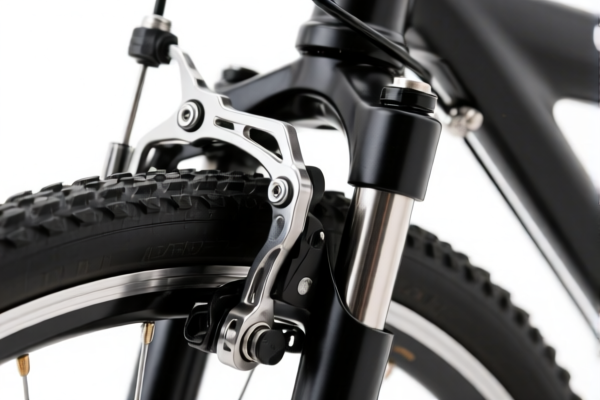
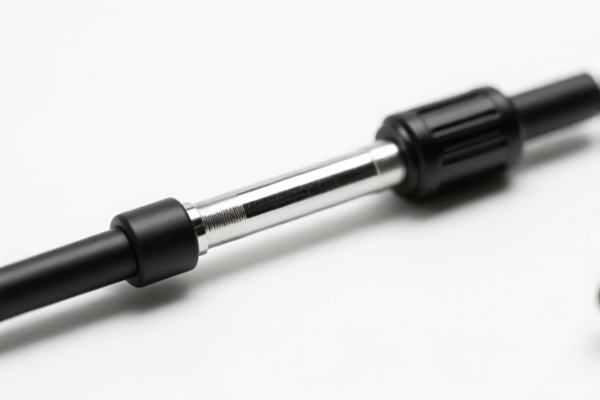
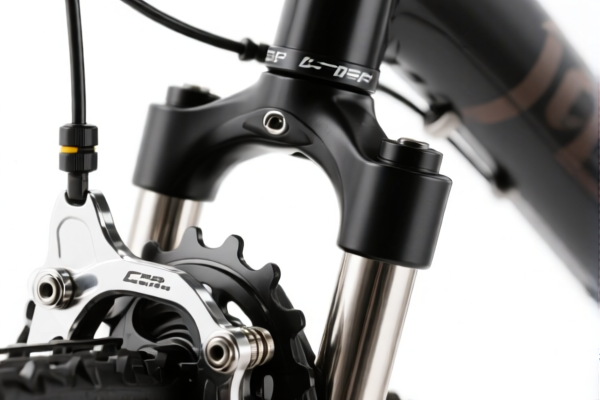
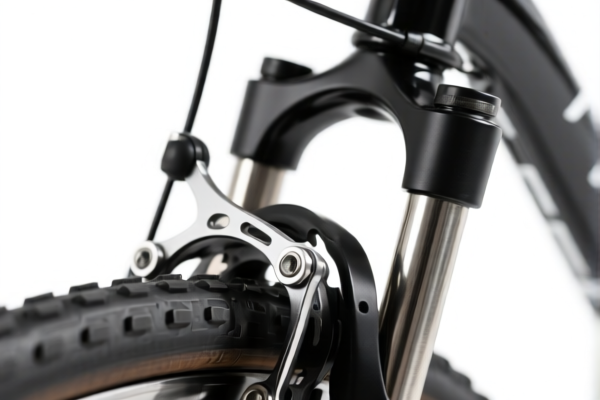
AI Analysis
🚲 Bicycle Brake Cable Housing (Brake Cable Outer Tubes)
🌐 HS Code Reference & Customs Clearance Guide | 2026 Latest Tariff Analysis | Professional Clearance Strategy
📌 I. Product Definition & Classification: Do You Really Understand "Brake Cable Housing"?
Bicycle brake cable housing (often referred to as brake cables, brake wires, or outer tubes) is a critical safety component in mechanical bicycle braking systems. In international trade, its classification depends heavily on material composition and structural design:
Plastic-Coated Metal/Plastic Housings: The core is often steel, encased in plastic or metal sleeves. These are typically classified under Chapter 39 (Plastics) or Chapter 83 (Miscellaneous Metallic Articles).
Pure Metallic Housings: Steel tubes with or without internal lining. These fall under Chapter 83 (Metallic pipes/tubes).
Bicycle Parts/Accessories: If viewed as a specific part of the bicycle's transmission/braking system, they may be classified under Chapter 87 (Vehicles).
⚠️ Key Distinction Points:
- If the product is primarily plastic with metal reinforcement (e.g., braided steel wire inside plastic) → It may be classified as 3917.39.00.
- If the product is a metallic tube (even if lined) → It may be classified as 8307.10.
- If classified specifically as a bicycle part/accessory → It may be classified as 8714.99.
📦 II. HS Code Classification Details (2026 Latest Tariff Authority Comparison)
| HS Code | Product Description | Application Scenario | Material/Structure |
|---|---|---|---|
3917.39.00.50 |
Plastic or plastic-covered tubes/conduits | Standard plastic brake cables, common consumer bikes | Plastic outer, steel inner core |
8714.99.50.00 |
Parts/accessories of bicycles, not specified elsewhere | Classified specifically as bicycle braking system components | Any material, viewed as bike part |
8307.10.60.00 |
Steel flexible tubing | Pure metal (steel) brake hoses/cables | Metallic (Steel) |
8307.10.30.00 |
Flexible tubing of iron or steel, containing wire | Metal or metal-wire core housing | Metallic with wire reinforcement |
3917.39.00.10 |
Plastic tubes with metal braid reinforcement | High-end brake cables with metal braided layer inside plastic | Plastic + Metal braid |
🔍 Key Reminder:
- Plastic-based housings generally fall under 3917.
- Metal-based housings generally fall under 8307.
- Bicycle-specific parts may fall under 8714, but often attract lower base tariffs but still face additional duties.
💰 III. 2026 Latest Tariff Rate Details (Including Surcharges & Policy Add-ons)
✅ Applicable Country: United States (US)
✅ Origin: China (CN)
✅ Effective Time: 2025/2026 (Including subsequent imports)
🎯 1. 3917.39.00.50 – Plastic or Plastic-Coated Tubes
| Item | Content |
|---|---|
| Base Tariff | 3.1% (ad valorem) |
| Section 301 Surcharge | +25.0% (Added Tariff) |
| Section 122 Tariff | +10.0% (Specific China Import Tax) |
| Total Tax Rate | 38.1% |
| Tax Calculation | CIF Value × 38.1% |
| De Minimis Exemption? | ❌ No (High tax rate excludes de minimis benefits in most practical scenarios for bulk imports) |
| Legal Basis Path | USITC:3917.39.00.50 → Section 301: 25% → Section 122: 10% |
📌 Explanation:
- This classification is for plastic-dominated housings.
- The 38.1% total rate is high due to the combination of base tariff and heavy US-China trade surcharges.
- Section 301 (25%) is the major cost driver.
- Section 122 (10%) is an additional penalty tariff for specific Chinese goods.
🎯 2. 8714.99.50.00 – Bicycle Parts/Accessories
| Item | Content |
|---|---|
| Base Tariff | 0.0% |
| Section 301 Surcharge | +7.5% (Added Tariff) |
| Section 122 Tariff | +10.0% |
| Total Tax Rate | 17.5% |
| Tax Calculation | CIF Value × 17.5% |
| De Minimis Exemption? | ❌ No |
| Legal Basis Path | USITC:8714.99.50.00 → Section 301: 7.5% → Section 122: 10% |
📌 Note:
- This is the most tax-efficient classification among the options provided.
- By classifying as a bicycle part rather than a general "tube" or "pipe," the base tariff is 0% and the Section 301 surcharge is only 7.5% (instead of 25%).
- Crucial: You must prove the item is specifically used in bicycles and not a general-purpose industrial tube.
🎯 3. 8307.10.60.00 – Steel Flexible Tubing
| Item | Content |
|---|---|
| Base Tariff | 3.8% |
| Section 301 Surcharge | +25.0% |
| Section 122 Tariff | +10.0% |
| Total Tax Rate | 38.8% |
| Tax Calculation | CIF Value × 38.8% |
| De Minimis Exemption? | ❌ No |
| Legal Basis Path | USITC:8307.10.60.00 → Section 301: 25% → Section 122: 10% |
📌 Explanation:
- This classification is for metallic housings.
- Like the plastic classification, it faces the full 25% Section 301 surcharge because it is viewed as an industrial/material good, not a specific bicycle part.
- 38.8% is the highest tax rate among all options. Avoid if possible.
🎯 4. 8307.10.30.00 – Metal/Metal-Wire Core Tubing
| Item | Content |
|---|---|
| Base Tariff | 3.8% |
| Section 301 Surcharge | +25.0% |
| Section 122 Tariff | +10.0% |
| Total Tax Rate | 38.8% |
| Tax Calculation | CIF Value × 38.8% |
| De Minimis Exemption? | ❌ No |
| Legal Basis Path | USITC:8307.10.30.00 → Section 301: 25% → Section 122: 10% |
📌 Note:
- Similar to8307.10.60.00, this is for metal-based products.
- The tax burden is identical to other metallic classifications.
- Do not use this code for plastic-covered cables.
🎯 5. 3917.39.00.10 – Plastic Tubes with Metal Braid Reinforcement
| Item | Content |
|---|---|
| Base Tariff | 3.1% |
| Section 301 Surcharge | +25.0% |
| Section 122 Tariff | +10.0% |
| Total Tax Rate | 38.1% |
| Tax Calculation | CIF Value × 38.1% |
| De Minimis Exemption? | ❌ No |
| Legal Basis Path | USITC:3917.39.00.10 → Section 301: 25% → Section 122: 10% |
📌 Explanation:
- Even though it has metal reinforcement, if the primary material is plastic, it falls under 3917.
- The tax rate is 38.1%, same as standard plastic housings.
- The metal braid does not change the classification to Chapter 83 if the plastic is the main component.
🛠️ IV. Customs Clearance Practical Advice (实战避坑指南)
✅ 1. Recommended HS Code: 8714.99.50.00
Why?
- Lowest Total Tax: 17.5% vs. 38.1%-38.8% for others.
- Savings: Saves ~20-21% on total duties compared to material-based classifications.
- Compliance: Justified if the product is specifically designed and marketed for bicycle braking systems.
📌 Key Condition: You must provide evidence that the housing is a bicycle part.
- Use names like "Bicycle Brake Cable Housing" instead of "Metal Plastic Tube."
- Include part numbers that link to specific bike models.
- Provide diagrams showing installation on a bicycle.
✅ 2. Documentation Checklist (Mandatory)
| Document | Required | Notes |
|---|---|---|
| ✅ Product Specification Sheet | ✔️ | Must state: "For Bicycle Use Only" |
| ✅ Commercial Invoice | ✔️ | Describe as "Bicycle Brake Cable Housing" (HS 8714.99.50.00) |
| ✅ Product Photos | ✔️ | Show ends, liners, and any bicycle branding |
| ✅ Declaration of Use | ✔️ | State intended use: "Mechanical Disc/Rim Brake System for Bicycles" |
| ✅ Packaging List | ✔️ | Ensure no mixed shipments with non-bicycle goods |
✅ 3. Declaration Tips (Key Phrases for Clearance)
🔥 "Declare as Bike Part, Not Pipe!"
| Scenario | Correct Declaration | Incorrect Declaration |
|---|---|---|
| Plastic Brake Cables | 8714.99.50.00 |
3917.39.00.50 (38.1% Tax) |
| Metal Brake Cables | 8714.99.50.00 |
8307.10.60.00 (38.8% Tax) |
| Mixed Plastic/Metal | 8714.99.50.00 |
3917.39.00.10 (38.1% Tax) |
⚠️ Warning:
- If you declare as3917or8307, you will pay 38%+ taxes.
- If you declare as8714, you must prove it is a bicycle part. If customs disagrees, they may reclassify and penalize.
- Recommendation: Use Advance Ruling or consult a customs broker to confirm8714.99.50.00applicability for your specific product design.
🌍 V. Global Market Comparison (2026 Latest)
| Country/Region | Recommended HS Code | Total Tax (China Origin) | Notes |
|---|---|---|---|
| 🇺🇸 USA | 8714.99.50.00 |
17.5% | Best option. 3917/8307 = 38%+ |
| 🇨🇳 China | 8714.99.00.00 |
~5-10% | Standard import duty for bicycle parts |
| 🇪🇺 EU | 8714.99.99 |
0% (if GSP applies) | Check CE marking requirements |
| 🇬🇧 UK | 8714.99.99 |
0-5% | Post-Brexit rules apply |
| 🇨🇦 Canada | 8714.99.90 |
0% (if CUSMA origin) | Free trade if manufactured in Canada/Mexico |
📌 Conclusion:
- USA is the most tax-sensitive market for this product due to Section 301 & 122 tariffs.
- Classification as8714.99.50.00saves ~20% in duties compared to material-based codes.
- Ensure your product description explicitly states "Bicycle Component" to support this classification.
📌 VI. Common Mistakes & Pitfalls (Blood & Tears Lessons)
❌ Mistake 1: Declaring brake cables as "Plastic Pipes" (3917)
👉 Consequence: Pay 38.1% tax instead of 17.5%. Lost profit!
❌ Mistake 2: Declaring metal brake cables as "Steel Tubes" (8307)
👉 Consequence: Pay 38.8% tax. Unnecessary cost!
❌ Mistake 3: Using generic names like "Outer Casing" or "Tubing"
👉 Consequence: Customs may reclassify to higher-tax codes. Delays & Penalties!
❌ Mistake 4: Mixing bicycle parts with industrial tubing in one shipment
👉 Consequence: Entire shipment may be audited. High Risk!
✅ Correct Approach:
"Bicycle Brake Cable Housing, Plastic/Metal, for Mechanical Braking Systems, Model XYZ"
HS Code:8714.99.50.00
🎯 VII. Conclusion: Professional Declaration, Save Costs, Increase Efficiency!
🎯 Remember the Mantra:
🔹 "Declare as Bike Part, Not Pipe! Save 20% in Taxes!"
🔹 "HS Code Determines Duty, 17.5% vs 38%, Choose Wisely!"
📌 Pro Tip:
- If your product is exclusively for bicycles, use 8714.99.50.00.
- If it can be used for other purposes (e.g., industrial machinery), you may be forced to use 3917 or 8307.
- Recommendation: Work with a customs broker to submit a Binding Tariff Information (BTI) or Advance Ruling for US imports to lock in the 8714 classification.
📣 Immediate Action:
📞 Contact a licensed customs broker
📄 Prepare product specs highlighting "Bicycle Use"
🚀 Clear Customs Smoothly, Maximize Profit Margins!
✨ Professional Clearance Starts with Accurate Classification!
💼 Every Penny Saved is Pure Profit!
Customer Reviews
About HS Code Classification
The Harmonized System (HS) is an internationally standardized nomenclature developed by the World Customs Organization (WCO) to classify traded products. Over 200 countries use the HS system as the basis for customs tariffs, trade statistics, and import/export regulations.
Each HS code follows a hierarchical structure:
- Chapter (2 digits) — Broad category of goods (e.g., Chapter 84: Machinery and Mechanical Appliances)
- Heading (4 digits) — More specific grouping within the chapter
- Subheading (6 digits) — Internationally standardized breakdown, used by all WCO member countries
- National subdivisions (8-10 digits) — Country-specific extensions for further classification, such as US HTSUS 10-digit codes
Correct HS code classification is essential for smooth customs clearance, accurate duty payment, and compliance with trade regulations. Misclassification can lead to customs delays, overpayment of duties, or penalties.
When importing from CN to US, the applicable tariff rates may include:
- Most-Favored-Nation (MFN) rate — The standard duty rate applied to WTO members
- General rate — Applied to countries without trade agreements
- Trade remedy duties — Additional tariffs such as Section 301 (anti-dumping), Section 232 (national security), or countervailing duties
The information provided on this page is for reference purposes only. For official classification, please consult with your local customs authority or a licensed customs broker.