Bicycle Caliper Brake Cable
CN → US| HS Code | Tariff Rate | Origin | Destination | Doc |
|---|---|---|---|---|
| 8714943020 | 35.0% | CN | US | Official Doc |
| 8714943080 | 35.0% | CN | US | Official Doc |
Product Images
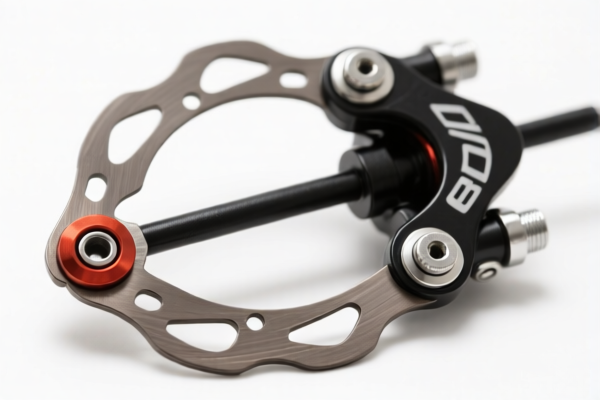
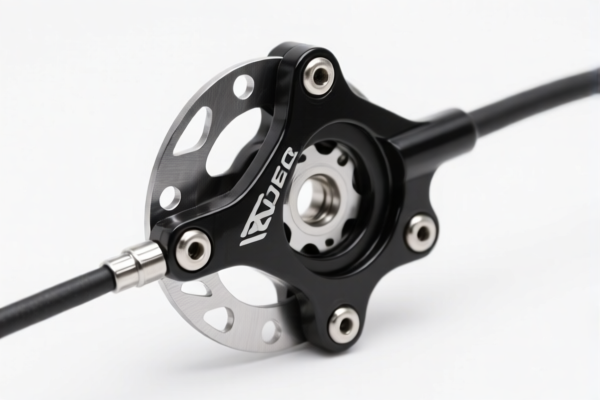
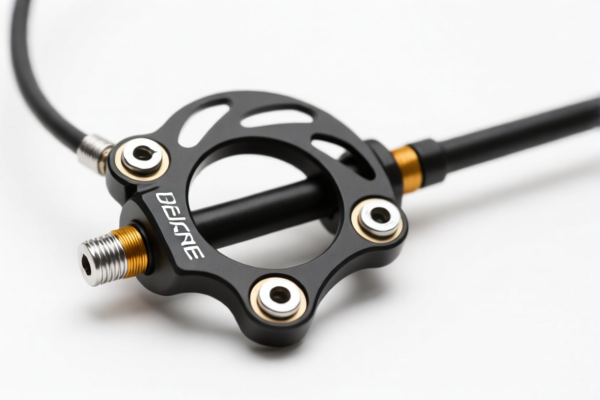
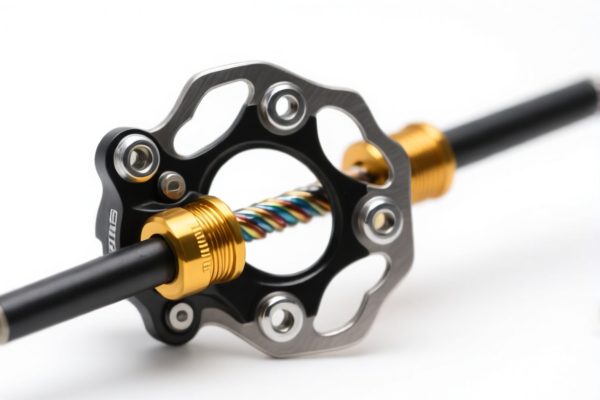
AI Analysis
🚲 Bicycle Caliper Brake Cable & Parts (Braking Systems for Bicycles)
🌐 HS Code Reference & Customs Clearance Guide | 2026 Latest Tariff Analysis | Specialized Clearance Strategy 📌 Part I: Product Definition & Classification: Do You Really Understand "Brake Cables"?
Bicycle brake cables are critical transmission components within the bicycle braking system. In international trade, they fall under the broader category of "Parts and Accessories of Vehicles of Headings 8711 to 8713," specifically classified under Brakes and their parts.
Key Distinction: * Caliper/Cantilever Brake Cables (with fittings): If the cable comes pre-assembled with fittings (nipples, barrel adjusters, or end caps), it is classified directly as a "Part of Brakes." * Loose Cables vs. Assembled Units: The specific HS codes provided in the data distinguish between standard caliper/cantilever brake assemblies/parts and other brake parts. However, both fall under the same tariff header 8714.94.30.
⚠️ Critical Classification Point:
- If the product is a "Cable or inner wire... fitted with fittings" intended for caliper/cantilever brakes, it maps to 8714.94.30.20.
- If it is a generic brake part that does not fit the specific "caliper/cantilever fitted" description or is categorized as "Other", it maps to 8714.94.30.80.
- Note: Both codes carry the same tax rate in this dataset, but correct description is vital for customs compliance.
📦 Part II: HS Code Classification Details (2026 Latest Tariff Authority Comparison)
Based strictly on the provided <DATA>, here is the authoritative breakdown for Brakes, including coaster braking hubs and hub brakes, and parts thereof:
| HS Code | Product Description | Application Scenario | Specific Feature |
|---|---|---|---|
8714.94.30.20 |
Caliper and cantilever bicycle brakes; parts thereof (including cable or inner wire therefor, fitted with fittings) | Specific brake cables with fittings, complete caliper brake sets | ✅ Fitted with fittings (nipples/adapters) |
8714.94.30.80 |
Other (under the category of Drum brakes, caliper/cantilever brakes, and coaster brakes; parts thereof) | Other brake components, loose cables (unfitted), generic brake parts | ❌ General "Other" classification |
🔍 Key Reminder:
- Both codes belong to the chapter: Parts and accessories of vehicles of headings 8711 to 8713.
- Subheading: Other → Brakes... → Drum brakes, caliper and cantilever bicycle brakes....
- The distinction lies in the specificity of the "parts" description in the tariff text.
💰 Part III: 2026 Latest Tariff Rate Details (Including Additional Taxes)
✅ Applicable Country: United States (US)
✅ Origin: China (CN) [Inferred from "Additional Tariff" context common in such datasets]
✅ Effective Time: Current Rate Structure
🎯 1. 8714.94.30.20 —— Caliper and Cantilever Bicycle Brake Parts (Fitted)
| Item | Content |
|---|---|
| Base Tariff | 0.0% (Ad Valorem) |
| Section 301 Additional Tariff | +25.0% |
| Total Tariff Rate | 25.0% |
| Tax Calculation | CIF Value × 25% |
| Legal Basis | Based on provided dataset: tax_detail: "Base Tariff: 0.0%, Additional Tariff: 25.0%" |
📌 Explanation:
- The 0% base rate reflects the standard MFN (Most Favored Nation) duty for bicycle parts.
- The 25% additional tariff is likely under Section 301 of the Trade Act of 1974, targeting specific Chinese imports.
- Total Cost Impact: A $1,000 shipment incurs $250 in duties.
🎯 2. 8714.94.30.80 —— Other Brake Parts
| Item | Content |
|---|---|
| Base Tariff | 0.0% (Ad Valorem) |
| Section 301 Additional Tariff | +25.0% |
| Total Tariff Rate | 25.0% |
| Tax Calculation | CIF Value × 25% |
| Legal Basis | Based on provided dataset: tax_detail: "Base Tariff: 0.0%, Additional Tariff: 25.0%" |
📌 Note:
- Despite the description difference ("Other" vs. "Fitted Cables"), the tax burden is identical.
- The classification difference is primarily for statistical tracking and trade remedy enforcement, not cost avoidance in this specific dataset.
🛠️ Part IV: Customs Clearance Practical Advice (Battlefield Pit-avoidance Guide)
✅ 1. Preparation Checklist (Indispensable)
| Document | Required | Explanation |
|---|---|---|
| ✅ Product Specification Sheet | ✔️ | Must specify: Type (Caliper/Cantilever), Length, Material (Stainless Steel/Kevlar), and whether fittings are included. |
| ✅ Product Photos | ✔️ | Clear images of the cable ends, fittings, and packaging label showing Model No. and "Made in China". |
| ✅ Commercial Invoice | ✔️ | Must accurately describe goods as "Bicycle Brake Cables" or "Parts of Bicycle Brakes". Avoid vague terms like "Hardware". |
| ✅ Packing List | ✔️ | Detail net/gross weight. Ensure no mixed commodities in one carton that could confuse customs valuation. |
| ✅ Certificate of Origin | ✔️ | Standard CO if applicable, though it doesn't reduce the 25% additional duty. |
✅ 2. Declaration Tips (Key Mantras)
🔥 "Describe Accurately, Don't Hide Fittings, Name is Key, Rate is Fixed!"
| Scenario | Correct Declaration | Incorrect Practice |
|---|---|---|
| Cable with Nipples/Barrel Adjusters | Use 8714.94.30.20 – "Brake Cable with Fittings" | Misdeclare as "Wire Rope" (8302) or "General Hardware" → High risk of reclassification & penalty |
| Loose Cable (No Fittings) | Use 8714.94.30.80 – "Other Brake Parts" | Declare as complete brake set → Over-declaration risk |
| Complete Brake Caliper Assembly | Use 8714.94.30.20 – "Caliper Brakes" | Declare as "Plastic Part" → Severe misclassification |
✅ 3. Special Situation Handling
| Situation | Handling Advice |
|---|---|
| OEM Private Label | Ensure the invoice reflects the actual buyer/seller relationship. Customs may scrutinize "Low Value" declarations. |
| Mixed Shipments | If cables are packed with tires or pedals, declare separately. Mixing HS Codes can delay clearance for the entire shipment. |
| Kevlar/Steel Core | Specify material. While not changing the HS code here, it helps customs officers verify the product nature quickly. |
🌍 Part V: Global Market Comparison (2026 Latest)
| Country/Region | Recommended HS Code | Tariff (China Origin) | Certification Requirements | Notes |
|---|---|---|---|---|
| 🇺🇸 USA | 8714.94.30.20 / .80 |
25.0% (Total) | None Specific (But DOT/Federal Motor Vehicle Safety Standards may apply for complete bikes) | 25% Additional Duty is Non-Negotiable for CN origin. |
| 🇨🇳 China | 8714.94.30 | Low/Zero | CCC (for complete vehicles, not parts) | Domestic trade benefits from lower logistics costs. |
| 🇪🇺 EU | 8714.99 | ~1.7% - 4.5% | CE Marking (if applicable to accessories), RoHS | Significantly lower tariffs than USA. Consider EU routing if feasible. |
| 🇨🇦 Canada | 8714.99 | 0% (under CUSMA/USMCA if eligible) | CSA Certification (rare for simple parts) | Zero Duty if rules of origin are met. |
| 🇯🇵 Japan | 8714.99 | 0% - 5% | JIS Standards (for safety) | No significant additional tariffs for bike parts. |
📌 Conclusion:
- The US market is the most expensive for bicycle brake parts from China due to the 25% additional tariff.
- No preferential treatment is evident in the provided data for this specific HS code under standard scenarios.
- Cost optimization strategies should focus on supply chain diversification (e.g., manufacturing in Vietnam or Mexico) if targeting the US, as these countries may be exempt from Section 301 duties.
📌 Part VI: Common Errors & Pitfalls (Lessons Learned)
❌ Error 1: Declaring brake cables as "Plastic Parts" or "Metal Wires"
👉 Consequence: Customs may reclassify under general chapter 73 or 39, leading to misclassification penalties and potential audits.
❌ Error 2: Failing to disclose "Made in China" when shipping to the US
👉 Consequence: Evading the 25% tariff is considered fraud. Penalties can be 2x the evaded duty.
❌ Error 3: Confusing "Brake Cables" with "Brake Pads" or "Brake Levers"
👉 Consequence: Different HS codes might apply (though many are similar, specificity matters for legal descriptions). Ensure the description matches the tariff text ("Cable... fitted with fittings").
❌ Error 4: Ignoring the "Fittings" aspect
👉 Consequence: If you send fitted cables but declare as "loose parts," it creates a discrepancy in inspection. Always match the physical product to the declaration.
✅ Correct Approach:
"Stainless Steel Bicycle Caliper Brake Cable, 1.2m Length, Pre-fitted with Brass Nipples, Model BC-100, Made in China"
🎯 Part VII: Conclusion: Professional Declaration, Save Time, Reduce Costs!
🎯 Remember the Mantra:
🔹 "Cable with Fittings = 8714.94.30.20"
🔹 "Other Brake Parts = 8714.94.30.80"
🔹 "Total Tax = 25% (0% Base + 25% Add-on)"
🔹 "Don't Split, Don't Hide, Declare Clearly!"
📌 Pro Tip:
If you are importing large volumes, consider applying for an Advance Ruling from U.S. Customs and Border Protection (CBP) if you have complex configurations (e.g., mixed kits). This provides legal certainty on the HS code and tariff liability before shipment.
📣 Immediate Action:
📞 Consult with a licensed Customs Broker.
📦 Provide precise product photos and specifications.
🚀 Ensure smooth customs clearance and maximize your profit margins!
✨ Professional Clearance Starts with Accurate Classification!
💼 Every penny in duty is a penny of profit lost! Get it right!
Customer Reviews
About HS Code Classification
The Harmonized System (HS) is an internationally standardized nomenclature developed by the World Customs Organization (WCO) to classify traded products. Over 200 countries use the HS system as the basis for customs tariffs, trade statistics, and import/export regulations.
Each HS code follows a hierarchical structure:
- Chapter (2 digits) — Broad category of goods (e.g., Chapter 84: Machinery and Mechanical Appliances)
- Heading (4 digits) — More specific grouping within the chapter
- Subheading (6 digits) — Internationally standardized breakdown, used by all WCO member countries
- National subdivisions (8-10 digits) — Country-specific extensions for further classification, such as US HTSUS 10-digit codes
Correct HS code classification is essential for smooth customs clearance, accurate duty payment, and compliance with trade regulations. Misclassification can lead to customs delays, overpayment of duties, or penalties.
When importing from CN to US, the applicable tariff rates may include:
- Most-Favored-Nation (MFN) rate — The standard duty rate applied to WTO members
- General rate — Applied to countries without trade agreements
- Trade remedy duties — Additional tariffs such as Section 301 (anti-dumping), Section 232 (national security), or countervailing duties
The information provided on this page is for reference purposes only. For official classification, please consult with your local customs authority or a licensed customs broker.