Bicycle Chain
CN → US| HS Code | Tariff Rate | Origin | Destination | Doc |
|---|---|---|---|---|
| 8714998000 | 27.5% | CN | US | Official Doc |
| 8714100050 | 17.5% | CN | US | Official Doc |
| 7315110010 | 85.0% | CN | US | Official Doc |
| 7315110045 | 85.0% | CN | US | Official Doc |
| 8483901050 | 37.8% | CN | US | Official Doc |
| 8483901010 | 37.8% | CN | US | Official Doc |
Product Images
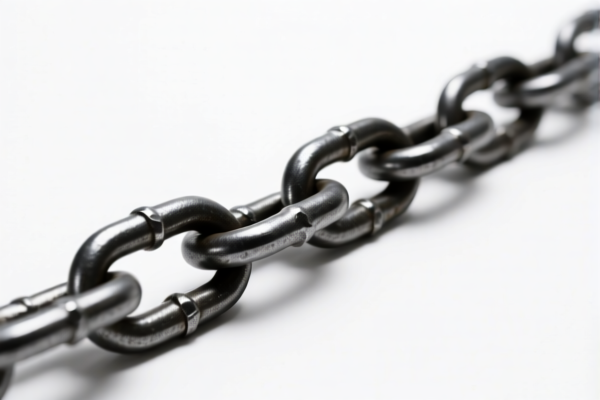
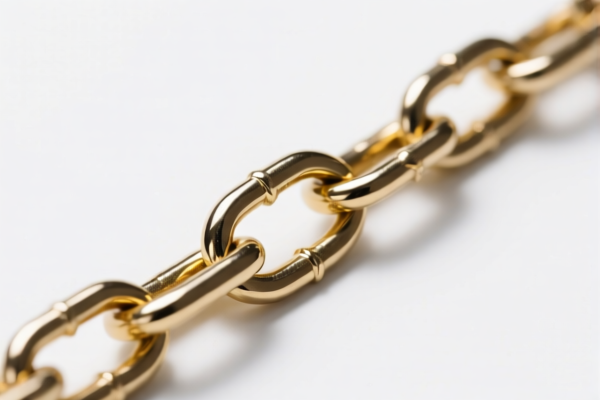

AI Analysis
🚴♂️ Bicycle Chains (Iron/Steel Roller Chains) – Global Trade & Customs Decoded (2026 Edition)
🌐 HS Code Reference & Customs Clearance Guide | 2026 Tax Breakdown | Professional Clearance Strategy
📌 1. Product Definition & Classification: What Exactly is a "Bicycle Chain"?
A bicycle chain is a critical transmission component connecting the pedals (cranks) to the rear wheel (sprockets). In international trade, it is classified under Iron or Steel chains, but its specific pitch and structural complexity dictate its exact HS Code and drastically affect the tariff rate.
Key Distinction Criteria: * Type: Is it a "Roller Chain" (standard)? * Pitch: Is the pitch 50mm or less? * Structure: Does it contain more than 3 parts per pitch? * Application: Is it specifically for Bicycles or "Other" (e.g., heavy machinery, motorcycles)?
⚠️ Critical Warning: * If the chain is < 50mm pitch and > 3 parts per pitch and specifically for bicycles, it faces a 75% Total Tax Rate (due to steel/aluminum surcharges). * If it is a Forged transmission part (e.g., a sprocket, not a chain), the tax may be 0%. * Do not confuse "Bicycle Chains" with "Motorcycle Chains"; the latter (8714.10.00.50) has a much lower tax rate (7.5%).
📦 2. HS Code Classification Details (2026 Authoritative Standards)
| HS Code | Product Description | Classification Logic | Total Tax Rate |
|---|---|---|---|
| 7315.11.00.10 | Chain: Roller Chain • Pitch ≤ 50mm • > 3 parts/pitch • Specifically: Bicycle Chains |
Fits all criteria for standard bike chains. | 75.0% |
| 7315.11.00.45 | Chain: Roller Chain • Pitch ≤ 50mm • > 3 parts/pitch • Other (Non-bicycle) |
For other machinery; same high surcharge applies. | 75.0% |
| 8714.10.00.50 | Parts of Motorcycles • Includes Mopeds |
Motorcycle/Moped chains (Not bicycles). | 7.5% |
| 8714.99.80.00 | Parts of Vehicles • Other (8711-8713) |
General vehicle parts (not specific chain/sprocket). | 17.5% |
| 8483.90.10.50 | Parts of Transmission • Chain Sprockets (Non-forged) |
Sprockets (gears), not the chain itself. | 27.8% |
| 8483.90.10.10 | Parts of Transmission • Chain Sprockets (Forged) |
Sprockets that are forged. | 0.0% |
🔍 Deep Dive Explanation: * 7315.11.00.10 (The Bicycle Chain Trap): This is the most dangerous code for importers. While the "Base Tariff" is 0%, the Additional Duty (25% + 50% steel/aluminum surcharge) results in a 75% total tax. * 8714.10.00.50 (Motorcycle Parts): If your product is labeled "Motorcycle Chain," it goes here. The tax is only 7.5% (Base 0% + 7.5% Additional). * 8483.90.10.10 (Forged Sprockets): If you are shipping chain rings or sprockets that are forged, the tax is 0%. This is a massive optimization opportunity for mixed shipments.
💰 3. 2026 Tax Rate Breakdown & Policy Details
✅ Applicable Context: Importing from China (CN) to markets with steel surcharges. ✅ Effective Date: 2025/2026 regimes. ✅ Currency: Calculated on CIF Value (Cost + Insurance + Freight).
🎯 1. Code 7315.11.00.10 — Bicycle Chains (High Risk!)
| Item | Detail |
|---|---|
| Base Tariff | 0.0% |
| Additional Duty (General) | +25.0% |
| Steel/Aluminum Surcharge | +50.0% |
| Total Effective Rate | 🚨 75.0% |
| Tax Calculation | CIF Value × 75% |
| Legal Basis | Steel/Aluminum Section 232 + Retaliatory Measures |
📌 Interpretation: * Why 75%? The structure is: Base (0%) + First Layer (25%) + Second Layer (50% for Steel/Aluminum products). * Impact: A $1,000 shipment of bicycle chains will incur $750 in taxes. This makes standard steel bike chains highly unprofitable for direct import into taxed markets.
🎯 2. Code 7315.11.00.45 — Other Roller Chains
| Item | Detail |
|---|---|
| Base Tariff | 0.0% |
| Additional Duty | +25.0% |
| Steel/Aluminum Surcharge | +50.0% |
| Total Effective Rate | 🚨 75.0% |
| Tax Calculation | CIF Value × 75% |
| Note | Same high penalty applies to non-bicycle chains fitting the pitch/structure criteria. |
🎯 3. Code 8714.10.00.50 — Motorcycle Parts (Low Risk)
| Item | Detail |
|---|---|
| Base Tariff | 0.0% |
| Additional Duty | +7.5% |
| Total Effective Rate | ✅ 7.5% |
| Tax Calculation | CIF Value × 7.5% |
| Strategy | Crucial: Ensure product description clearly states "Motorcycle/Moped" if applicable to avoid the 75% steel surcharge. |
🛠️ 4. Customs Clearance Practical Advice (Pitfall Avoidance)
✅ 1. Documentation Checklist (Must-Have)
| Document | Requirement | Why it Matters |
|---|---|---|
| Technical Specification | ✔️ Must specify Pitch (mm) | Determines if it falls under "≤ 50mm" rule (75% vs 0%). |
| Material Declaration | ✔️ Confirm "Iron/Steel" | Triggers the 50% steel surcharge. If aluminum, surcharge may differ. |
| Part Number & Photo | ✔️ Clear Image | Distinguish between Bicycle Chain (7315.11.00.10) vs Motorcycle Chain (8714.10.00.50). |
| Bill of Lading | ✔️ Accurate Description | Must match the HS Code logic (e.g., "Roller Chain, Pitch 1/2 inch"). |
| End-Use Certificate | ✔️ If Applicable | Proves if intended for bicycles vs. general machinery. |
✅ 2. Classification Strategy (The "Golden Rule")
🔥 Rule: "Pitch < 50mm + Steel + >3 Parts = 75% Tax (Unless it's a Motorcycle Part!)"
| Scenario | Correct Classification | Tax Rate | Action |
|---|---|---|---|
| Standard Steel Bike Chain | 7315.11.00.10 |
75.0% | Avoid direct import or factor cost into price. |
| Aluminum Chain (Rare) | 7315.11.00.45 or similar |
Check Surcharge | Verify material to avoid steel surcharge. |
| Motorcycle Chain | 8714.10.00.50 |
7.5% | Re-label/Re-classify if applicable. |
| Chain Sprockets (Forged) | 8483.90.10.10 |
0.0% | Optimize! Separate sprockets from chains in packing list. |
| Chain Sprockets (Other) | 8483.90.10.50 |
27.8% | Standard tax for non-forged transmission parts. |
✅ 3. Special Handling for "Bicycle" Products
- The "Pitch" Trap: If the pitch is exactly 50mm, check if the "parts per pitch" count is 3 or fewer. If ≤3 parts, the 75% rate might not apply. Measure carefully!
- Material Substitution: If possible, consider non-steel alternatives (e.g., specific alloys) that might avoid the "Steel/Aluminum" surcharge definition, though this is rare for standard bike chains.
- Sprocket Separation: Do not ship chains and sprockets as a single "Kit" if possible.
- Ship Sprockets under
8483.90.10.10(0% tax) if forged. - Ship Chains under
7315.11.00.10(75% tax) only if necessary. - Tip: Some jurisdictions allow separating "parts" to optimize, but ensure they are distinct line items in the invoice.
- Ship Sprockets under
🌍 5. Global Market Comparison (2026)
| Region | Typical HS Code | Estimated Tax | Key Challenge |
|---|---|---|---|
| 🇺🇸 USA | 7315.11.00.10 |
75% (Section 232 + 301) | Extremely high steel surcharge. |
| 🇪🇺 EU | 7315.11.00.10 |
0% - 15% (Varies by Country) | Generally lower than US, no 50% surcharge. |
| 🇨🇳 China | 7315.11.00.10 |
0% (Domestic) | No import tax for local manufacturing. |
| 🇯🇵 Japan | 7315.11.00.10 |
0% - 5% | Low tariff, strict quality control. |
📌 Conclusion: The 75% tax is primarily a US/Protectionist Market issue. If shipping to EU/Asia, the risk is significantly lower.
🚨 6. Common Mistakes & "Blood and Tears" Lessons
❌ Mistake 1: Calling it "Motorcycle Chain" when it's for a Bicycle. 👉 Result: Misclassification audit. Fine + Retroactive 75% tax.
❌ Mistake 2: Ignoring the "Pitch" measurement. 👉 Result: If pitch > 50mm, it might fall into a different, lower-tax category. If you declare ≤50mm but it's actually 60mm, you get penalized.
❌ Mistake 3: Mixing Forged Sprockets with Chains in one line item. 👉 Result: Customs may tax the whole lot at the higher rate (75% or 27.8%). Separate the lines!
✅ Correct Strategy:
Item 1:
8483.90.10.10- Chain Sprockets (Forged), 0% Tax. Item 2:8714.10.00.50- Motorcycle Chain (if applicable), 7.5% Tax. Item 3:7315.11.00.10- Bicycle Chain (Only if unavoidable), 75% Tax.
🎯 7. Final Verdict: Smart Sourcing for 2026
🎯 Remember:
🔹 "Bicycle Chains (Steel) = 75% Tax." (The "Steel Penalty" is real). 🔹 "Motorcycle Parts = 7.5% Tax." (Much better, but verify usage). 🔹 "Forged Sprockets = 0% Tax." (The "Golden Opportunity").
📌 Pro Tip: If you are importing to the US, do not import standard steel bicycle chains unless the profit margin can absorb the 75% tax. Consider: 1. Manufacturing locally (if possible). 2. Importing Sprockets only (0% tax) and assembling locally. 3. Sourcing from Vietnam/Mexico (if rules of origin allow, to bypass steel surcharges).
📣 Action Required:
📞 Contact a Customs Broker with the exact Pitch (mm) and Part Count. 📄 Request an Advance Ruling before shipping to confirm the 7315.11.00.10 classification. 🚀 Avoid the 75% tax trap – your supply chain efficiency depends on it!
✨ Precise Classification = Maximized Profit. 💼 Don't let "Steel" eat your margins!
Customer Reviews
About HS Code Classification
The Harmonized System (HS) is an internationally standardized nomenclature developed by the World Customs Organization (WCO) to classify traded products. Over 200 countries use the HS system as the basis for customs tariffs, trade statistics, and import/export regulations.
Each HS code follows a hierarchical structure:
- Chapter (2 digits) — Broad category of goods (e.g., Chapter 84: Machinery and Mechanical Appliances)
- Heading (4 digits) — More specific grouping within the chapter
- Subheading (6 digits) — Internationally standardized breakdown, used by all WCO member countries
- National subdivisions (8-10 digits) — Country-specific extensions for further classification, such as US HTSUS 10-digit codes
Correct HS code classification is essential for smooth customs clearance, accurate duty payment, and compliance with trade regulations. Misclassification can lead to customs delays, overpayment of duties, or penalties.
When importing from CN to US, the applicable tariff rates may include:
- Most-Favored-Nation (MFN) rate — The standard duty rate applied to WTO members
- General rate — Applied to countries without trade agreements
- Trade remedy duties — Additional tariffs such as Section 301 (anti-dumping), Section 232 (national security), or countervailing duties
The information provided on this page is for reference purposes only. For official classification, please consult with your local customs authority or a licensed customs broker.