Bicycle Frewheel Removal Tool
CN → US| HS Code | Tariff Rate | Origin | Destination | Doc |
|---|---|---|---|---|
| 8714937060 | 35.0% | CN | US | Official Doc |
| 8466100175 | 13.9% | CN | US | Official Doc |
| 8714998000 | 27.5% | CN | US | Official Doc |
| 8205591000 | 42.2% | CN | US | Official Doc |
| 8205595560 | 40.3% | CN | US | Official Doc |
Product Images
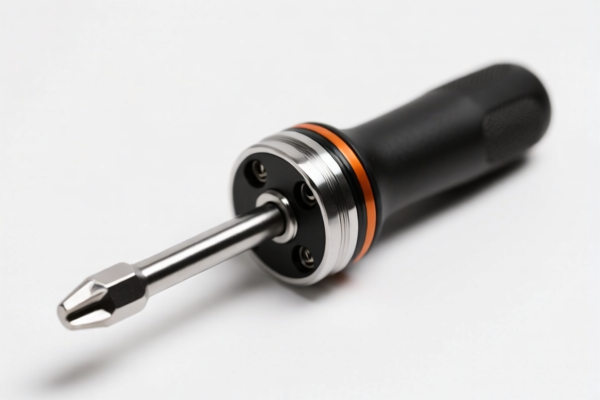
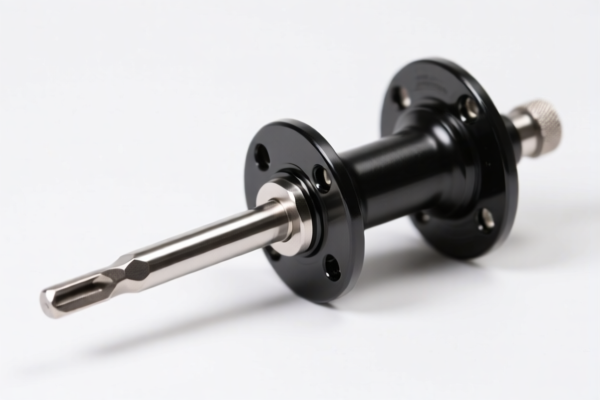
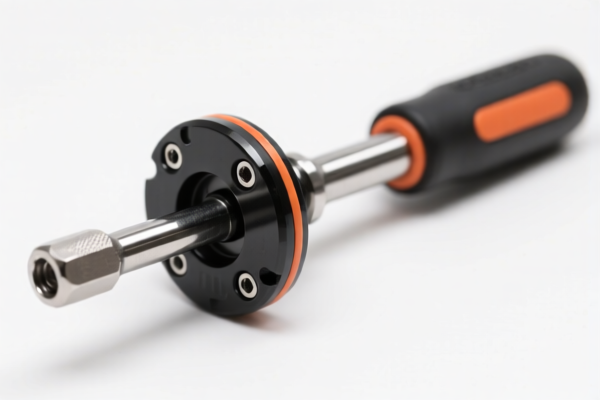
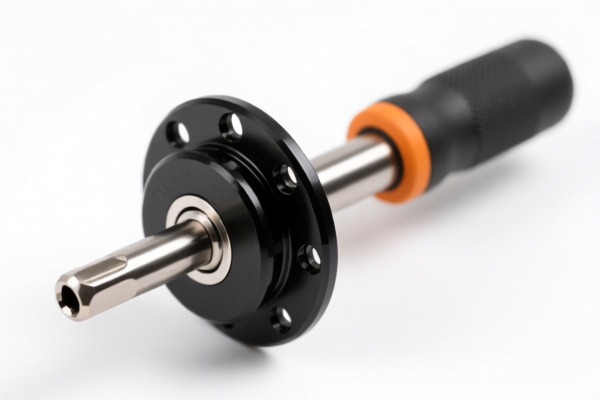
AI Analysis
🔧 Bicycle Cassette & Freewheel Removal Tool (Cycle Tool)
🌐 HS Code Reference & Customs Clearance Guide | 2026 Latest Tariff Analysis | Professional Clearance Strategy
📌 I. Product Definition & Classification: Do You Really Understand This Tool?
A Bicycle Freewheel/Cassette Removal Tool is a specialized hand tool used to remove or install freewheels (on older bikes) or cassettes (on modern bikes) from the rear hub. It is typically a metal socket, key, or spline driver.
In international trade, its classification depends entirely on functional intent: * As a Vehicle Part: If marketed specifically as a spare part for bicycle repair kits or integrated systems. * As a Hand Tool: If marketed as a general maintenance tool for mechanics or cycling enthusiasts. * As a Mechanical Component: If considered a generic accessory or component.
⚠️ Key Distinction Point:
- If it is a standalone metal tool with no electronic components → Likely falls under Chapter 82 (Tools) or Chapter 84 (Mechanical Appliances).
- If it is sold exclusively as a bicycle part in a specific kit → Likely falls under Chapter 87 (Vehicles).
- Customs Risk: Misclassifying a simple tool as a vehicle part can lead to significant tariff discrepancies due to the "Section Notes" in the HS Code system.
📦 II. HS Code Classification Details (2026 Latest Tariff Authority Comparison)
The input data provides five potential classifications, ranging from 13.9% to 42.2% total tax. Here is the breakdown:
| HS Code | Product Description | Applicable Scenario | Tax Rate (Total) |
|---|---|---|---|
8466.10.01.75 |
Tool Accessories/Components | Generic metal tools, socket sets, mechanics' tools | 13.9% |
8714.99.80.00 |
Bicycle Parts & Accessories | Spare parts specifically for bicycles | 27.5% |
8714.93.70.60 |
Bicycle Freewheel/Gear Parts | Specific parts of freewheel/cassette systems | 35.0% |
8205.59.55.60 |
Metal Hand Tools (Other) | Non-specific metal hand tools | 40.3% |
8205.59.10.00 |
Pipe/Mechanical Maintenance Tools | Specialized pipe or mechanical maintenance tools | 42.2% |
🔍 Key Insight:
- Lowest Tax Option:8466.10.01.75(13.9%) is the most economical if you can prove it is a tool accessory rather than a specific bicycle part.
- Highest Tax Option:8205.59.10.00(42.2%) is the riskiest if misclassified as a generic pipe tool.
- Middle Ground:8714.99.80.00(27.5%) is the safest "bicycle part" classification but carries higher duties than tools.
💰 III. 2026 Latest Tariff Rate Breakdown (Including Additional Duties)
✅ Applicable Country: United States (US)
✅ Origin: China (CN)
✅ Effective Date: Post-2025 (Including Section 301 & IEEPA tariffs)
🎯 1. 8466.10.01.75 —— Tool Accessories (Lowest Risk/Cost)
| Item | Content |
|---|---|
| Basic Duty Rate | 3.9% (ad valorem) |
| Section 301 Additional Duty | 0.0% |
| Section 122 Duty | 10.0% |
| Total Duty Rate | 13.9% |
| Tax Calculation | CIF Value × 13.9% |
| De Minimis Eligibility | ❌ No (Deny De Minimis for Chinese Goods) |
| Legal Basis Path | USITC:8466.10.01.75 → Section 122: 10% |
📌 Explanation:
- This classification treats the item as a tool accessory.
- Crucial: It does not incur the heavy Section 301 (25%) tariff, but only a 10% Section 122 duty.
- Strategy: Use this if the tool is not exclusively branded for bicycle repair only.
🎯 2. 8714.99.80.00 —— Bicycle Parts (Standard Market Classification)
| Item | Content |
|---|---|
| Basic Duty Rate | 10.0% |
| Section 301 Additional Duty | 7.5% |
| Section 122 Duty | 10.0% |
| Total Duty Rate | 27.5% |
| Tax Calculation | CIF Value × 27.5% |
| De Minimis Eligibility | ❌ No |
| Legal Basis Path | USITC:8714.99.80.00 → Section 301: 7.5% + Section 122: 10% |
📌 Explanation:
- This is the most common classification for bicycle-specific parts.
- The Section 301 duty is lower here (7.5%) than for other tools, but the base duty is higher (10%).
- Advantage: If you are selling exclusively to bike shops, this is the most defensible classification.
🎯 3. 8714.93.70.60 —— Freewheel/Gear Specific Parts (High Tax)
| Item | Content |
|---|---|
| Basic Duty Rate | 0.0% |
| Section 301 Additional Duty | 25.0% |
| Section 122 Duty | 10.0% |
| Total Duty Rate | 35.0% |
| Tax Calculation | CIF Value × 35.0% |
| De Minimis Eligibility | ❌ No |
| Legal Basis Path | USITC:8714.93.70.60 → Section 301: 25% + Section 122: 10% |
📌 Explanation:
- This code targets specific gear/freewheel mechanisms.
- Warning: The 25% Section 301 duty is applied. This is a high-risk classification unless the item is strictly a gear component, not a tool.
🎯 4. 8205.59.55.60 & 8205.59.10.00 —— Hand Tools (High Risk)
| HS Code | Total Rate | Section 301 | Section 122 | Explanation |
|---|---|---|---|---|
8205.59.55.60 |
40.3% | 25.0% | 10.0% | Generic metal tools. High Section 301. |
8205.59.10.00 |
42.2% | 25.0% | 10.0% | Pipe/Mechanical tools. Highest tax. |
📌 Explanation:
- These codes fall under Chapter 82 (Tools,implements,spoons and forks of base metal).
- They incur the maximum 25% Section 301 tariff.
- Avoid these classifications unless necessary, as they are the most expensive.
🛠️ IV. Customs Clearance Practical Advice (Pitfall Avoidance Guide)
✅ 1. Documentation Checklist (Must-Haves)
| Document | Required | Notes |
|---|---|---|
| ✅ Product Specification Sheet | ✔️ | Include material (e.g., Chrome Vanadium Steel), dimensions, weight. |
| ✅ Product Photos | ✔️ | Show the tool engaging with a freewheel/cassette. |
| ✅ Commercial Invoice | ✔️ | Describe as "Bicycle Maintenance Tool" or "Freewheel Removal Key". |
| ✅ Packing List | ✔️ | List quantities, gross/net weight. |
| ✅ Origin Certificate | ✔️ | Proof of Chinese origin (triggers tariffs). |
⚠️ Critical: Do not list the item as "Bicycle Spare Part" if you are using HS Code
8466.10.01.75(Tool Accessory). The description must match the code. If using8714, describe it as a "Bicycle Part".
✅ 2. Classification Strategy (Key Tips)
🔥 "Define by Function, Not Just by Use!"
| Scenario | Recommended HS Code | Duty Rate | Why? |
|---|---|---|---|
| Sold as a general mechanic's tool | 8466.10.01.75 |
13.9% | Lowest tax. Treat as tool accessory. |
| Sold exclusively in bike repair kits | 8714.99.80.00 |
27.5% | Safest for "Bicycle Parts". |
| Specifically a gear/freewheel component | 8714.93.70.60 |
35.0% | High tax, but accurate for parts. |
| Generic metal tool (no bike context) | 8205.59.55.60 |
40.3% | Avoid. High duty. |
✅ 3. Special Case Handling
| Situation | Recommendation |
|---|---|
| OEM Custom Tools | Provide design drawings to prove it is a tool accessory (8466) rather than a part. |
| Kit with Other Tools | If sold in a box with wrenches, classify as a tool set (8466) to avoid part-specific duties. |
| Marketing as "Bike Part" | Be careful. If you market it as a "Bike Part," customs may force classification to 8714 (27.5%+). |
| Pre-Clearance Ruling | Highly Recommended. Apply for an Advance Ruling from US CBP to lock in 8466.10.01.75 if possible. |
🌍 V. Global Market Clearance Comparison (2026 Latest)
| Country/Region | Recommended HS Code | Duty Rate | Certification Required | Notes |
|---|---|---|---|---|
| 🇺🇸 USA | 8466.10.01.75 |
13.9% | None | Lowest duty for tools. |
| 🇺🇸 USA | 8714.99.80.00 |
27.5% | None | Standard for bike parts. |
| 🇨🇳 China | 8205.59.10.00 |
Varies | CCC (if applicable) | Lower import duties. |
| 🇪🇺 EU | 8205.59.00 |
0% | CE (if applicable) | No additional tariffs. |
| 🇦🇺 Australia | 8205.59.00 |
5% | RCM | Standard duty. |
| 🇯🇵 Japan | 8205.59.00 |
0% | PSE | No additional tariffs. |
📌 Conclusion:
- USA is the most challenging due to Section 301 and Section 122 tariffs.
- EU, Australia, Japan have significantly lower duties, making them more profitable markets for this tool.
- Strategy: To minimize US duties, classify as Tool Accessory (8466) if defensible.
📌 VI. Common Mistakes & Pitfall Guide (Lessons Learned)
❌ Mistake 1: Classifying a simple metal tool as a "Bicycle Part" without justification
👉 Consequence: May be challenged by customs, leading to audits or retroactive duties.
❌ Mistake 2: Using "Bike Part" description for 8466 classification
👉 Consequence: Customs may reject the classification due to description mismatch. Use "Tool Accessory" or "Mechanical Tool".
❌ Mistake 3: Ignoring Section 122 (10%) in tax calculations
👉 Consequence: Underpayment of duties, leading to penalties and delays.
❌ Mistake 4: Assuming all bicycle items are exempt from high tariffs
👉 Consequence: Many bicycle parts (8714) still face 7.5%-25% additional duties from China.
✅ Correct Approach:
"Freewheel Removal Tool, Chrome Vanadium Steel, Hand Tool, for Bicycle Maintenance, Model XYZ"
🎯 VII. Conclusion: Smart Classification, Lower Costs, Faster Clearance!
🎯 Remember These Rules:
🔹 "Tool Accessory (
8466) = 13.9% (Best)"
🔹 "Bicycle Part (8714) = 27.5% (Standard)"
🔹 "Specific Gear Part (8714.93) = 35.0% (High)"
🔹 "Generic Tool (8205) = 40.3%+ (Avoid)"
📌 Pro Tip:
If your product can be argued as a general mechanical tool rather than a specialized bicycle part, pursue
8466.10.01.75.
Consult a customs broker to apply for an Advance Ruling before shipping large volumes to the US.
📣 Take Action Now:
📞 Contact a licensed customs broker
📄 Prepare product specs and photos
🚀 Optimize your HS Code strategy for maximum savings!
✨ Professional clearance starts with precise classification!
💼 Every percentage point matters in global trade!
Customer Reviews
About HS Code Classification
The Harmonized System (HS) is an internationally standardized nomenclature developed by the World Customs Organization (WCO) to classify traded products. Over 200 countries use the HS system as the basis for customs tariffs, trade statistics, and import/export regulations.
Each HS code follows a hierarchical structure:
- Chapter (2 digits) — Broad category of goods (e.g., Chapter 84: Machinery and Mechanical Appliances)
- Heading (4 digits) — More specific grouping within the chapter
- Subheading (6 digits) — Internationally standardized breakdown, used by all WCO member countries
- National subdivisions (8-10 digits) — Country-specific extensions for further classification, such as US HTSUS 10-digit codes
Correct HS code classification is essential for smooth customs clearance, accurate duty payment, and compliance with trade regulations. Misclassification can lead to customs delays, overpayment of duties, or penalties.
When importing from CN to US, the applicable tariff rates may include:
- Most-Favored-Nation (MFN) rate — The standard duty rate applied to WTO members
- General rate — Applied to countries without trade agreements
- Trade remedy duties — Additional tariffs such as Section 301 (anti-dumping), Section 232 (national security), or countervailing duties
The information provided on this page is for reference purposes only. For official classification, please consult with your local customs authority or a licensed customs broker.